



Victorian Desk Timepiece
A victorian desk timepiece brings precise nineteenth century engineering and polished brass to your writing table.
Victorian Desk Timepiece
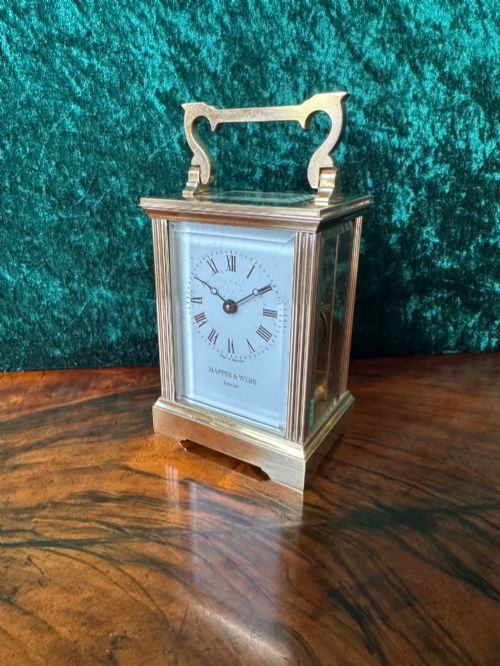
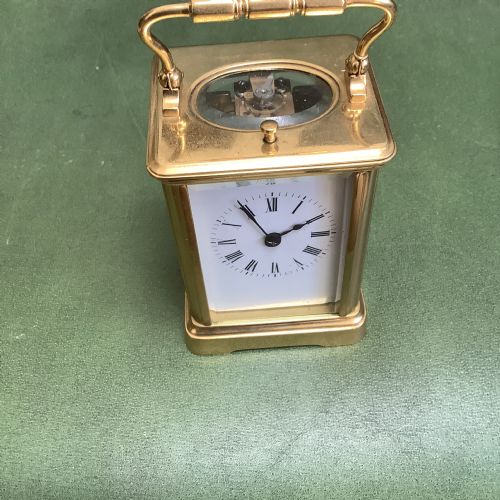
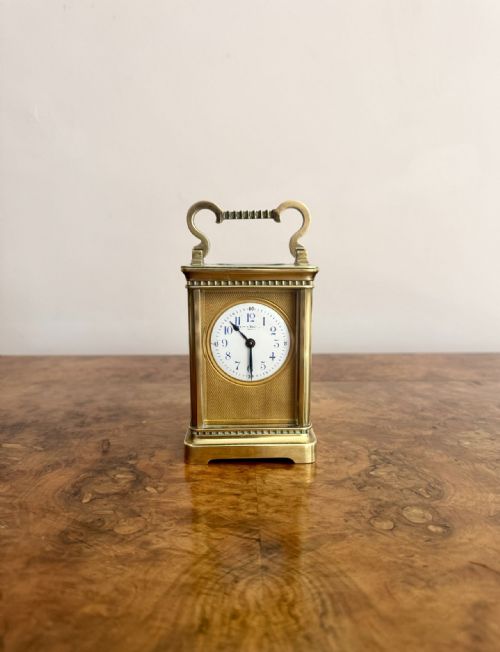
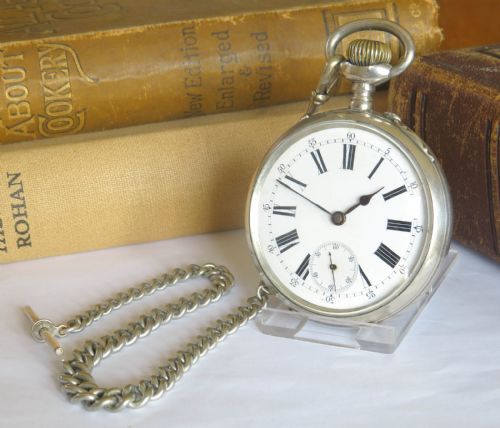
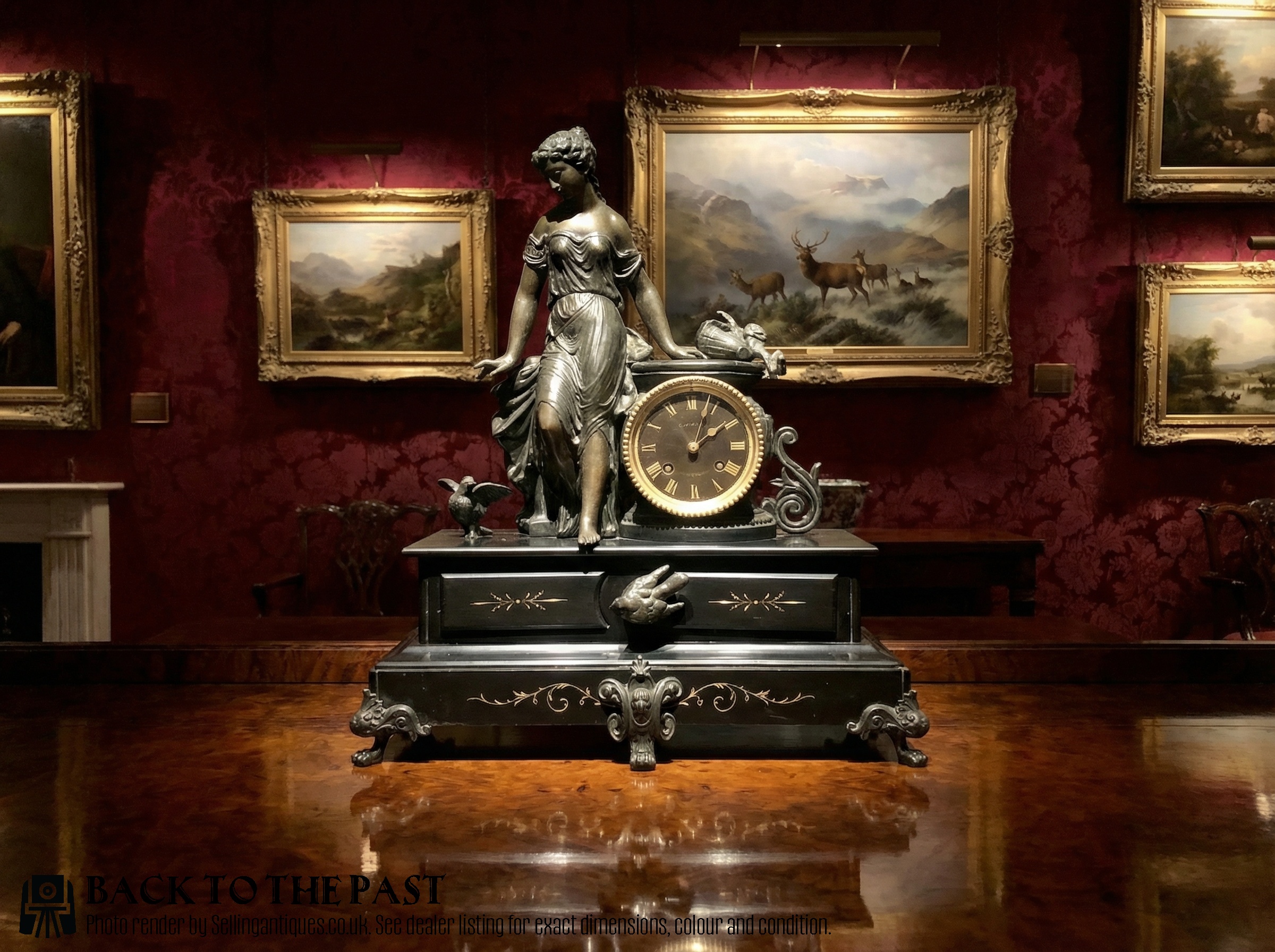
A victorian desk timepiece is a portable or table-standing clock designed for reading hours during work or study. When searching for a victorian desk timepiece, buyers encounter numerous brass carriage clocks alongside skeleton clocks, strut clocks and smaller mantel pieces.
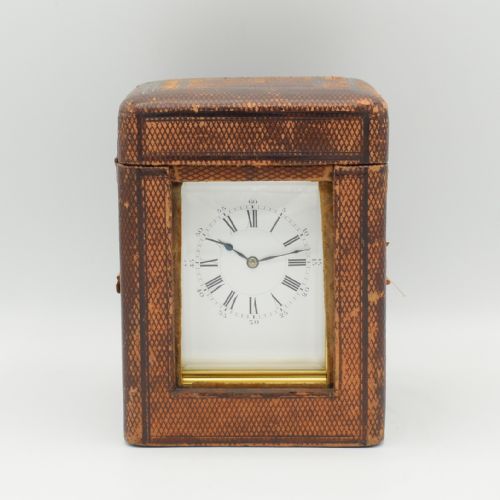
Most examples originate from the nineteenth century, spanning Victorian and Edwardian periods with notable French and English influences. These objects combine practical timekeeping with decorative utility, housed in glazed brass gorge cases, marble blocks or leather travel cases.
How they were made
Maker workshops constructed these timepieces primarily using cast and polished brass, often applying gilt finishes or silvered metal dials. Mechanics incorporated glass panels for movement visibility, alongside enamel for chapter rings and dials.
Cabinet makers and horologists utilised heavy materials like sienna marble, mahogany, and specialised elements such as porcelain mounts or faux tortoiseshell casing. Intricate movements often featured eight-day mechanisms, repeater functions, or alarm complications.
Listings feature brass, marble, and glass extensively, alongside periods spanning the Victorian era, Edwardian years, and the nineteenth century.
What varies in quality
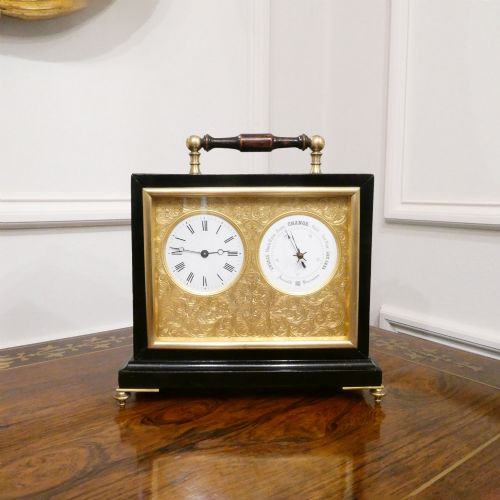
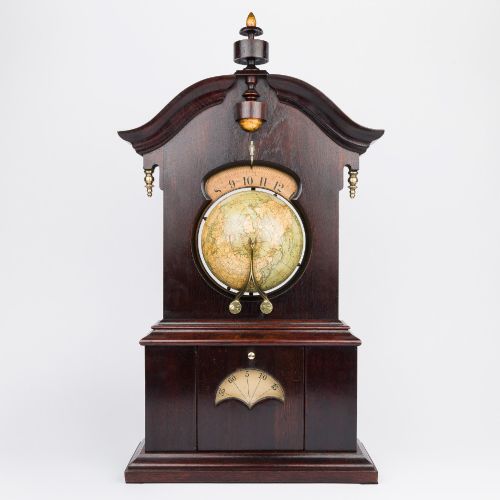
Quality rests in the crispness of brass casting, the depth of gilding, and the presence of full hand engraving across the case. Pieces featuring intricate complications like alarms, calendars, or automata demonstrate superior horological ambition.
The integrity of original glass panels, signed movements by notable makers, and the survival of matching leather travel cases distinguish finer pieces from standard production items.
Henri Jacot·Mappin and Web·Richard Winter of Chieveley·Pickford of London·Drocourt Paris·Antoine Redier of Paris·Duverdrey and Bloquel·Howell and James·Guilmet
The Victorian Desk Timepiece Glossary
- Carriage clock
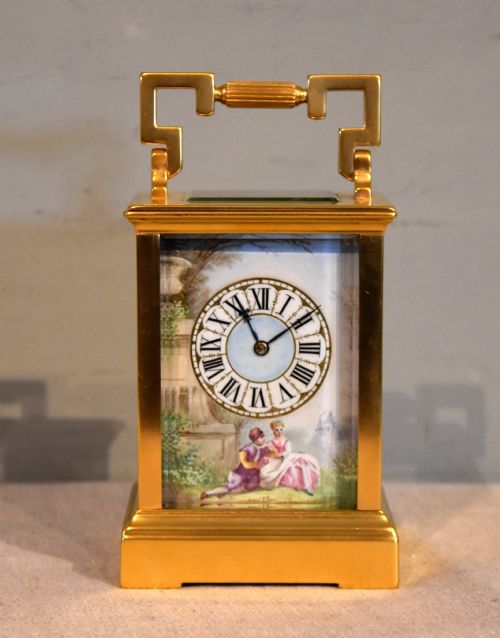
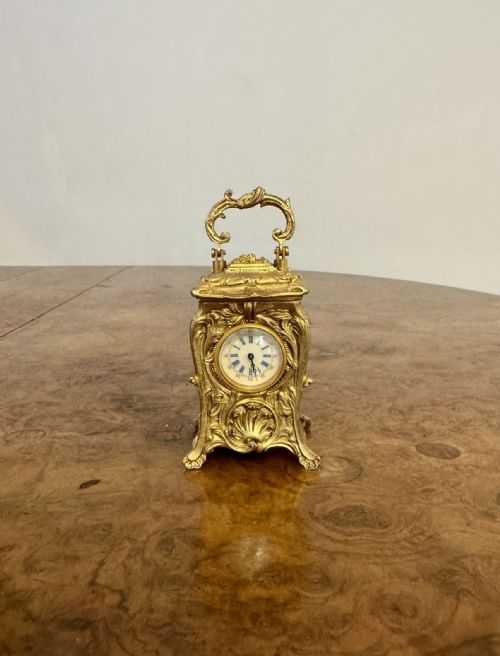
- A small, spring-driven portable clock with a carrying handle, originally designed for officers travelling in carriages during the nineteenth century.
- Skeleton clock
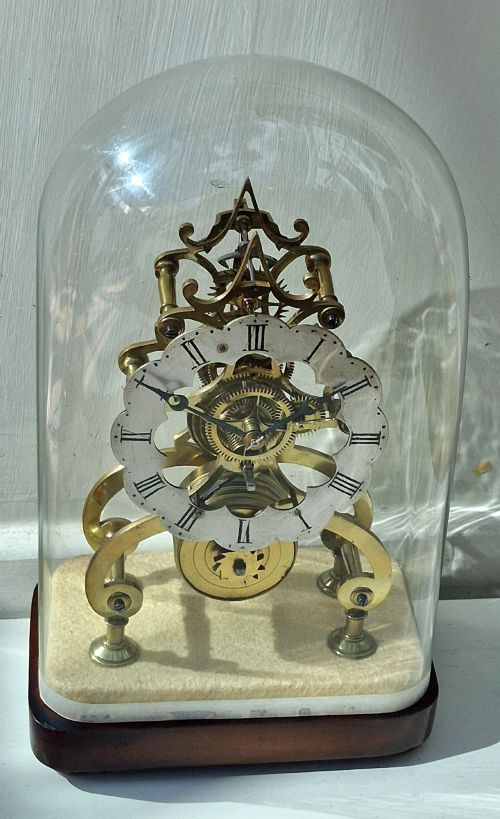
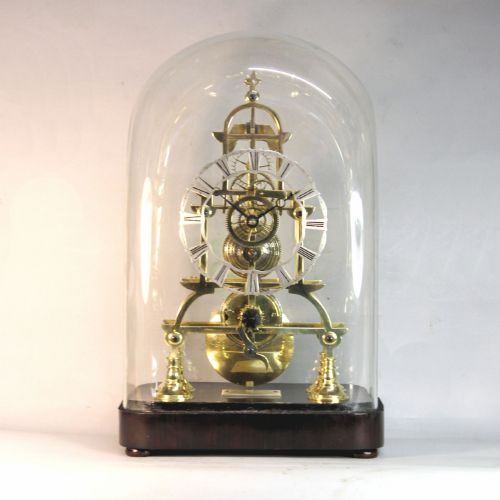
- A timepiece with an open framework that exposes the gear train and movement to view, typically protected by a glass dome.
- Gorge case
- A specific stepped brass rectangular case design commonly found on nineteenth-century French carriage clocks.
- Strut clock
- A portable timepiece featuring a hinged prop or stand at the back to support an upright position on a desk or mantel.
- Repeater
- A mechanical complication that chimes the hours and quarters on demand when a pendant or lever is pressed.
Victorian Desk Timepiece: Frequently Asked Questions
What is a victorian desk timepiece?
A victorian desk timepiece is a portable or small stationary clock made during the nineteenth century to keep time on a desk or table.
These pieces range from brass carriage clocks and skeleton clocks to novelty timepieces housed in marble or leather cases.
How do I wind a carriage clock?
Most carriage clocks use a dedicated winding key inserted into arbors located on the underside or back plate of the movement.
Care must be taken not to overwind the mainspring, turning the key gently until resistance signals the spring is fully tensioned.
Where were these clocks made?
Makers produced these timepieces across England and France, with prominent workshops operating in London and Paris.
French makers frequently supplied brass carriage and novelty clocks, whilst English makers contributed specialised skeleton and strut clocks.
How do I set the time?
Time setting on a carriage clock is usually performed by moving the minute hand directly by hand across the enamel dial.
Moving the hands backwards should be avoided on delicate movements with striking or repeating trains to prevent gear damage.
Are these clocks suitable for daily use?
Many nineteenth-century timepieces remain fully operational and suitable for daily running when serviced by a professional horologist.
Regular mechanical maintenance ensures the gear trains and escapements function correctly over extended periods.