



Victorian Desk Calendar
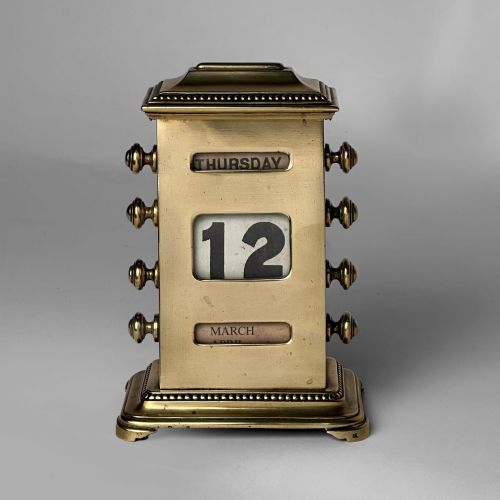
A victorian desk calendar organises the working surface with mechanical sliding cards, drums or rotating dials.
Victorian Desk Calendar
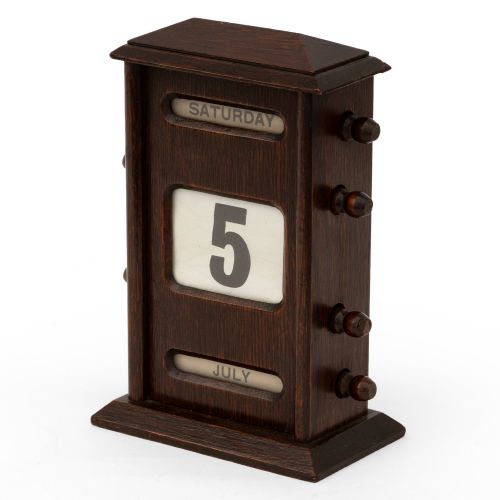
When searching for a victorian desk calendar, one encounters small functional office items designed to display the date persistently through changing months and years. These pieces typically take the form of upright wooden frames or compact blocks intended to sit stably upon a writing table or ledger desk.
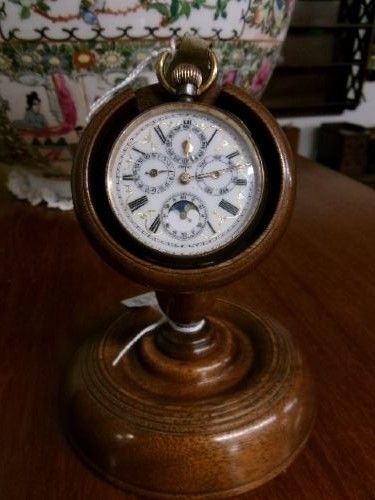
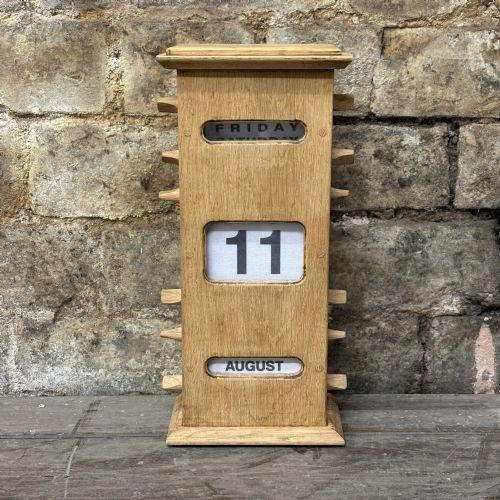
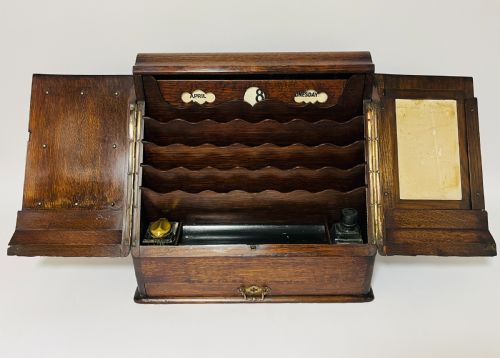
The version most commonly met on this page is constructed from dark or polished oak, often featuring adjustable cards, panels or revolving drums to advance the day, date and month. Alongside dedicated calendar frames, the selection includes stationery cabinets fitted with date mechanisms, pocket watches with moonface calendars, and heavy slate or brass mantel clocks incorporating perpetual calendar dials.
Origins span British workshops, French makers and specialist retailers, moving from plain utilitarian desk furniture to decorative brass, enamel and tiled pieces. The persistent presence of perpetual mechanisms demonstrates a Victorian appetite for combining domestic organisation with fine mechanical craft.
Materials and construction
Timbers dominate the physical structure, with solid and figured oak forming the majority of frames alongside polished mahogany and walnut. These woods are frequently turned, carved or panelled to house paper cards, card strips or rotating wooden blocks that display the printed date.
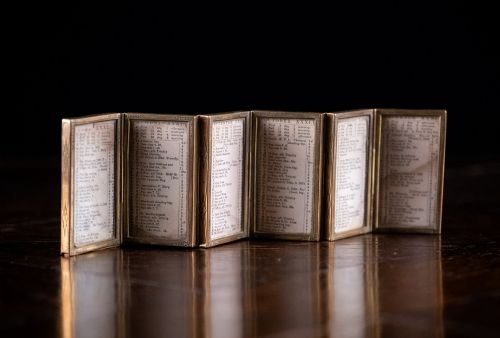
Metal components provide both structural support and mechanical longevity, utilising brass, cast brass, gilt brass, gun metal and silver plating for hinges, bezels and mountings. Glazed brass frames protect paper miniature almanacs, while enamel, ceramic tiles and Belgium slate serve as decorative or structural faces for clocks and calendar plaques.
Victorian Desk Calendar Retail Price Guide 2026
Typical asking prices for victorian desk calendar among the pieces listed under this phrase on Sellingantiques today, from the lower quarter to the upper quarter. They describe what is for sale here now, not the wider market.
French horological makers combined perpetual calendar functions with carriage clocks and slate mantel pieces during the mid nineteenth century.
Qualities of execution
The standard of a victorian desk calendar rests upon the integration of its mechanism within the housing, whether that involves smooth-turning wooden drums or tightly fitted card slots. Superior examples maintain legible, crisp typography on paper cards and well-cast lettering on brass components.
Material selection and joinery divide mass production from finer workshop output, evident in figured oak grains, solid brass mountings, and intricate engraving on clock platforms or calendar bezels. Signed pieces bearing maker marks reflect greater accountability in original construction and mechanical precision.
William Tonks of Birmingham·Minton Hollins·J. F. Bautte Et Cie·Drocourt·Moser·Brocot·Asprey London
The Victorian Desk Calendar Glossary
- Perpetual calendar
- A mechanism designed to track the date correctly across varying month lengths without manual reset except for leap years. It relies on internal gear trains or rotating drums.
- Stationery cabinet
- A desk accessory featuring internal compartments and pigeonholes for paper and envelopes, frequently incorporating an adjustable date mechanism on the fall front or crest.
- Carriage clock
- A small, spring-driven portable clock with a glass and brass case, often containing supplementary date work, alarm functions or grande sonnerie striking movements.
- Almanac
- A printed annual table or book containing calendar data, feast days and astronomical information, sometimes mounted in miniature within a folding brass travel frame.
Victorian Desk Calendar: Frequently Asked Questions
How do perpetual calendar mechanisms work?
These calendars use interlinked rotating drums, sliding cards or gear wheels displaying days, dates and months. Manual adjustment shifts the panels to align the correct day against the date.
Most domestic desk versions require simple hand turning of side knobs or sliding tabs to advance the configuration each morning.
Were these calendars used in offices?
They served as permanent desktop fixtures in studies, railway offices and commercial counting houses throughout the nineteenth century. Their solid timber frames and clear lettering suited daily business organisation.
Many incorporated stationery storage or inkwells to function as central writing desk accessories.
How should I care for wooden desk calendars?
Keep wooden frames away from direct heat sources and strong sunlight to prevent the timber from drying or warping. Gentle dusting preserves the polished surface and printed paper elements.
Avoid excessive moisture on paper cards, celluloid strips and exposed mechanism parts during routine cleaning.
Can I set the date on antique models?
Most models allow manual adjustment of the calendar display using the original side knobs, pins or sliding panels. Care must be taken not to force stuck wooden drums or tight card holders.
Clockwork calendar combinations may require professional handling if the integrated date work links directly to the escapement.