


Victorian Decorative Oil Light
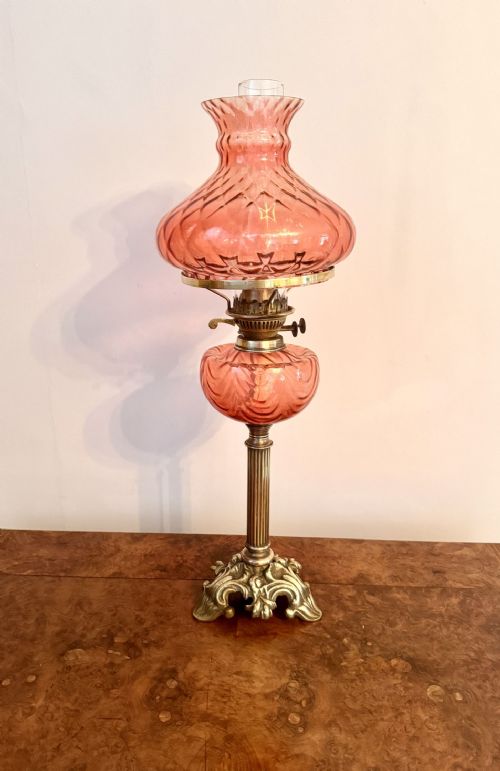
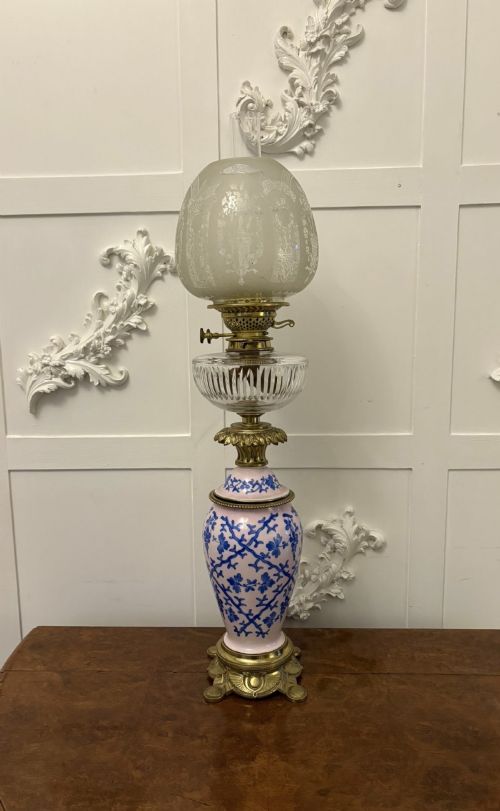
These Victorian decorative oil light examples bring warmth and period charm to a room, offering tactile materials and detailed workmanship.
Victorian Decorative Oil Light
A victorian decorative oil light is a functional lighting vessel from the nineteenth and early twentieth centuries, designed to burn oil for illumination before electric lighting became universal. Buyers examine table lamps and column lamps that combine utility with ornamental appeal, often featuring contrasting reservoirs and shades.
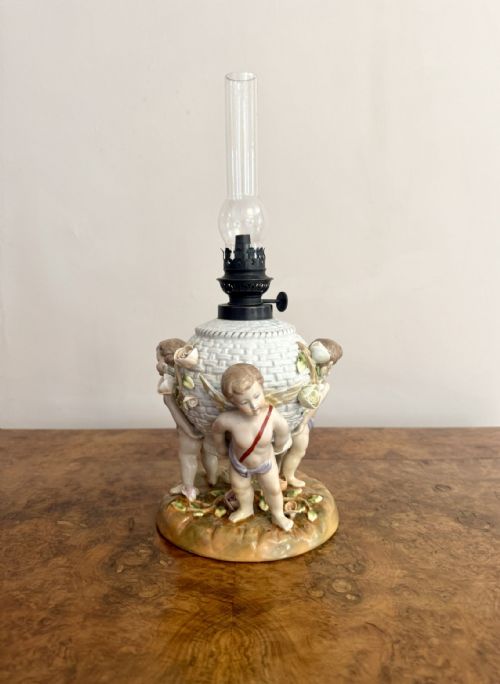
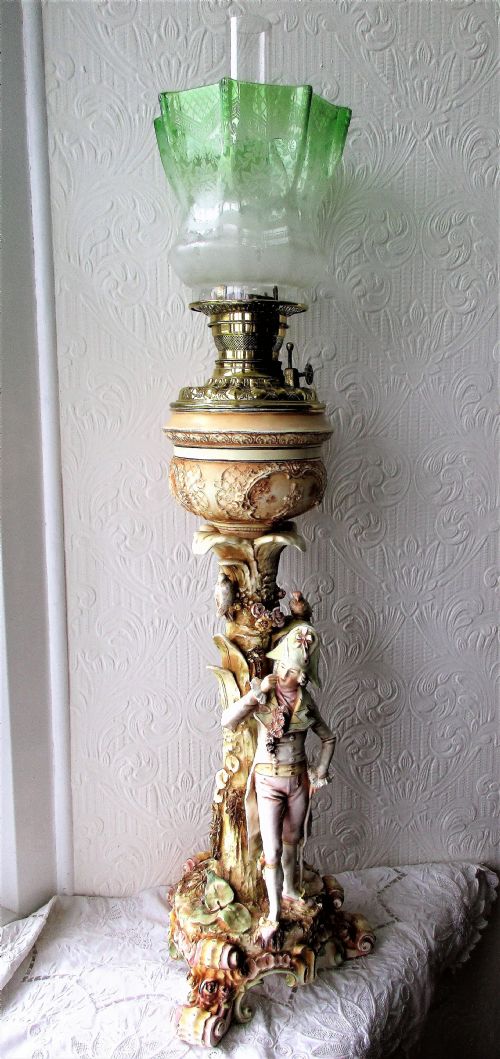
The pieces appearing on this page span the Victorian and Edwardian periods, stretching into the early twentieth century. Examples range from simple brass and copper columns to elaborate figural porcelain bases and cold-painted bronze creations.
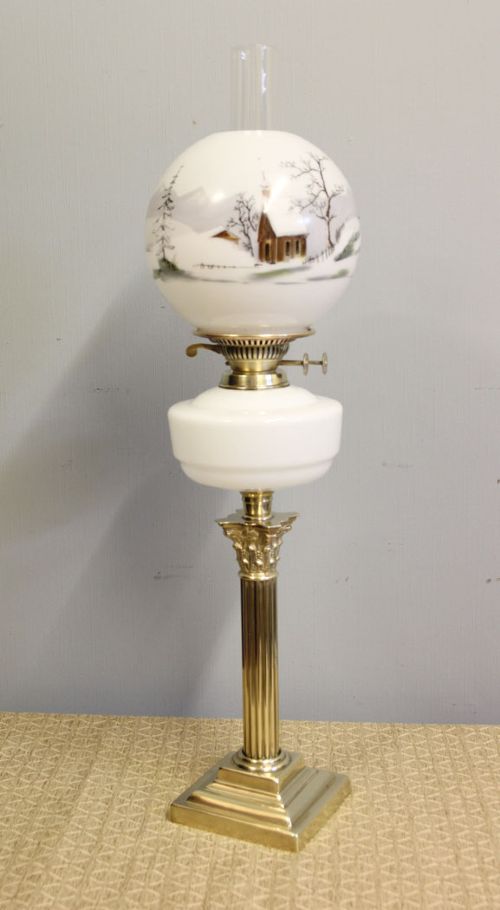
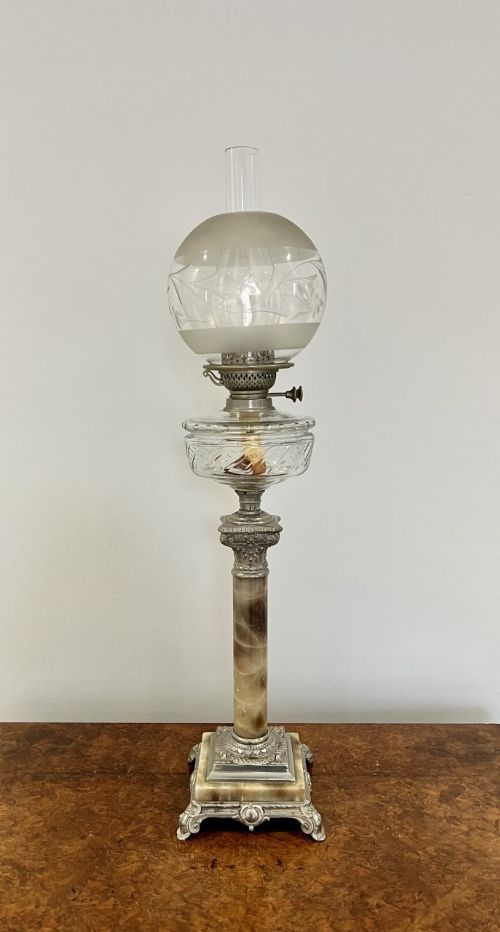
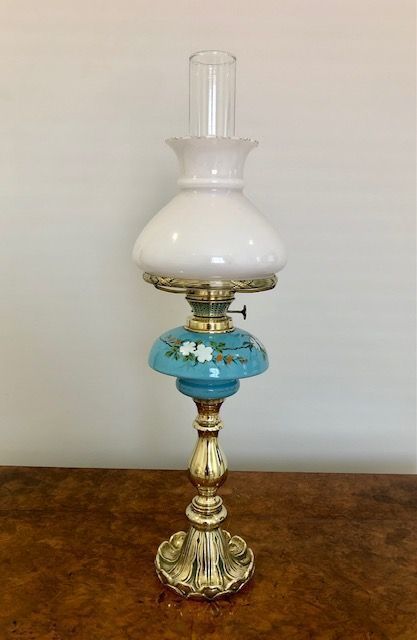
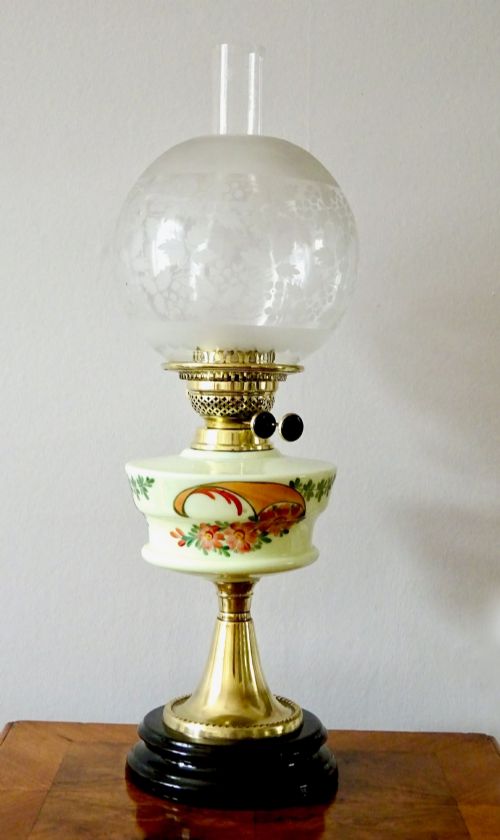
Most items incorporate a glass shade paired with a ceramic, glass, or metal body. One meets opaline glass, milk glass, and porcelain fonts alongside etched shades and snow winter scene designs.
Materials and Construction
Makers utilised cast and spun metals including brass, copper, and bronze to form sturdy columns and bases, sometimes mounting them on heavier plinths of onyx. These metallic components provide structural integrity and a lustrous finish.
Ceramic and porcelain elements, such as Faience and Sitzendorf porcelain, form decorative bowls and bodies. These are frequently hand-painted or glazed with gilt details, paired with blown glass fonts in pink or opaline hues.
One lamp even brings a touch of frost indoors with an etched snow winter scene adorning its glass shade.
Judging Quality
Quality rests in the crispness of casting detail on metal columns and the finesse of hand-painted porcelain figures or floral motifs. Superior examples display careful finishing on every component, from the burner assembly to the foot.
The harmony between the shade and the base dictates visual success. Items that retain matching or period-appropriate etched glass shades alongside undamaged ceramic bodies command greater regard.
Sitzendorf
The Victorian Decorative Oil Light Glossary
- Font
- The oil reservoir of the lamp, typically positioned above the base and beneath the burner. It is frequently made of coloured glass, ceramic, or metal.
- Column Lamp
- A style of lamp featuring a classical architectural column as the main support shaft. These often follow Doric or Corinthian orders.
- Opaline Glass
- A pale, translucent white glass developed during the nineteenth century. It diffuses light softly and is commonly found in shades and bodies.
- Cold Painted Bronze
- Bronze sculpture finished with paint applied after casting rather than fired in a kiln. This technique allows for intricate, delicate polychrome details.
- Faience
- Tin-glazed earthenware decorated with opaque colours. It provides a smooth canvas for enamelled patterns on lamp bodies.
Victorian Decorative Oil Light: Frequently Asked Questions
How do I date a decorative oil light?
Dating relies on stylistic markers, material choices, and manufacturing techniques recorded across the periods. Pieces from the Victorian era often feature ornate porcelain or heavy brass casting.
Later examples stretching towards the nineteen-thirties adopt simpler lines or different ceramic bodies. Examining the construction of the burner and the type of glass helps place the item in its correct decade.
Were these lamps converted to electricity?
Many surviving examples have undergone conversion to electricity for modern household use. This adaptation allows them to function safely as bedside or desk lighting.
Conversions typically retain the original brass, bronze, or porcelain bodies while updating the internal wiring and adding a bulb fitting.
What materials are most common?
Brass and copper appear frequently as structural metals for columns and bases. These metals provide a durable frame that often develops a rich patina over time.
Glass and porcelain are equally prevalent, forming colourful fonts and delicate shades. Onyx and bronze add weight and decorative contrast to specific table lamps.
How should I clean a brass and glass lamp?
Cleaning requires gentle handling, particularly around painted porcelain sections and etched glass shades. A soft cloth removes dust from metal surfaces without disturbing the finish.
Harsh chemical polishes should be avoided on painted or patinated areas to preserve the historical surface integrity.