
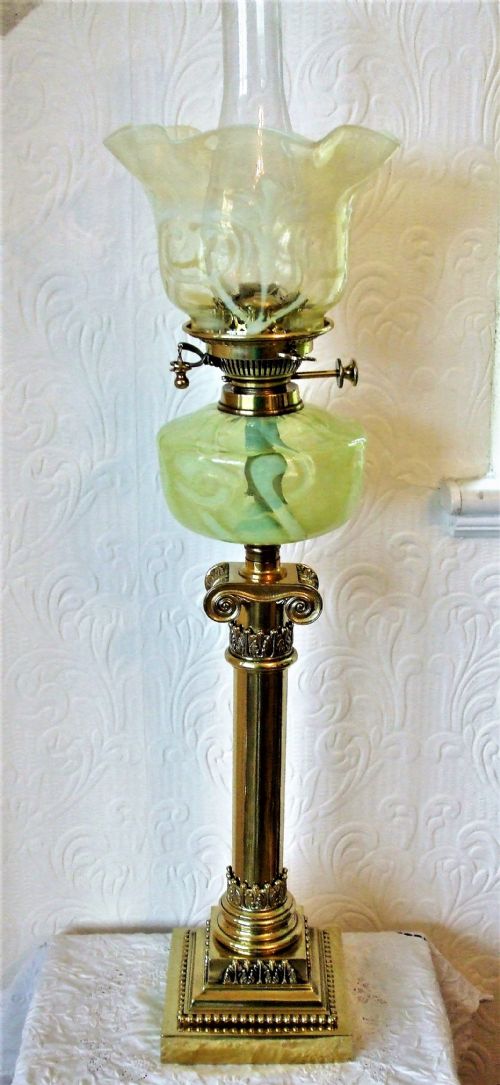
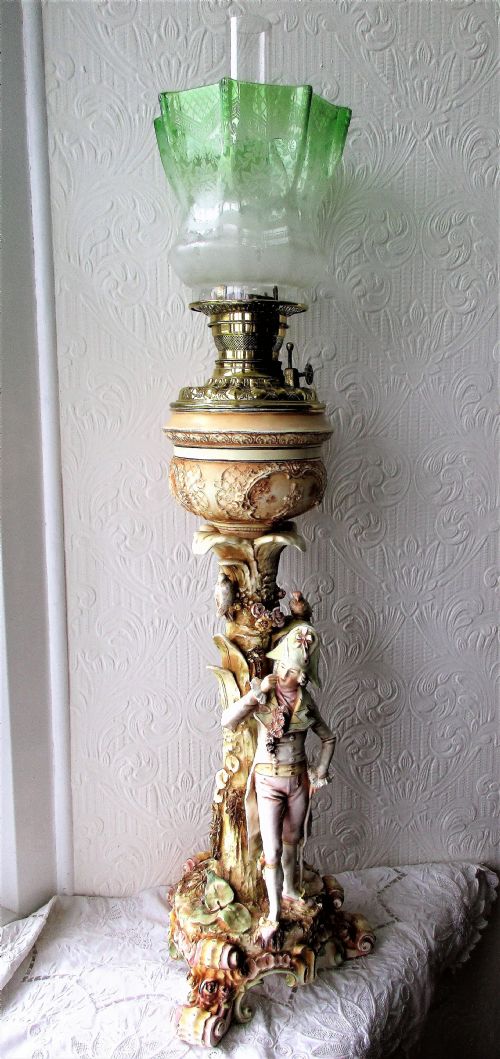


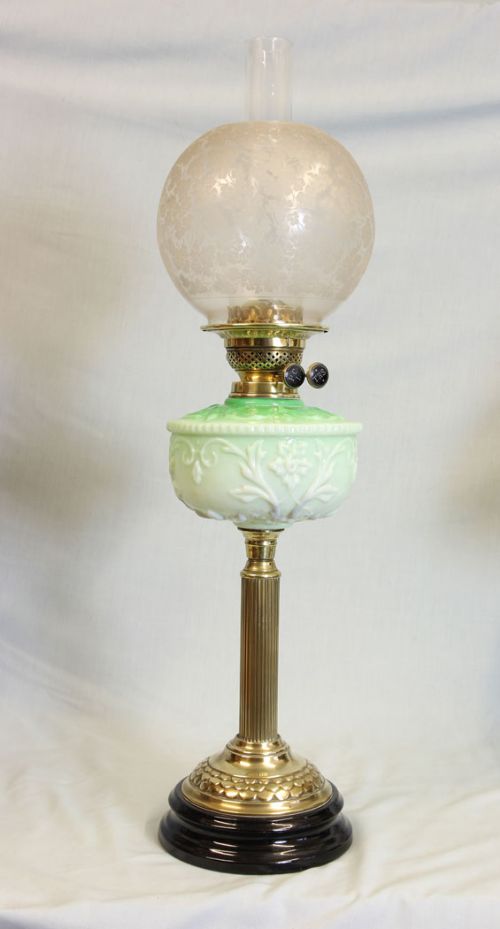
Green Etched Shade Lamp
These green etched shade lamp pieces bring period warmth and coloured light to a room, built from brass and glass.
Green Etched Shade Lamp
When you search for green etched shade lamp, you look for domestic lighting fixtures that combine metal stands with distinct coloured glass elements. The examples appearing here span the nineteenth century and the Edwardian era, showing how domestic illumination evolved from oil burners to early electric desk fittings.
Oil lamps form the primary focus of this selection, alongside specific replacement shades and adjustable desk lamps. You find structures incorporating classical columns, swan neck frames, and porcelain figural bases supporting glass fonts and globes.
The aesthetic centres on Victorian and Edwardian design sensibilities, often pairing heavy brass or ormolu mounts with pale green or frosted glass. These items survive as both functional desk pieces and decorative interior objects.
How they were made
Maker workshops built these lamps primarily from cast brass, ormolu, and heavy glass components. Metalwork involved turning and casting columns, necks, and decorative mounts to support heavy fuel reservoirs.
Glass production utilised techniques of moulding, frosting, and acid etching to create patterned surfaces on green and clear glass shades. Artisans shaped tulip forms and spherical globes to sit securely atop oil fonts or desk brackets.
Listings feature items exclusively from the nineteenth century and the Edwardian era, predominantly constructed from brass, frosted glass, and green glass.
What varies in quality
Quality rests on the weight and crispness of the metal castings, where fine chasing on ormolu and solid brass stands separates standard utilitarian items from finer showroom pieces. Thicker brass components maintain better structural integrity over time.
The glass elements show variation in the depth of colour, the precision of the etched patterns, and the uniformity of the glass thickness. Hand-finished shades display subtle individual characteristics in the frosted and clear surfaces.
The Green Etched Shade Lamp Glossary
- Ormolu
- A gilded brass technique used for decorative mounts and furniture ornaments. It provides a rich metallic finish found on finer Victorian pieces.
- Swan neck
- A curved metal arm shape common on adjustable desk lamps. This form directs light downward onto a work surface.
- Ionic column
- A classical architectural style featuring volutes on the capital, adapted here for oil lamp pillars. It reflects Victorian Classical Revival tastes.
- Font
- The oil reservoir section of a lamp, frequently fashioned from coloured glass or porcelain. It sits beneath the burner mechanism.
Green Etched Shade Lamp: Frequently Asked Questions
How do I date these lamps?
Dating relies on examining the materials, burner mechanisms, and stylistic clues within the metalwork and glass. Victorian pieces often feature heavy brass columns and porcelain figures, whereas Edwardian items introduce simpler adjustable desk forms.
Comparing the construction of the collar and the assembly methods helps distinguish mid-nineteenth century examples from later productions.
Were these originally for oil?
Most pieces in this selection began as oil or paraffin burning lamps before many were later adapted for electricity. The presence of brass burners and large glass fonts indicates their original fuel-burning purpose.
Fittings often retain elements of their original paraffin reservoir systems alongside modern wiring adjustments.
How do I clean the glass shades?
Cleaning requires warm water and mild soap applied gently with a soft cloth to protect the etched and frosted surfaces. Avoid harsh abrasives that can damage the delicate acid-etched patterns on the green glass.
Careful handling prevents chipping the fragile rims of tulip shades and globes during maintenance.
Where should I place a desk lamp?
Edwardian swan neck desk lamps suit studies, libraries, or side tables where directional task lighting is useful. Their adjustable frames allow you to position the light source directly over reading materials.
Perect placement highlights the polished brass and coloured glass details without cluttering the surface space.