
Victorian Daybed
When you search for a victorian daybed, you enter a world of nineteenth-century lounging furniture designed for daytime rest and salon elegance.
Victorian Daybed
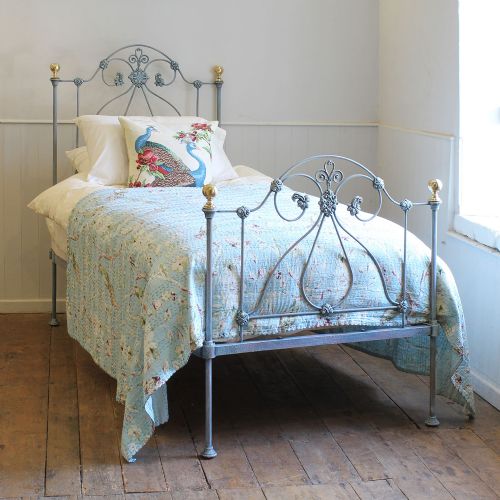
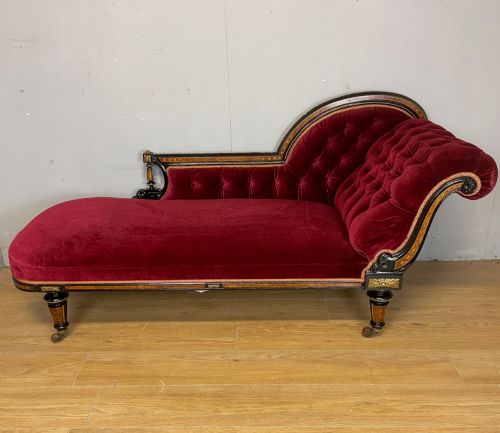
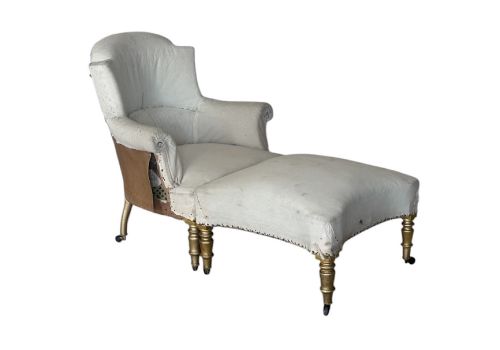
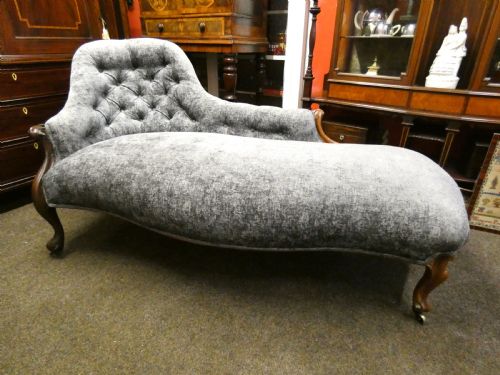
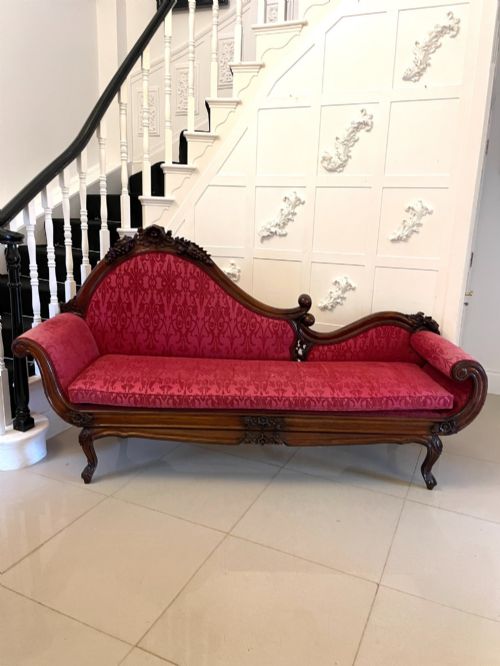
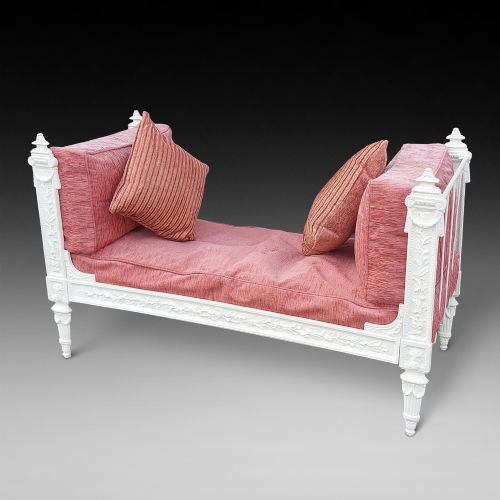
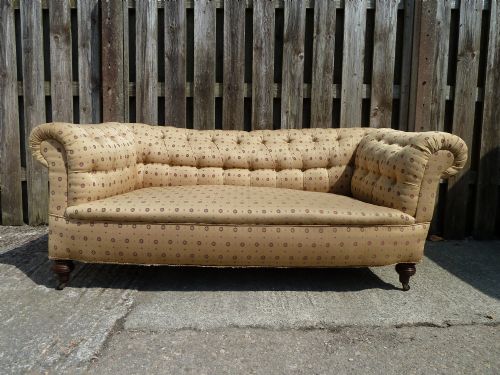
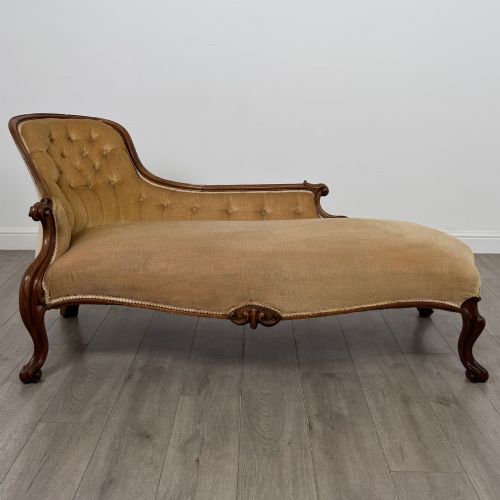
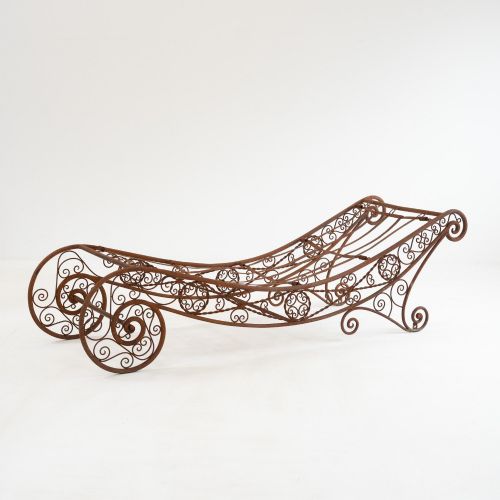
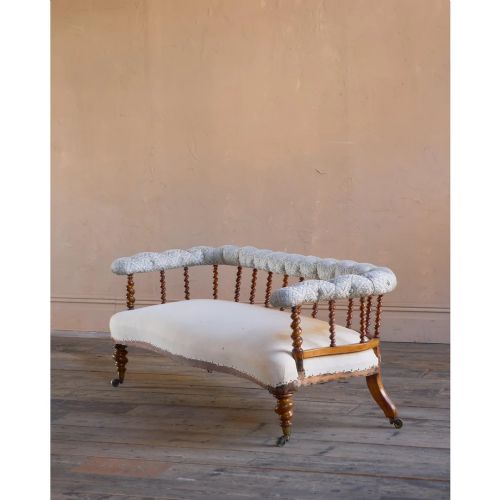
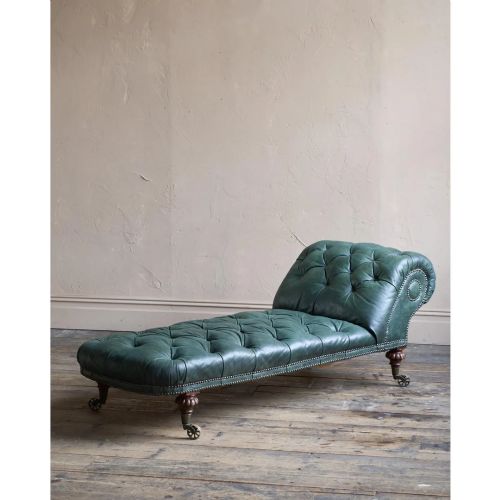
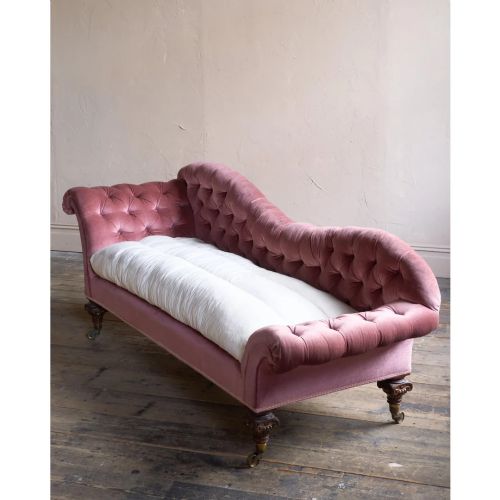
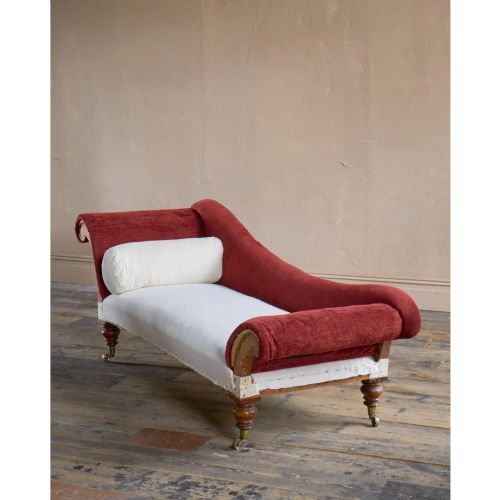
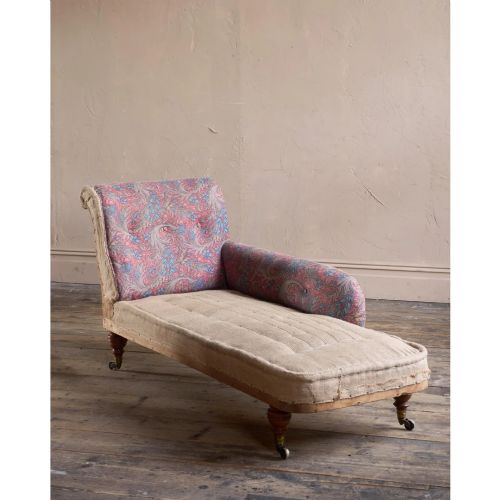
A victorian daybed encompasses various forms of extended seating, most commonly appearing as carved mahogany or walnut chaise longues, upholstered ottomans, and iron or brass bedsteads. These pieces span from the early nineteenth century through to the Edwardian period, reflecting shifting domestic habits of relaxation and entertaining.
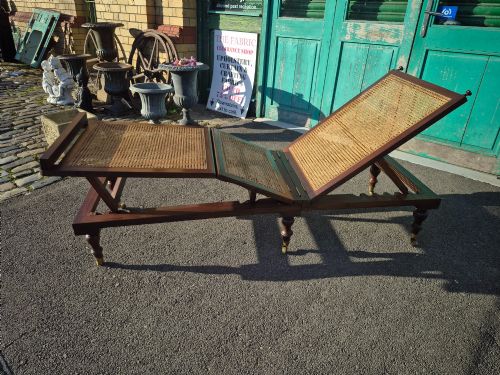
The selection ranges from sturdy cast iron and brass campaign daybeds to button-upholstered country house chaises and ebonised salon sofas. While some pieces are built for simple reclining in private chambers, others show elaborate carved frames intended for formal reception rooms.
How They Were Made
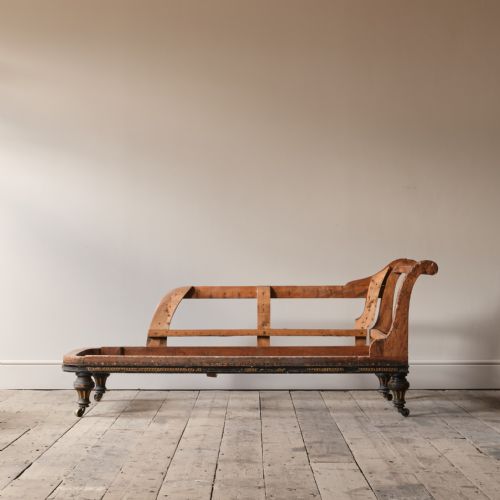
Frames are constructed from dense timbers such as mahogany, walnut, rosewood, and oak, frequently paired with structural metalwork in brass, cast iron, and wrought iron. Artisans shaped these materials using traditional joinery, lathe-turning, and ornate hand-carving to create the scrolled ends and architectural legs characteristic of the period.
Upholstery techniques involved horsehair stuffing and spring-loaded interiors covered in heavy fabrics, leather, velvet, calico, or linen. Decorative details often incorporate inlaid wood panels, ormolu mounts, and cane work rather than simple painted finishes.
Listings feature frames in mahogany, walnut, rosewood, oak, brass, and cast iron, upholstered in leather, velvet, calico, and linen.
What Varies in Quality
Quality rests upon the crispness of the frame's carving and the architectural integrity of the woodwork, distinguishing workshop-made pieces from standard commercial output. Superior examples often bear maker stamps or attribute successfully to established cabinet makers through distinctive structural hallmarks and timber selection.
The refinement of the secondary materials, such as the weight of the brass fittings, the precision of ebonised finishes, and the depth of button-upholstered springing, separates utilitarian resting furniture from high-status salon seating.
Holland & Sons·Howard and Sons·C. Hindley & Sons·H. Goodall & Sons·R W Winfield
The Victorian Daybed Glossary
- Chaise Longue
- An upholstered long chair for reclining, combining a chair and a footstool into a single piece of furniture. This form dominates nineteenth-century daybed listings.
- Ottoman
- A low, upholstered seat or couch without arms or a back, frequently designed with adjustable ends or box storage beneath the cushion. These often double as daybeds.
- Campaign Style
- Portable furniture constructed for travel and military use, typically featuring dismantling frames and robust metal mounts. These pieces prioritize sturdy, practical construction.
- Ormolu
- Gilt bronze mounted onto furniture frames for decorative effect, adding metallic contrast to dark woods like mahogany or ebonised timber. It appears on high-status nineteenth-century pieces.
- Ebonisation
- A wood-finishing process that stains timber to resemble ebony, popular for creating dramatic dark surfaces on nineteenth-century salon seating.
Victorian Daybed: Frequently Asked Questions
How were daybeds used in Victorian homes?
Victorian daybeds served primarily for daytime resting, reading, and informal lounging in private boudoirs, libraries, and withdrawing rooms. They allowed ladies to recline without retiring fully to a bedroom.
Larger variations also functioned as overflow seating during evening gatherings and house parties in country residences.
Are these pieces suitable for daily sleeping?
Most antique daybeds were built for daytime lounging rather than nightly sleeping, featuring narrow proportions and firm horsehair padding. Adjustable line models offer flexibility, but original frames may lack modern mattress support.
Using them for occasional guest accommodation is common, provided the underlying webbing and springs remain structurally sound.
How do I identify the period of a daybed?
Dating relies upon stylistic markers such as heavy William IV scrolls, mid-century walnut carving, or late Victorian ebonised and cane details. Timber choice also indicates age, with dense mahogany and rosewood giving way to lighter woods and iron frames toward the end of the century.
Maker stamps and registry marks provide the most precise confirmation of manufacture dates.