



Victorian Damask Settee
These Victorian damask settee pieces bring nineteenth-century reception rooms into modern spaces with carved timber frames and patterned textile upholstery.
Victorian Damask Settee
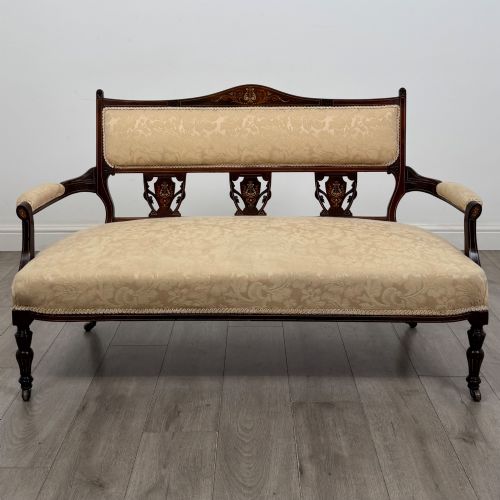
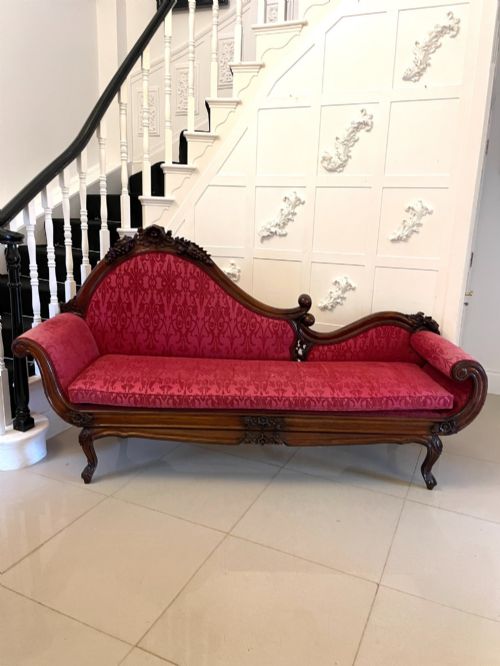
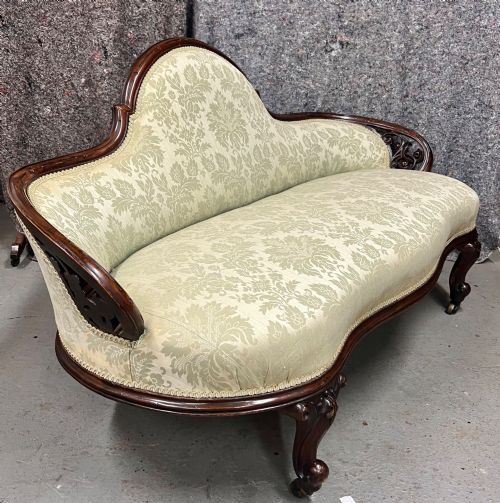
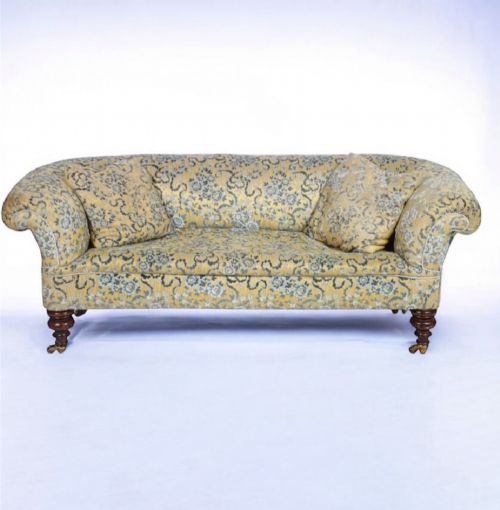
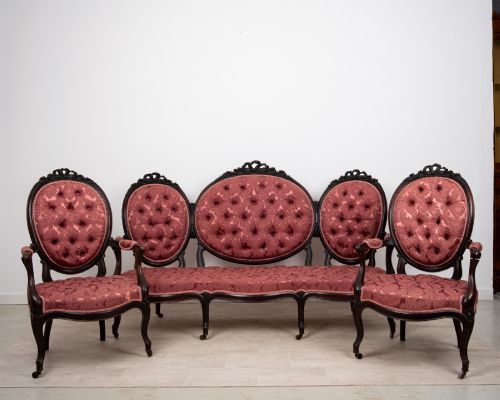
A Victorian damask settee is a nineteenth-century seat designed for formal reception rooms, appearing across this page in forms ranging from compact couches to long Chesterfield sofas and matching salon suites. The examples seen here date across the Victorian period, including pieces from eighteen eighty, eighteen sixty, and eighteen ninety, alongside broader nineteenth-century items.
The standard version met on this page uses a timber frame of mahogany, walnut, or satinwood, paired with patterned upholstery that defines the aesthetic of the seat. Makers of the period produced both standalone settees and larger seating suites that included matching chairs for formal parlours.
How they were made
Carpenters constructed the structural frames of these settees from hardwoods like mahogany, walnut, and satinwood, applying carved detail, inlay, or polished showwood finishes to the visible timber. These frames support deep upholstery and decorative textile covers designed for nineteenth-century formal interiors.
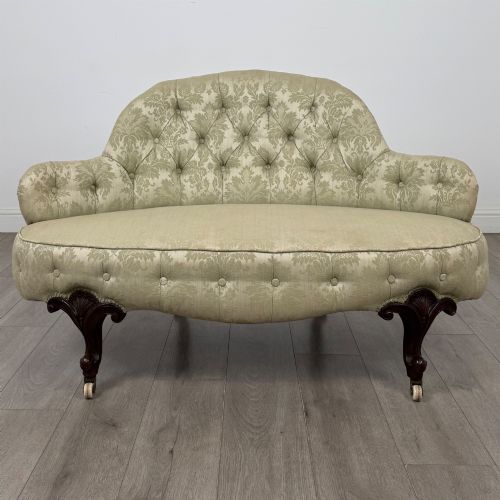
Makers utilised brass fittings and specialised textile weaves, applying damask fabric and deep buttoned upholstery techniques to pad the seating surfaces. The combination of dense hardwood frames and patterned fabric created durable parlour furniture built to withstand daily use.
Some Victorian settees feature carved lion paw feet, letting your parlour furniture walk the wild side without leaving the rug.
What varies in quality
The distinction between standard examples and finer items rests upon the execution of the timber carving and the complexity of the frame inlay. Master cabinetmakers employed sophisticated joinery and intricate woodwork on walnut and mahogany structures, separating standard production pieces from exceptional workshop output.
Upholstery specification also determines the grade of the piece, with original deep buttoning and high-grade damask fabric marking out superior examples. The proportion of the frame, from small settees to large salon suites, dictates the visual impact of the furniture within a room.
The Victorian Damask Settee Glossary
- Damask
- A reversible figured fabric with patterns formed by weaving, traditionally utilised for upholstery and heavy drapery in nineteenth-century interiors. It provides the characteristic textured surface seen on these period seats.
- Showwood
- Timber frame construction left visible around the upholstered portions of a sofa or settee. Cabinetmakers polished these exposed wooden elements to display the grain of walnut or mahogany.
- Chesterfield
- A deep-buttoned upholstered sofa style originating in the nineteenth century, typically featuring arms and back of the same height. This form remains a staple of Victorian seating design.
- Salon suite
- A matching set of parlour furniture comprising a settee and associated armchairs or single chairs. These suites were manufactured together to create a unified decorative scheme in Victorian homes.
Victorian Damask Settee: Frequently Asked Questions
How do I clean damask upholstery?
Vacuum the fabric regularly using a soft brush attachment to remove dust from the woven pattern. Professional textile cleaning is recommended for deeper marks to preserve the integrity of the period material.
Avoid using excessive moisture or standard household detergents, which can damage the delicate fibres of nineteenth-century fabric weaves.
Where were these settees placed?
Victorian settees were positioned primarily in formal reception rooms, drawing rooms, and parlours to receive guests. They served both as decorative focal points and as functional seating for social gatherings.
In modern interiors, these pieces work effectively in living rooms, large hallways, or studies as statement seats.
Can I use a settee daily?
These nineteenth-century seats are built with solid hardwood frames of mahogany or walnut designed for regular household use. Checking the internal webbing and padding ensures the seat remains supportive for daily sitting.
Adding appropriate support beneath modern or period upholstery helps maintain the structural condition over time.