

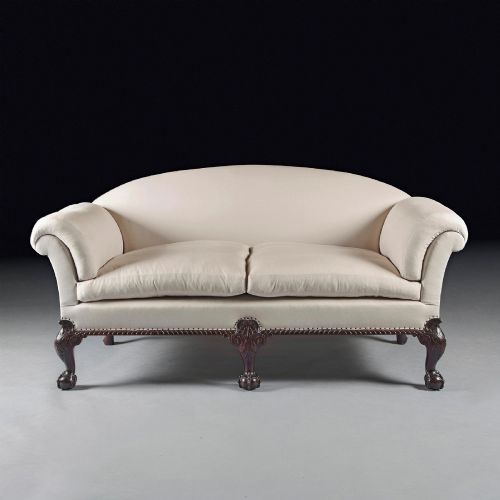
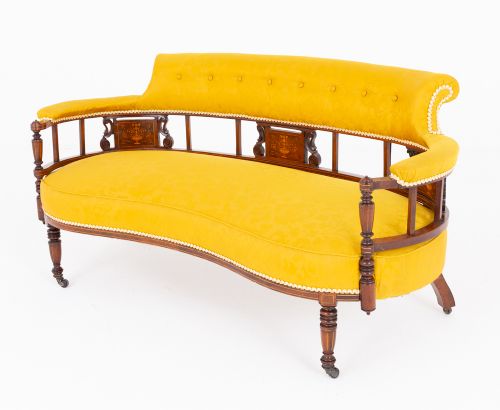
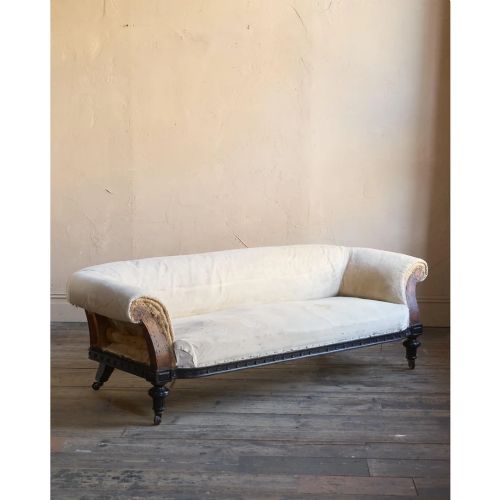
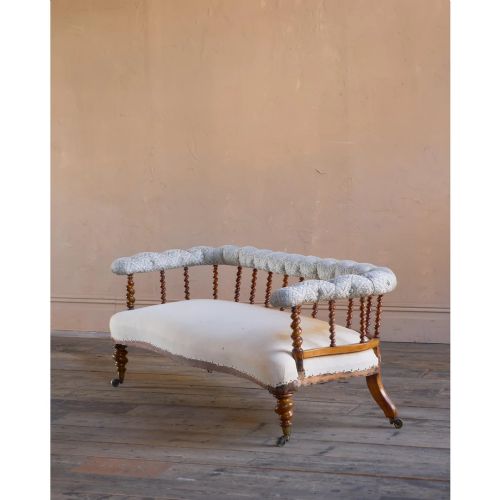


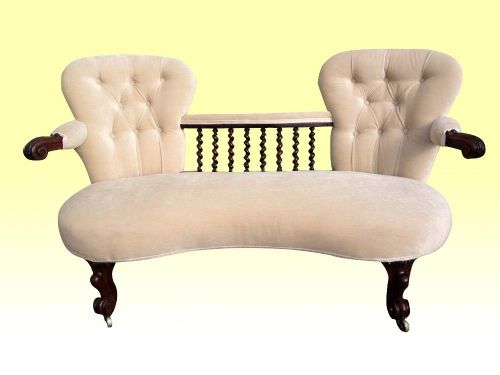


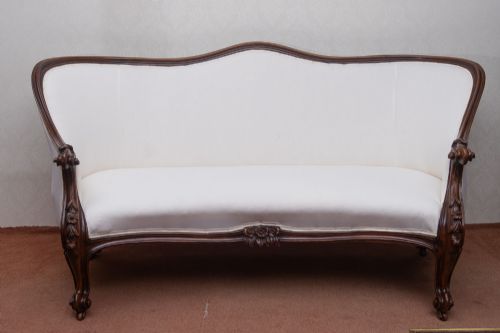

Victorian Curved Back Settee
These Victorian curved back settees combine comfortable deep seating with elegant timber frames, making them both practical everyday furniture and striking historic statement pieces.
Victorian Curved Back Settee
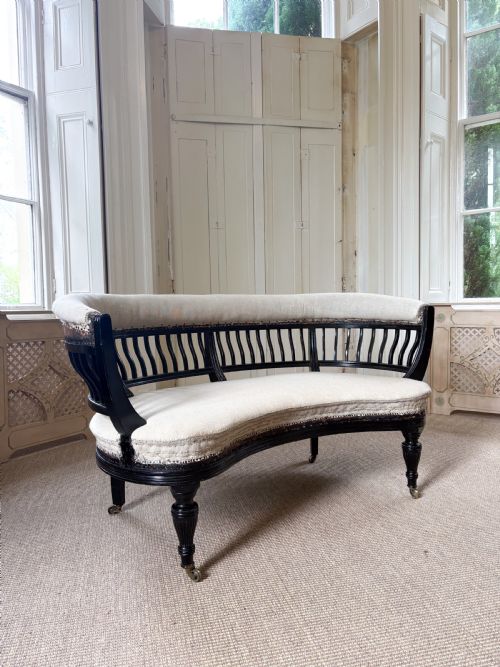
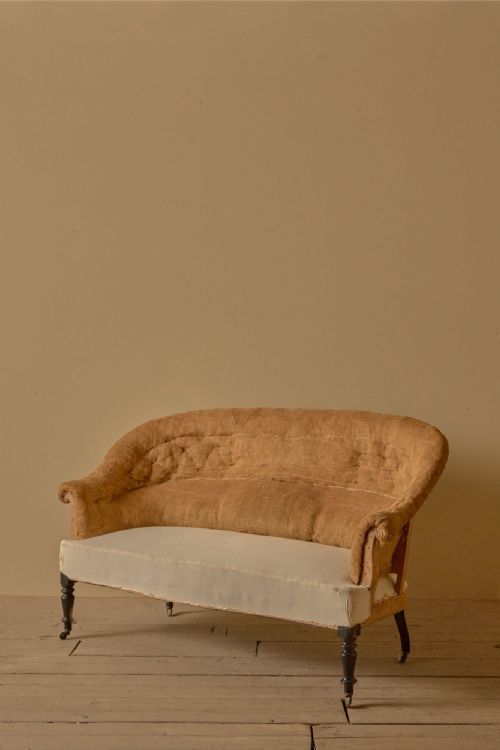
When searching for a victorian curved back settee, buyers encounter seating designed for formal reception rooms and intimate salons alike. The selection includes distinct regional flavours such as French Napoleon III models alongside robust English creations.
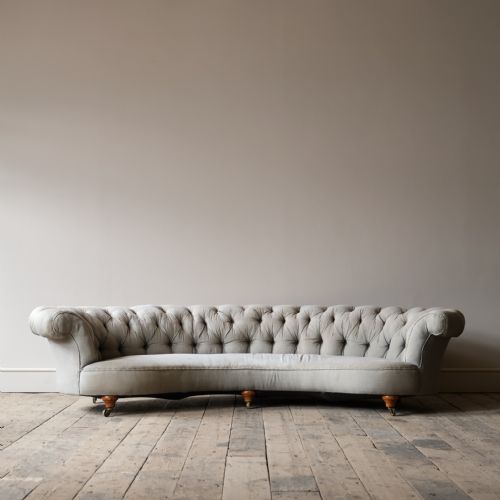
Most examples date across the nineteenth century, ranging from mid-century productions up to Edwardian iterations. Common forms include crescent Chesterfoields, salon settees, corner sofas, and buttoned canapes.
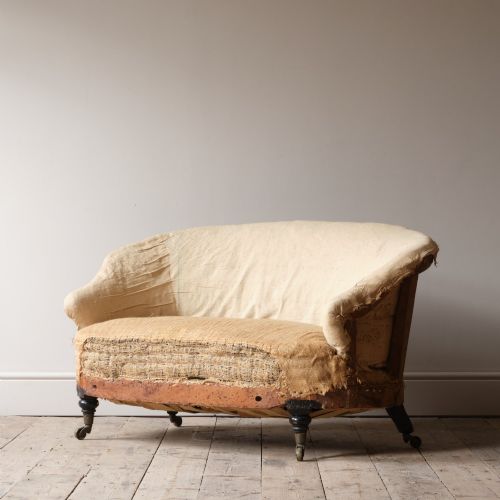
Makers utilised various silhouettes, pairing serpentine or curved backs with turned timber legs, brass castors, and upholstered finishes. The overarching style reflects the shifting tastes of the period, moving from heavy revivalism to lighter aesthetic sensibilities.
Materials and Construction
Timbers form the structural foundation of these settees, with mahogany and rosewood frequently utilised for exposed frames. Selected pieces incorporate rich hardwoods that highlight the natural grain beneath polished finishes.
Upholstery techniques dictate the comfort and profile of each piece, relying on traditional materials like hessian, calico, and leather. Many surfaces employ deep buttoning secured by skilled artisans to shape the padded contours.
Victorian Curved Back Settee Retail Price Guide 2026
Typical asking prices for victorian curved back settee among the pieces listed under this phrase on Sellingantiques today, from the lower quarter to the upper quarter. They describe what is for sale here now, not the wider market.
Listings feature eighteenth-century and nineteenth-century periods, spanning dates from 1850 through 1900.
Judging Quality and Craftsmanship
The distinction between standard commercial production and superior workmanship lies in the crispness of the timber carving and the integrity of the internal frame. Master workshops ensured every joint remained concealed and sturdy under daily use.
Upholstery execution separates simpler models from important ones, particularly in the precision of buttoning and the choice of covering materials. Original leather or period-appropriate textiles command attention for their tactile presence and preservation.
Howard & Sons·C. Hindley & Sons·Hampton & Sons
The Victorian Curved Back Settee Glossary
- Canape
- An ornamental French settee with an upholstered seat and back, usually featuring an exposed wooden frame. These pieces often exhibit lighter proportions than their English counterparts.
- Chesterfield
- A large upholstered sofa traditionally characterised by button-tufted upholstery and arms of the same height as the back. Versions here include crescent shapes and leather finishes.
- Button Back
- An upholstery style where buttons are pulled through the padding at regular intervals to create a diamond pattern. This technique provides both structural support and decorative depth.
- Salon Settee
- A smaller, decorative sofa designed for entertaining guests in a formal drawing room or parlour. They frequently showcase delicate wood frames and refined upholstery.
Victorian Curved Back Settee: Frequently Asked Questions
Where were these settees originally placed?
Original placements included formal drawing rooms, parlours, and reception spaces within nineteenth-century homes. Their decorative backs meant they could sit centrally in a room rather than pushed solely against a wall.
French models often served in intimate salon settings, whilst larger English Chesterfields anchored substantial living spaces.
How do I care for antique leather upholstery?
Maintaining vintage leather requires gentle cleaning and conditioning to prevent the natural material from drying out over time. Avoid placing these pieces in direct sunlight or near strong heat sources.
Regular dusting and professional conservation help preserve the historic patina found on nineteenth-century surfaces.
Can I mix these settees with modern decor?
These nineteenth-century seats integrate effectively into contemporary interiors by providing a strong focal point and textural contrast. Their classic forms sit comfortably alongside clean modern lines.
Selecting pieces upholstered in neutral fabrics or rich leather allows them to complement varied design schemes.