


Victorian Curb Bracelet
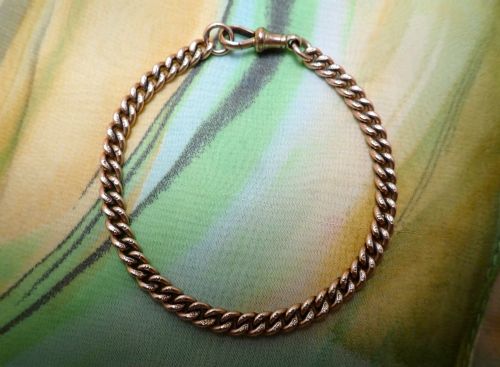
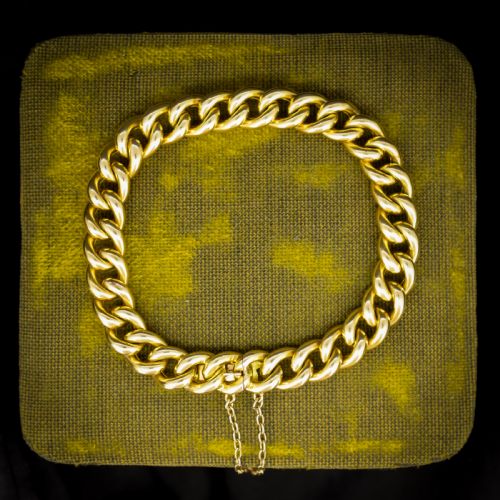
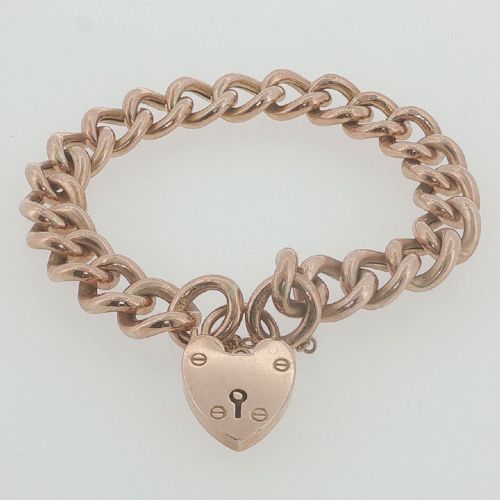
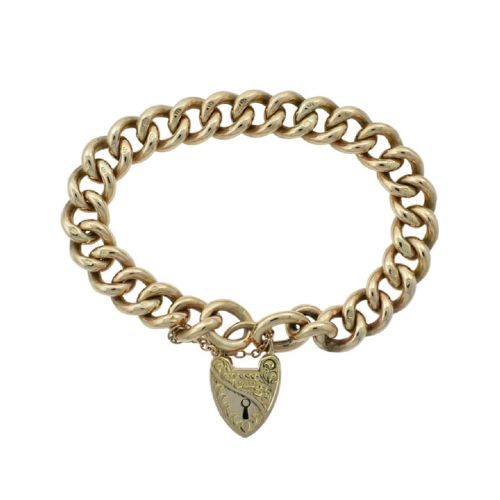
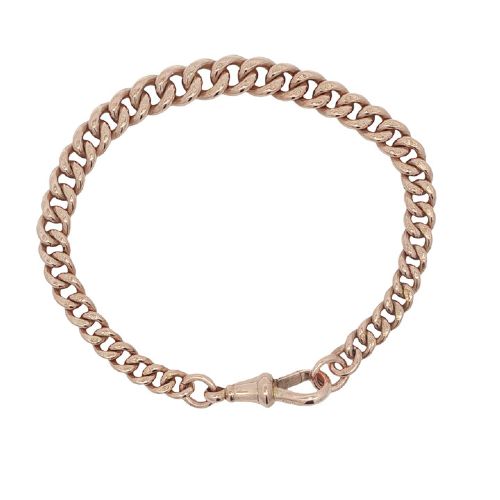
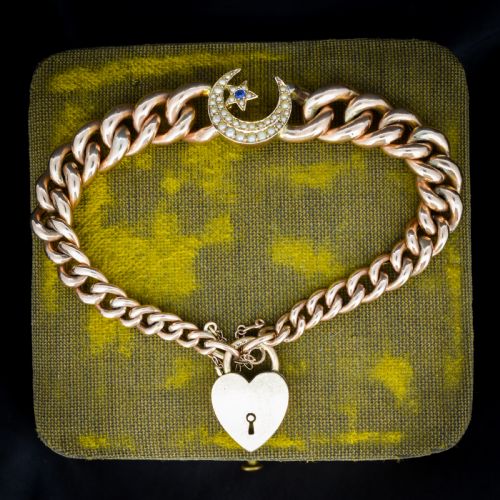
A victorian curb bracelet offers a solid interlocking link design, frequently fitted with a secure heart padlock or dog clip.
Victorian Curb Bracelet
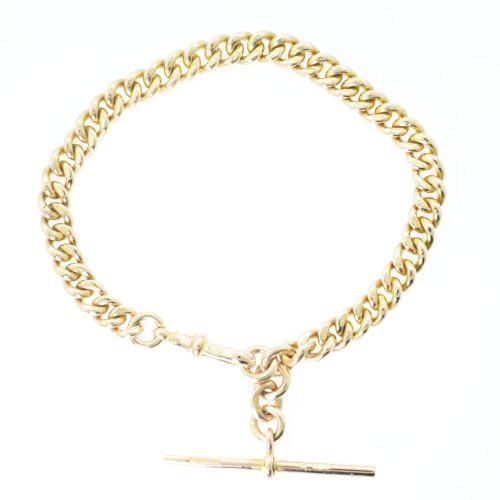
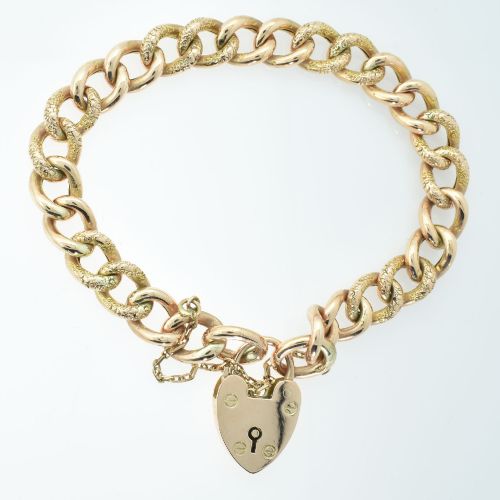
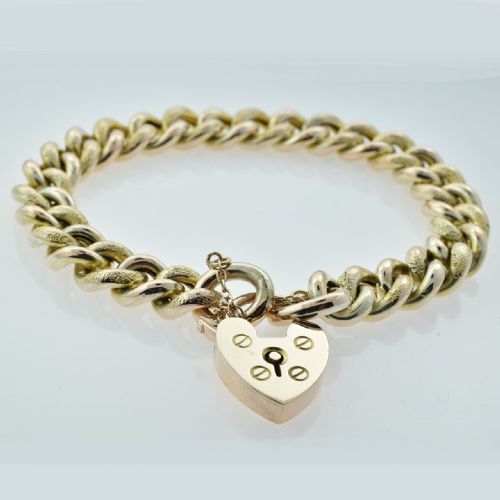
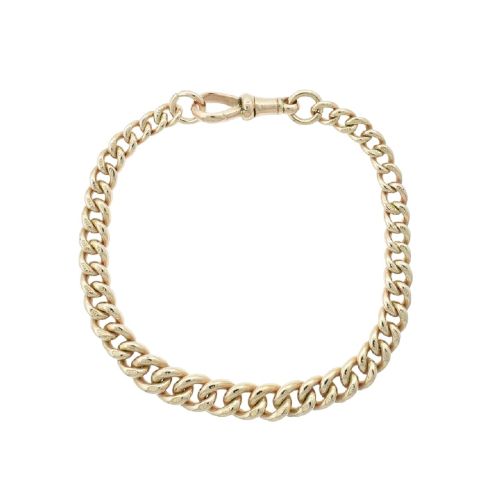
A victorian curb bracelet represents a substantial form of antique wristwear built from interlocking uniform links that sit flat against the skin. You will most commonly encounter pieces fashioned in warm rose gold, often finished with engraved decoration along the upper surface of the chain.
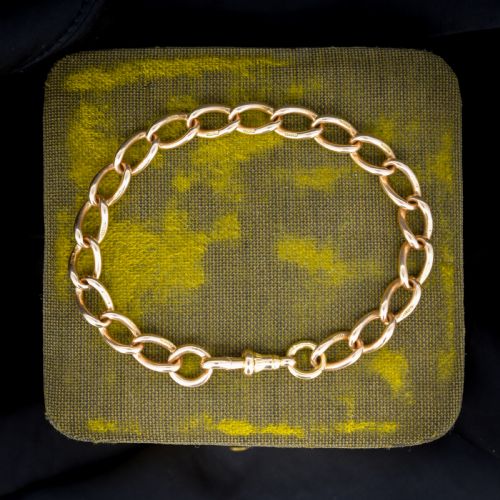
Many examples incorporate practical fastenings such as heart padlocks, dog clips or concealed clasps, frequently accompanied by safety chains. The stylistic range extends from plain heavy chains to ornamented designs set with seed pearls, turquoise stones and rubies.
Originating predominantly across the Victorian and Edwardian eras, these bracelets range from everyday 9ct gold weights to higher purity 15ct and 18ct gold pieces. They occasionally appear within matched jewellery sets alongside companion brooches.
How they were made
Goldsmiths constructed these chains by linking individual metal components together, shaping gold of 9ct, 15ct and 18ct purity into uniform curb links. Surface ornamentation was often applied by hand, utilising half-engraved scrolling patterns across the curved faces of the links.
Gemstones including turquoise, seed pearls, diamonds, chrysoberyl, sapphires and rubies were integrated into clasps or dedicated cluster centres. Secure fittings such as heart padlocks, T-bars and dog clips were mechanically engineered to anchor the heavy gold chains reliably.
Several bracelets double as miniature security systems, coming equipped with tiny matching safety chains just in case the padlock gets ideas.
What varies in quality
The overall substance of a piece depends directly on the gram weight and the gold purity, moving from standard 9ct alloys up to dense 15ct and 18ct constructions. Solid link formation and substantial gauge thickness distinguish a heavy everyday chain from lighter hollow variations.
The complexity of the hand engraving and the integration of securely bezel-set or seed-pearl-studded padlocks elevate the decorative merit. Original fitted boxes, intact safety chains and fully preserved hallmarks contribute further to the distinction of individual examples.
The Victorian Curb Bracelet Glossary
- Curb link
- A type of jewellery chain formed of interlocking flat uniform links that lie level when worn on the wrist.
- Heart padlock
- A heart-shaped clasp mechanism used as both a secure fastening and a decorative centrepiece on antique bracelets.
- Dog clip
- A spring-loaded swivel fastening commonly utilised on watch chains and bracelet links for secure attachment.
- T-bar
- A transverse metal bar originally designed to pass through a waistcoat buttonhole, frequently suspended from Albert chains.
- Seed pearl
- A very small natural or cultured pearl, often utilised in clustered arrangements to embellish padlocks and clasps.
Victorian Curb Bracelet: Frequently Asked Questions
What is an Albert bracelet?
An Albert bracelet originates from pocket watch chains scaled down for wristwear, typically featuring a T-bar and graduated links.
These pieces showcase substantial gold weight and often accommodate charms or lockets secured directly to the central chain.
How do you open a heart padlock?
Most antique heart padlocks operate via a small spring-loaded lever or a concealed push-pin mechanism on the side of the body.
Pressing this internal spring allows the hinged bail to release from the loop of the bracelet.
Are these bracelets solid gold?
The majority of these pieces are constructed from solid gold alloys, hallmarked or tested at 9ct, 15ct or 18ct purity.
Certain examples utilise rolled gold techniques over a base metal core, particularly within matched sets.
How can you date these bracelets?
Dating relies upon stylistic markers, gemstone combinations, clasp designs and official hallmarks stamped onto the metal links or padlocks.
Pieces span the late Victorian and Edwardian periods, typically falling between the 1880s and the 1910s.