

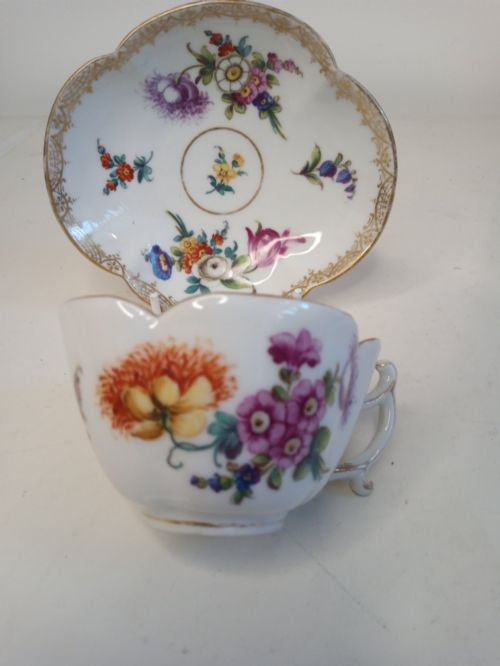


Victorian Cup and Saucer
These Victorian cup and saucer sets bring hand-painted floral motifs and rich gilding to the afternoon table.
Victorian Cup and Saucer
A victorian cup and saucer set includes matching porcelain or bone china drinking vessels designed for social tea or coffee service. The pieces range from solo demitasse cups to large afternoon tea services and individual pedestal forms.
Most examples found in this selection originate from English potteries or continental workshops, carrying styles that stretch from Rococo Revival curves to delicate late-period enamel work. Buyers encounter single decorative trios alongside larger multi-person settings.
The forms span deep breakfast cups, slender coffee cups, and wide saucer bases intended to hold the hot vessel securely during formal gatherings.
Assessing quality in ceramic ware
The preservation of the gold leaf and enamel decoration determines the desirability of the set, as heavy wear diminishes the crispness of the gilt borders. Matching sets with uniform glaze tones command greater attention than mismatched replacements.
Victorian Cup and Saucer Retail Price Guide 2026
Typical asking prices for victorian cup and saucer among the pieces listed under this phrase on Sellingantiques today, from the lower quarter to the upper quarter. They describe what is for sale here now, not the wider market.
Some nineteenth-century tea sets included wine tasters and silver poringers for when tea simply wasn't strong enough.
Royal Worcester·Moser·Meissen·Davenport·Aynsley
The Victorian Cup and Saucer Glossary
- Bone china
- A type of porcelain containing animal bone ash that produces a strong, highly translucent white body. This material allows for thinner vessel walls while maintaining durability.
- Demitasse
- A small cup used for serving strong black coffee or espresso. These pieces frequently appear with matching saucers in nineteenth-century collections.
- Gilding
- The application of gold leaf or gold paint to ceramic surfaces for decorative effect. Hand-gilt details add a reflective metallic border to rims and handles.
- Ironstone
- A heavy, durable type of earthenware patented to resist chipping. It provides a sturdy base for utilitarian tea services and kitchen ceramics.
- Pedestal cup
- A drinking vessel raised on a small footed base rather than resting flat on the table. This form lifts the cup to emphasise painted panels and gilt trim.
Victorian Cup and Saucer: Frequently Asked Questions
Can I still use these cups for tea?
These antique drinking vessels remain functional for occasional use, though modern handling habits require extra care. Thermal shock from boiling water poured directly into cold porcelain can cause hairline cracks.
Warm the cup gradually with warm tap water before pouring hot tea. Hand-wash immediately after use to prevent staining on aged interior glazes.
What is a true tea trio?
A tea trio consists of three matching components designed for individual service. This configuration includes a teacup, a matching saucer, and a small plate for cake or bread.
Trios gained popularity during the Victorian era for formal afternoon gatherings. Finding a complete trio in original condition is less common than finding standard cup and saucer pairs.
How do I date a porcelain mark?
Examine the base of the cup or saucer for maker stamps, impressed ciphers, or painted numbers. Many nineteenth-century potteries used registry marks that encode the exact year or batch of production.
Compare the shape of the handle and the painting style with documented factory timelines. Unmarked pieces are often dated through stylistic clues like floral motifs and gilding patterns.