
Victorian Country Scene Art
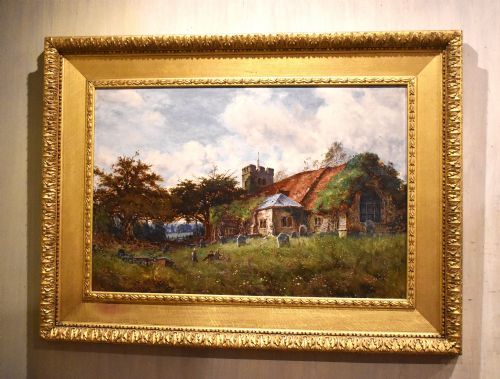
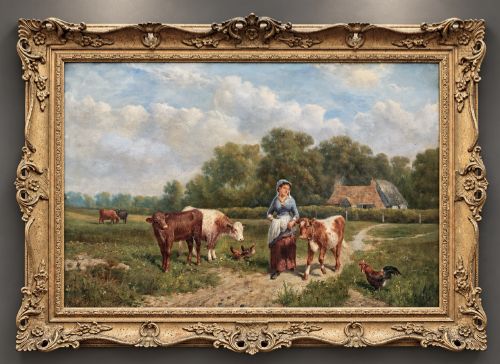
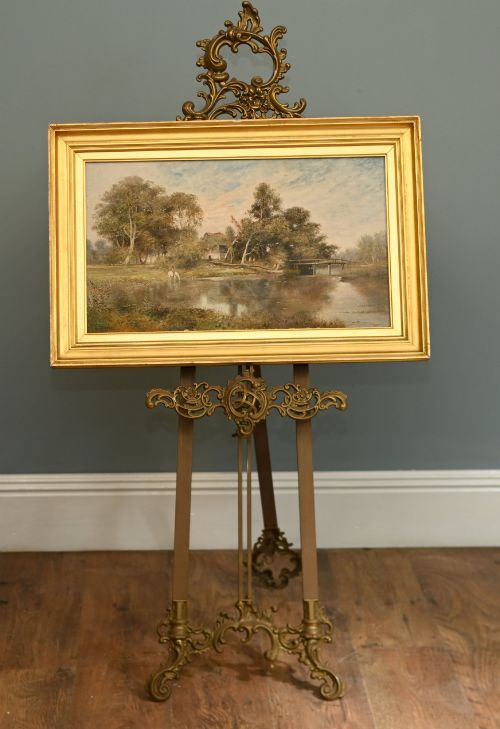
Victorian country scene art captures rural life, pastoral landscapes, and agricultural work through paintings and watercolours.
Victorian Country Scene Art
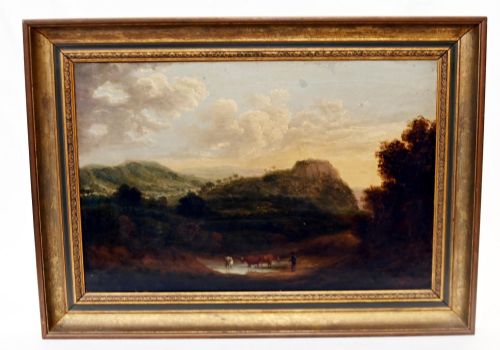
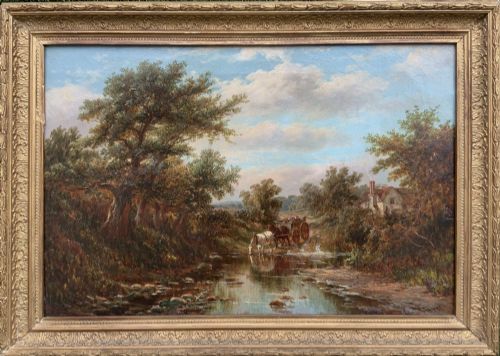
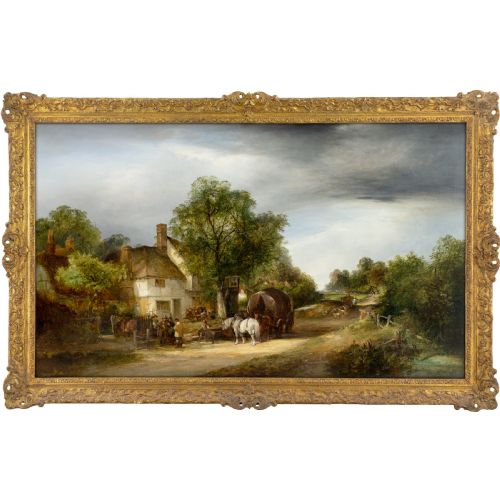
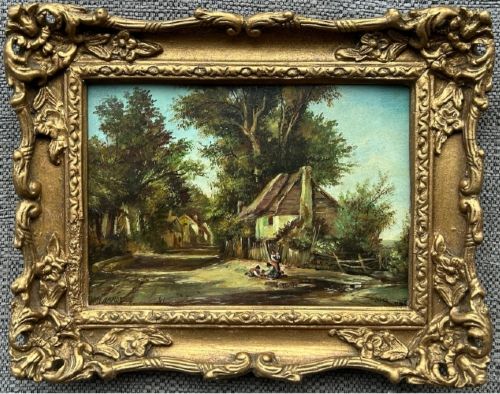
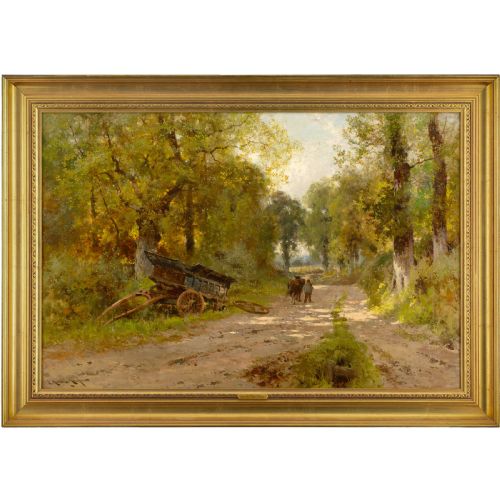
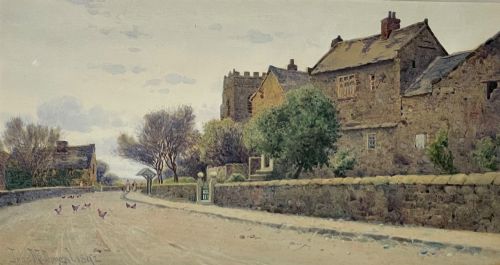
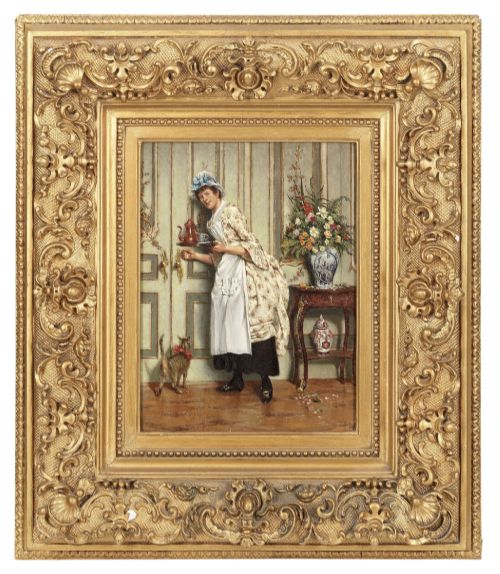
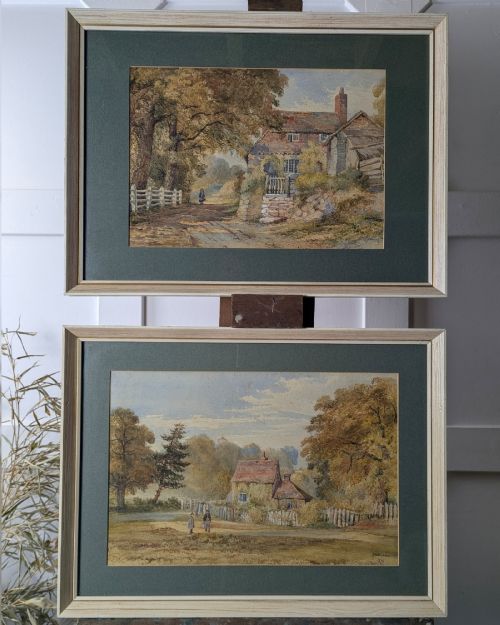
When you search for victorian country scene art, you encounter works produced across the nineteenth century and into the early twentieth century. These pieces record rural communities, farm animals, agricultural labour, and domestic interiors in both oil and watercolour.
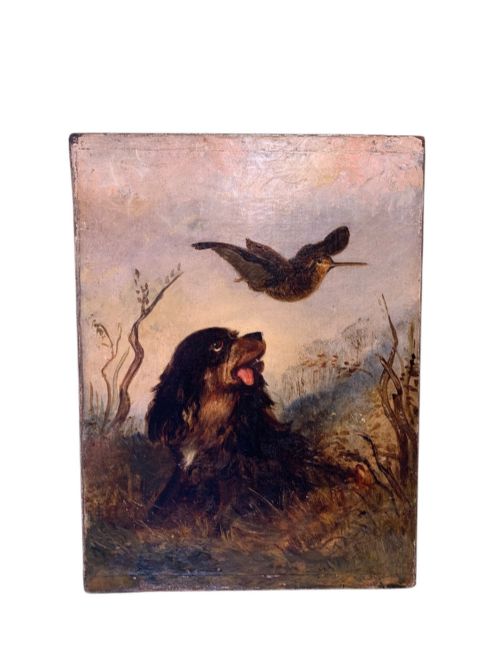
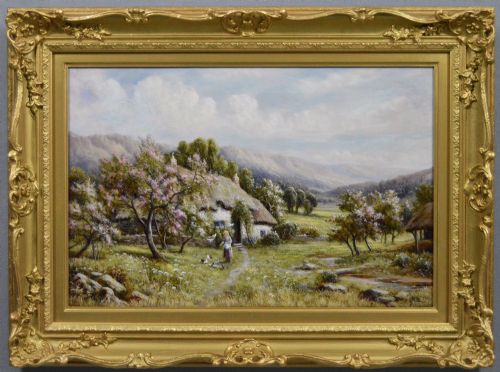
The versions most commonly met on this page include landscapes with figures outside cottages, river scenes, and farmyard studies of horses, cattle, sheep, and poultry. Many are framed in period giltwood or gesso mouldings.
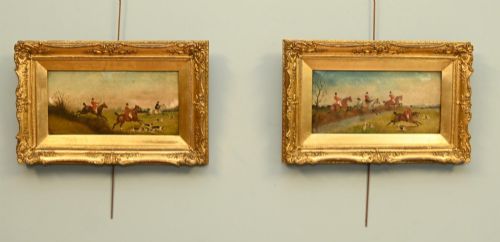
The styles span Victorian realism, pastoral scenes, and sporting art, reflecting the era's deep interest in the countryside.
Materials and technique
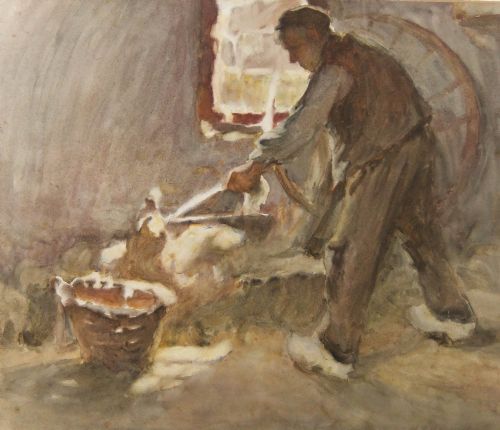
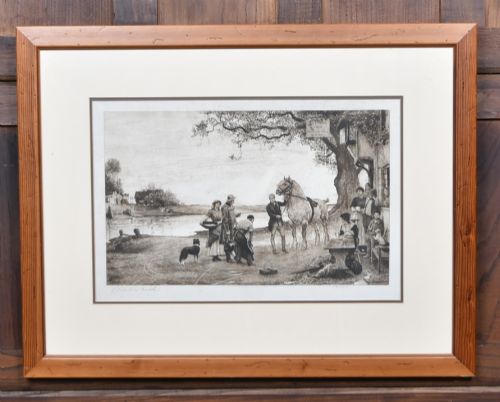
Artists painted primarily with oil on canvas or board, or applied watercolour and gouache to paper, utilising traditional brushwork to build depth and light. Etchings and lithographs also appear among the printed works.
Frames play a significant structural role, constructed from wood and finished with applied gesso and gold leaf to house the paintings.
Listings span the nineteenth century into the early twentieth century, incorporating oils, watercolours, etchings, and lithographs.
Assessing quality
Quality rests upon the artist's ability to render light, anatomy, and atmosphere with conviction, separating confident compositions from rigid or formulaic output. The handling of the medium, whether the fluid transparency of watercolour or the layered richness of oil, dictates the visual impact.
The preservation of the original surface, along with the harmony and condition of the period giltwood frame, contributes substantially to the integrity of the piece.
William Howard Hardy·John Horace Hooper·John McDougal·Stephen Samuel Lewin·Robert A Nottingham·Henry Silkstone Hopwood·Robert John Hammond·Robert W Macbeth·Robert Thorne Waite·Howard Helmick·George Augustus Holmes·Thomas Sidney Cooper·Joseph H Barnes·Frederick Walker·Frederick James Kerr·Edgar Hunt·Johann Friedrich Voltz·Henry H Parker·Thomas Walker Bretland·Miles Birkett Foster·Henry Schouten·Herman S Melville·Charles Edward Wilson·Claude Cardon·Joseph Knight
The Victorian Country Scene Art Glossary
- Gesso
- A plaster-like mixture applied to wooden frame mouldings to create a smooth surface for gilding.
- Watercolour
- A paint consisting of pigment suspended in a water-soluble binder, frequently applied to paper in country landscapes.
- Genre painting
- Artwork depicting scenes from everyday life, such as domestic interiors or agricultural labour.
- Pastoral
- A style of art that idealizes rural life and rustic settings.
- Tondo
- A circular painting or relief.
Victorian Country Scene Art: Frequently Asked Questions
What subjects appear in these paintings?
The works depict rural landscapes, agricultural workers, farm animals, river scenes, and domestic cottage interiors across the nineteenth century.
These subjects reflect the period's artistic focus on pastoral life and rural traditions.
Are these works painted on canvas?
Many pieces utilise oil on canvas or board, while others consist of watercolours and gouache executed on paper.
Print mediums such as etchings and lithographs also appear within the selection.
How should I display framed artwork?
Display the pieces away from direct sunlight and excessive moisture to protect the paper, canvas, and giltwood frames.
Ensure secure wall fixings to support the weight of wood and gesso frames.
How do I identify the period?
Dating relies on recorded artist active dates, stylistic indicators of nineteenth-century realism, and framing materials.
Signatures, inscriptions on the reverse, and medium types further help narrow the timeframe.