



Victorian Country Rocker
These Victorian country rocker examples bring unpretentious domestic charm and rhythmic comfort to any interior.
Victorian Country Rocker
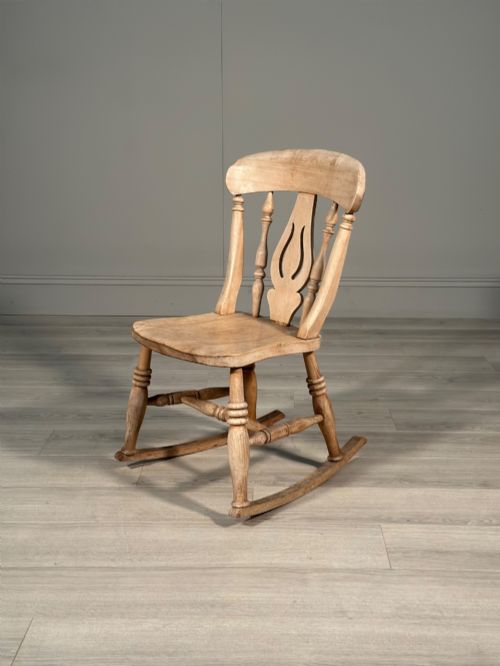
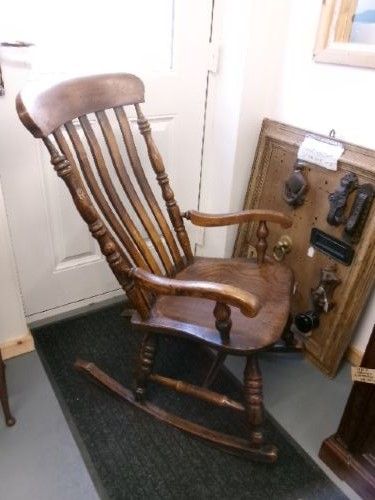
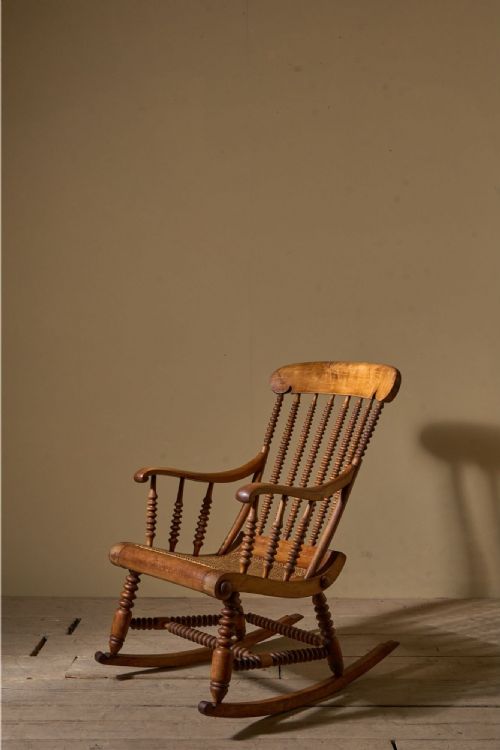
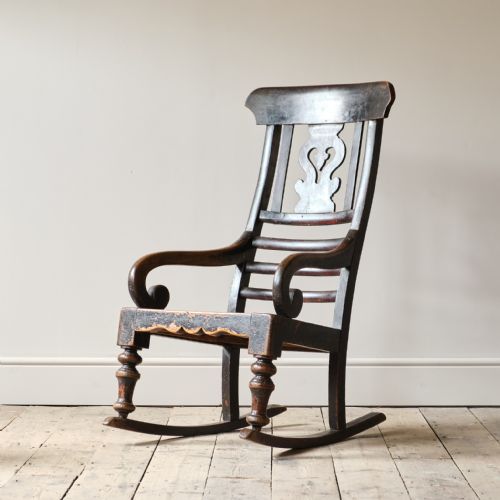
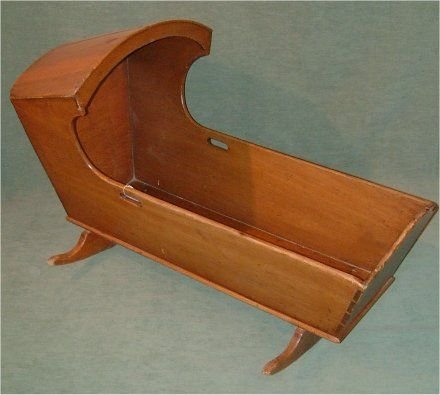
A victorian country rocker encompasses robust seating designed for rural homes, featuring vernacular Windsor forms, spindle backs, and ladder backs alongside functional cradles and cribs. These pieces span the nineteenth century, including specific periods like eighteen eighty, and range from adult fireside chairs down to smaller child's versions.
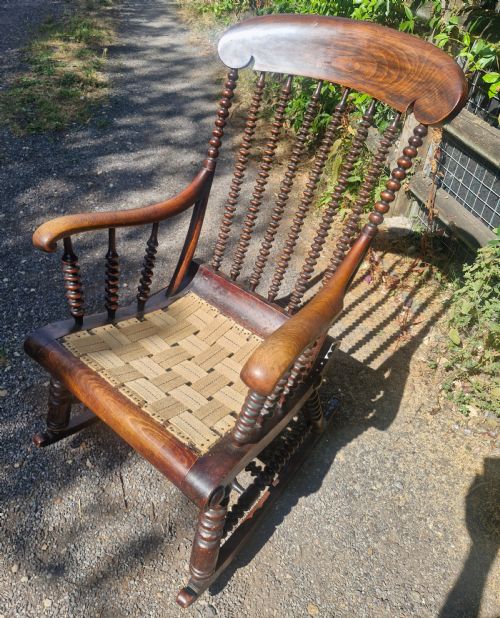
The aesthetic leans towards regional English and Scottish vernacular styles rather than formal urban cabinet-making. Common iterations include bobbin turned frames, low nursing chairs, and sturdy elm armchairs built for daily cottage use.
Materials and construction
Local timbers dominate construction, with elm, oak, beech, ash, and pine utilised depending on regional availability. Artisans often combined woods within a single piece, pairing solid hardwood seats with compliant spindle components.
Seating surfaces vary from solid timber planks to woven cane, sea grass, and leather inserts. Frames utilise traditional turning, bobbin framing, and spindle-back joinery designed to withstand continuous motion.
Victorian Country Rocker Retail Price Guide 2026
Typical asking prices for victorian country rocker among the pieces listed under this phrase on Sellingantiques today, from the lower quarter to the upper quarter. They describe what is for sale here now, not the wider market.
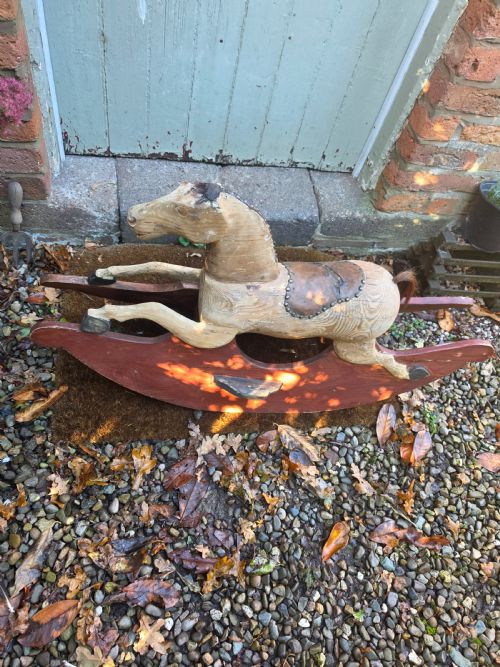
A tiny doll-sized rocker sits among full-sized farmhouse cradles, proving that Victorian children expected their toys to swing just as smoothly.
Distinctions in quality
Quality rests upon the integrity of the timber selection and the harmony of the regional vernacular design. Well-balanced proportions and comfortable rocker curves distinguish finer pieces from heavier, utilitarian variants.
Original surface treatments, such as early paint, ebonising, or honest patina on exposed ash and elm, elevate the character of a piece. The tightness of traditional joints and the minimal replacement of turned spindles also influence desirability.
The Victorian Country Rocker Glossary
- Windsor
- A chair built with a solid wooden seat into which the legs and back spindles are directly joined. This construction provides robust support through pegged and bored joints.
- Bobbin turned
- A style of furniture leg or stretcher shaped on a lathe to resemble a series of wooden reels or bobbins. It is frequently seen on mid-nineteenth-century framework.
- Spindle back
- A chair back constructed from multiple thin, turned wooden uprights fitted between a top rail and the seat. This method creates a light yet strong supportive structure.
Victorian Country Rocker: Frequently Asked Questions
How do I spot a genuine nineteenth-century rocker?
Examine the construction methods beneath the seat and around the rocker base for hand-turned components and traditional joinery. Tool marks and timber shrinkage offer reliable indicators of age.
Compare the framing styles and wood species against documented vernacular pieces from the period to confirm authenticity.
Were these chairs used outdoors?
These pieces were built primarily for domestic interior use, specifically beside firesides, in nurseries, or within farmhouse kitchens. Their comfortable rocking motion suited relaxed indoor domestic tasks.
Exposure to damp outdoor environments would quickly damage the timber construction and woven or leather seat inserts.
How should I care for an antique wooden rocker?
Maintain stable indoor humidity levels to prevent the timbers from drying out or splitting. Dust regularly with a dry cloth and apply appropriate wax sparingly to nourish the wood surface.
Avoid placing the chair in direct sunlight or near heat sources which can weaken glued joints and damage leather or cane seats.