


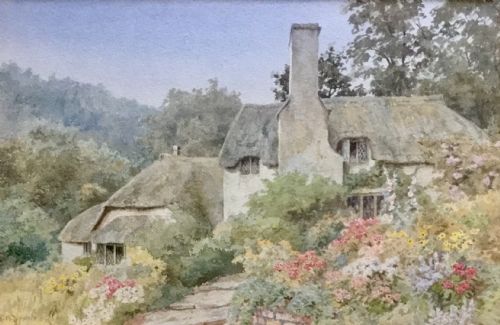


Victorian Cottage Scene Picture
A victorian cottage scene picture brings pastoral charm and traditional rural life directly onto the wall through period paintings and watercolours.
Victorian Cottage Scene Picture
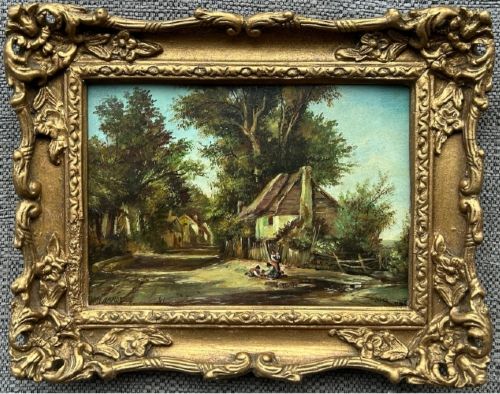
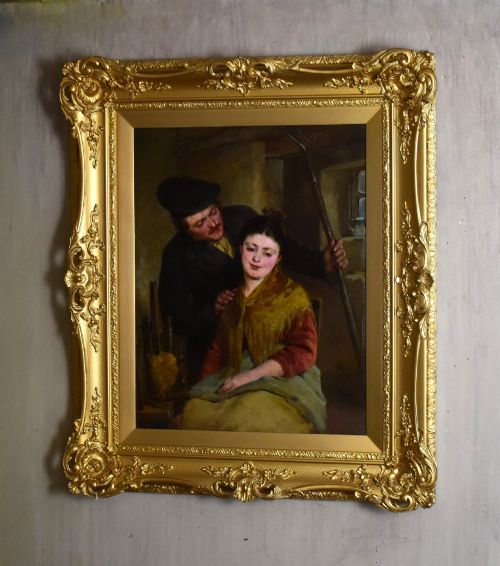
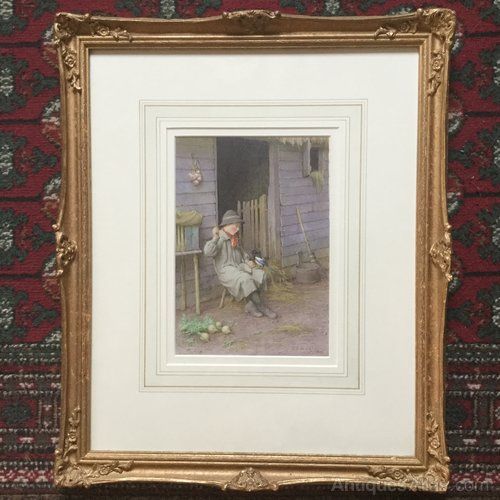
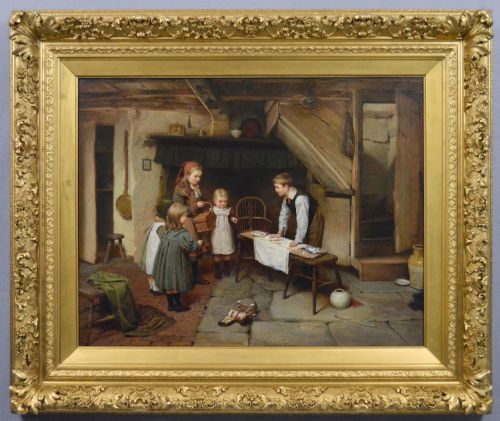
A victorian cottage scene picture captures domestic rural life, rustic dwellings and agricultural landscapes from the nineteenth and early twentieth centuries. These works frequently depict figures tending animals, children playing near doorways, or quiet country rivers.
The selection on this page relies heavily on original watercolours and oil paintings on canvas, panel or board, alongside occasional framed prints and crystoleums. Common formats range from intimate cottage door scenes to broader pastoral and genre landscapes spanning the Victorian and Edwardian eras.
How they were made
Artists utilised oil paint on canvas and panel, or watercolours on paper, capturing fine details of rural architecture and rustic inhabitants. Many pieces retain their period wooden or gilt wood frames.
Techniques range from traditional brushwork in oils to detailed watercolour washes, sometimes accompanied by lithography or specialised antique crystoleum mounting beneath glass.
Materials in this selection include oil paint, watercolour, paper, canvas, glass, wood and gilt wood.
What varies in quality
Quality rests upon the artist's ability to render light, texture and naturalistic detail within the rustic subject matter, distinguishing masterly brushwork from simpler decorative productions. Hand-painted works by listed artists carry greater definition than secondary prints or reproductions.
The condition of the original paper, canvas and period framing significantly affects the integrity of each piece, preserving the depth of the nineteenth-century palette.
William Howard Hardy·Howard Helmick·Charles Edward Wilson·Harry Brooker·James Hardy Junior·Helena Maguire·David Woodlock·Joseph Kirkpatrick·George Cole·Arthur Claude Strachan·Thomas Nicholson Tyndale·Benjamin D. Sigmund·Henry Silkstone Hopwood·George Augustus Williams·Thomas Thomas·Yeend King·Alfred George Stevens·Harold Lawes·James Hughes Clayton·Charles Hunt Jnr·G R Vaughan·Charles Lewis·Sir Ernest Albert Waterlow
The Victorian Cottage Scene Picture Glossary
- Watercolour
- A painting method where fine pigment is suspended in water-based solution on paper. This medium produces translucent washes often seen in rural landscape works.
- Crystoleum
- A Victorian method of applying a hand-coloured print to glass, clearing the paper, and painting the reverse. This technique creates a rich, luminous finish.
- Genre painting
- Artwork depicting scenes from everyday life, particularly domestic activities and rural cottage interiors. These works offer insight into historical social habits.
- Lithograph
- A print method based on the repulsion of oil and water on a stone plate. Artists used this to reproduce original compositions.
Victorian Cottage Scene Picture: Frequently Asked Questions
What is a victorian cottage scene picture?
A victorian cottage scene picture is an artwork depicting rural dwellings, farmyards and domestic country life from the nineteenth century.
These pieces typically use watercolour or oil paint to portray traditional rustic architecture and figures engaged in daily chores.
How were these paintings displayed originally?
These works were traditionally framed in timber or gilt wood to hang within domestic parlours and drawing rooms.
Many retain their original framing materials which help date the artwork accurately to the period.
How do I identify a watercolour from an oil painting?
Watercolours are executed on paper behind glass, showing translucent washes and delicate brush marks without heavy surface texture.
Oil paintings utilise thicker pigments on canvas, panel or board, displaying a distinct tactile surface layer.
Are these works original antique pieces?
The selection includes original period paintings, watercolours and select vintage reproductions created during the nineteenth and early twentieth centuries.
Each listing notes the specific medium and estimated period of origin to clarify its heritage.