



Victorian Mother Child Painting
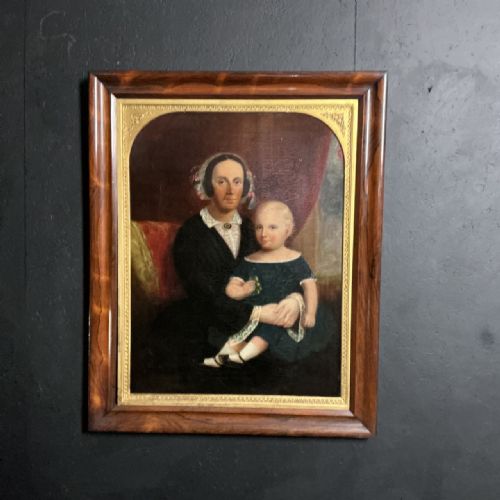
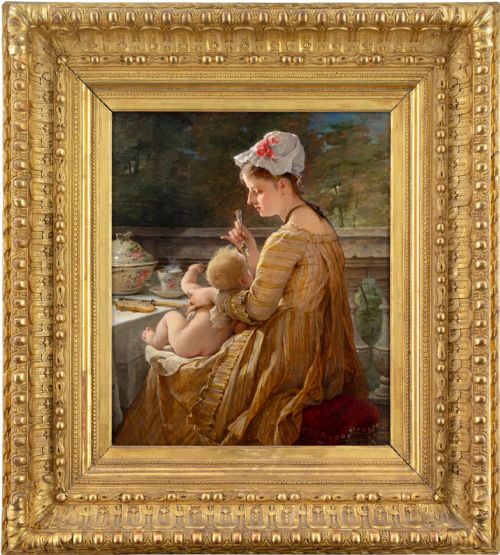
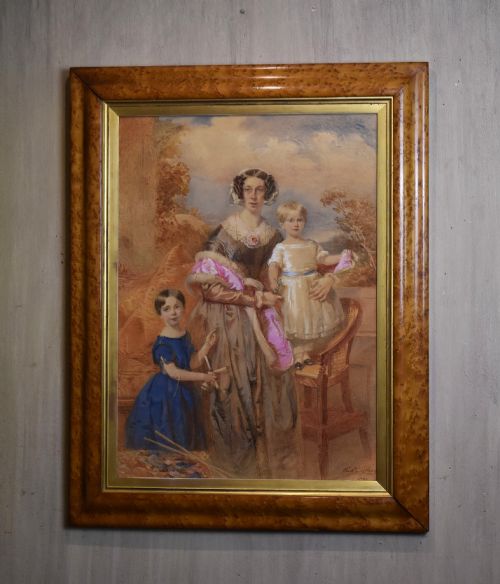
These Victorian mother child painting works capture domestic affection on canvas and paper, offering a window into nineteenth-century family life.
Victorian Mother Child Painting
A Victorian mother child painting depicts intimate domestic bonds, rendered across oil on canvas and delicate watercolours during the nineteenth century. Buyers searching for a Victorian mother child painting encounter framed artworks spanning romanticism, realism, and impressionist styles.
The pieces on this page range from cottage scenes to grand family portraits, occasionally accompanied by related items such as papier-mâché side chairs. Most examples date from the middle and late nineteenth century, reflecting the era's enduring fascination with maternal care.
Materials and methods
Artists relied primarily on oil on canvas and watercolour on paper to capture these domestic scenes, often framing the finished works in gilt wood, giltwood, or burr maple frames. The application of paint varies from smooth academic precision to looser impressionist brushwork.
Support materials include prepared canvas and heavy paper, housed behind glass in the case of watercolours, pastels, and gouache or crystoleum pieces. Frames frequently incorporate decorative mouldings and maple veneer to complement the tonal palette of the artwork.
Victorian Mother Child Painting Retail Price Guide 2026
Typical asking prices for victorian mother child painting among the pieces listed under this phrase on Sellingantiques today, from the lower quarter to the upper quarter. They describe what is for sale here now, not the wider market.
Listings feature works executed in oil on canvas, watercolour, pastel, and gouache, housed in giltwood and maple veneer frames.
Judging quality
Quality rests in the handling of light and expression within the figures, distinguishing a competent studio piece from a masterwork. The subtlety of facial expressions and the natural rendering of fabric and posture define the upper tier of these works.
The condition of the original pigment, the stability of the canvas or paper, and the preservation of the period frame contribute significantly to the standing of a piece. Works exhibited in recognised salons or by established painters carry a distinct documentary weight.
Adelaïde Salles-Wagner·Frederick Tatham·George Smith·Helena Maguire·Franz Xaver Winterhalter·Richard Buckner·Charles Lewis·Josiah Gilbert
The Victorian Mother Child Painting Glossary
- Oil on Canvas
- Pigment mixed with drying oil applied to a woven fabric support. This combination allows for rich colour depth and textured brushwork.
- Watercolour
- Pigment suspended in a water-soluble vehicle, applied to paper. It creates transparent washes of light and delicate tonal shifts.
- Crystoleum
- A method of applying and colouring a hand-painted photograph or print under concave glass. It was a popular Victorian technique for creating luminous portraits.
- Giltwood
- Wood carved and covered with a thin layer of gold leaf. It provides a reflective and ornate border for nineteenth-century paintings.
Victorian Mother Child Painting: Frequently Asked Questions
What styles define these paintings?
The selections encompass 19th Century academic, romanticism, realism, and impressionist approaches. Artists recorded domestic subjects through varying lenses of theatrical sentiment or direct observation.
Techniques shifted from tightly rendered academic portraiture towards looser brushwork by the end of the century. This stylistic evolution mirrors broader changes in European fine art during the period.
How should I care for watercolours?
Watercolours on paper require protection from direct sunlight to prevent the fading of delicate pigments. Framing behind glass helps shield the paper from airborne pollutants and moisture.
Maintaining a stable room temperature prevents the paper support from warping or developing foxing spots. Acid-free backing materials further safeguard the longevity of works on paper.
What is a crystoleum?
A crystoleum is a Victorian picture created by applying a transparent print to the inside of a concave glass piece. The image was then hand-painted from behind and sealed with a backing layer.
This technique produced a distinctive three-dimensional depth and a glossy surface finish. They are frequently found in period frames dating from the nineteenth century.
How do I identify the period?
Dating relies on stylistic markers, framing materials, and the physical characteristics of the canvas or paper support. Mid-Victorian works often favour formal academic structures, while later pieces show looser impressionist tendencies.
Inscribed signatures, exhibition labels on the reverse, and materials like burr maple veneer offer further chronological clues. Archivists and dealers cross-reference these details with known active dates of the artists.