


Victorian Copper Wash Boiler
These heavy metal vessels bring industrial warmth indoors as log bins and garden planters.
Victorian Copper Wash Boiler
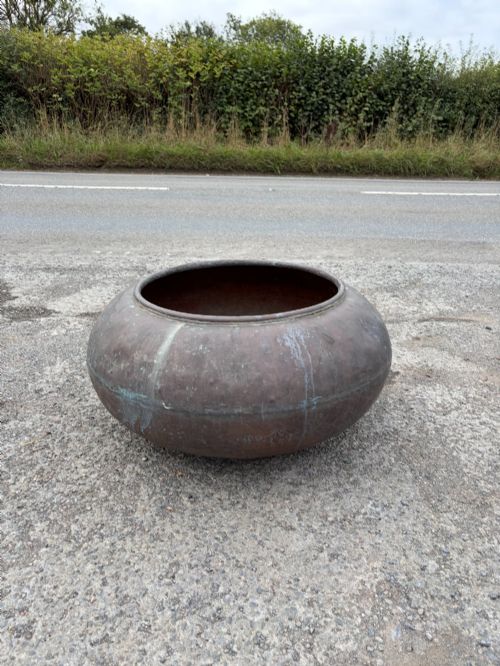
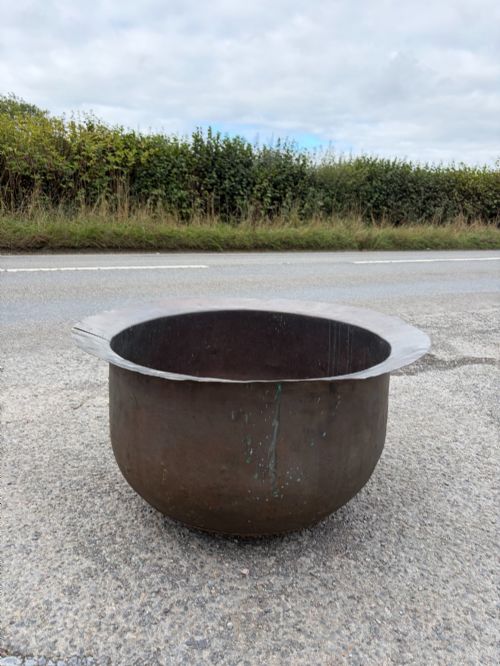
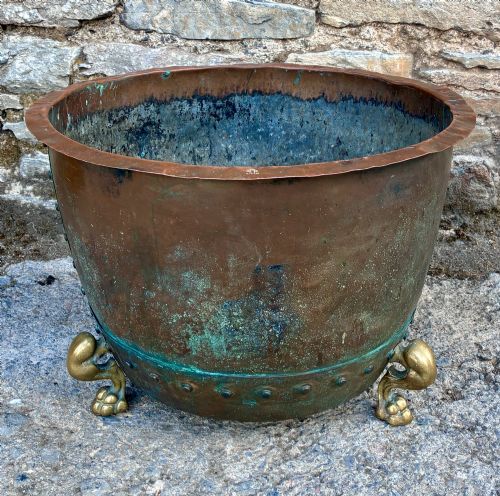
A victorian copper wash boiler is a substantial metal container originally used for heating water or laundering clothes during the nineteenth century. These utilitarian pieces now serve mainly as decorative garden planters, log bins, and log baskets inside homes.
Most examples found on this page date from the nineteenth century, spanning decades such as eighteen fifty, eighteen sixty, eighteen seventy, eighteen ninety, and nineteen twenty. They often appear under styles like Victorian utilitarian, rustic farmhouse, and nineteenth century country.
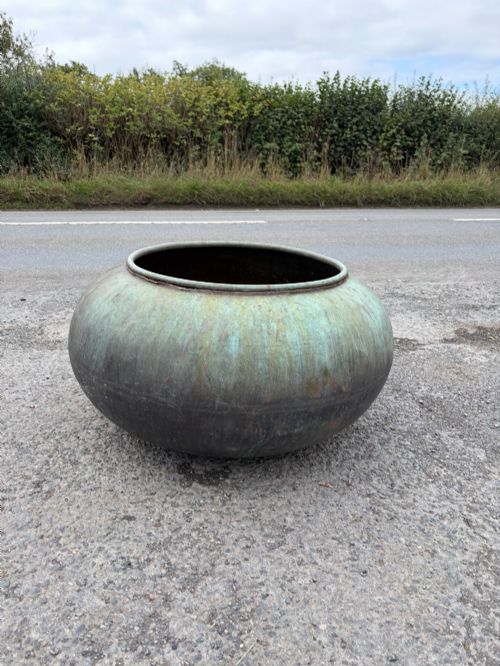
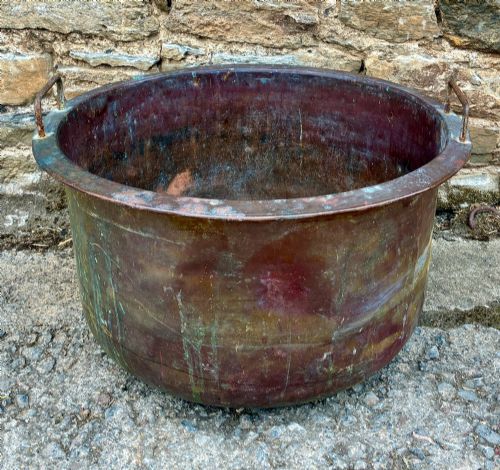
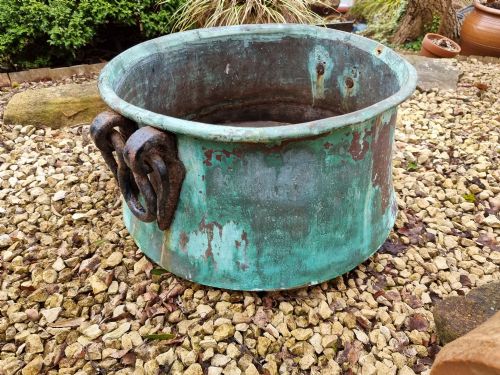
Forms include large copper pots, cauldrons, wash tubs, and cooking vessels, frequently repurposed with wrought iron handles or cast iron elements. Buyers encounter both plain metal surfaces and those showing rich natural patina or verdigris.
Assessing quality and condition
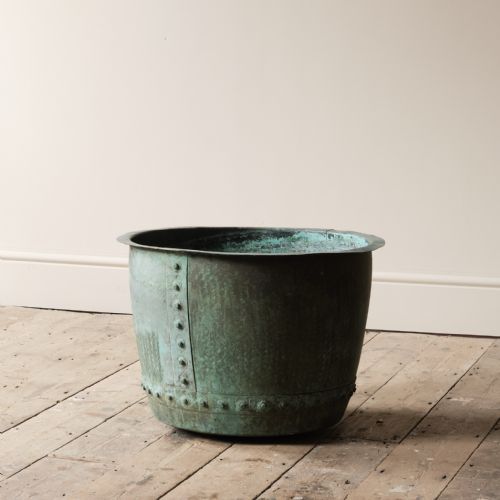
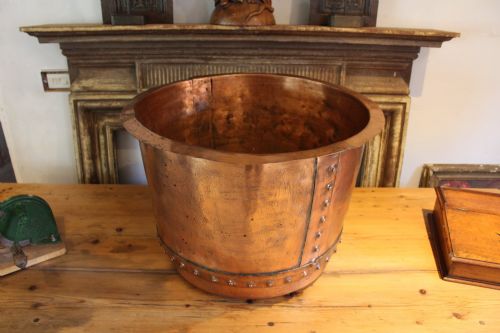
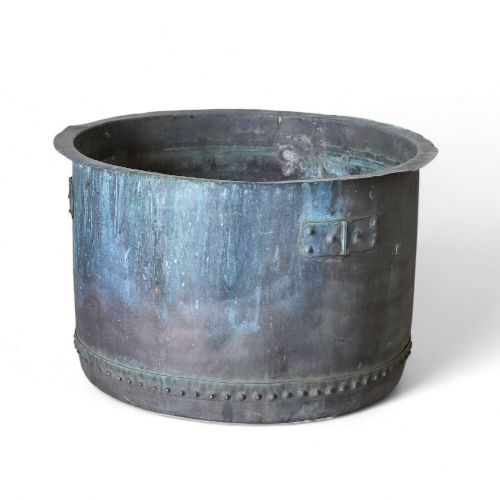
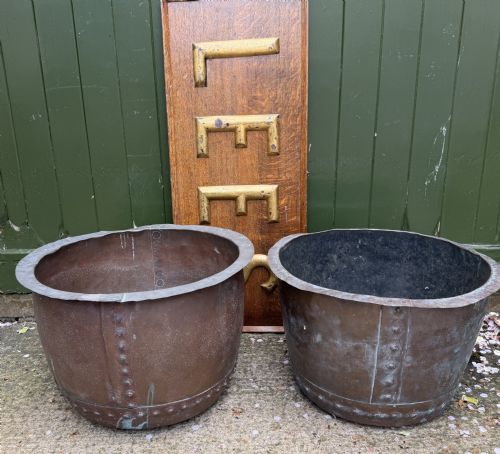
Quality rests primarily on the integrity of the hand-riveted construction and the thickness of the original copper sheeting used to form the vessel. Thicker walls withstand centuries of use and adaptation much better than thinner alternatives.
The visual appeal depends heavily on the depth of the natural patina and the presence of stable verdigris, which develop through age and exposure. Original iron swing handles and secure mounts enhance the authenticity and desirability of each piece.
Current listings feature materials including copper, wrought iron, cast iron, and paint, spanning periods from eighteen fifty to nineteen twenty.
The Victorian Copper Wash Boiler Glossary
- Patina
- The surface sheen and colour acquired by copper through age, oxidation, and handling. A rich natural patina indicates authentic long-term exposure.
- Verdigris
- The green crust or patina that forms on copper and brass through atmospheric oxidation. This weathered surface adds distinctive visual character to antique garden pieces.
- Hand-riveted
- A method of joining metal plates using metal pins hammered into place by hand. This technique creates visible, rugged seams typical of nineteenth-century utilitarian manufacture.
- Wrought iron
- Tough, malleable iron traditionally beaten into shape by a blacksmith. It frequently appears on these vessels as sturdy drop handles or swing bails.
Victorian Copper Wash Boiler: Frequently Asked Questions
How do I use a wash boiler indoors?
These large vessels function well as floor-standing log bins or umbrella stands in a hallway or hearth. Their heavy metal construction safely contains firewood while adding industrial texture to a room.
Place protective felt pads underneath if sitting on delicate wooden flooring to prevent scratching from the raw metal base.
Can I leave these copper pots outside?
Copper withstands outdoor elements effectively, developing a deeper verdigris surface when exposed to rain and soil over time. Many people plant directly inside them or use them as decorative garden planters.
Ensure adequate drainage if planting directly, or simply drop a potted plant inside to protect the historic metal interior.
What is the difference between a copper boiler and a log bin?
Originally, wash boilers served utility rooms for boiling water and laundering textiles, featuring heavy riveted seams and sometimes iron handles. Today's marketplace often repurposes identical vessels as log bins and garden planters.
The underlying object remains the same heavy nineteenth-century utility vessel regardless of its modern descriptive label.
How do I clean antique copper?
Most collectors prefer to leave the accumulated patina and verdigris intact because these surfaces prove the age and authenticity of the piece. Scrubbing away the dark oxidation strips the character that defines nineteenth-century garden vessels.
Dust gently with a dry cloth or wash with mild soapy water if removing heavy accumulated dirt is necessary.