


Victorian Continental Porcelain Figures
Victorian continental porcelain figures bring colour and sculptural detail to a room, ranging from pastoral pairs to classical subjects.
Victorian Continental Porcelain Figures
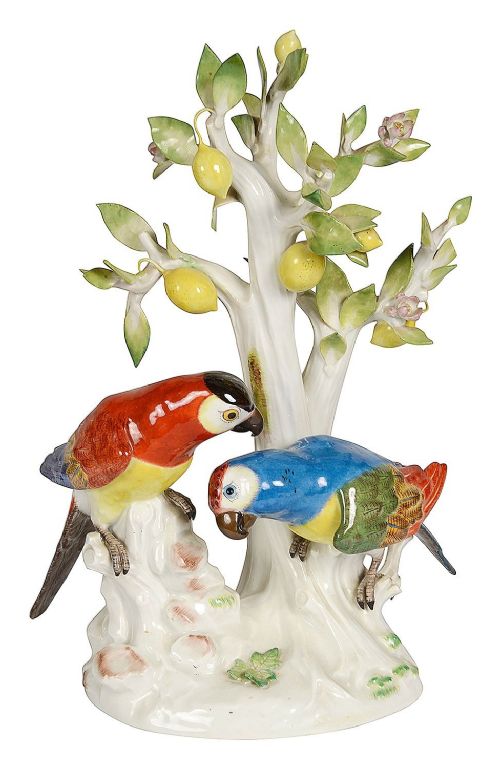
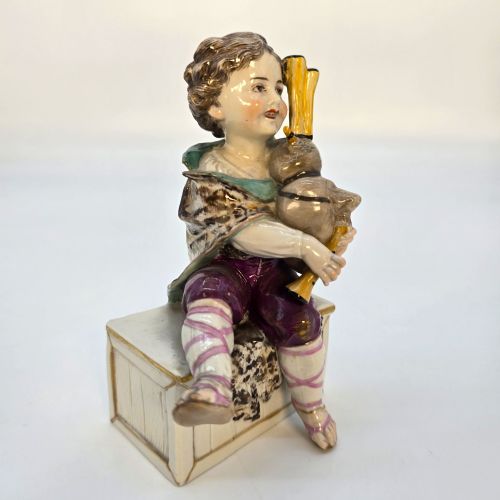
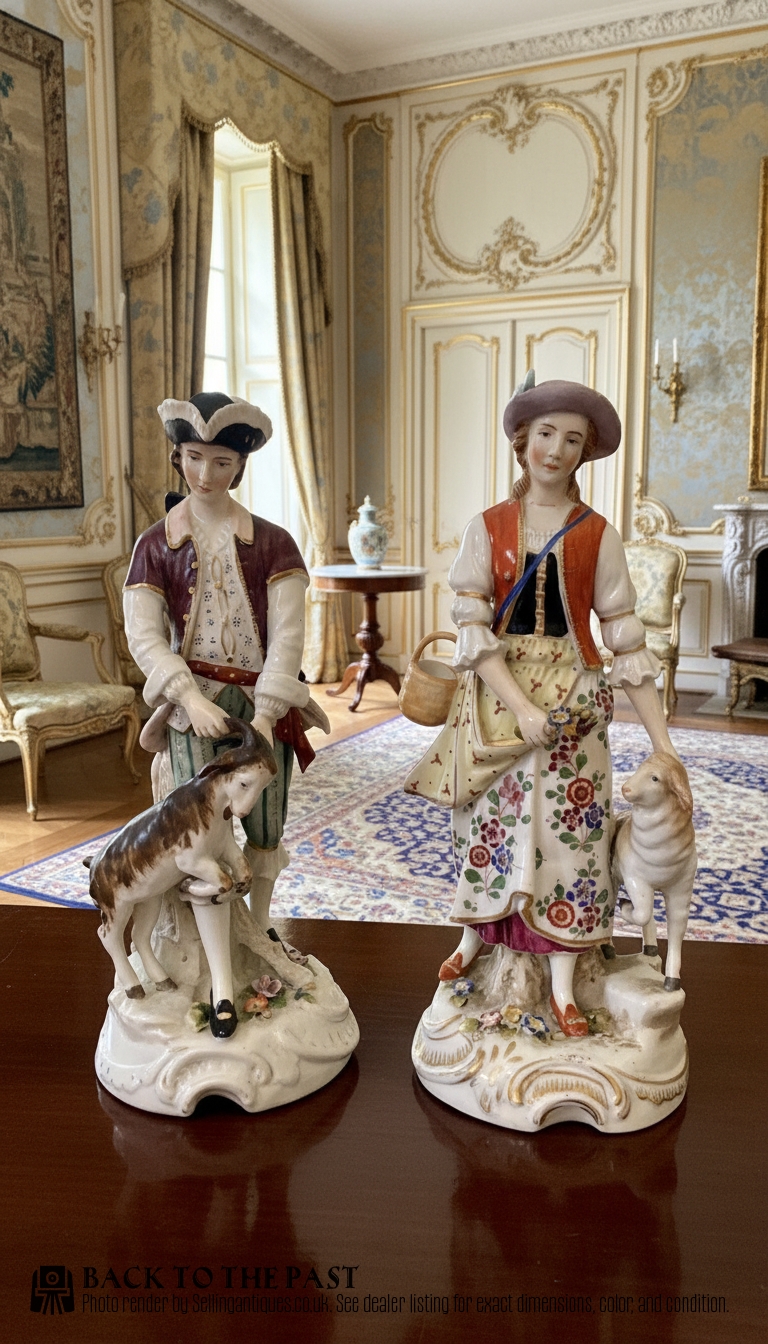
Victorian continental porcelain figures span individual figurines, pairs and larger figural groups, often depicting children, animals, harvesters and mythological subjects such as Venus and Cupid. You will frequently encounter pairs of birds, dwarves, pastoral subjects and children in garden settings among the available pieces.
The objects originate across 19th-century Germany, France and Bohemia, reflecting regional workshops that produced both glazed porcelain and unglazed bisque. Makers drew on earlier traditions, working in styles that referenced Meissen, Chelsea taste, Chelsea-Derby and Rococo Revival forms.
Beyond standard figurines, the category includes functional or decorative items incorporating figures, such as mantel clocks, vases and centrepiece bowls. These pieces highlight the 19th-century preference for elaborate, decorative domestic objects.
Materials and technique
Makers utilised porcelain, hard-paste porcelain and bisque porcelain as primary bases, often shaping them into detailed figures and sculptural groups. Bisque porcelain provided a matte, unglazed finish prized for revealing fine modelling, while hard-paste porcelain offered a durable, vitreous body suitable for intricate forms.
Pieces frequently feature enamel painting, gold leaf and gilt highlights applied over the glaze or ceramic body to accentuate garments and decorative elements. Some works combine glazed surfaces with unglazed bisque details or include original glass domes for protection.
Listings feature hard-paste porcelain, bisque porcelain and ceramic materials decorated with enamel, gold leaf and gilt.
Judging quality
Quality separates through the crispness of the modelling and the precision of the hand-painting, particularly in facial expressions, foliage and garments. Superior examples display delicate rendering of fine details such as fingers, leaves and animal plumage without blurring or heavy-handed glaze pooling.
The ambition of the composition dictates the standing of a piece, distinguishing standard decorative figures from large, multi-figure groups or paired compositions with complex bases. Scale and the inclusion of original protective elements like glass domes further separate workshop production.
Volkstedt Rudolstadt Factory·Samson of Paris·Vion et Baury·C. G. Schierholz·Carl Thieme Dresden·Eugene Clauss·Royal Dux
The Victorian Continental Porcelain Figures Glossary
- Bisque porcelain
- Unglazed porcelain fired to a matte, porous finish that resembles marble and highlights fine sculptural detail. It was widely used for 19th-century figures.
- Hard-paste porcelain
- A durable ceramic composition fired at high temperatures, known for its bright white body and resistance to scratching. It forms the basis of many German and French figures.
- Rococo Revival
- A 19th-century design style emulating the 18th-century Rococo movement with asymmetrical scrolls, C-scrolls and naturalistic motifs. Figures in this style often feature elaborate, swirling bases.
- Gilt
- A thin layer of gold or gold-coloured material applied to the surface of porcelain to highlight ornament. It adds reflective detail to garments and trim.
- Figural group
- A sculptural arrangement featuring two or more human or animal figures interacting within a single scene. These pieces often depict narrative or pastoral subjects.
Victorian Continental Porcelain Figures: Frequently Asked Questions
How are continental figures dated?
Dating relies on factory marks, stylistic indicators and period characteristics recorded in the listings. Pieces often span the 19th century, from the 1860s through to 1910.
Comparison with documented workshop styles, such as Rococo Revival or Chelsea taste, helps narrow the production era when specific date marks are absent.
What is the difference between glazed and bisque porcelain?
Glazed porcelain has a shiny, vitrified coating applied before firing, which protects the ceramic body and gives a reflective finish. Bisque porcelain is fired without a glaze, leaving a matte, porous surface.
Bisque was often chosen to showcase fine sculptural modelling, while glaze provided colour durability and brightness.
Where were most figures made?
The pieces originate predominantly from 19th-century German, French and Bohemian workshops. Major centres included Meissen, Dresden, Plaue and Paris.
French makers like Vion et Baury and German factories such as Volkstedt and Schierholz produced distinct regional interpretations of classical and pastoral themes.
How should figures be displayed?
Figures require stable surfaces away from heavy foot traffic due to their delicate protruding elements like fingers, leaves and branchwork. Some pieces retain their original glass domes, which offer protection from dust and accidental damage.
Pairings of birds, harvesters or children are best displayed together to preserve the intended composition.