





Victorian Condiment Spoon
These Victorian condiment spoon examples bring tactile refinement to the table, offering precise silver service for salts, mustards, and preserves.
Victorian Condiment Spoon
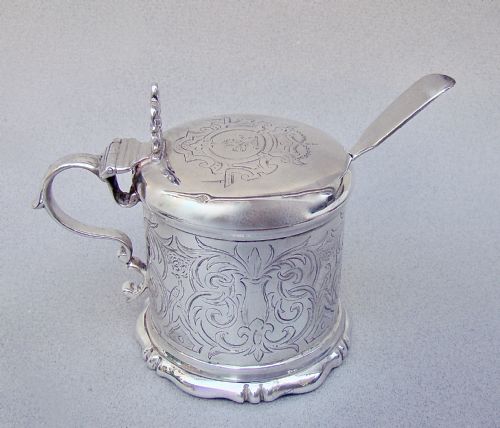
When searching for a victorian condiment spoon, a buyer encounters small implements designed specifically for service from salt cellars, mustard pots, and cruet sets. Most examples on this page date from the nineteenth century, spanning early Victorian reigns through to Edwardian periods and later twentieth-century cruet sets.
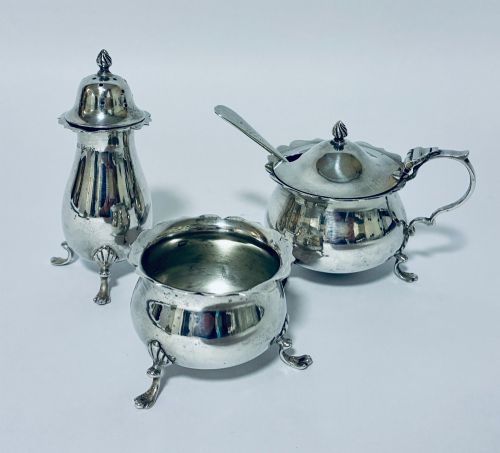
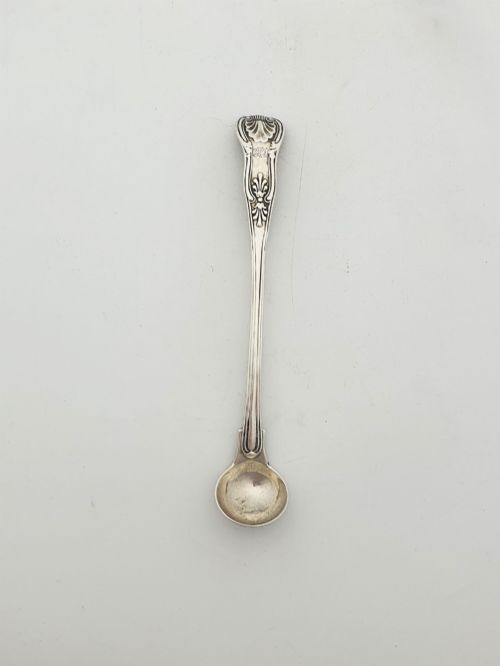
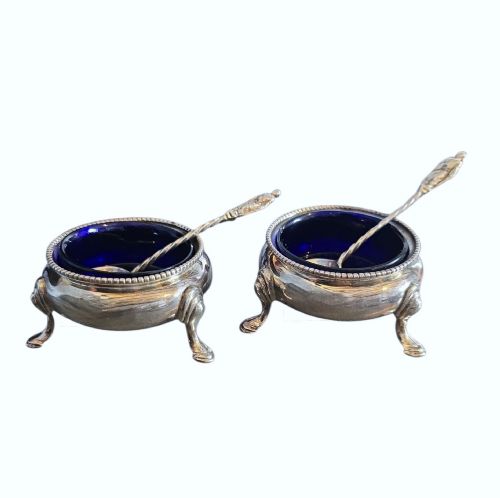
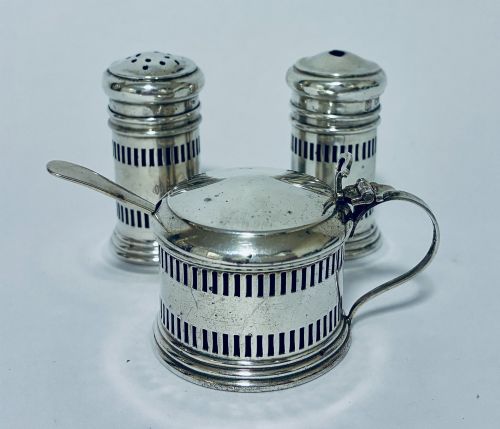
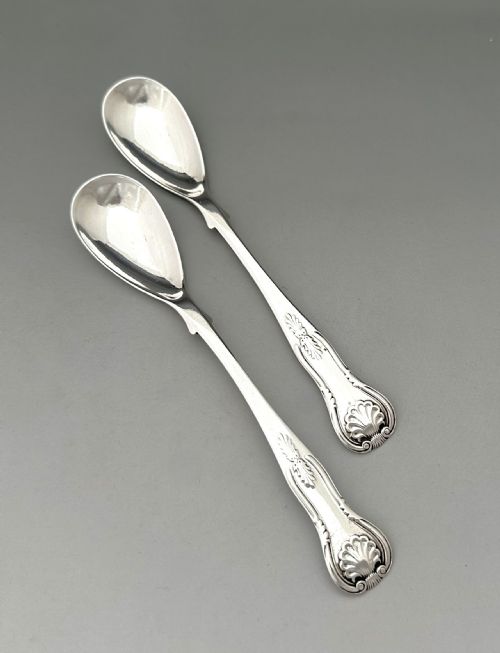
The forms range from Kings pattern spoons and fiddle handles to novelty animal designs and long cayenne ladles. Many appear alongside matching silver salt cellars, cobalt glass liners, and fitted presentation boxes.
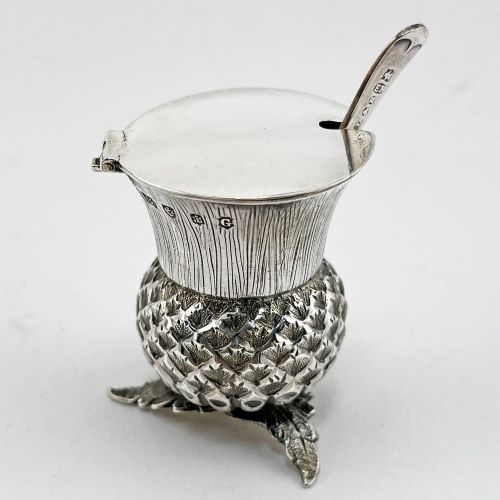
Makers utilised various regional assay offices in London, Birmingham, and Exeter to hallmark these small silver pieces. Collectors frequently find them paired with mustard pots in the form of thistles or boat-shaped table salts.
Materials and Techniques
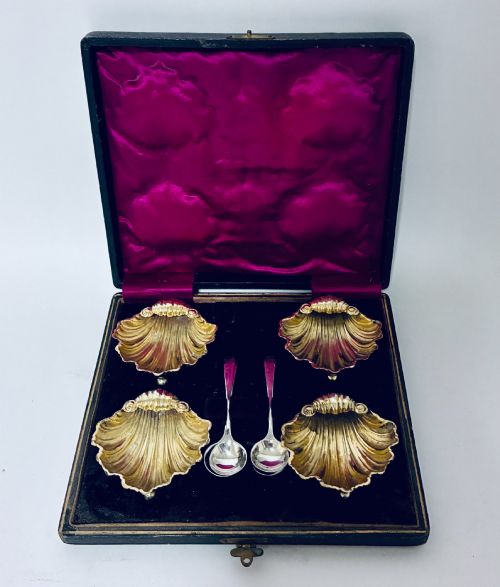
Sterling silver forms the primary body of these pieces, often worked with techniques such as casting, embossing, and piercing. Silversmiths applied silver gilt finishes to the bowl interiors of certain condiment spoons to protect the metal from corrosive salts and mustards.
Victorian Condiment Spoon Retail Price Guide 2026
Typical asking prices for victorian condiment spoon among the pieces listed under this phrase on Sellingantiques today, from the lower quarter to the upper quarter. They describe what is for sale here now, not the wider market.
Some nineteenth-century silversmiths fashioned tiny salt spoons shaped like swans, thistles, and creeping birds.
Quality and Distinction
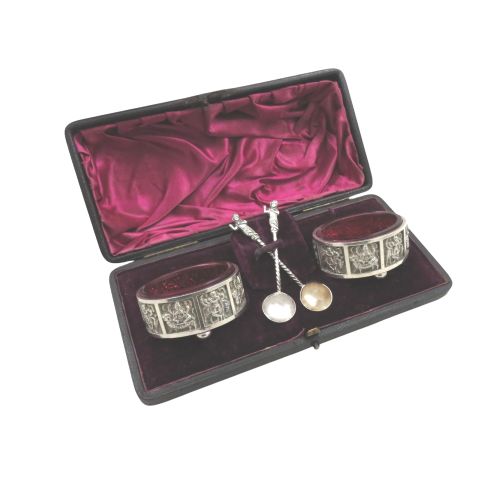
Quality in a victorian condiment spoon rests upon the crispness of the chasing and the weight of the solid silver in the hand. Crisp relief work on figural motifs, such as cherubs, birds, or Hindu deities, separates standard production pieces from finer artisan outputs.
The integrity of the original hallmarks and the survival of matching silver-gilt washes indicate superior workshop origin. Pieces retaining their original cobalt glass liners or matching boxed presentation sets command greater interest from discerning collectors.
Beare Falcke·Charles and George Fox·Hamilton and Inches·Charles Stuart Harris·Vale Brothers and Sermon·George Adams
The Victorian Condiment Spoon Glossary
- Sterling Silver
- An alloy containing ninety-two point five percent silver by mass, with the remainder consisting of copper or other metals. This standard grade dominated British silversmithing.
- Silver Gilt
- Silver that has been coated with a thin layer of gold on its surface. This technique provided a decorative gold appearance and protected silver spoons from chemical corrosion.
- Cruet Set
- A matched collection of small bottles, jars, or open pots held in a frame for holding condiments at the dining table. They frequently include mustard pots and salt cellars alongside appropriate spoons.
- Salt Cellar
- A small open bowl or vessel placed on the table to hold loose salt for individual diners. They often require a dedicated spoon for hygienic service.
- Hallmark
- An official stamp applied by an assay office to indicate the purity of a precious metal, the place of testing, and the year of manufacture.
Victorian Condiment Spoon: Frequently Asked Questions
What is a victorian condiment spoon used for?
These small spoons transfer salt, mustard, and preserves from open table cellars and pots to individual plates. They prevent diners from using personal cutlery in communal condiment containers.
Their small bowls and short handles suit the diminutive scale of nineteenth-century cruet furniture and salt cellars.
How do I date a silver spoon?
Assay office hallmarks stamped directly onto the metal provide the exact year of manufacture and testing location. Date letters change annually according to the governing goldsmiths' guild records.
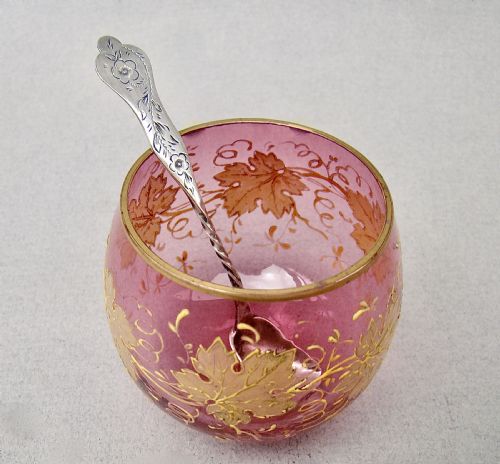
Stylistic cues such as Kings pattern handles or engraved floral motifs further narrow the production era.
Why do some spoons have gold bowls?
Silver reacts chemically and tarnishes when exposed to the acids present in mustard, salt, and various preserves. Applying a gold wash inside the bowl protects the underlying silver from corrosion.
This silver gilt finish also adds a decorative contrast to the polished stem and handle.
Are these spoons sold individually or in sets?
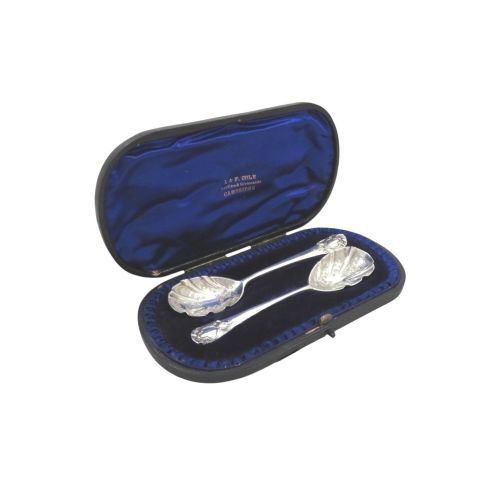
Surviving examples appear both as single spoons and as matched pairs housed within original velvet-lined presentation cases. Larger cruet sets often include multiple spoons alongside matching salt cellars and mustard pots.
Collectors frequently source individual spoons to complete incomplete nineteenth-century table settings.