
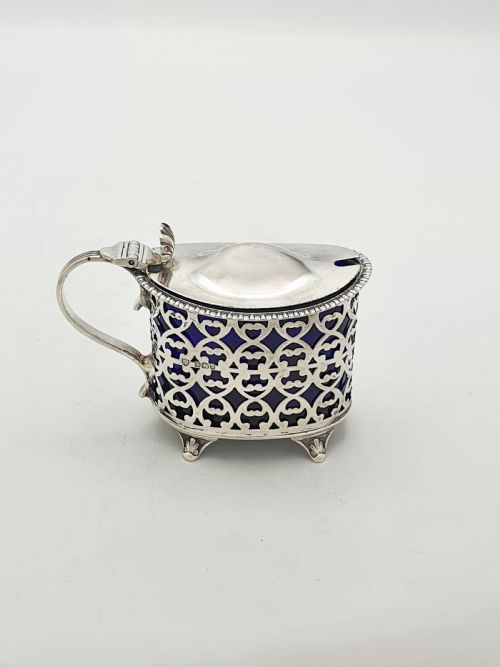


Victorian Cobalt Vessel
A victorian cobalt vessel brings deep blue richness to a room, catching the light through cut crystal or glazed ceramic.
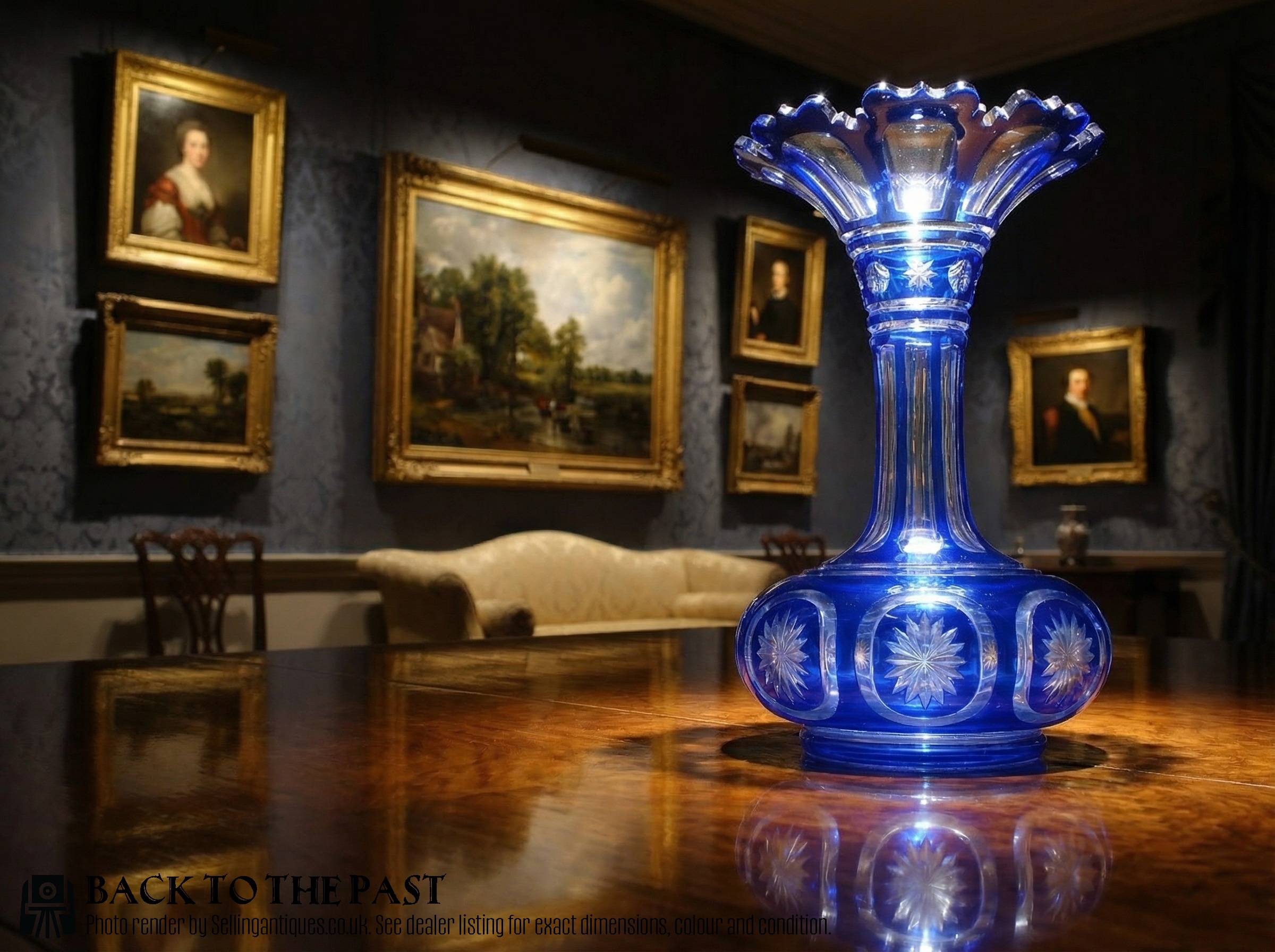
Victorian Cobalt Vessel
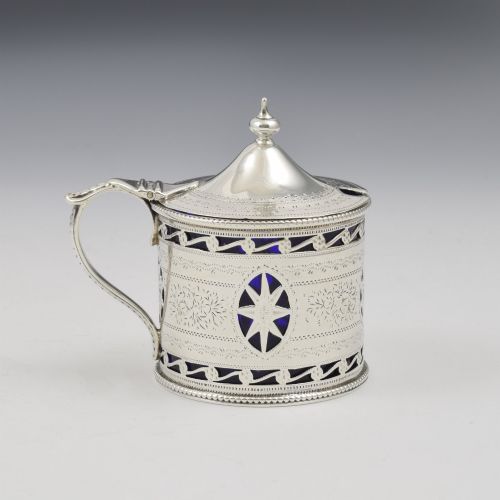
When you search for a victorian cobalt vessel, you encounter a range of deep blue objects spanning vases, apothecary bottles, mustard pots, and jardinieres. These pieces originate from various nineteenth-century makers, utilising intense blue glass, glazed stoneware, and porcelain.
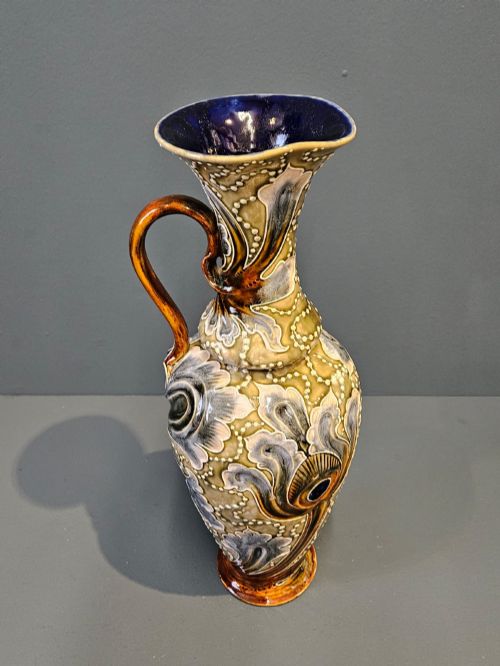
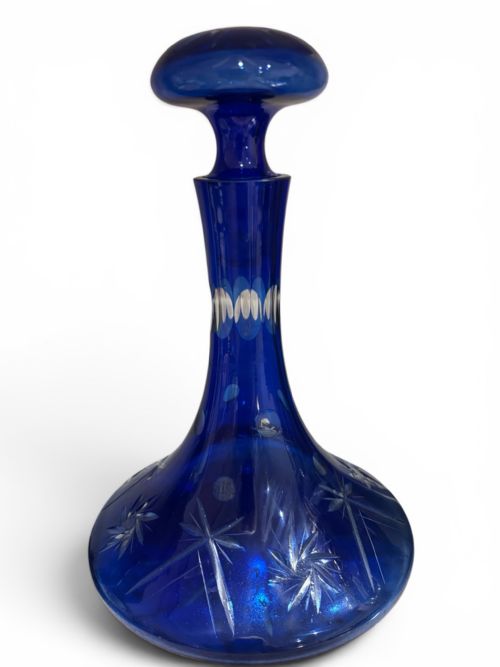
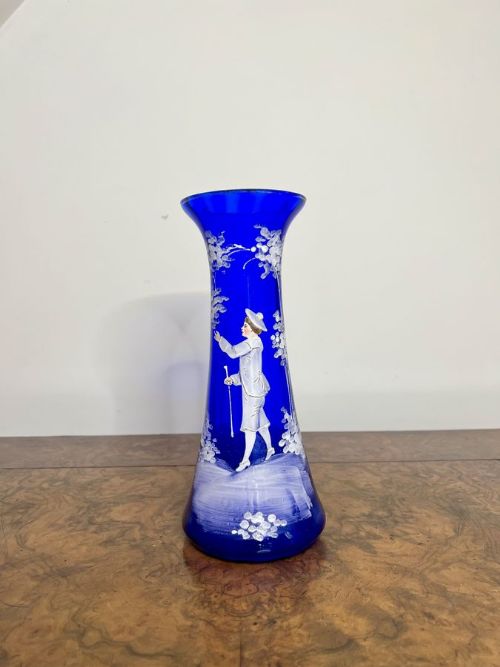
The most common forms on this page include Doulton Lambeth jardinieres and ewers, alongside Bohemian cut crystal decanters and blue glass vases. Makers also produced functional items such as silver-mounted mustard pots alongside purely decorative urns.
How they were made
Glass vessels rely on cobalt oxide added to the molten batch to achieve that characteristic deep blue coloration. Artisans then shaped the glass by hand, occasionally employing a cut-to-clear technique where layers are carved away to reveal the colour beneath.
Ceramic and stoneware pieces involve throwing clay on a wheel or moulding it into forms like jardinieres and ewers, followed by application of rich glazes and sometimes enamel paint or gold leaf details.
Listings feature items from the Victorian period, 1850, 1880, 1890, 1900, 1920, and the broader 19th Century.
What varies in quality
The distinction between ordinary and exceptional pieces lies in the crispness of the glass cutting, the depth of the cobalt hue, and the precision of any hand-painted enamel or gold leaf decoration. Heavier crystal bodies and intricate silver pierced mounts on mustard pots indicate higher craftsmanship.
In ceramic items, the crispness of the moulded relief, the evenness of the glaze, and the artistic merit of the painted scenes separate standard production pieces from masterworks.
Nathan & Hayes·Doulton Lambeth·Royal Crown Derby·Royal Vienna·Royal Doulton·Royal Worcester·William Adams & Sons
The Victorian Cobalt Vessel Glossary
- Cobalt glass
- Glass coloured deep blue by the addition of cobalt oxide during melting. This material forms the primary body of many nineteenth-century bottles and vases.
- Jardiniere
- A large decorative ceramic or stoneware pot designed to hold a plant or floral arrangement. These substantial vessels often feature detailed glazes or moulded motifs.
- Cut to clear
- A technique where an outer layer of coloured glass is partially carved away to expose the clear glass beneath. This process creates high-contrast geometric or floral patterns.
- Jasperware
- A fine-grained stoneware pioneered by English potteries, characterised by a matte surface and applied white reliefs against a coloured ground.
- Imari
- A decorative style inspired by Japanese export wares, featuring cobalt blue and iron red highlights enriched with gold. This palette appears on various ceramic vessels.
Victorian Cobalt Vessel: Frequently Asked Questions
What is a victorian cobalt vessel?
A victorian cobalt vessel is any decorative or functional container made during the nineteenth century using deep blue glass, ceramic, or stoneware.
These pieces encompass items such as apothecary bottles, vases, jardinieres, and decanters created by various European and English potteries and glasshouses.
How do I identify a victorian cobalt vessel?
Examination of the materials, marks, and manufacturing techniques helps determine the period and origin of the piece. Look for characteristic nineteenth-century forms, maker stamps on ceramics, and the weight of the glass.
Cut-to-clear glasswork, hand-painted enamel details, and silver mounts also provide strong indicators of nineteenth-century production methods.
How were these vessels used originally?
Original uses varied widely depending on the specific form of the object. Apothecary bottles stored medicines or chemicals, while mustard pots held condiments on dining tables.
Vases and jardinieres served decorative purposes in domestic interiors, holding cut flowers or potted plants to brighten parlour rooms.
How should I clean my cobalt vessel?
Gentle cleaning with warm water and a mild soap suffices for most glass and ceramic surfaces. Avoid harsh abrasives that might damage enamel painted details or gold leaf.
Silver mounts on mustard pots require appropriate metal polish applied carefully to prevent contact with the surrounding glass or ceramic body.