


Bohemian Blue Glass
When buying bohemian blue glass, you are selecting vibrant pieces ranging from Victorian decanters to Art Nouveau vases that bring striking colour to a room.
Bohemian Blue Glass
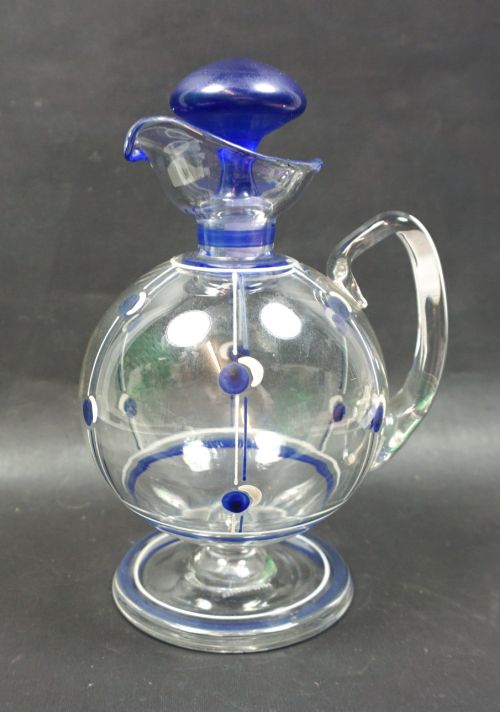
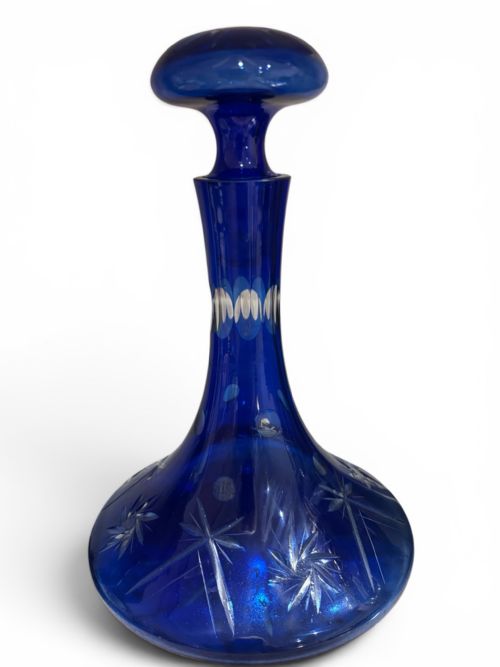
Bohemian blue glass encompasses a rich array of decorative items, from heavy Victorian overlay vases and scent bottles to Art Deco crystal wine jugs and iridescent bowls. The most common pieces met on this page are deeply hued decanters, vases, and scent bottles dating from the nineteenth century into the early twentieth century.
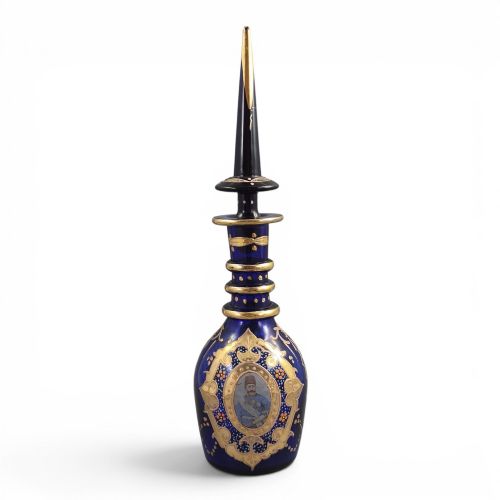
Many examples reflect specific historical export markets, such as enamelled cobalt pieces created for the Persian Qajar market, alongside European domestic forms like lustres and tea sets. Makers produced these items in various styles including Historicism, Secessionist, and Art Nouveau.
The objects serve primarily as display pieces, drinking vessels, and dressing table accessories, utilising rich cobalt and light blue shades often enhanced by gilding or silver mounts.
How they were made
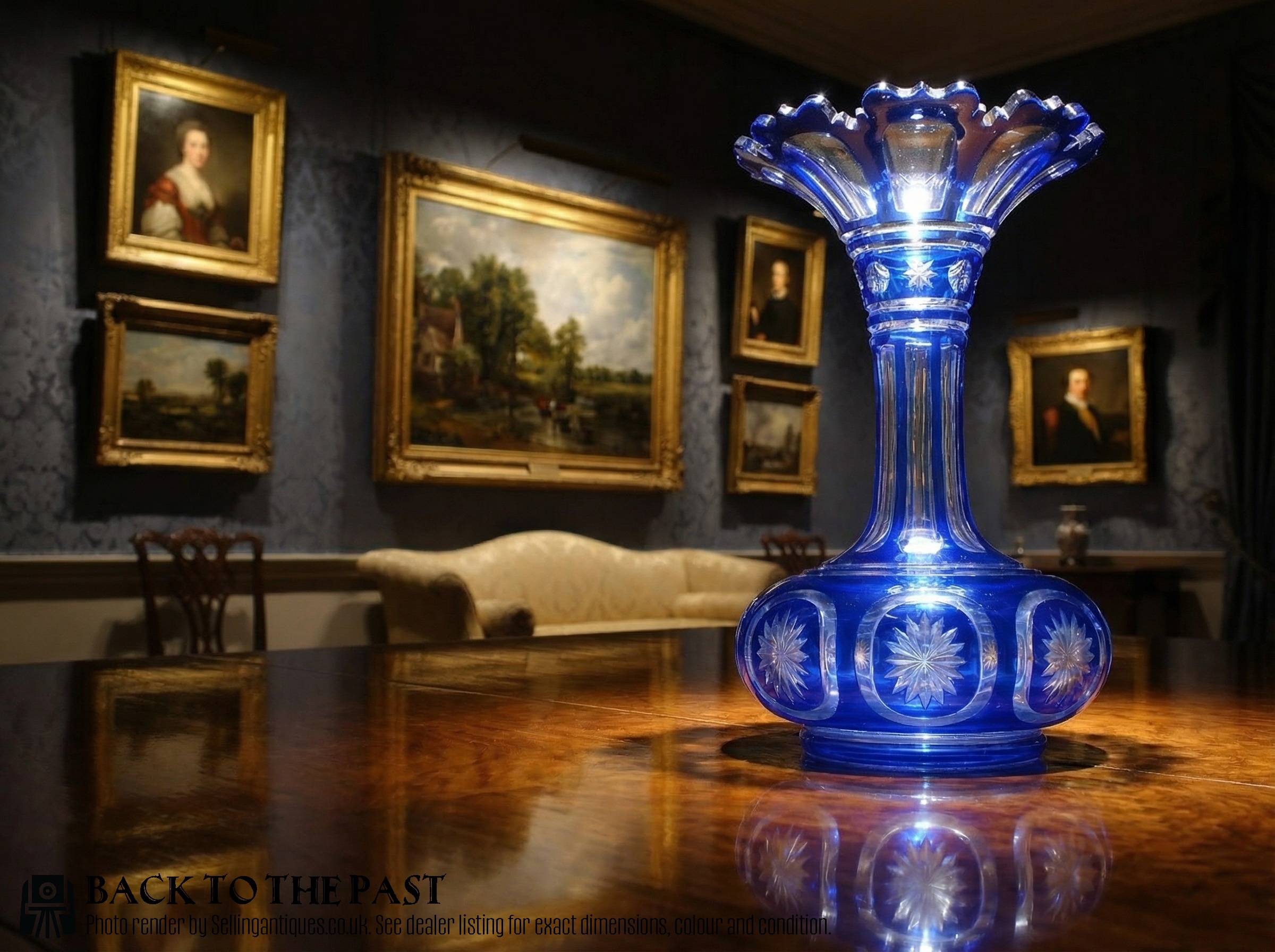
Craftsmen shaped these items using glassblowing and crystal-cutting techniques, frequently employing colour-over-crystal methods and layered overlays to create depth. Overlay pieces required cutting through an outer layer of blue glass to reveal clear or contrasting glass underneath.
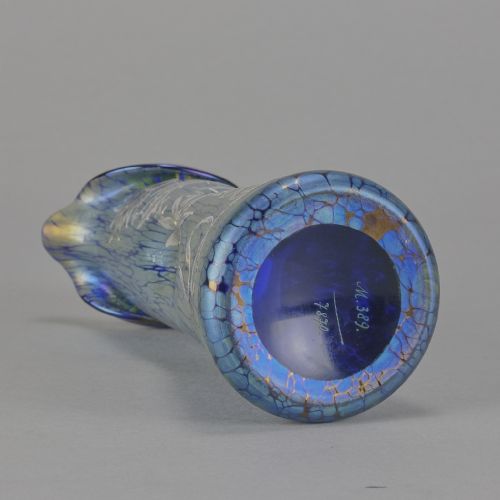
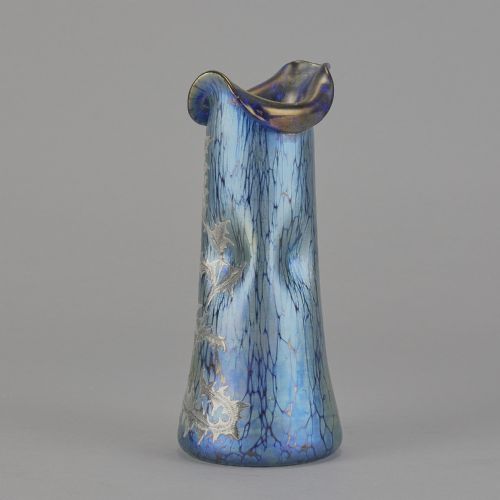
Decoration relied heavily on hand-gilding with gold leaf, polychrome enamel painting, and silver mounting by firms like Mappin & Webb or Sampson Mordan. Iridescent finishes, such as the Papillon decor by Loetz, involved treating the hot glass surface with metallic vapours to achieve a shimmering sheen.
Several scent bottles feature hidden chatelaine hooks so Victorian ladies could dangle their blue glass aromas from their waistbands.
What varies in quality
Quality in these pieces depends on the precision of the glass cutting, the weight and clarity of the crystal, and the finesse of the hand-applied enamel or gold leaf. Superior items display crisp facets, securely fitted silver mounts, and intricate, well-preserved hand-painting.
Simpler moulded items contrast with triple-cased or heavily engraved examples where artisan skill dictates the depth of the finish and the brilliance of the blue hue.
Loetz Witwe·Fritz Heckert·Moser·Kralik·Mappin & Webb·Sampson Mordan·Charles May·Emmy Seyfried
The Bohemian Blue Glass Glossary
- Cobalt Glass
- Glass coloured to a deep blue by the addition of cobalt oxide. This intense pigment defines many nineteenth-century Bohemian decanters and vases.
- Overlay Glass
- A technique where a layer of coloured glass is fused over a base of clear or contrasting glass. Artisans then cut away portions of the outer layer to create patterns.
- Mary Gregory
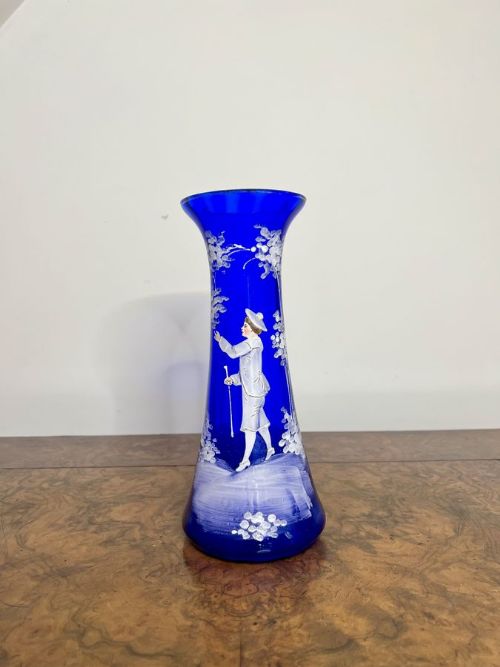
- A style of white enamel painting depicting silhouetted Victorian children usually playing in pastoral settings. It appears frequently on blue glass glassware.
- Iridescent Glass
- Glass treated to produce a rainbow-like sheen on the surface. Makers like Loetz utilised this technique during the Art Nouveau period.
Bohemian Blue Glass: Frequently Asked Questions
How do I identify a Victorian piece?
Victorian examples often feature heavy overlay glass, intricate gold gilding, and sometimes hallmarked silver mounts dating from the late nineteenth century.
Look for traditional forms like scent bottles, lustres, and deep cobalt decanters that reflect nineteenth-century aesthetic preferences.
Are these items suitable for everyday use?
While many pieces like wine glasses, decanters, and tea sets were originally functional, antique glass requires careful handling.
Hand-gilded surfaces and delicate enamel decorations mean most buyers prefer to display these items rather than use them daily.
What is Bohemian overlay glass?
Overlay glass consists of multiple fused layers of glass where an outer layer of blue is cut away to reveal a contrasting base colour. This creates a tactile, dimensional pattern across the surface.
Master glassmakers in Bohemia utilised this method extensively on decanters and scent bottles.