




Victorian Cobalt Bottle
A victorian cobalt bottle brings rich depth of colour and period craftsmanship to a room.
Victorian Cobalt Bottle
The selections span distinct periods including the Georgian, William IV, and Victorian eras, often crossing into French, Bohemian, and Persian export styles. Decanters and scent bottles frequently appear alongside apothecary wares, displaying the versatility of deep blue glass in domestic and professional settings.
How they were made
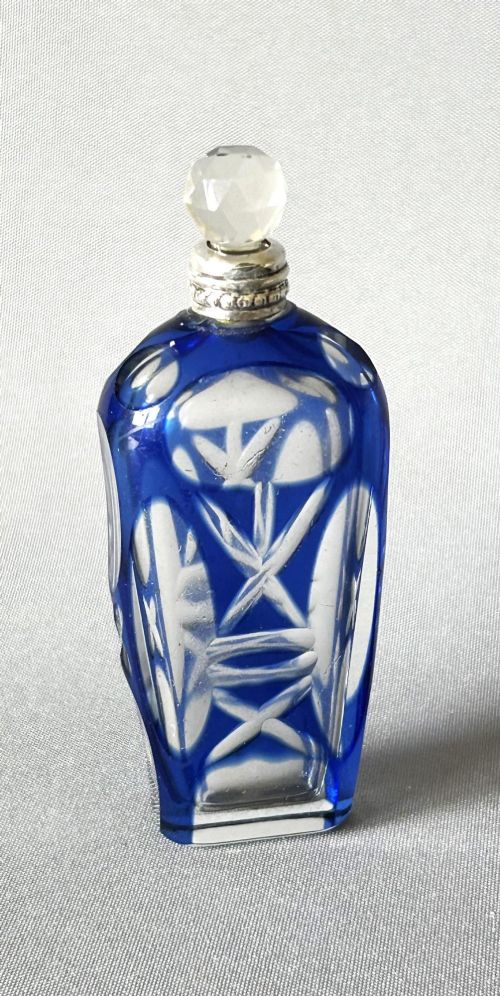
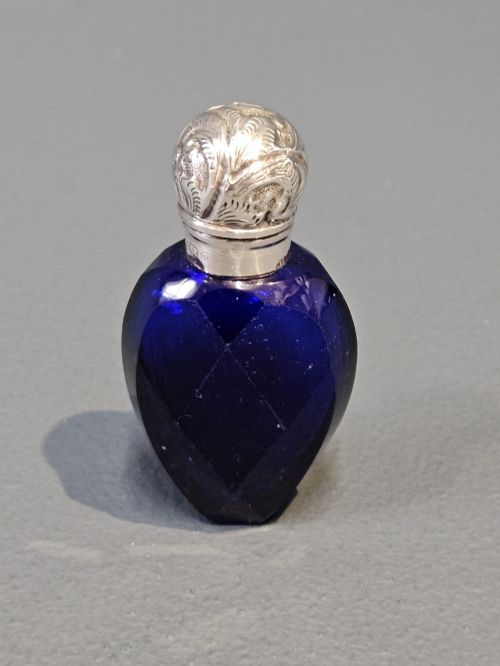
Makers utilised glass as the primary medium, often shaping cobalt glass through hand-blowing techniques to achieve rich, saturated hues. Many pieces incorporate secondary elements such as sterling silver mounts, gold leaf accents, enamel decoration, and cork stoppers.
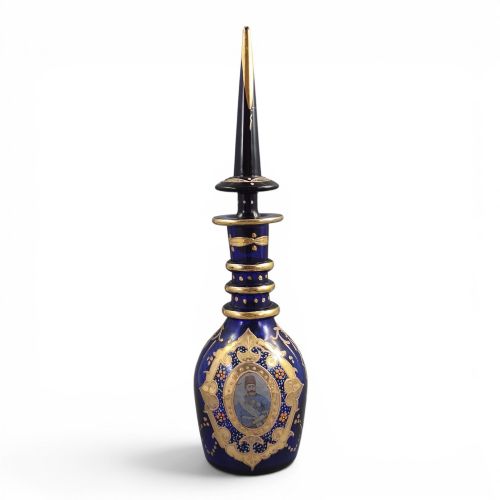
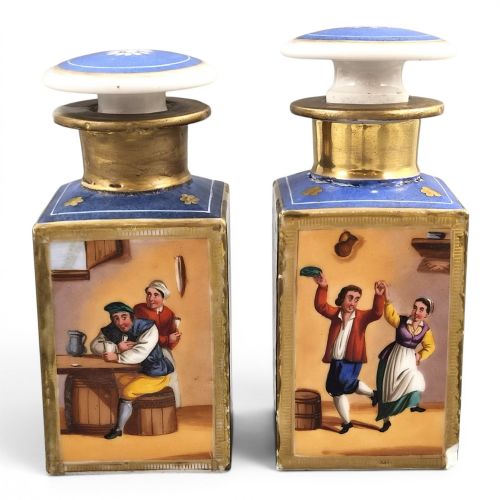
Overlay glass and multi-layered techniques appear on finer scent bottles, while porcelain and ironstone examples utilise traditional ceramic bodies with hand-painted glazes. Metal collars and chatelaine mountings provide functional security and decorative contrast to the glass and porcelain structures.
Victorian Cobalt Bottle Retail Price Guide 2026
Typical asking prices for victorian cobalt bottle among the pieces listed under this phrase on Sellingantiques today, from the lower quarter to the upper quarter. They describe what is for sale here now, not the wider market.
A chemist once reached for a cobalt bottle in the gloom of 1890, accidentally pouring laudanum instead of lavender water.
What varies in quality
Quality rests in the depth and clarity of the cobalt glass and the precision of any hand-blown or wheel-cut details. Superior examples exhibit crisp silver mounts, refined enamel work, or intact original stoppers that match the body.
Finer items demonstrate master craftsmanship in overlay glass cutting or detailed hand-painted scenes, separating standard utilitarian vessels from highly decorative parlour pieces.
Royal Crown Derby·Mason's Patent Ironstone·Jacob Petit·Stevenson and Hancock·Franchini and Bigaglia·Doulton
The Victorian Cobalt Bottle Glossary
- Cobalt glass
- Deep blue glass coloured by the addition of cobalt oxide during the melting process. This intense hue defines the visual appeal of many nineteenth-century apothecary and decorative bottles.
- Lollipop stopper
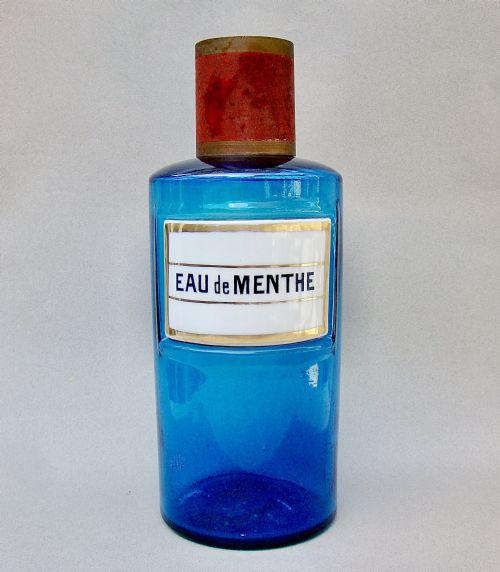
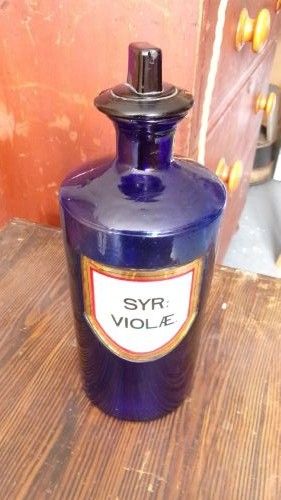
- A flat, circular glass stopper resembling a lollipop, commonly found on large chemist and apothecary bottles. It provides a tight seal for contents while offering a bold visual terminal.
- Mell decanter
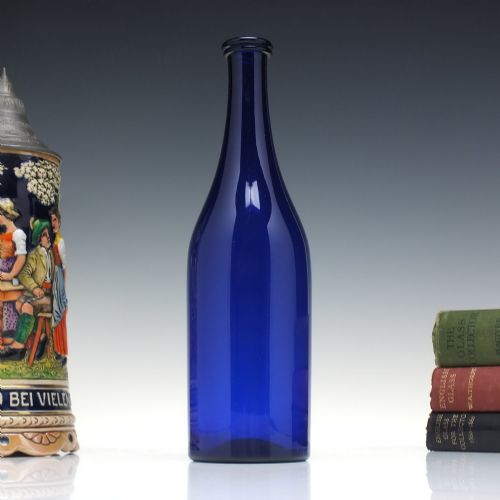
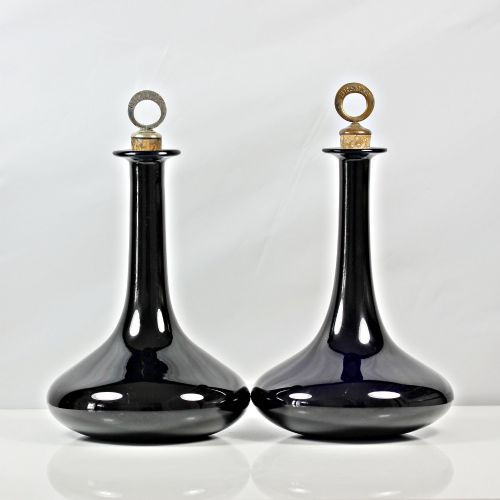
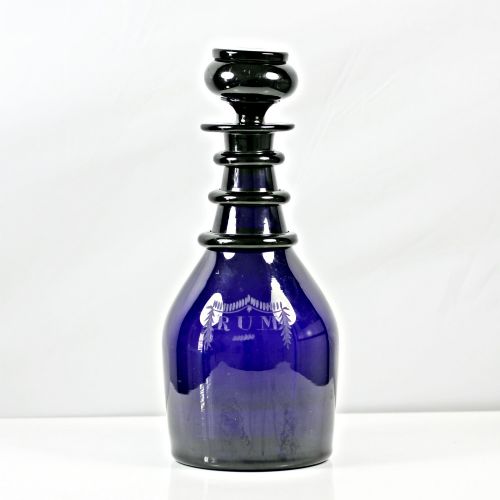
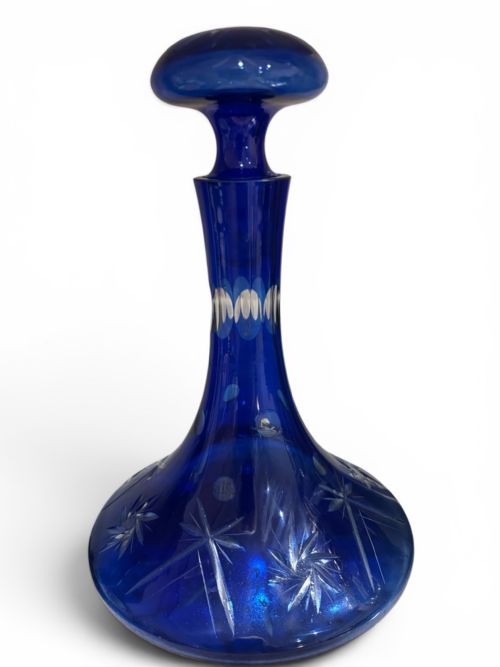
- A specific decanter shape featuring a rounded body and a tapering neck, often produced in blue glass for spirits and wine. These heavy vessels served dining rooms throughout the Victorian period.
- Chatelaine scent bottle
- A small perfume container suspended from a belt hook or chatelaine worn by women in the nineteenth century. These pieces frequently incorporate silver and overlay glass.
- Imari
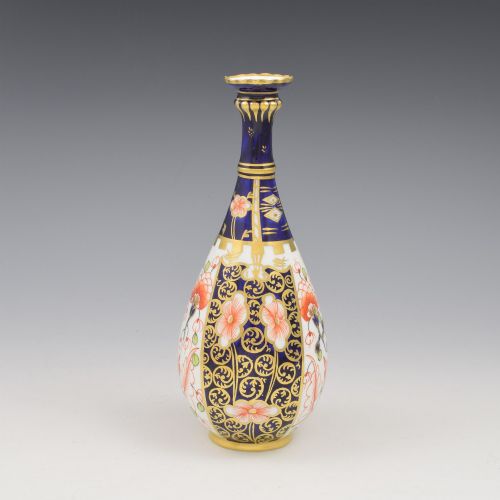
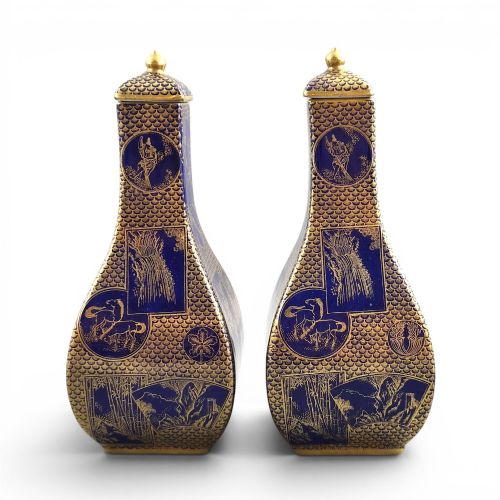
- A decorative style inspired by Japanese export porcelain, characterised by cobalt blue and iron red highlights on a white ground. Victorian potteries frequently adopted this palette for vases and small vessels.
Victorian Cobalt Bottle: Frequently Asked Questions
What were cobalt bottles used for?
Apothecaries and chemists utilised cobalt bottles to protect light-sensitive medicines and compounds from degradation. Households also employed them as decanters for spirits, wine, and water, or as decorative scent and perfume bottles.
Their striking colour made them practical for identifying specific contents while adding a decorative element to shop shelves and domestic interiors.
How do I identify a Victorian piece?
Examinations of pontil marks, glass thickness, and mount styles help determine a piece's era. Victorian examples often feature hand-blown irregularities, sterling silver hallmarks, or distinct period stoppers.
Stylistic cues such as William IV proportions, overlay glass techniques, and traditional apothecary labeling also point toward nineteenth-century origins.
Are stoppers usually original?
Many surviving bottles retain their original stoppers, particularly chemist bottles with lollipop tops and fitted decanters. Because stoppers were easily misplaced or broken over generations, replacements do occur.
Matching glass tone, wear patterns around the neck, and snugness of fit help indicate whether a stopper belongs to the vessel.
How should I clean my bottle?
Gentle cleaning with warm water and a soft cloth preserves the glass, enamel, and any silver mounts. Harsh abrasives and chemical cleaners must be avoided to protect delicate gold leaf and surface decoration.
Silver components benefit from targeted polishing that prevents tarnish without touching the surrounding glass.