
Victorian Coat Rack Stand
A victorian coat rack stand brings practical organisation and grand presence to an entrance hall, combining hooks and mirrors in solid timber or bentwood.
Victorian Coat Rack Stand
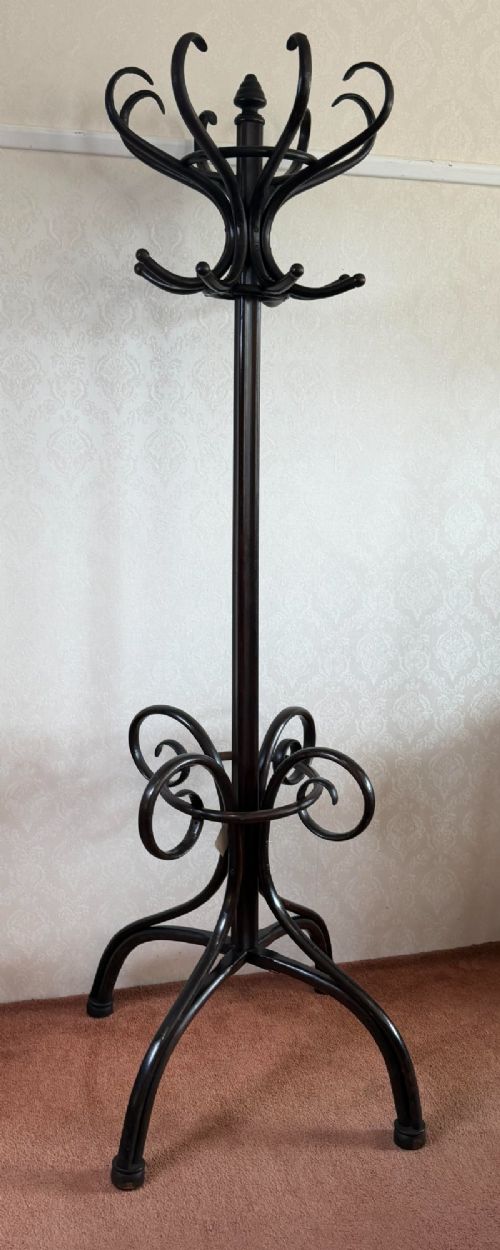
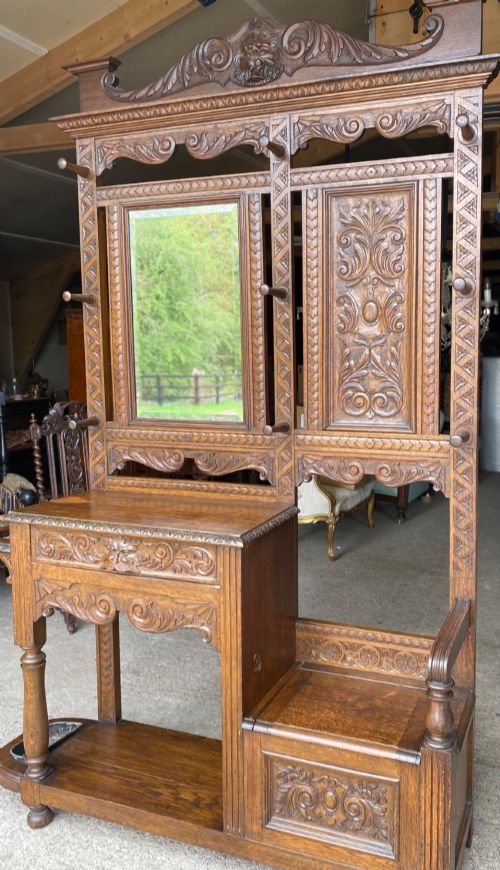
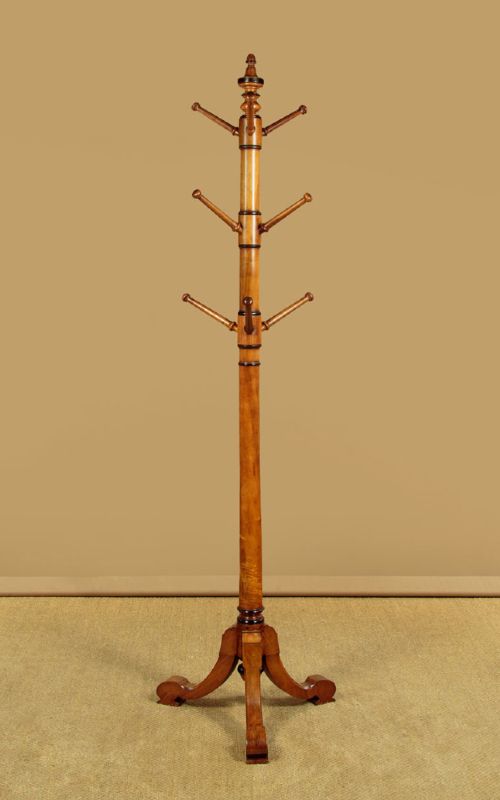
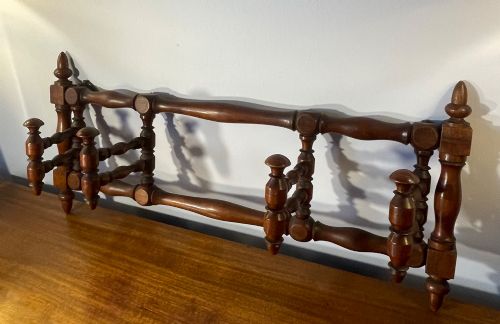
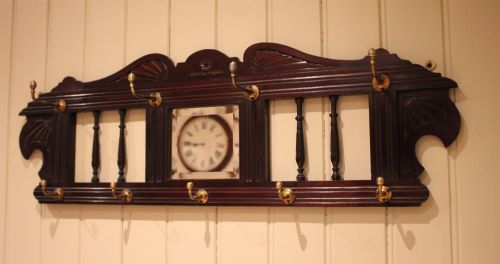
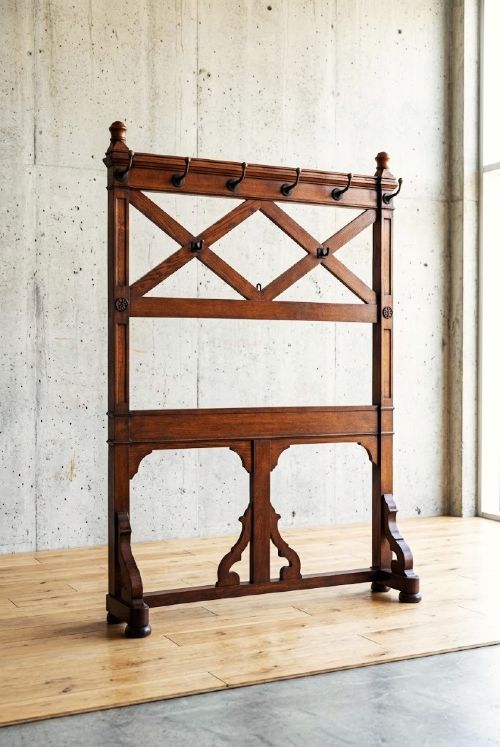
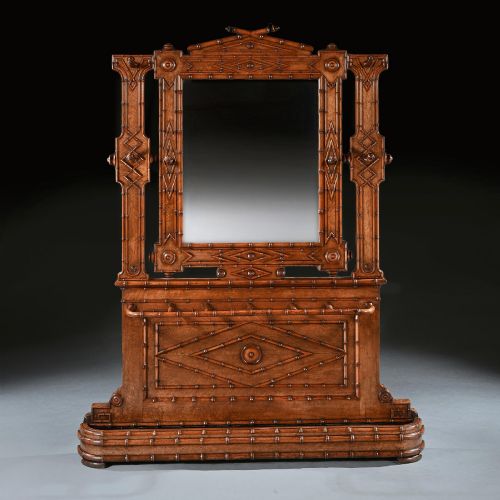
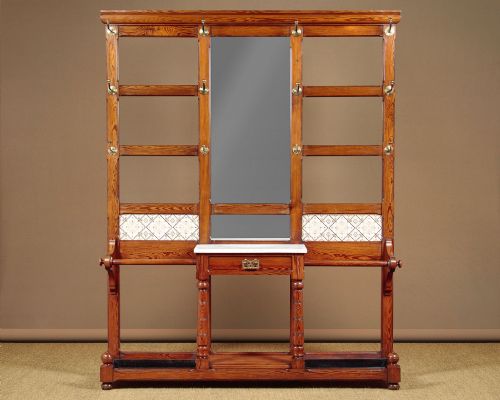
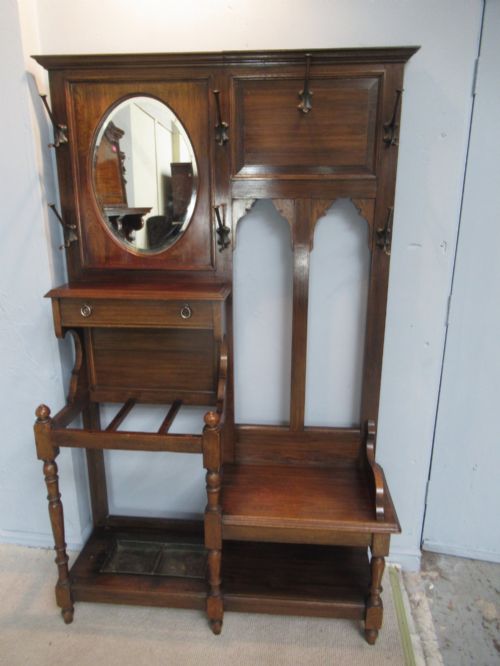
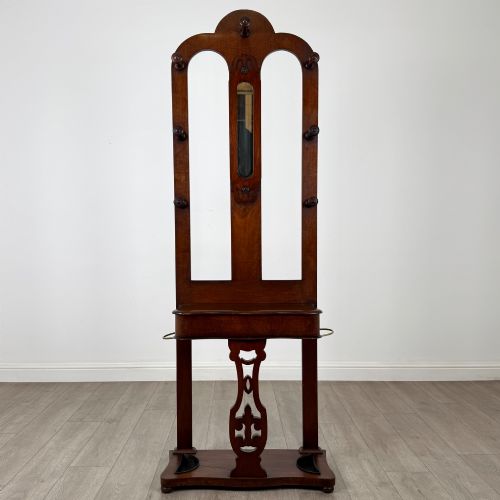
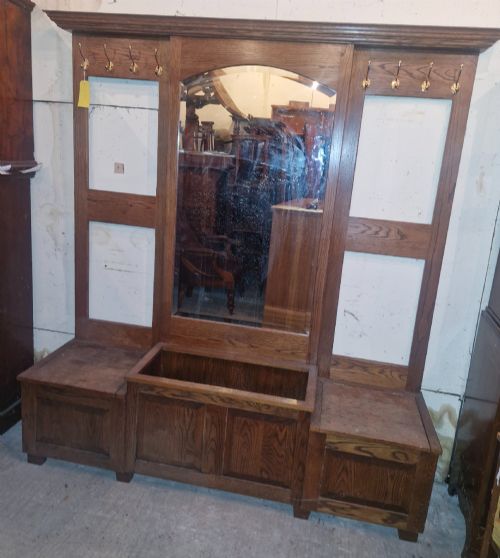
A victorian coat rack stand serves as a functional piece of entrance furniture designed to hold hats, coats, and walking sticks in a hallway. These items appear in various forms including wall-mounted racks, tall standing trees, and large hall stands incorporating umbrella wells and seats.
The selections on this page span the Victorian era, Edwardian period, and late nineteenth century, reflecting styles from Gothic Revival to Aesthetic Movement. Buyers frequently encounter bentwood designs alongside heavy carved oak and mahogany structures.
Originating largely from British and continental workshops, these stands utilise diverse timbers and metals to suit both grand country houses and smaller domestic spaces. Their survival in daily use demonstrates their enduring structural utility.
Materials and construction
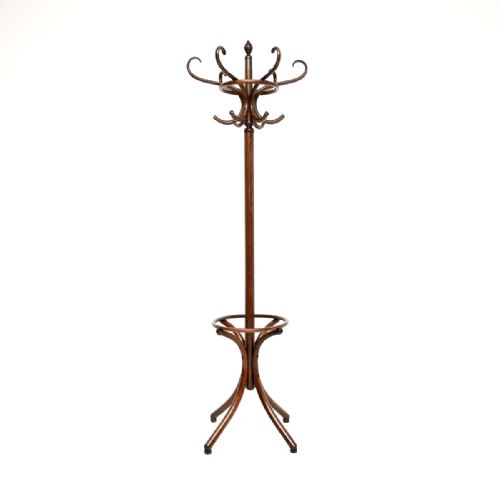
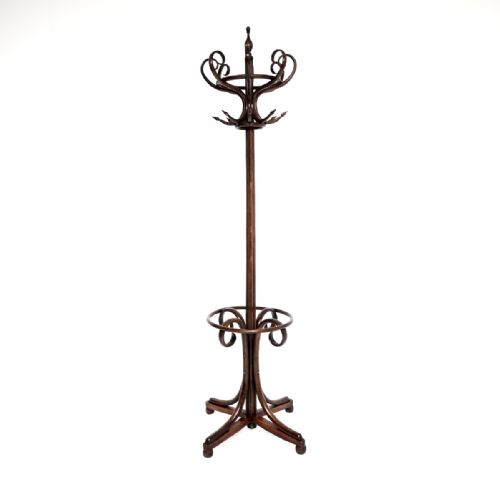
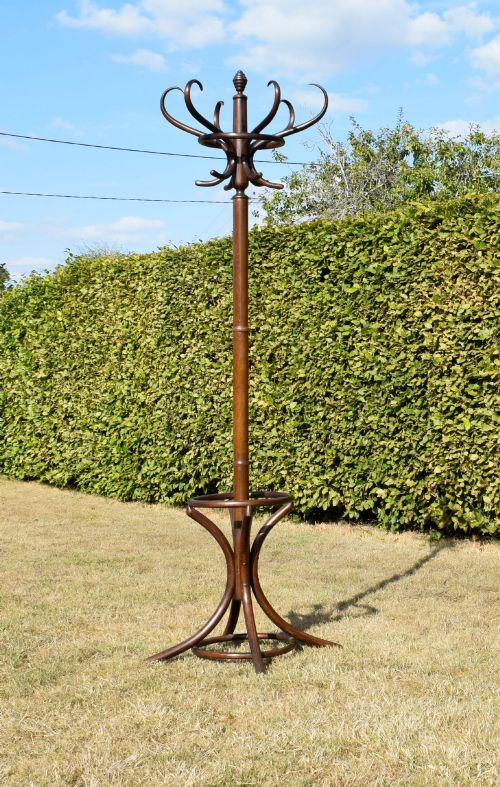
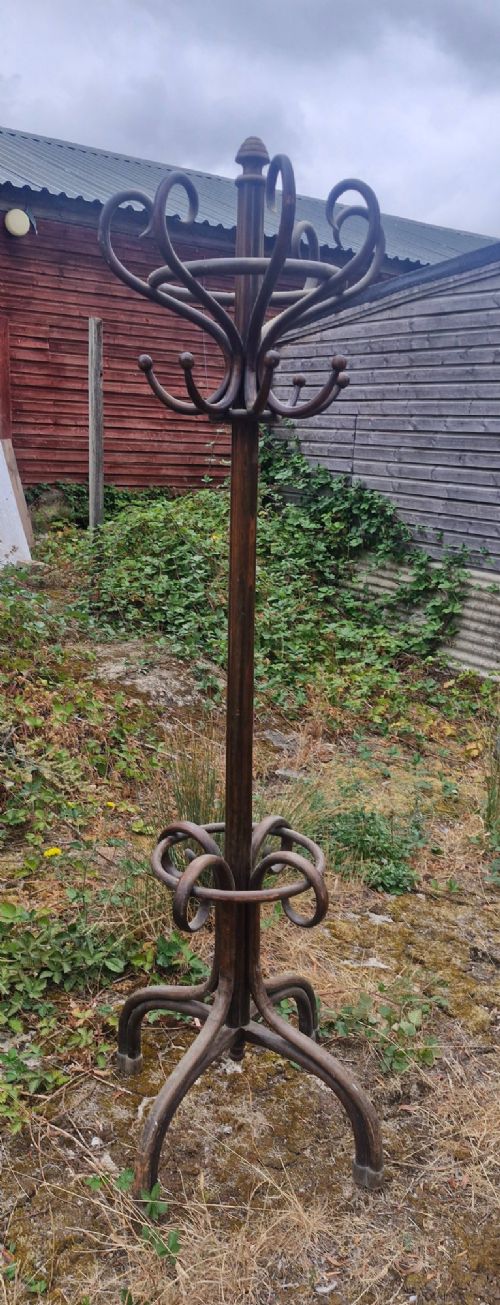
Makers utilised solid timbers such as oak, walnut, mahogany, and beech, often shaped through steam-bent techniques pioneered by workshops like Thonet. These bentwood pieces rely on flexible steamed beech curved into graceful loops for lightweight strength.
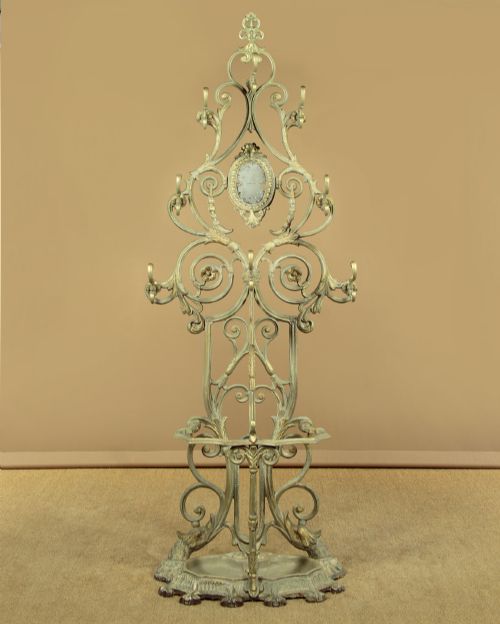
Cast iron and brass provide robust alternatives, frequently moulded into intricate faux bamboo or decorative botanical patterns. Mirrors, ceramic drip pans, and brass hooks complete the construction, combining metalwork and glassware with traditional joinery.
Listings feature items spanning the Victorian era, Edwardian period, and early twentieth century, constructed from oak, mahogany, beech, cast iron, and bamboo.
Assessing quality and execution
Quality rests upon the depth of hand-carving, the selection of timber grain, and the integrity of the structural joints. Pieces featuring elaborate Green Man carvings or detailed stags' horn work demonstrate superior craftsmanship compared to simpler utilitarian designs.
The presence of original bevelled mirrors, intact drip trays, and stamped maker details elevates a piece. Construction methods, such as pegged mortise and tenon joints in oak or seamless steam curves in bentwood, determine long-term durability.
Thonet·J Parker of Woodstock·Coalbrookdale
The Victorian Coat Rack Stand Glossary
- Bentwood
- Wood shaped by steaming and bending it into curved forms. This technique produced lightweight, durable coat stands popular in the late nineteenth century.
- Hall Stand
- A large piece of entrance furniture combining coat hooks, a mirror, umbrella holders, and frequently a seat or glove box. They anchor the decor of a traditional hallway.
- Aesthetic Movement
- A late nineteenth-century design style emphasising visual beauty over narrative subject matter. Pieces in this style often incorporate bamboo and Japanese-inspired motifs.
- Gothic Revival
- An architectural and decorative style drawing inspiration from medieval forms. Such pieces display pointed arches, heavy tracery, and dark carved oak.
- Faux Bamboo
- Wood or metal carved and painted to imitate natural bamboo stalks. This whimsical technique was common in French and English furniture of the late nineteenth century.
Victorian Coat Rack Stand: Frequently Asked Questions
How do I maintain a wooden hall stand?
Apply natural beeswax periodically to nourish the timber and protect the polished surface from moisture in everyday use.
Avoid placing the stand near direct heat sources or damp areas to prevent wood movement and veneer lifting.
Were these stands used in small homes?
While massive carved oak hall stands suited grand country houses, smaller wall-mounted racks and half-round bentwood stands served compact Victorian townhouses.
Slim footprints and corner designs allowed hallways of modest proportions to accommodate outdoor wear efficiently.
What is the difference between a coat stand and a hall stand?
A coat stand primarily consists of a central vertical post with radiating hooks at the top for hats and coats. It focuses solely on hanging garments.
A hall stand is a larger, multi-functional cabinet piece that incorporates a mirror, glove compartments, umbrella stands, and sometimes a bench seat.
How do I identify a bentwood piece?
Look for continuous, flowing curves of wood formed without traditional glued joints. The smooth, rounded frames are characteristic of steam-bent beech production.
Many examples bear paper labels or stamped signatures from prominent makers on the underside of the base.