

Victorian Clothes Armoire
A victorian clothes armoire brings substantial timber storage and period character to a bedroom.
Victorian Clothes Armoire
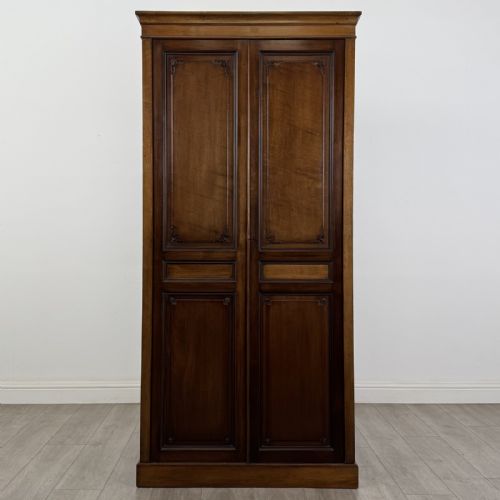
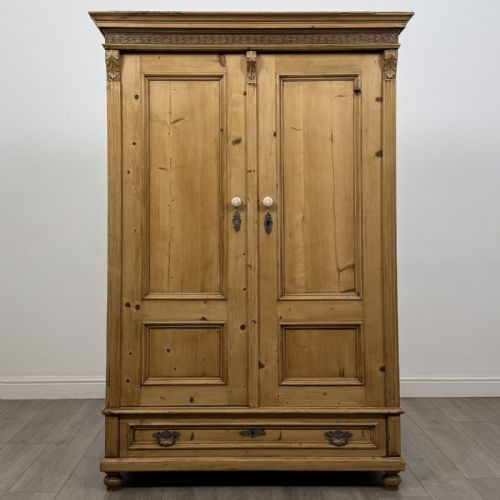
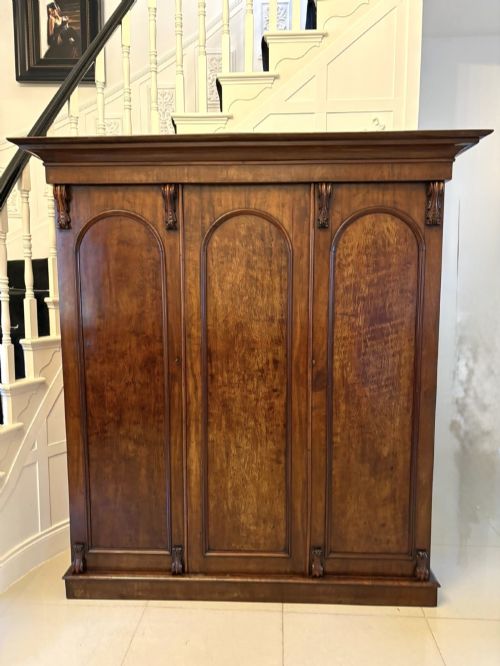
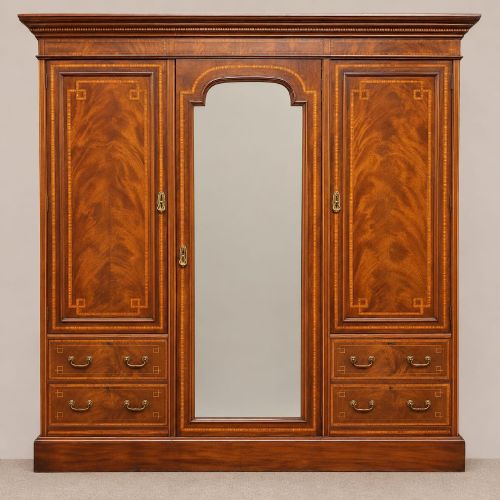
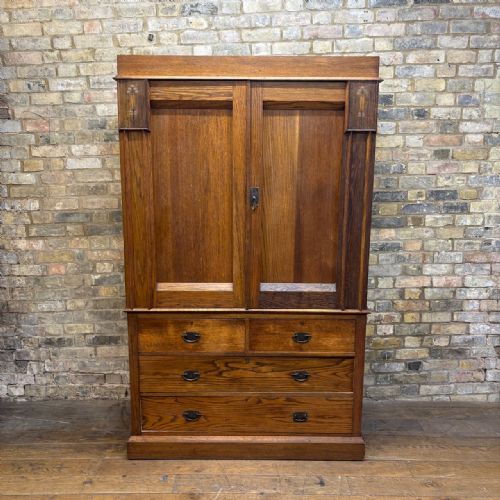
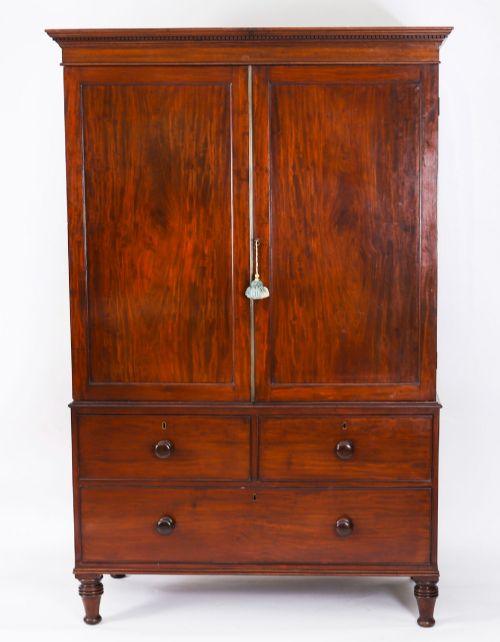
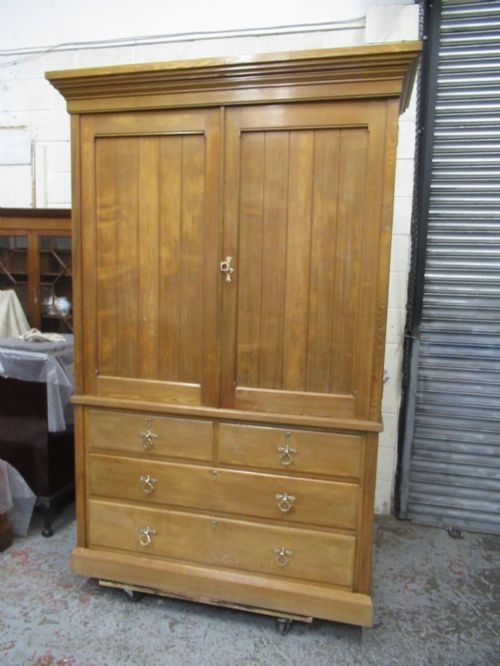
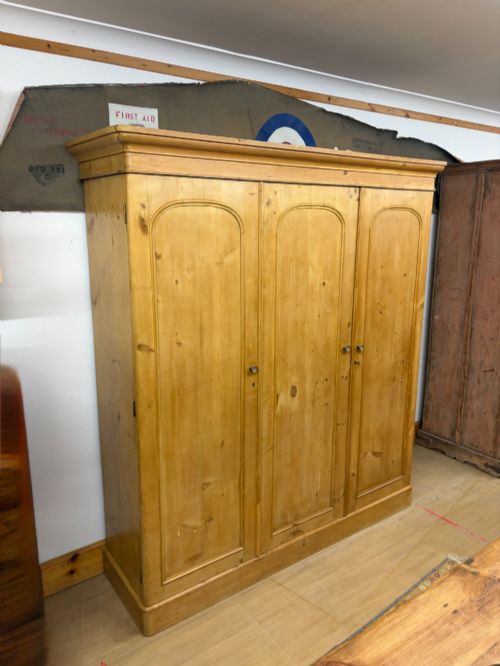
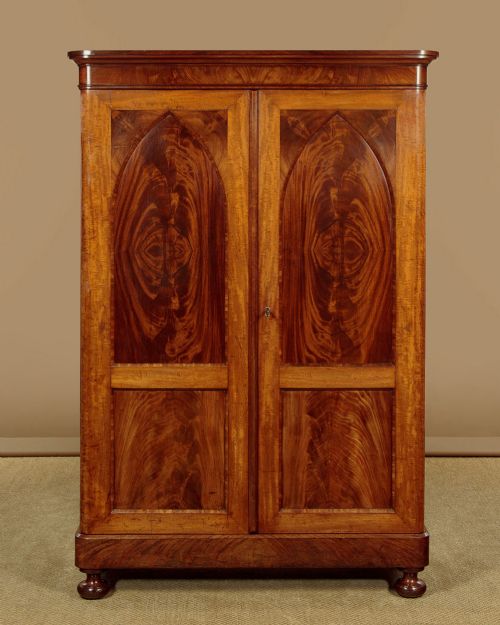
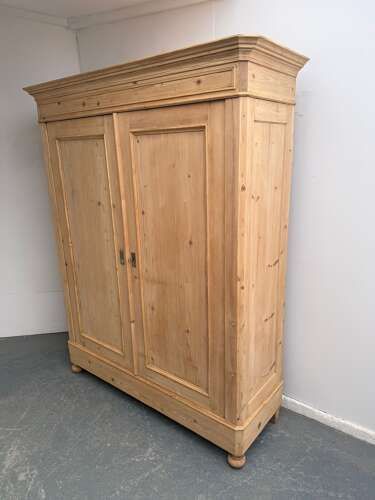
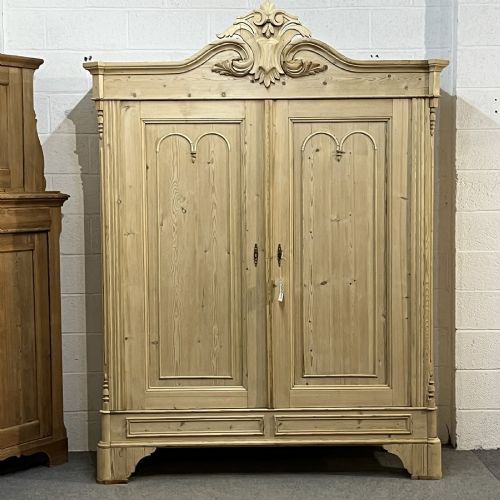
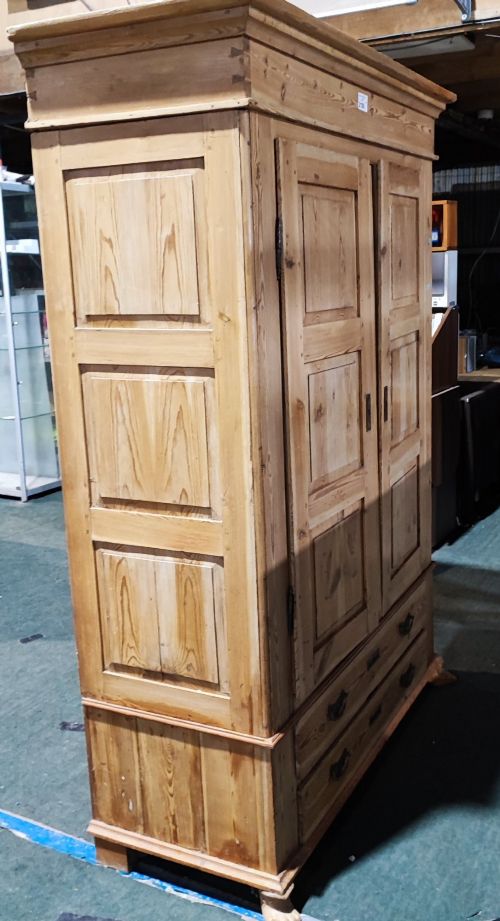
When searching for a victorian clothes armoire, buyers encounter large timber storage furniture spanning wardrobes, linen presses, and compactums produced through the nineteenth century. These pieces range from substantial mahogany and walnut wardrobe designs to practical pine cupboards.
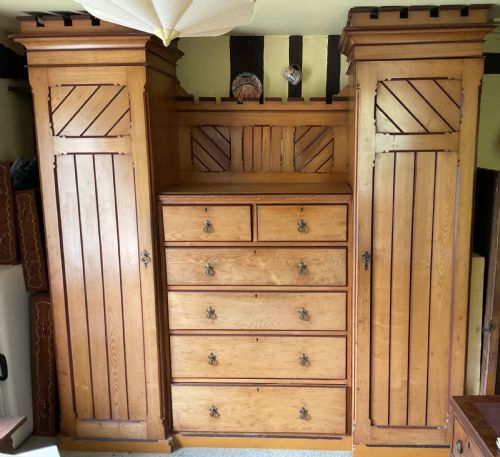
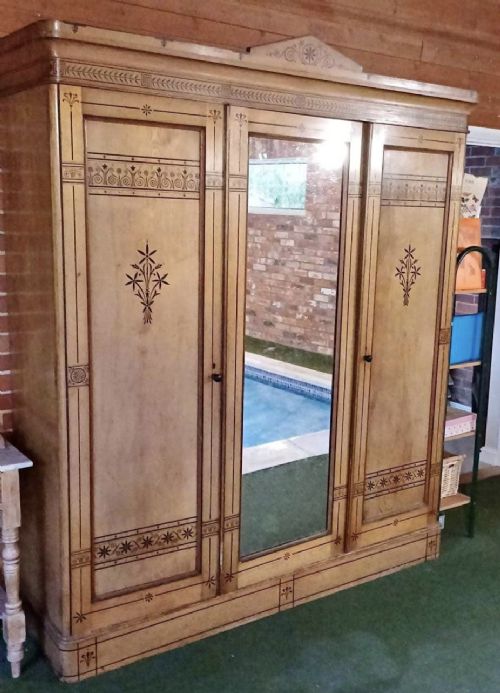
Double and triple wardrobe formats dominate the selection, often featuring hanging space flanked by linen drawers or shelving compartments. Pieces attributed to the Arts and Crafts style or Aesthetic Movement appear alongside traditional country house examples.
Originating in the Victorian period, many items incorporate knockdown construction or modular frames designed to dismantle for transport in smaller townhouses and rural properties.
Materials and construction methods
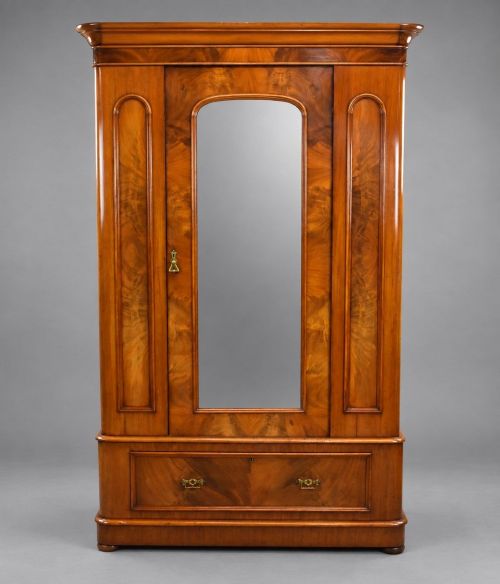
Cabinet makers utilised dense hardwoods including flame mahogany, burr walnut, and English ash, alongside domestic softwoods like pitch pine for utilitarian or country workshop pieces. Drawer linings frequently employ oak or pine with hand-cut dovetail joints securing the carcase.
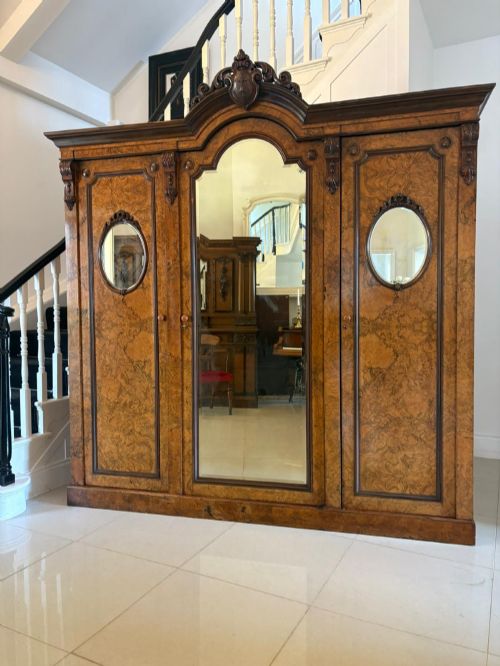
Surface treatments combine French polish on figured mahogany and walnut with wax finishes on pine, occasionally supplemented by decorative scumble paintwork or carved panel details. Brass hardware, iron locking mechanisms, and bevelled glass mirror doors complete the assembly of larger multi-door wardrobes.
Victorian Clothes Armoire Retail Price Guide 2026
Typical asking prices for victorian clothes armoire among the pieces listed under this phrase on Sellingantiques today, from the lower quarter to the upper quarter. They describe what is for sale here now, not the wider market.
Listings feature mahogany, walnut, pine, and ash woods across Victorian wardrobe and linen press configurations.
Distinguishing quality across examples
Quality depends upon the selection of timber veneers, such as figured mahogany or burr walnut, and the precision of decorative carvings or blind fretwork cornices. Cabinetry featuring original brass fittings, intact bevelled glass mirrors, and functioning internal sliding linen trays commands attention.
Structural integrity relies on the retention of original knockdown bolts, solid timber backboards, and stable plinth bases that withstand the weight of heavy doors without dropping on their hinges.
Shapland & Petter·Gillows·S & H Jewell
The Victorian Clothes Armoire Glossary
- Compactum
- A fitted wardrobe combining hanging space, drawers, and linen shelves within a single multi-door cabinet. These pieces maximise internal storage capacity.
- Linen press
- A tall cupboard with upper sliding shelves or trays for folded linen above a bank of lower drawers. The design evolved into hanging wardrobes during the nineteenth century.
- Scumble
- A decorative paint technique applied over a base coat to imitate natural wood grain. This finish appeared frequently on nineteenth-century utility furniture.
- Knockdown
- A piece of furniture constructed to dismantle into sections for transport and installation. Iron bolts and slot joints hold the carcase together.
Victorian Clothes Armoire: Frequently Asked Questions
How do I dismantle a large wardrobe?
Most nineteenth-century wardrobes with knockdown construction utilise internal bed bolts or slotted timber pins to secure the cornice, sides, and base together.
Marking each component during disassembly ensures correct alignment when rebuilding the carcase in a new room.
What is a compactum wardrobe?
A compactum is a multi-compartment wardrobe that integrates hanging rails, sliding linen trays, and graduated drawers into one piece of furniture.
This layout provided complete bedroom storage for garments and linens within a single footprint.
Can I paint a pine wardrobe?
Many nineteenth-century pine wardrobes arrive prepared for wax or paint finishes, allowing buyers to match existing interior schemes.
Applying traditional mineral paint or breathable wax over stripped pine preserves the timber while updating its appearance.
How do I fit clothes inside?
Older wardrobes often feature shallower internal depths or fixed wooden hanging pegs rather than modern rails running front to back.
Utilising slim hangers or adding a secondary brass rail allows standard garments to hang cleanly inside narrow carcases.