




Victorian Clock Under Glass
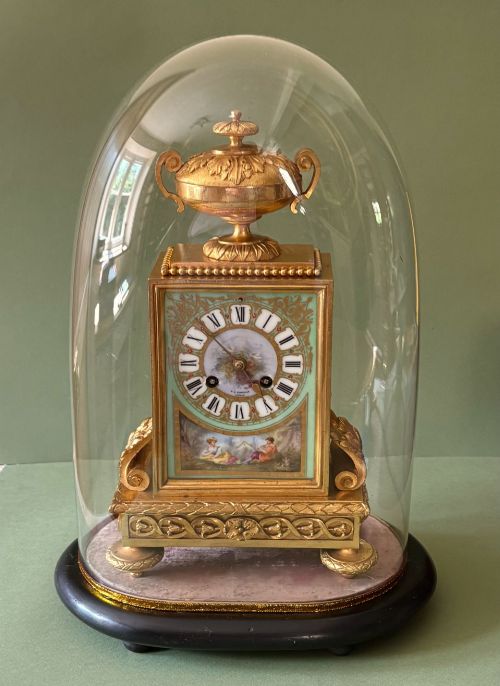
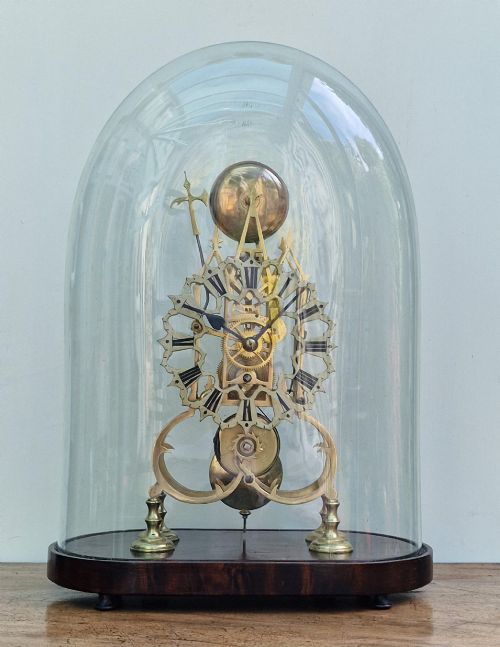
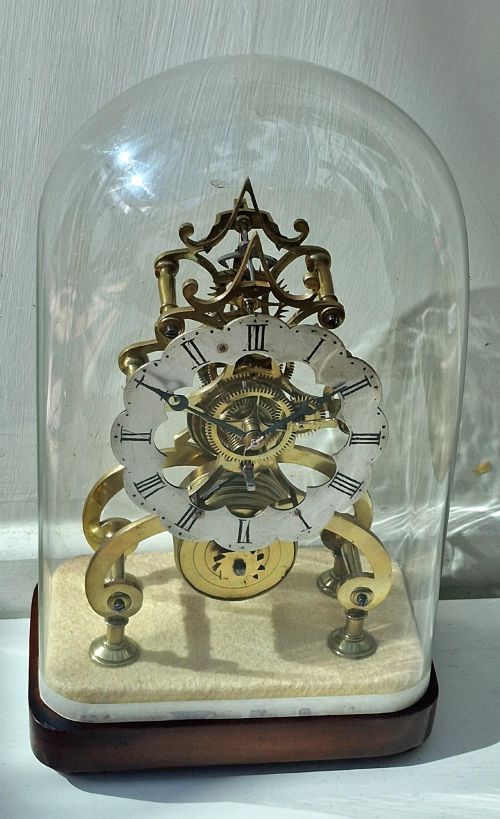
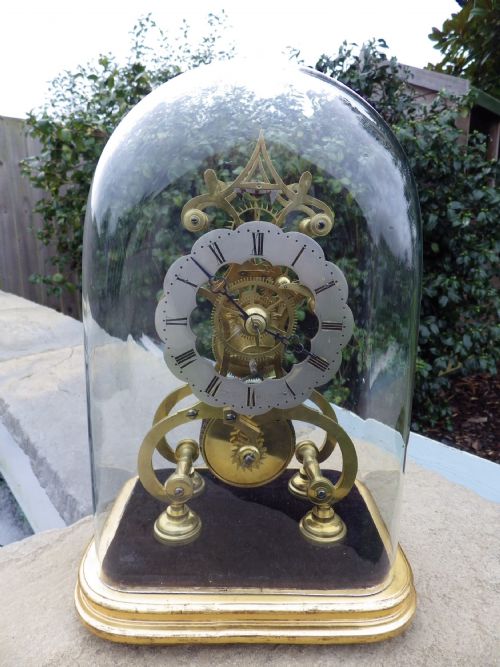
A victorian clock under glass combines mechanical skeleton work and delicate porcelain mounts beneath a protective hand-blown dome.
Victorian Clock Under Glass
The selections on this page span several decades of the Victorian era, alongside French Empire and Gothic Revival movements. Most examples feature brass or ormolu mechanisms paired with wooden bases and original glass domes.
How they were made
Clockmakers utilised brass, steel, and ormolu for intricate wheel work, portico frames, and skeletal structures. Cabinets and stands frequently employed mahogany and ebonised wood to support the weight of the mechanism.
Protective covers were produced using hand-blown glass methods to create clear domes that shielded delicate porcelain panels and fusee movements from dust.
Victorian Clock Under Glass Retail Price Guide 2026
Typical asking prices for victorian clock under glass among the pieces listed under this phrase on Sellingantiques today, from the lower quarter to the upper quarter. They describe what is for sale here now, not the wider market.
Tiny brass wheels turn silently beneath heavy glass bubbles, keeping nineteenth-century time while safe from passing cats and stray elbows.
What varies in quality
The refinement of the wheel work and the complexity of the skeleton movement distinguish standard timepieces from exceptional creations. Six-spoke wheel designs and passing strike complications indicate higher grade production.
The presence of an original hand-blown dome alters the integrity of the piece compared to later replacements. Furthermore, the crispness of ormolu mounts and Sevres style porcelain panels demonstrates superior craftsmanship.
The Victorian Clock Under Glass Glossary
- Fusee
- A conical pulley used in a clock to maintain even power as the mainspring unwinds. This mechanism improves the timekeeping accuracy of the movement.
- Ormolu
- Gilded bronze or brass applied to clock cases and decorative mounts. It provides a bright metallic finish popular in French and Victorian design.
- Skeleton clock
- A timepiece designed with open plates and bridges to reveal the gear train and escapement. This exposes the internal mechanics to view.
- Portico clock
- A mantel clock featuring architectural columns or pillars supporting the central dial housing. The design draws inspiration from classical architecture.
- Dome
- A blown glass cover resting on a wooden or velvet-lined base to protect the clock mechanism. It preserves the internal components from dust.
Victorian Clock Under Glass: Frequently Asked Questions
Are the glass domes original?
Many listings specify whether the dome is the original hand-blown cover supplied with the clock during the nineteenth century. Original domes often exhibit minor imperfections characteristic of period glass production.
Replacement domes appear on the market when the initial cover suffered damage over the decades of use.
How do fusee movements work?
A fusee movement uses a conical pulley connected to the mainspring by a cord or chain. As the spring unwinds and loses tension, the leverage on the cone changes to maintain consistent force on the gear train.
This mechanical refinement helps the clock maintain accurate time throughout its running cycle.
What styles are common?
Common styles include Victorian Gothic, French Empire, and Second Empire designs alongside classic English fusee configurations. These pieces range from architectural portico models to cathedral garnitures.
Materials extend to ormolu, ebonised wood, mahogany, and porcelain panels in the style of Sevres.