




Victorian Clock Set
A victorian clock set brings symmetry and functional horology to a mantelpiece, usually comprising a central timepiece flanked by matching ornamental vases or candelabras.
Victorian Clock Set
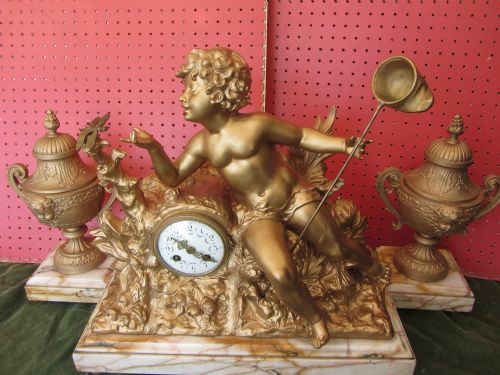
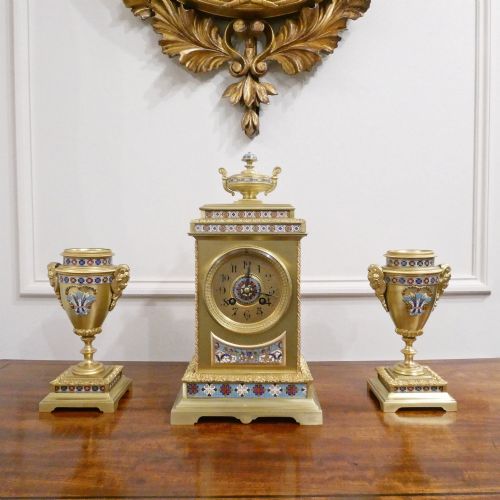
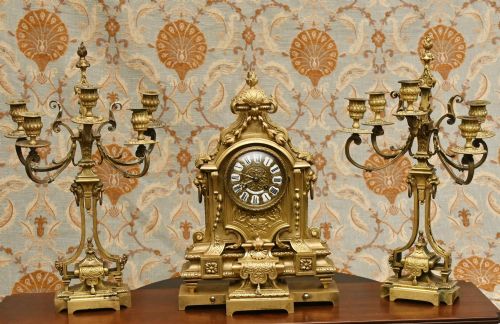
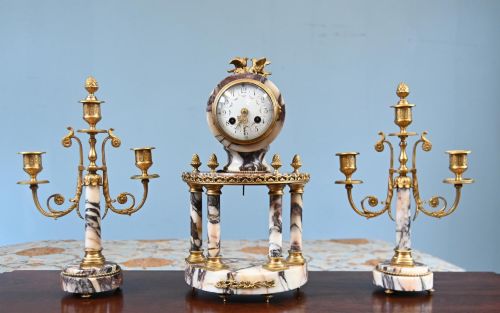
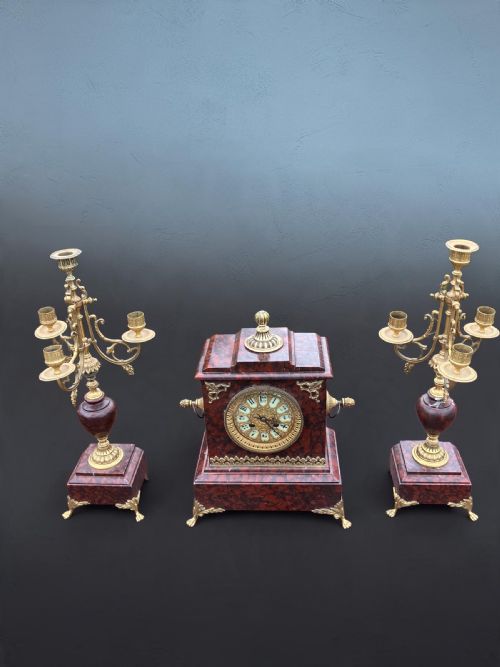
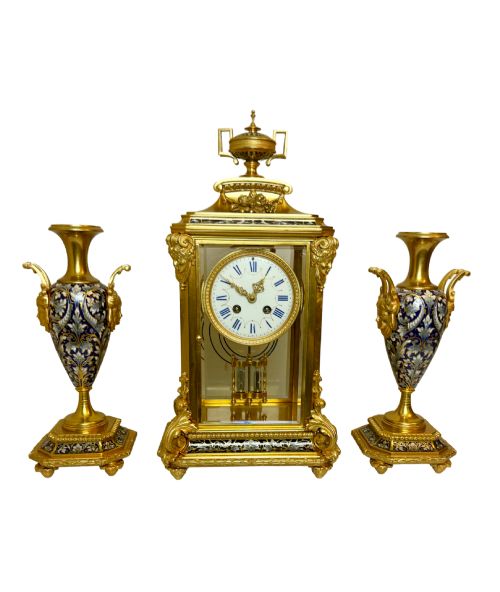
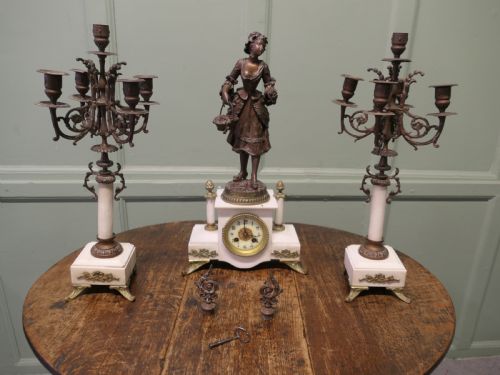
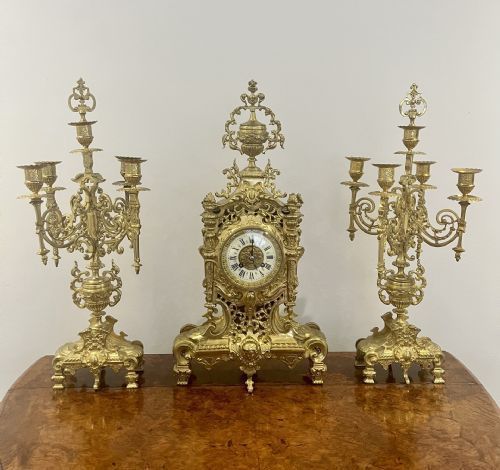
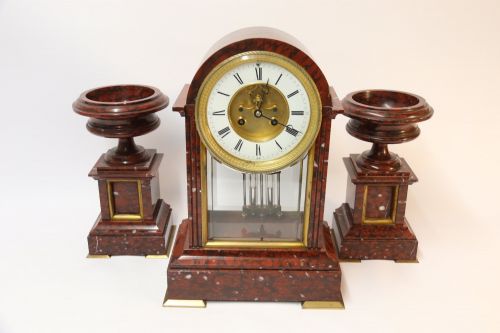
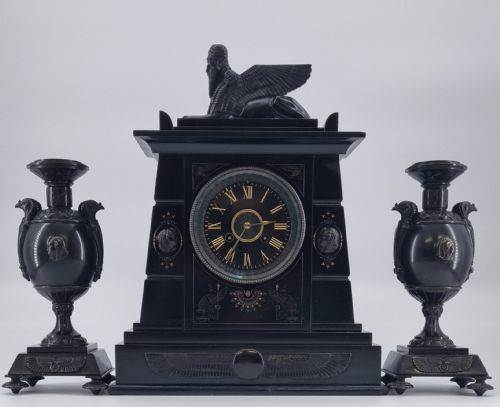
A victorian clock set typically arrives as a matching three-piece garniture, uniting a mantel clock with a pair of side ornaments such as urns or candelabras. These arrangements were designed to create a balanced centrepiece on a drawing room fireplace or sideboard during the nineteenth century.
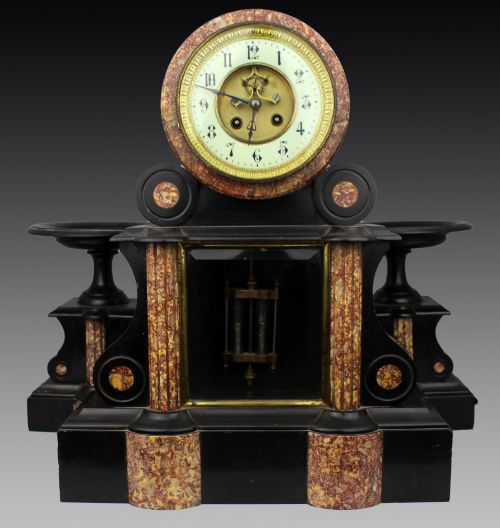
The versions most commonly met on this page combine French movement manufacture with heavy architectural housings in black slate, marble, or gilded bronze. Alongside these, buyers frequently encounter sets decorated with painted porcelain panels or intricate champleve enamel.
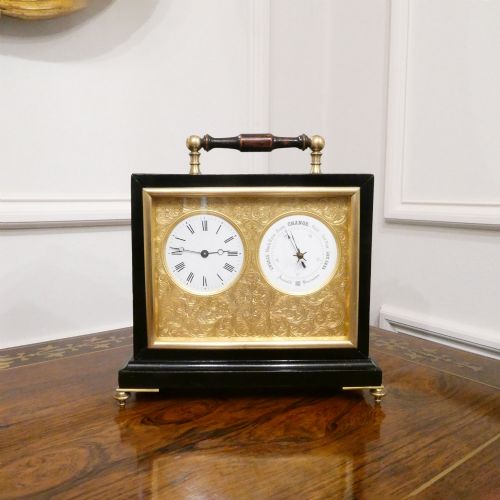
Many examples incorporate decorative themes from the Rococo Revival, Napoleon III, and Egyptian Revival periods, reflecting the eclectic taste of the era. The selection also extends to specialised compendiums that group a clock with thermometers, barometers, or matching inkwells.
Materials and construction
Horologists housed these movements in substantial mineral cases, utilising black slate, various marbles, and onyx to achieve weight and architectural presence. Ormolu and gilded bronze mounts were frequently applied to soften the stone and introduce ornate rococo or classical detailing.
Makers integrated delicate visual elements through hand-painted porcelain plaques, often styled after Sevres or Meissen, alongside glass-enclosed dials with enamel chapters. Champleve and cloisonne enamelling added vibrant patches of colour directly into recessed metallic cells on the brass or bronze chassis.
Victorian Clock Set Retail Price Guide 2026
Typical asking prices for victorian clock set among the pieces listed under this phrase on Sellingantiques today, from the lower quarter to the upper quarter. They describe what is for sale here now, not the wider market.
Some desk pieces integrated chaff-cutter escapements alongside inkwells, ensuring Victorian writers could check the time while spilling their black ink.
What separates the tiers of quality
Quality rests heavily on the reputation of the movement maker and the crispness of the cast metal mounts. Signed movements by notable mechanicians show superior machining in the escapements and gear trains compared to anonymous mass-produced alternatives.
The artistic execution of the porcelain panels and the depth of the chasing on the ormolu define the upper tier of pieces. Heavy, solid marble and slate housings with intact, finely detailed cloisonne or champleve work distinguish the finer ensembles from plainer, simpler iterations.
Japy Freres·Samuel Marti·A.D Mougin·KPM Berlin·Raingo Fres·Seth Thomas
The Victorian Clock Set Glossary
- Garniture
- A set of matching decorative objects designed to be displayed together, typically consisting of a central clock and two flanking vases or candelabras.
- Ormolu
- Gilded bronze, where a layer of gold is applied to a bronze base using mercury amalgamation or electroplating to produce a bright golden finish.
- Champleve
- An enamelling technique where troughs or cells are hollowed out of a metal surface and filled with vitreous enamel before firing.
- Escapement
- The mechanical linkage in a clock that regulates the unwinding of the mainspring by translating rotational force into regulated impulses.
- Slate
- A fine-grained metamorphic rock used extensively in nineteenth-century clock cases for its ability to take a high polish and imitate black marble.
Victorian Clock Set: Frequently Asked Questions
How do you wind a victorian clock set?
Most models utilise a key inserted into specific winding holes on the porcelain or enamel dial face to tension the internal springs.
Care should be taken not to overwind the mechanism, stopping as soon as resistance is felt to preserve the historical teeth on the arbors.
Where were these clock sets displayed?
They were primarily positioned on the mantelpiece above a drawing room fireplace, flanked by their matching candelabras or urns to frame a mirror.
Secondary placements included large sideboards, entrance hall tables, and dedicated architectural desks within wealthy nineteenth-century homes.
How do I maintain an eight-day movement?
These mechanical movements require periodic professional cleaning and oiling to remove congealed dust and old lubricants from the pivots and gears.
Keeping the clock on a level surface ensures the pendulum beats evenly and prevents the escapement from wearing unevenly over time.