


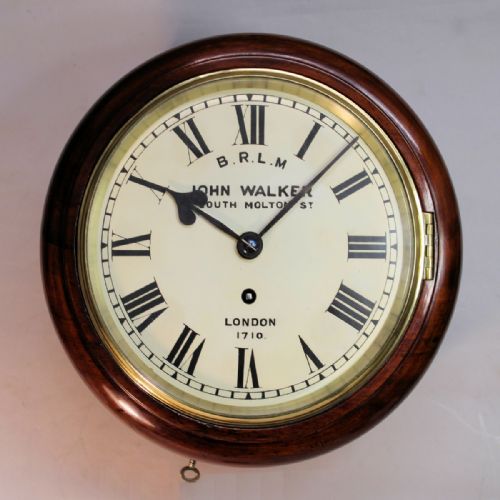
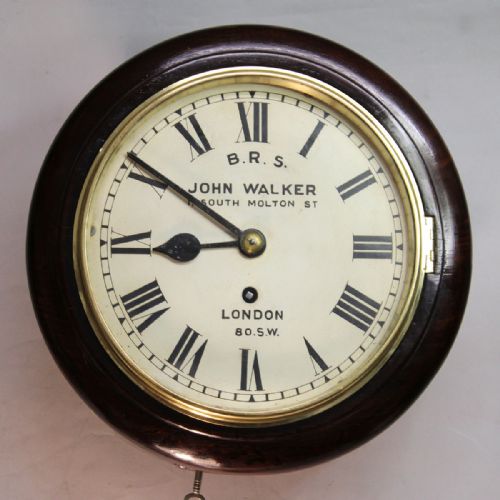
Victorian Circular Wall Clock
A victorian circular wall clock brings steady British craftsmanship and practical timekeeping directly to your wall.
Victorian Circular Wall Clock
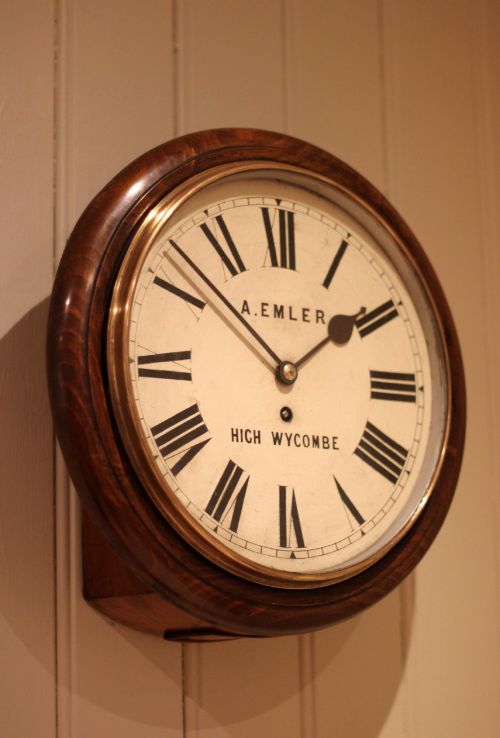
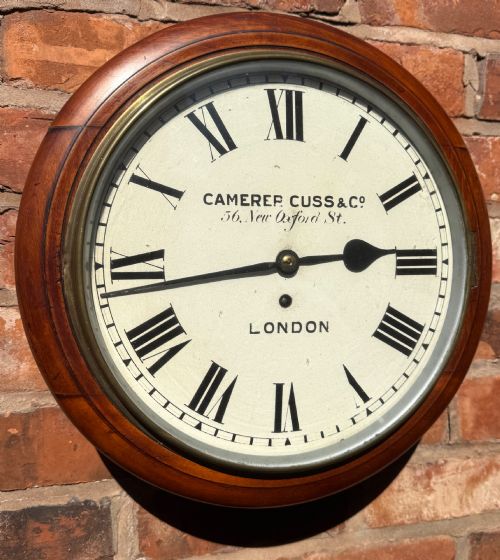
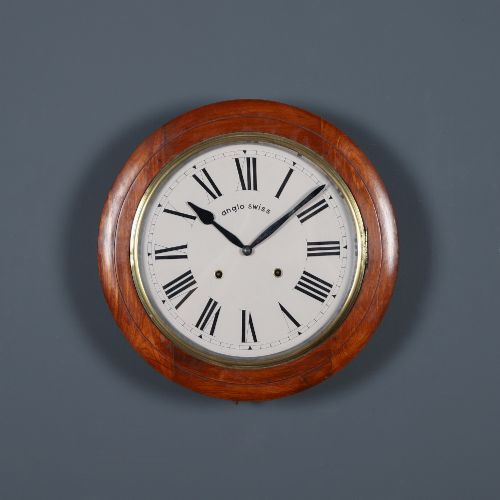
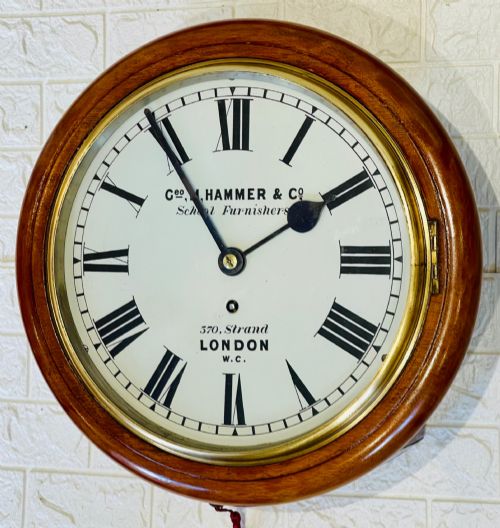
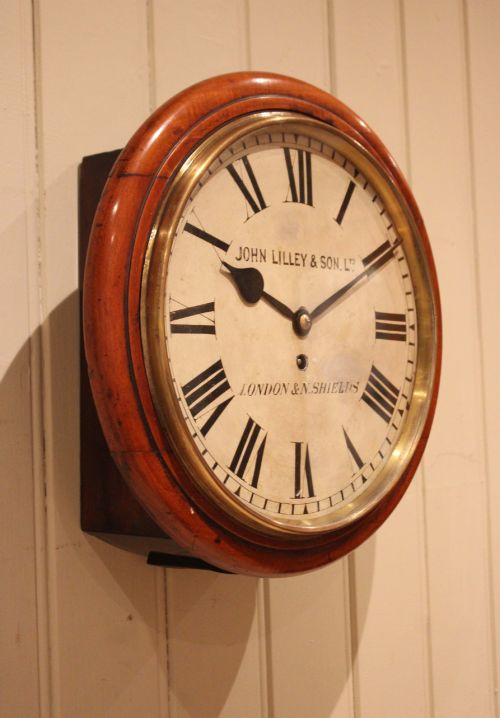
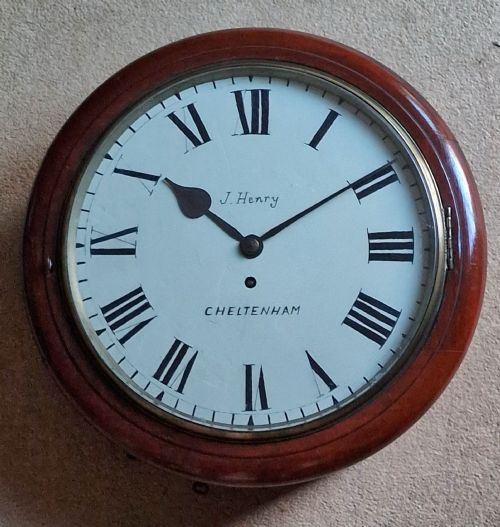
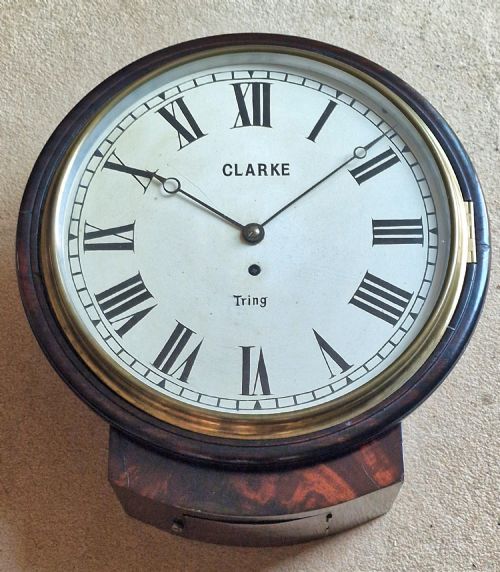
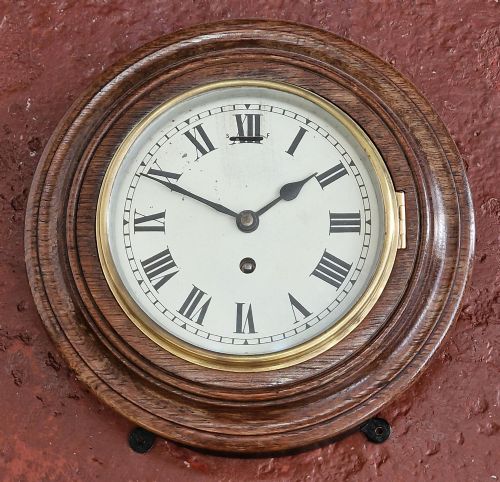
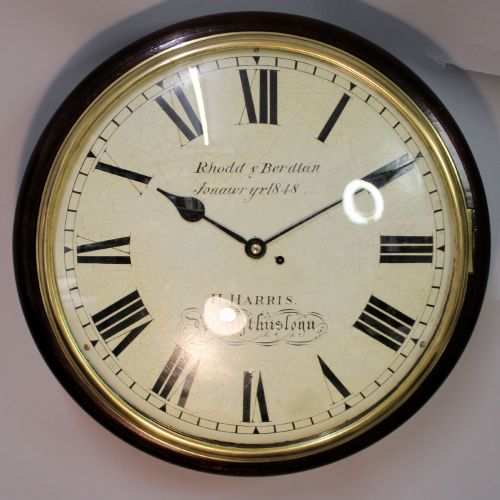
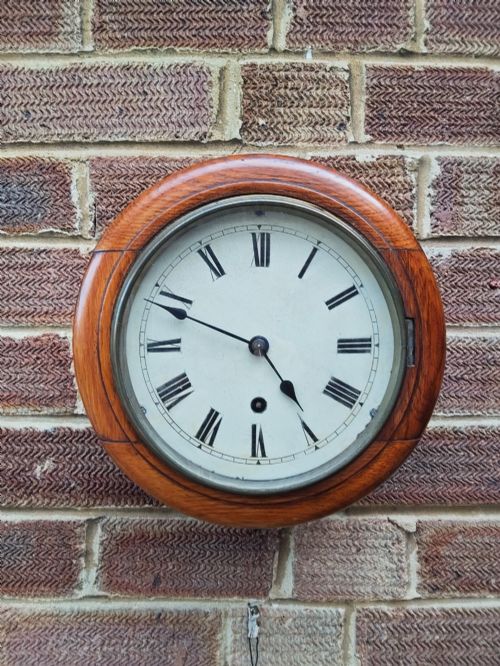
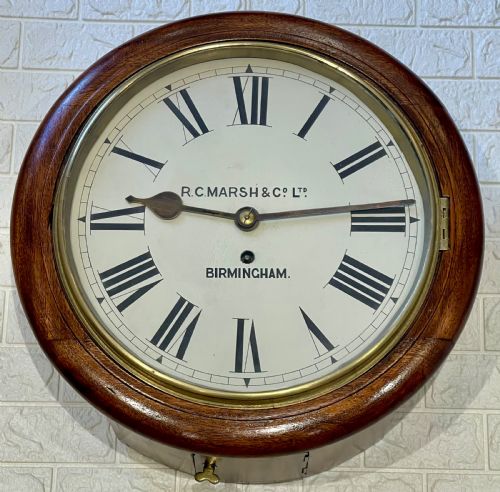
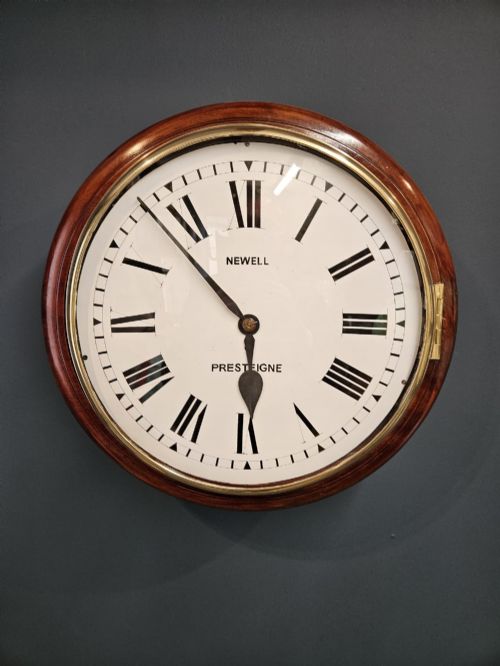
A victorian circular wall clock is a round timepiece designed specifically to hang on a wall, most frequently found in public spaces, offices and domestic rooms across Britain during the nineteenth century. The examples on this page primarily take the form of dial clocks and railway or school clocks housed in sturdy timber surrounds. These round clocks measure anywhere from compact six-inch dials up to commanding twenty-four-hour formats.
The dominant mechanical heart within these pieces is the fusee movement, a conical pulley system designed to maintain even tension on the chain as the mainspring unwinds, ensuring accurate timekeeping. While the Victorian period sets the main style, you will also encounter pieces carrying influences from the Edwardian era and up to nineteen-thirty. Railway companies such as the GWR, LMS and British Railways heavily utilised these reliable round dials to keep operations punctual.
Materials and construction
Timbers form the protective housing for these movements, with dense mahogany, warm walnut, solid oak and beech selected for durability and finished to a smooth sheen. The dial faces themselves incorporate painted metal, brass or enamel with bold Roman or Arabic numerals protected behind heavy glass doors.
The internal brass fusee movements require careful hand assembly by skilled horologists, often featuring chain-driven mechanisms designed to run for eight days on a single wind. Iron components appear within specific brackets and framing, whilst distinctive cast brass bezels secure the glass face to the outer wooden rim.
Listings feature robust timbers like mahogany, oak and walnut paired with brass and enamel across nineteenth-century and early twentieth-century dial clocks.
Judging quality and character
The standard of a victorian circular wall clock rests heavily on the crispness of the dial markings and the original maker's signature inscribed upon the face. Named makers and regional railway contracts elevate an example beyond standard commercial production.
Cabinetry integrity and timber selection dictate the visual appeal, where well-figured mahogany or walnut with tight corner joints denotes superior workshop standards. The complexity and condition of the underlying fusee movement complete the assessment, favouring clean, untouched mechanical parts over heavily altered gears.
Camerer Cuss And Co·Henry Harris·Dent Of London·John Walker·Anglo Swiss Watch Co
The Victorian Circular Wall Clock Glossary
- Fusee
- A conical pulley used with a cord or chain to maintain equal power on the train of a clock as the mainspring unwinds. This clever mechanism ensures consistent timekeeping from the first hour to the last.
- Dial clock
- A round wall clock featuring a prominent painted face and a short wooden case or trunk underneath to house the pendulum. They were fixtures in railway stations, schools and offices.
- Timepiece
- A clock that tells the time without any striking mechanism or bell to chime the hours. These units focus purely on continuous mechanical motion.
- Bezel
- The brass or wooden ring that holds the glass door protecting the clock face. It typically swings open on a hinge to allow hand adjustments.
- Aneroid barometer
- An instrument that measures atmospheric pressure using a flexible metal box without any liquid. They frequently match the timber and circular style of wall clocks in domestic settings.
Victorian Circular Wall Clock: Frequently Asked Questions
How do I wind a fusee wall clock?
You insert the winding key into the small hole on the painted dial face and turn it gently clockwise until the mechanism resists further tension. Care must be taken not to overwind the chain or spring.
Most traditional fusee movements run for eight days, meaning a weekly winding routine keeps the clock running accurately without straining the internal gears.
Where were these round clocks originally used?
These clocks hung in railway station platforms, school rooms, offices and prominent public buildings where reliable timekeeping was essential for daily operations. Railway companies like the Great Western Railway stamped their dials with specific regional initials.
Domestic versions also found places in large hallways and kitchens, providing a clear focal point for the household.
How can I tell a railway clock from a domestic one?
Railway and school clocks usually feature bold, legible numerals, robust oak or mahogany frames, and often bear company lettering or station names directly on the dial face. Their movements are built for heavy public use and high reliability.
Domestic variations tend to feature finer wood veneers, more decorative bezels, and subtler dial designs suited for a parlour or study.
Do these wall clocks strike the hour?
Some models include a bell-striking or chiming mechanism that sounds the hours or quarters, while others are strictly timepieces without any acoustic function. The presence of a strike train is usually visible through additional winding holes on the dial.
Quiet timepiece versions rely entirely on the visual sweep of the hands across the painted dial.