




Victorian Church Table
A victorian church table brings solid ecclesiastical timber and iron into domestic spaces, offering sturdy proportions and historic architectural character.
Victorian Church Table
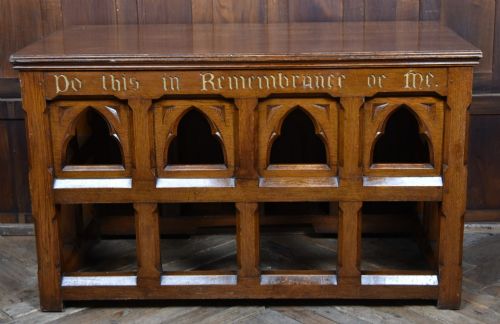
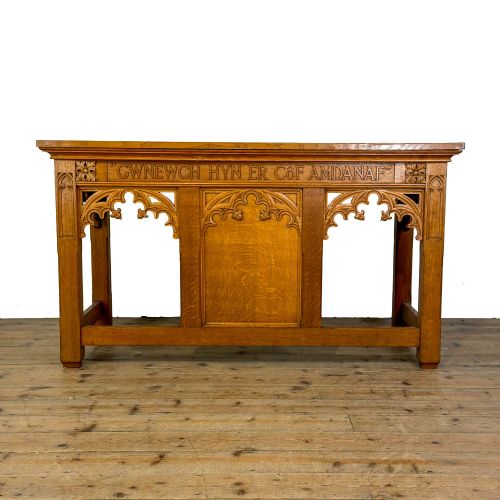
When you search for a victorian church table, you are looking at ecclesiastical furnishings repurposed for domestic interiors, predominantly altar tables, side tables, and writing desks. These pieces span the nineteenth century and into the early twentieth century, carrying the distinct architectural gravity of their origins in chapels and churches.
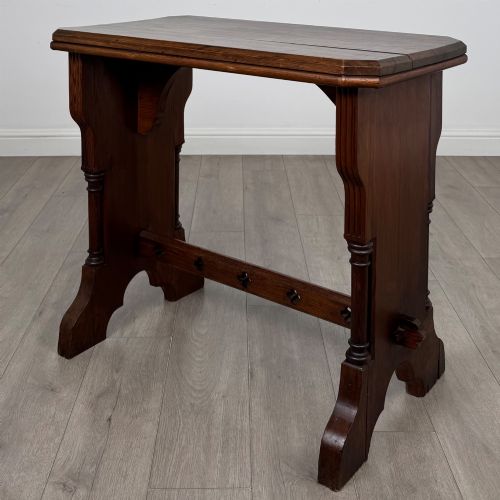
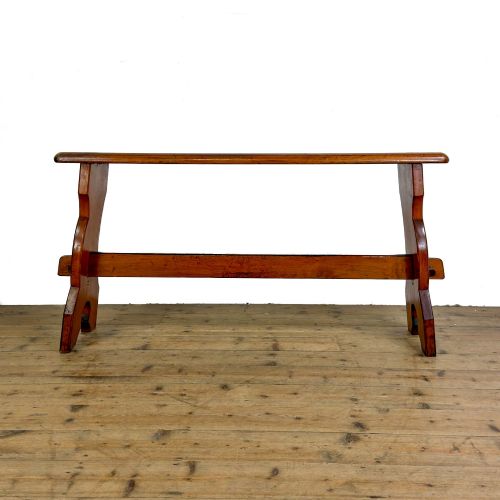
You are most likely to meet pitch pine and oak variants on this page, often showing Gothic Revival styling with pointed arches or chamfered supports. Forms range from long altar boards and serving tables down to smaller side tables, organ benches, and prayer desks.
The aesthetic borrows heavily from ecclesiastical architecture, creating heavy, grounded silhouettes designed for ritual use but adaptable for modern hallways, kitchens, and living spaces. Their construction prioritises utility and solemn presence over delicate ornamentation.
Judging quality in ecclesiastical furniture
Quality in a victorian church table rests on the selection of timber and the ambition of the Gothic detailing. Dense, well-figured oak or deeply grained pitch pine marks out pieces intended for chancel use rather than simple vestry utility.
Proportion and architectural integrity separate standard utility tables from finer works associated with specific design idioms. Sharply executed chamfers, pegged framing, and substantial stretcher bases indicate superior workshop standards.
Listings span from eighteen-fifty to nineteen-thirty, with pitch pine and oak forming the dominant timber choices across altar tables and side tables.
T Thomason & Co
The Victorian Church Table Glossary
- Gothic Revival
- An architectural and decorative style popular during the nineteenth century that revived medieval Gothic forms such as pointed arches, trefoils, and heavy buttresses. It heavily influences the ornamentation found on ecclesiastical tables.
- Pitch Pine
- A resinous, durable pine species harvested extensively in the nineteenth century, known for its strong grain pattern and reddish-brown tone. It is the most common timber seen in these listings.
- Prie-Dieu
- A devotional desk designed for kneeling during prayer, featuring a sloping top for books and a padded kneeling rail below. Several examples survive in oak and pine.
- Altar Table
- A heavy ceremonial table placed at the east end of a church chancel, repurposed today as robust serving tables or hall consoles. They are typically executed in solid oak or pitch pine.
Victorian Church Table: Frequently Asked Questions
How were these tables used originally?
These tables served primarily as altars, communion tables, or vestry furniture in nineteenth-century churches and chapels. They provided a stable surface for sacred vessels, service books, and sacramental bread.
Over time, many ecclesiastical spaces closed or updated their interiors, releasing these heavy wooden pieces into the wider market for domestic repurposing.
How do I fit a church table into a modern home?
Their narrow, elongated proportions make church tables ideal for hallways, behind sofas, or as striking sideboards in kitchens and dining rooms. The robust timber stands up well to daily domestic use.
Pair them with simpler modern seating to let the architectural Gothic detailing stand out without overwhelming the room.
Are these tables made of solid wood?
Yes, the listings demonstrate that these pieces rely on solid timbers such as oak, pitch pine, and standard pine rather than veneered panels. This heavy solid construction accounts for their survival through heavy institutional use.
Inspect the undersides and stretcher bases to confirm the solid timber construction typical of nineteenth-century workshop practices.