




Victorian Church Book Stand
These victorian church book stand pieces bring architectural presence and solid timber grain to a room.
Victorian Church Book Stand
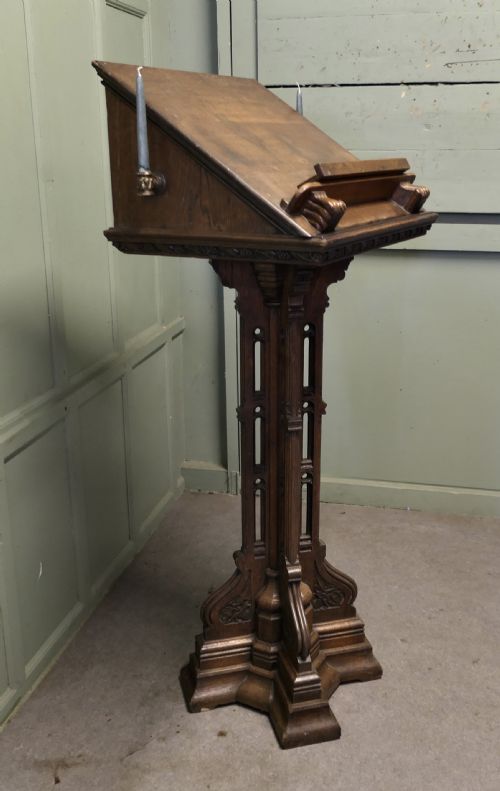
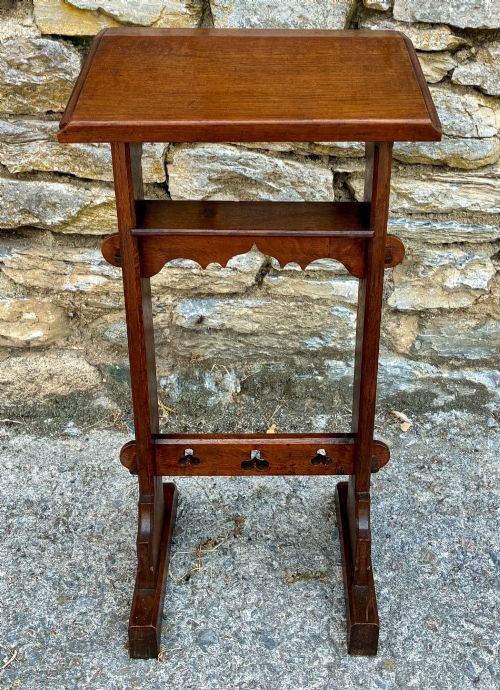
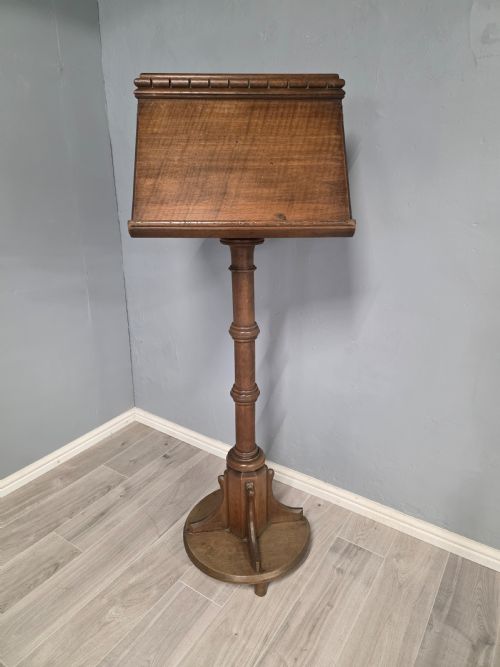
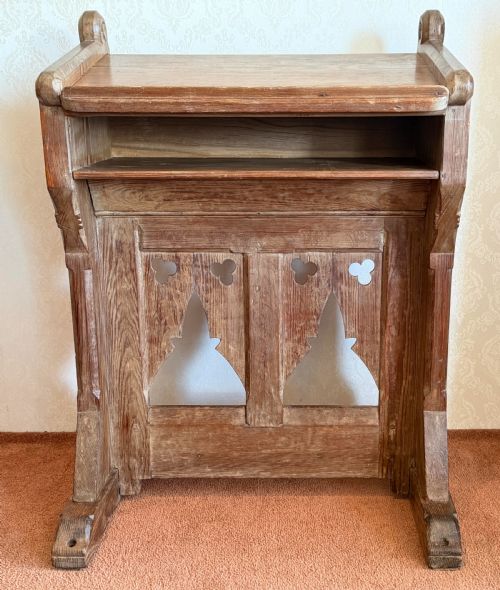
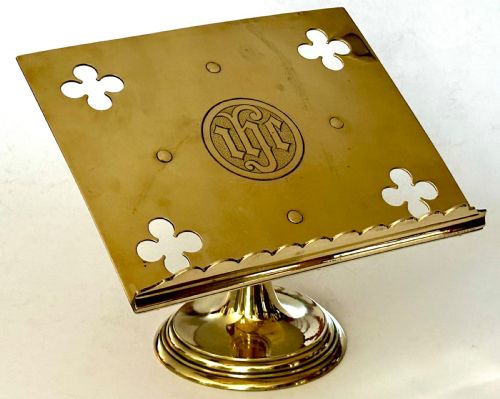
A victorian church book stand serves as a sturdy resting place for heavy volumes, designed originally to hold service books in ecclesiastical settings. These objects appear on this page primarily as lecterns, reading desks, and smaller book rests.
The pieces seen here date from the nineteenth century through the early twentieth century, spanning periods such as 1890, 1910, and 1920. Most examples take the form of floor-standing lecterns or table-top book rests intended for reading.
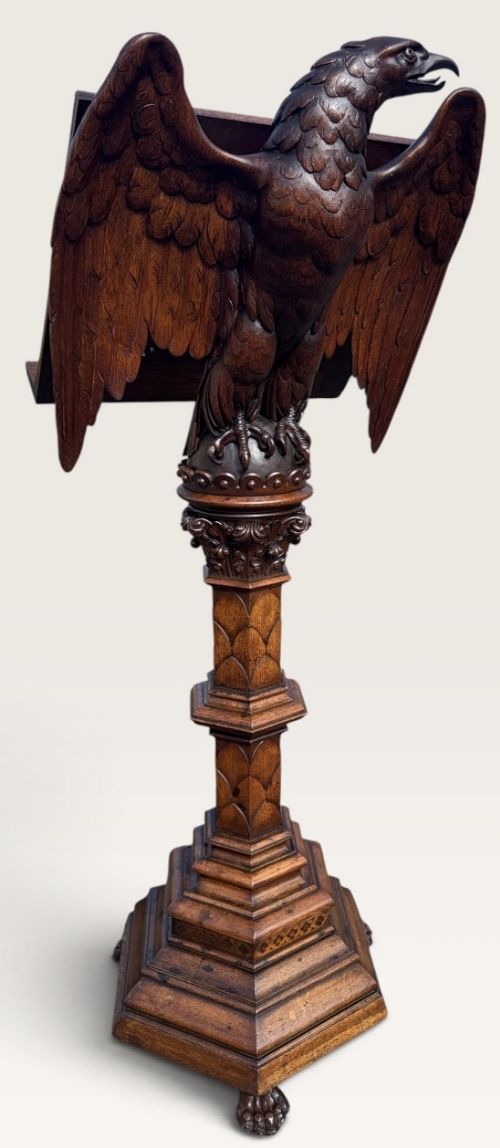
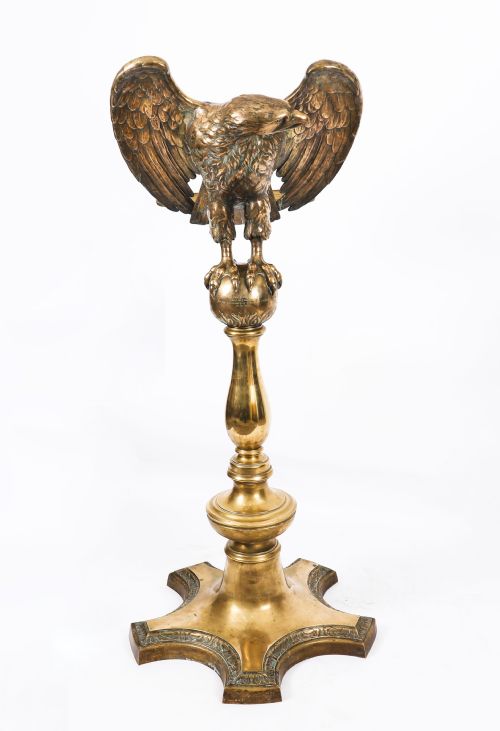
Buyers encounter versions ranging from modest pine and oak reading stands to elaborate carved eagle designs. Gothic revival aesthetics dominate the group, reflecting the ecclesiastical origins of these heavy wooden and metal objects.
How they were made
Makers utilised solid oak, pine, and cast iron alongside polished brass to build these durable stands. Woodworkers carved heavy timber to create architectural details and substantial reading platforms.
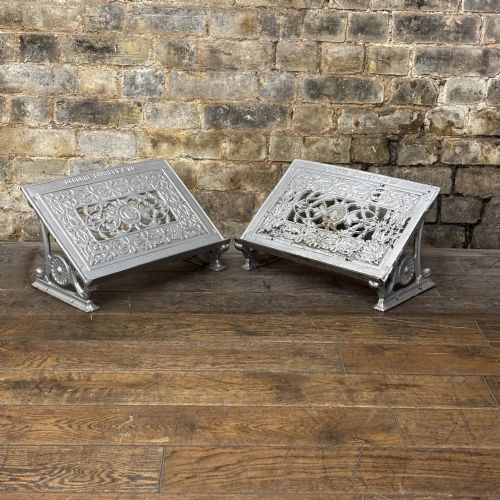
Metal components involved casting iron for structural stability or fashioning brass into detailed figures like eagles. Construction relied on robust joinery to support large books without wobbling.
Listings in this category span the nineteenth century and the early decades of the twentieth century, featuring oak, brass, cast iron, and pine.
What varies in quality
The depth and crispness of the carved detail separate a standard reading stand from a finer piece. Hand-carved wooden figures and crisp mouldings reflect greater skill than plain or heavily worn surfaces.
Materials also dictate the character of the object, with solid oak and detailed brass castings offering a more substantial presence than simpler pine constructions.
Osborne Garrett & Co
The Victorian Church Book Stand Glossary
- Lectern
- A tall stand with a sloping top to hold a book for a reader standing up. These often feature desk-like surfaces or carved figures.
- Gothic Revival
- An architectural and decorative style drawing on medieval forms, featuring pointed arches and heavy timber. This aesthetic defines the ecclesiastical pieces found in this category.
- Eagle Lectern
- A reading stand where the book rest takes the shape of an eagle with outspread wings. Brass and carved oak examples represent this traditional church form.
- Book Rest
- A smaller stand designed to hold a volume at a readable angle on a table or desk. These function as portable versions of larger church lecterns.
Victorian Church Book Stand: Frequently Asked Questions
What is a victorian church book stand used for?
These stands were originally built to hold heavy service books in churches, supporting the text at a comfortable angle for a reader.
Today, people place them in studies or living rooms to hold large art volumes, family bibles, or open books for display.
Are these stands heavy?
Most examples are constructed from solid oak, cast iron, or brass, giving them a substantial weight designed to prevent tipping under heavy volumes.
Floor-standing lecterns require a permanent spot in a room, while smaller book rests can be moved between tables more easily.
How do I identify the period?
Makers often incorporated Gothic Revival details, heavy timber construction, and cast metalwork characteristic of the nineteenth century and early twentieth century.
Examining the tool marks, timber shrinkage, and brass casting methods helps distinguish nineteenth-century examples from later reproductions.
Can they hold modern books?
The sloping ledges are wide enough to accommodate most large modern books, atlases, and cookbooks securely.
The sturdy timber or metal lips at the bottom of the stand keep open pages from sliding off during reading.