



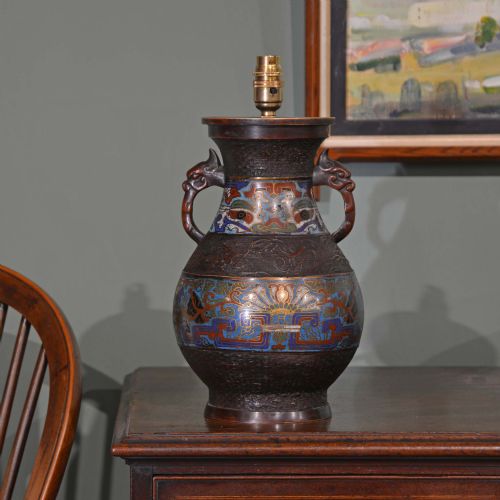

Victorian Chinese Table
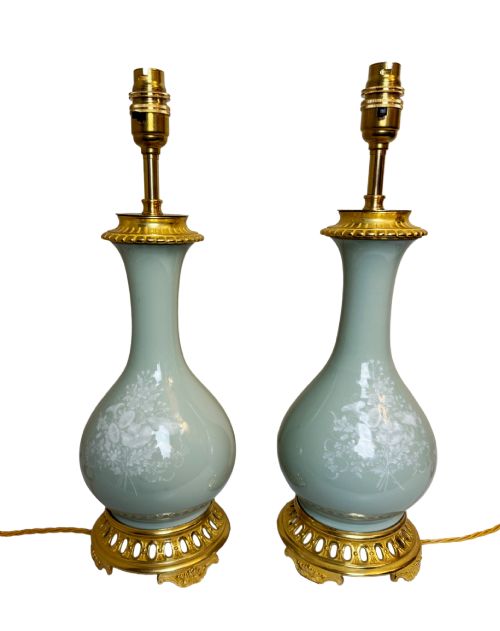
These pieces bring a Victorian Chinese table into the room, combining British Victorian forms with eastern craftsmanship.
Victorian Chinese Table
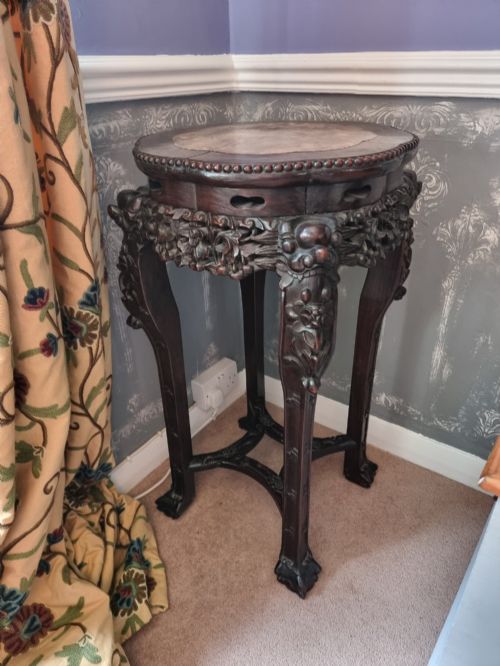
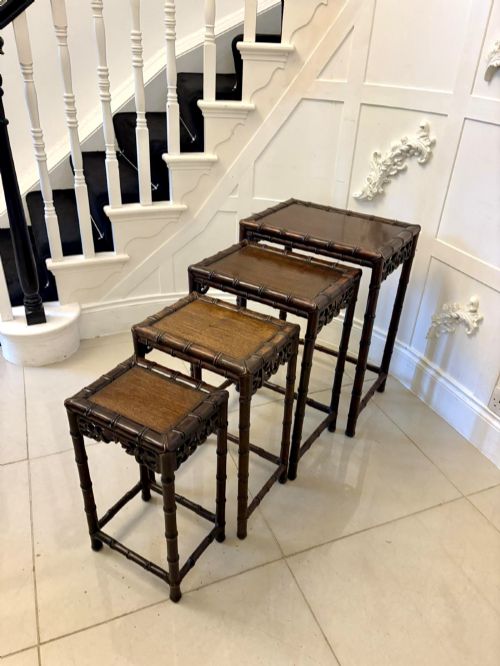
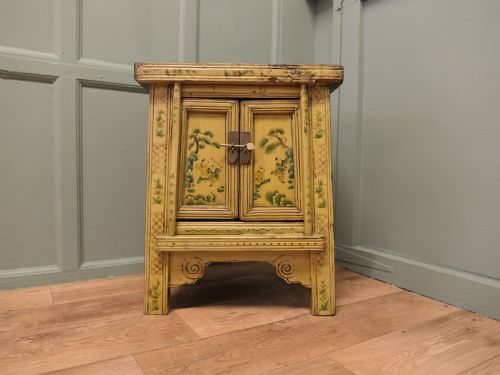
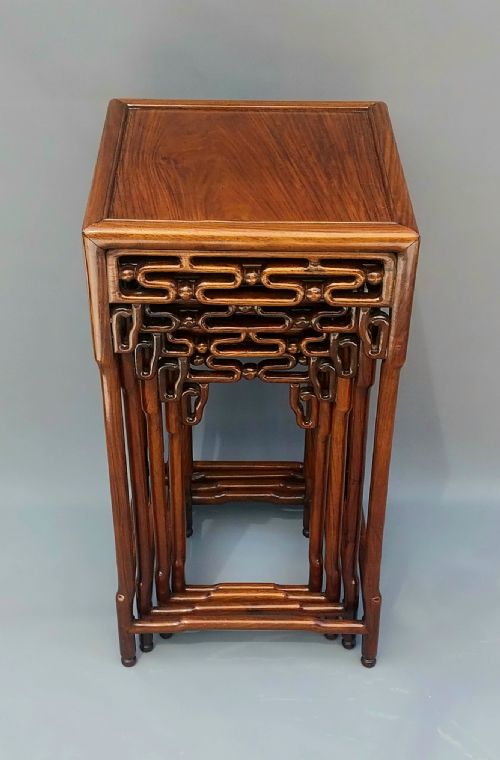
A victorian chinese table encompasses diverse forms from the nineteenth century, including nests of tables, occasional pieces, plant stands, and jardiniere supports. Buyers searching for a victorian chinese table encounter items produced in China for export or made in Britain under strong oriental influence. These surface as hardwood furnishings, lacquered surfaces, and carved stands designed to display lamps, plants, and decorative objects.
The selection ranges from solid hongmu and padouk timbers carved with dragons and floral motifs to ebonised British pieces styled in the Chinese Chippendale manner. Lacquered nests of tables and marble-topped stands dominate the forms recorded in this period. Each variation reflects the nineteenth-century fascination with eastern design adapted for domestic sitting rooms and parlours.
Materials and construction
Carpenters utilised dense Asian hardwoods such as hongmu and padouk alongside British mahogany and ebonised timber. These materials were carved deeply with organic motifs, pierced panels, and bamboo-effect turnings. Hardwood components joined tightly without metal fasteners, demonstrating traditional framing techniques.
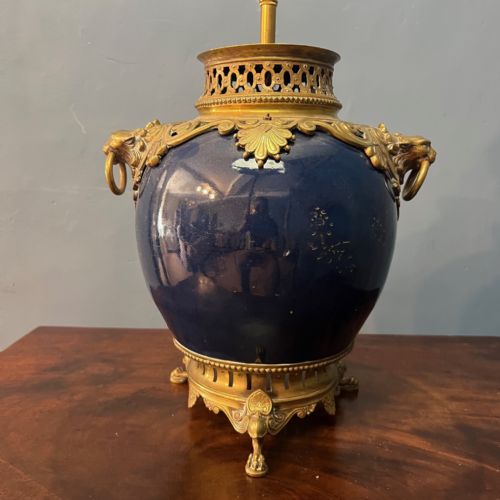
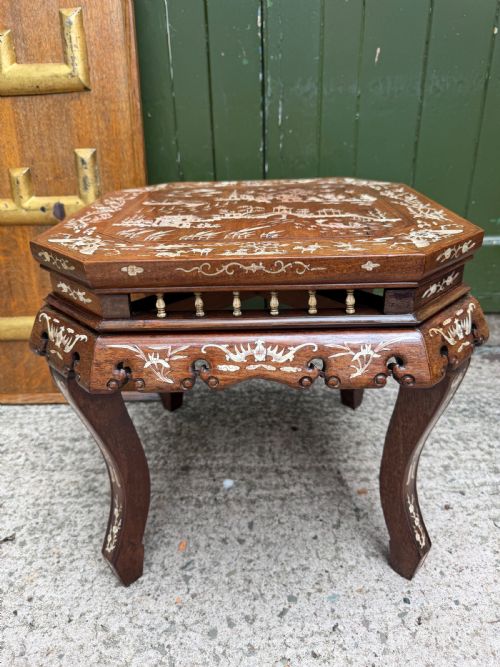
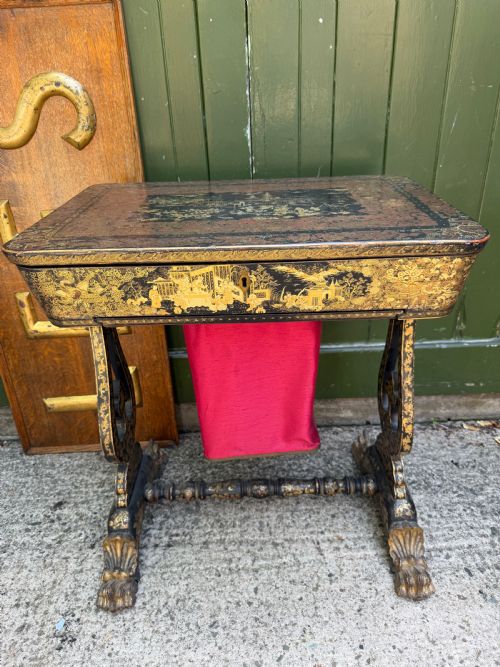
Surface decoration involved black and cream lacquer, gold leaf gilding, and bone inlay set into wood. Marble inserts were fitted neatly into table tops to hold heavy porcelain planters and lamps. Ormolu mounts and brass details occasionally accented the wood and lacquer structures.
Victorian Chinese Table Retail Price Guide 2026
Typical asking prices for victorian chinese table among the pieces listed under this phrase on Sellingantiques today, from the lower quarter to the upper quarter. They describe what is for sale here now, not the wider market.
Nineteenth-century craftsmen carved sturdy root wood and bamboo into delicate tables to satisfy an insatiable Victorian appetite for the exotic.
Distinguishing quality
Quality rests in the crispness of the hand carving and the selection of timber. Dense, heavy hardwoods like padouk and rosewood indicate superior construction compared to lighter secondary woods. Intricately pierced aprons and deeply chiselled dragon motifs separate standard production from exceptional examples.
The precision of bone inlay and the depth of the black lacquer finish dictate the grade of decorative items. Smooth joints and stable marble inserts secured within hardwood frames denote careful workshop production. Surface wear tells a history of domestic use, but structural integrity remains the primary marker of a well-made piece.
The Victorian Chinese Table Glossary
- Chinoiserie
- European artistic interpretation of Chinese and East Asian artistic traditions. This style appeared frequently on nineteenth-century lacquer furniture and decorative cabinets.
- Hongmu
- A dense, dark Asian hardwood used for fine tables and stands. Artisans favoured it for its weight and ability to hold deep relief carving.
- Jardiniere
- A large ornamental pot or stand for holding plants and flowers. These stands formed a common furniture type in Victorian interiors.
- Ormolu
- Gilded bronze used for decorative mounts and decorative hardware. It often accented porcelain lamp bases and nineteenth-century furnishings.
- Famille Rose
- A palette of Chinese ceramic glazes dominated by pink enamel. Pieces decorated in this style were frequently converted into table lamps during the nineteenth century.
Victorian Chinese Table: Frequently Asked Questions
What is a victorian chinese table?
A victorian chinese table refers to nineteenth-century furnishings originating from China for export or produced in Britain under Chinese artistic influence. These include hardwood plant stands, nests of tables, and lacquered occasional pieces.
They served practical roles in Victorian homes as surfaces for lamps, porcelain vases, and indoor plants. The category blends eastern joinery and carving with western domestic furniture forms.
How do I identify Chinese export furniture?
Export pieces typically utilise dense Asian timbers like padouk and hongmu, featuring carved dragons, prunus blossoms, or pierced floral aprons. They often incorporate inset marble tops and traditional frame construction.
Makers tailored these objects for the European market while retaining distinct regional woodworking techniques. Examining the timber weight and carving depth helps confirm the eastern origin.
Where were these tables used?
Victorian households placed these tables in drawing rooms, parlours, and hallways as decorative accents. They held heavy jardiniere pots, bronze lamps, and porcelain display items.
Their compact sizes, particularly nests of tables, allowed them to be moved easily around sitting spaces. Plant stands occupied corners and window spaces to showcase indoor greenery.
How do I care for lacquer furniture?
Lacquered surfaces require gentle dusting with a dry, soft cloth to protect the delicate finish. Avoid placing them in direct sunlight or near heat sources that could dry the wood.
Keep moisture away from the surface and handle bone inlay with care to prevent loss. Regular maintenance preserves the gold leaf and painted scenes.