



Victorian Children Landscape Painting
These pieces gather victorian children landscape painting examples, depicting figures within outdoor settings from woodland clearings to riverbanks, valued for their narrative charm.
Victorian Children Landscape Painting
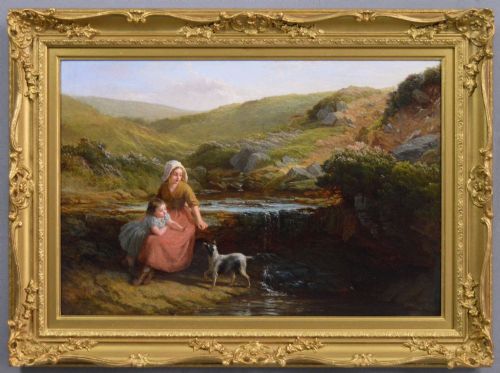
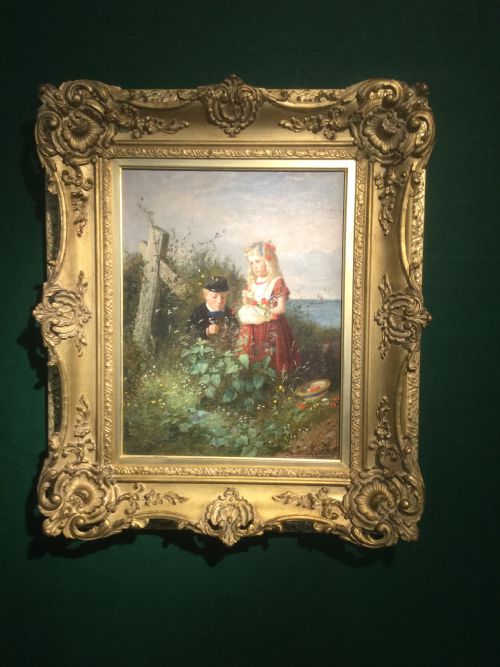
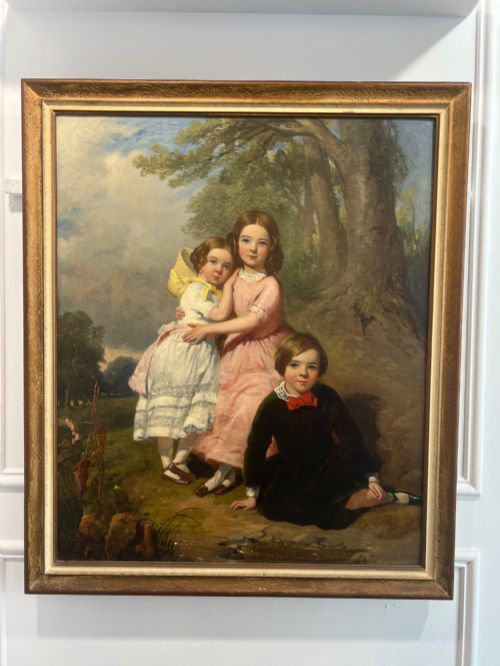
A victorian children landscape painting brings together two distinct subjects of the nineteenth century: portraiture of youth and open-air scenery. The figures often engage in rural pursuits such as gathering firewood, picking berries, or fishing by streams.
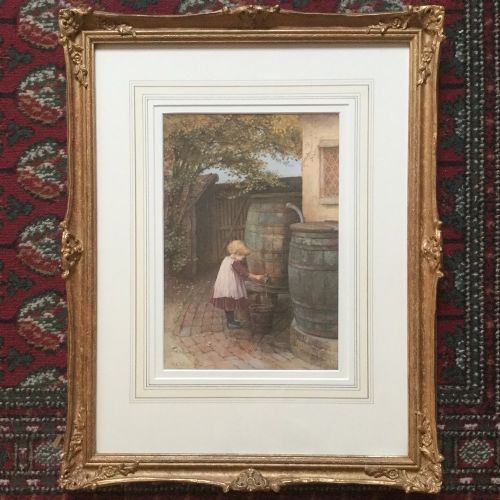
The selections span from the nineteenth century into the early twentieth century, incorporating Victorian, Edwardian, and folk art styles. Buyers encounter both oil paintings on canvas or panel and delicate watercolours on paper.
Most compositions place children centrally within pastoral settings, cottage gardens, or coastal shores. Works range from naive depictions to detailed fine art paintings by named artists.
How They Were Made
Artists painted primarily using oil on canvas or panel, alongside watercolour pigments applied to paper. Frames frequently incorporate gesso and gilt wood to finish the presentation.
Watercolour techniques rely on washes of pigment to capture natural light in outdoor scenes, while oil paintings build texture through layered brushwork on canvas or wood.
Victorian Children Landscape Painting Retail Price Guide 2026
Typical asking prices for victorian children landscape painting among the pieces listed under this phrase on Sellingantiques today, from the lower quarter to the upper quarter. They describe what is for sale here now, not the wider market.
Several watercolours capture children inspecting birds' nests or sailing toy boats across quiet ponds.
What Varies in Quality
Execution and proportion set individual pieces apart, separating naive works from accomplished fine art paintings. The handling of natural light and shadow defines the depth of the landscape and the expressiveness of the figures.
The condition of the original surface, whether canvas, panel, or paper, influences the visual impact. Frames of gesso and gilt wood also contribute to the overall integrity of the piece.
Charles Hunt·Charles Edward Wilson·Thomas Bromley Blacklock·James Mallard Bromley·Helena Maguire·Linnie Watt·John Alfred Wheeler·John Henry Dell·William Manners·William Stephen Coleman·Jane Maria Bowkett·James George Bingley·Alfred Banner·Henry Sykes·William Lucas·Thomas Hollingsworth·Arthur Claude Strachan·Henry John Sylvester Stannard·Eveline Lance·Ralph Hedley·John Pedder·Charles Lewis·John Duvall
The Victorian Children Landscape Painting Glossary
- Genre painting
- Depictions of aspects of everyday life by subjects from ordinary life, often involving children or domestic scenes. These works tell a visual story of nineteenth century daily existence.
- Watercolour
- A method where the paints are made of pigments suspended in a water-based solution. Artists use this medium on paper to create translucent washes of colour.
- Gesso
- A paint mixture consisting of a neutral binder mixed with chalk, gypsum, or pigment. It served as a preparation layer for gilt wood frames.
- Naive art
- Visual art created by a person who lacks formal education and training in artistic techniques. These pieces often feature flat perspectives and direct charm.
- Oil on canvas
- Pigments bound in a medium of drying oil applied to stretched fabric. This technique allows for rich colour blending and durability.
Victorian Children Landscape Painting: Frequently Asked Questions
What periods do these paintings cover?
The works span from the nineteenth century through the Victorian and Edwardian eras up to the early twentieth century.
Creators utilised traditional methods typical of British fine art and folk art during these periods.
What materials were used?
Artists worked with oil on canvas, oil on panel, and watercolour pigment on paper.
Many pieces retain their original gesso and gilt wood frames.
What scenes are typically shown?
Paintings frequently feature children engaged in activities like fishing, picking berries, gathering firewood, and playing by rivers or cottages.
Equestrian portraits and coastal beach scenes also appear within the selection.
How do naive works differ from fine art?
Naive and folk art pieces present simpler perspectives and direct storytelling without formal academic training.
Fine art paintings demonstrate advanced handling of anatomy, light, and landscape depth.