



Victorian Chest on Stand
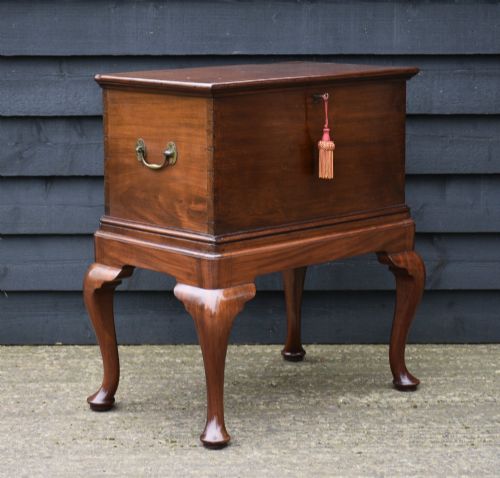
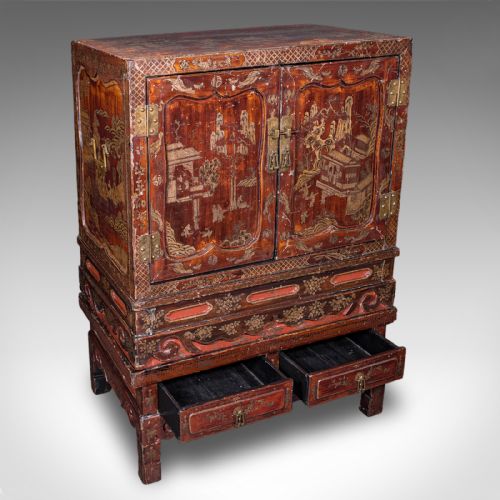
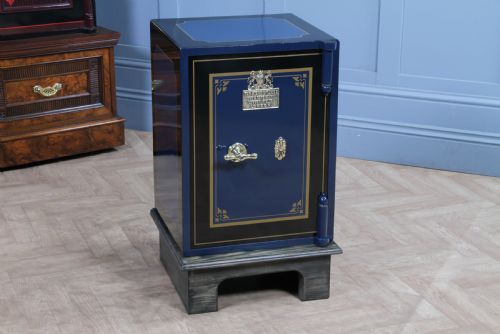
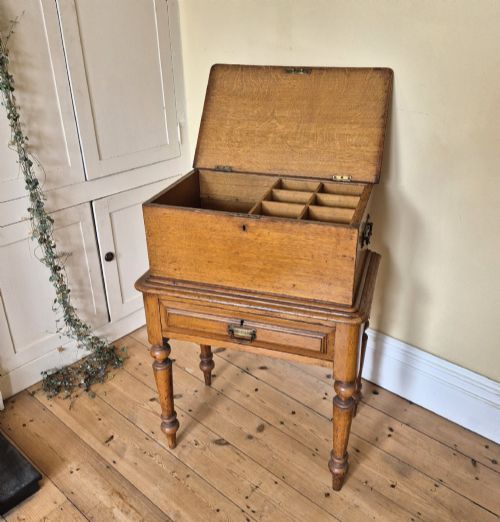
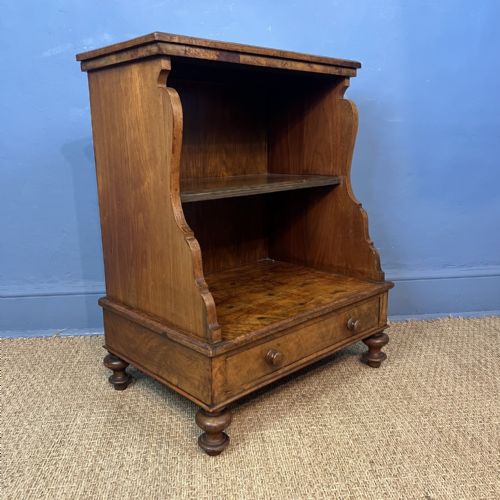
A victorian chest on stand brings elevated storage into a room, uniting a timber carcase with a raised support.
Victorian Chest on Stand
A victorian chest on stand combines a raised upper compartment with a supporting stand, appearing across nineteenth-century and Edwardian examples in timber and lacquer.
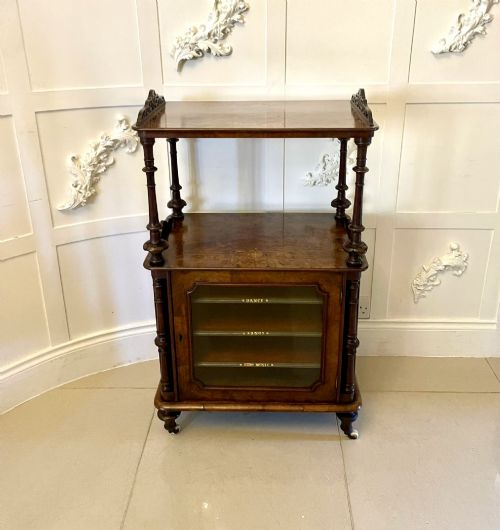
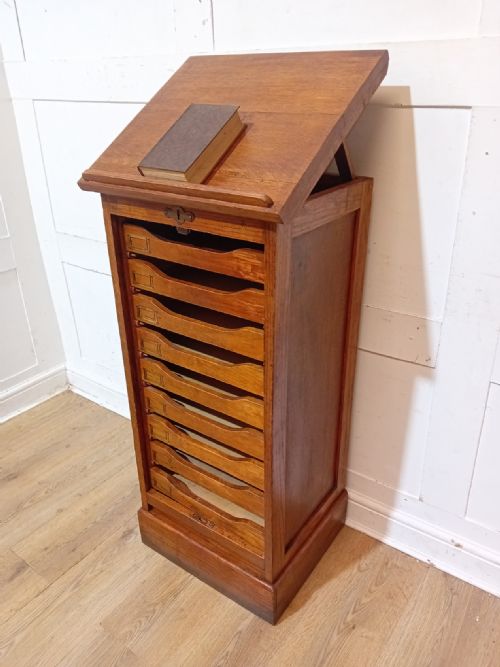
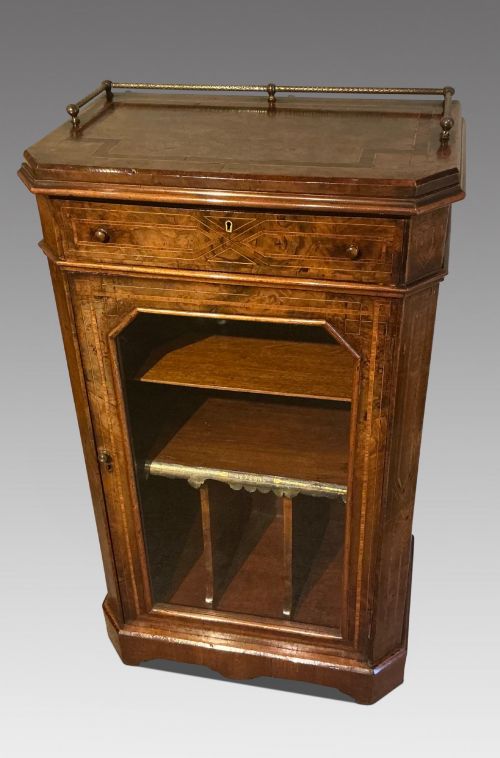
The form encompasses campaign pieces, music cabinets, drawer chests, and tea poys raised above the floor.
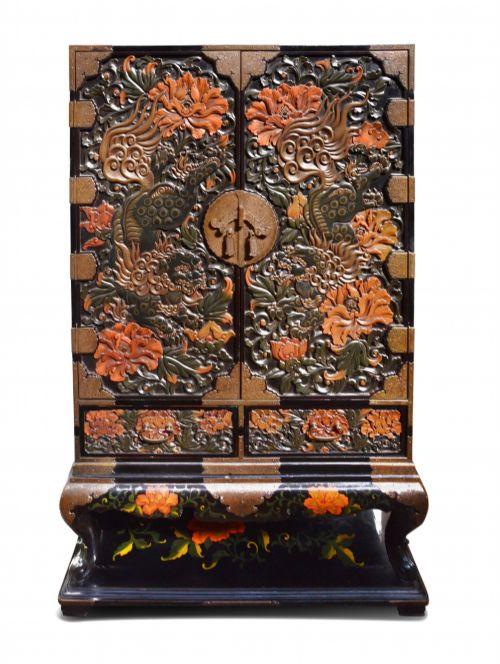
Mahogany, oak, and walnut dominate the selection, alongside specialised pieces in burr walnut, teak, and lacquer.
How they were made
Cabinetmakers constructed these pieces primarily from solid hardwoods and applied veneers such as flame mahogany, burr walnut, and satinwood over secondary timbers.
Brass fittings, campaign hardware, and ceramic elements reinforced the structures, while lacquer and marquetry provided surface decoration.
Victorian Chest on Stand Retail Price Guide 2026
Typical asking prices for victorian chest on stand among the pieces listed under this phrase on Sellingantiques today, from the lower quarter to the upper quarter. They describe what is for sale here now, not the wider market.
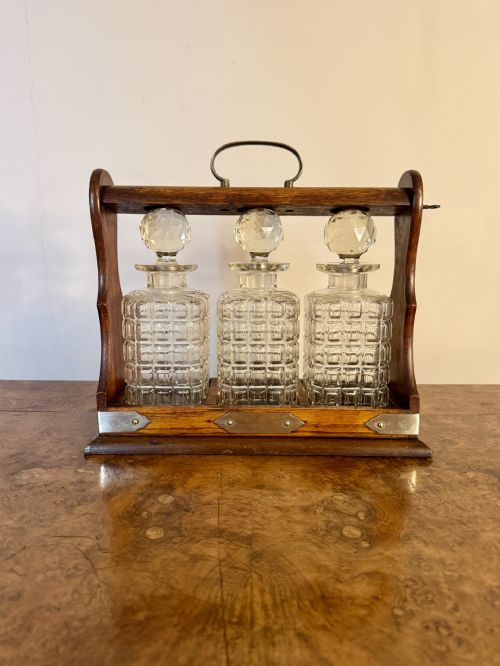
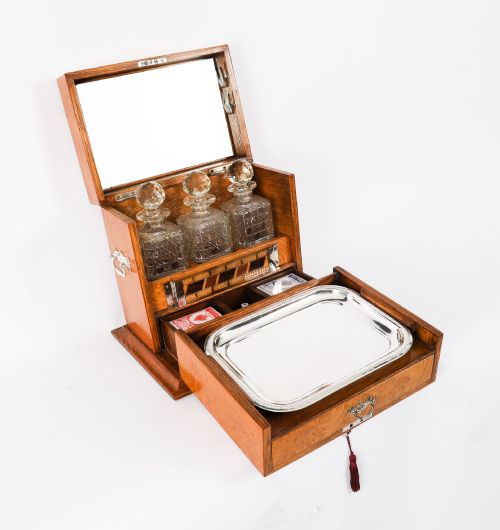
The furniture forms on this page span music cabinets, tantalus sets, tea poys, folio cabinets, and traditional chests on stands.
What varies in quality
The standard of timber selection and veneer matching defines the visual weight of the piece, distinguishing plain surfaces from figured grain.
Detailing in the carving, inlay work, and the integration of the stand relative to the main carcase dictates the overall accomplishment of the work.
Edwards & Roberts·Roberson & Co·Hall & Co·Gillows
The Victorian Chest on Stand Glossary
- Campaign
- Furniture designed for transport, featuring brass corners, recessed handles, and sectional construction. These pieces were built for portability during military or colonial travel.
- Teapoy
- A small box on a stand originally intended for holding tea. They often feature internal compartments and lids.
- Marquetry
- Decorative veneer patterns formed by fitting together small pieces of various woods or other materials. It creates pictorial or geometric designs across flat surfaces.
- Tantalus
- A locked cabinet holding decanters with the stoppers secured in place. The mechanism prevents access to the contents without a key.
Victorian Chest on Stand: Frequently Asked Questions
What is a victorian chest on stand?
A victorian chest on stand is a raised storage unit or cabinet supported by legs or a dedicated stand rather than resting directly on the floor.
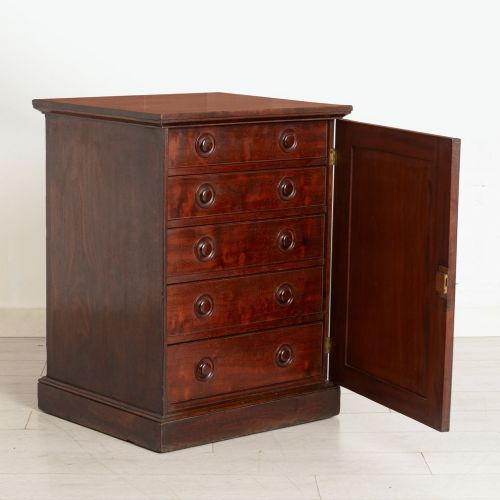
These pieces range from mahogany drawer units and burr walnut low bookcases to specialised cabinets designed for music or writing.
How were these pieces used?
They functioned as versatile storage furniture in period homes, holding linens, documents, tea, or personal items off the floor.
Raised stands made cleaning underneath easier and lifted the contents to a more convenient height for daily access.
What woods were commonly used?
Cabinetmakers relied heavily on mahogany, oak, and walnut, often utilising figured veneers like burr walnut and flame mahogany for visual depth.
Pine served for secondary carcases or country house versions, while exotic timbers such as teak and satinwood appeared in specific regional or campaign formats.
How do I date a victorian chest on stand?
Dating relies on observing construction methods, timber choices, and stylistic markers recorded across the nineteenth century and into the Edwardian era.
Details such as brass campaign hardware, marquetry inlay, and carved stands help place pieces within specific decades like the eighteen-eighties or eighteen-nineties.