

Victorian Chair on Castors
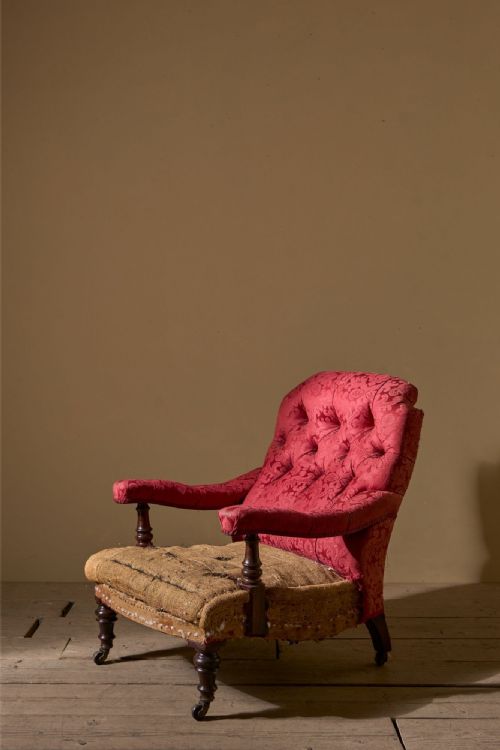
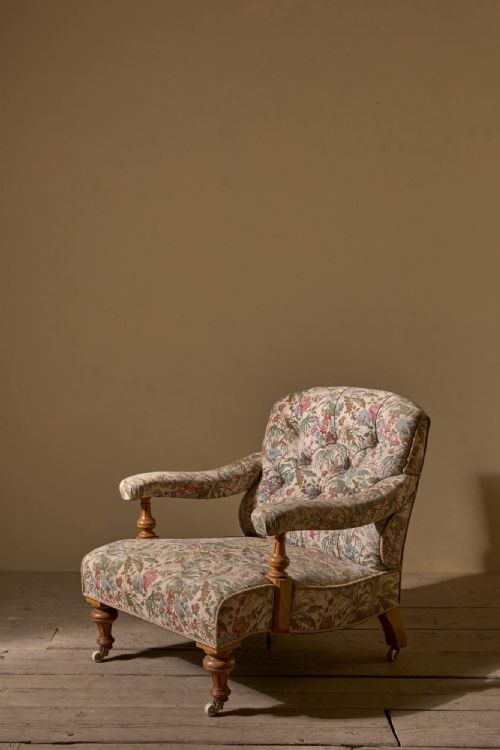
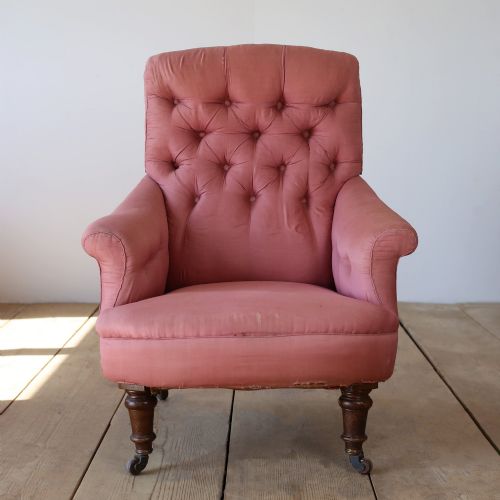
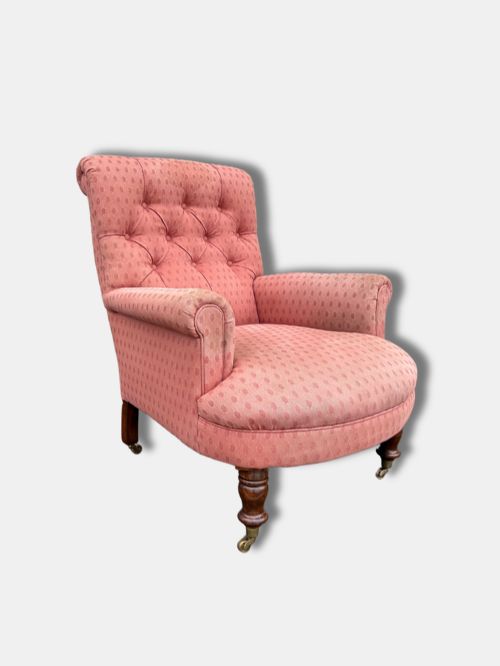
A victorian chair on castors is a sturdy, movable seat designed for nineteenth-century comfort, combining rich timber frames with practical rolling wheels.
Victorian Chair on Castors
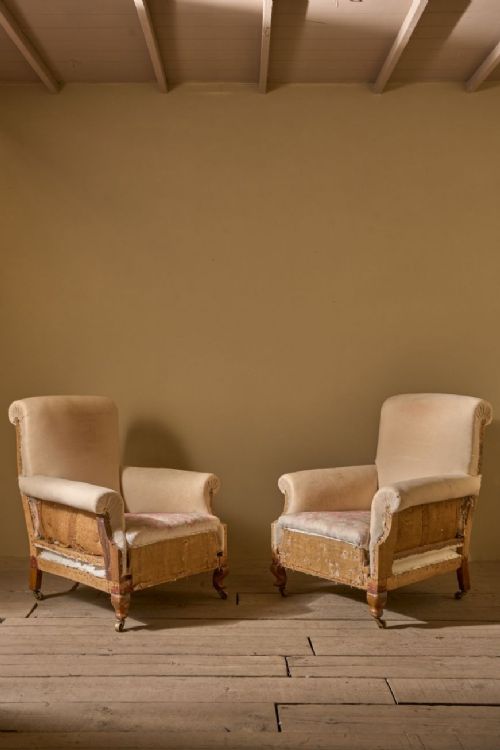
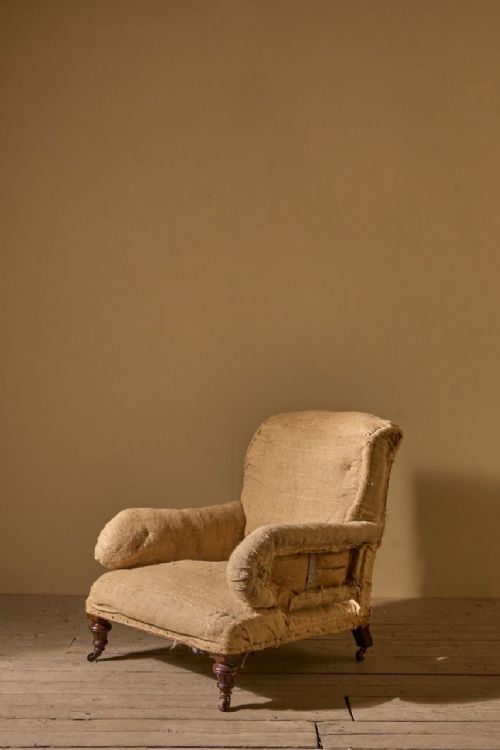
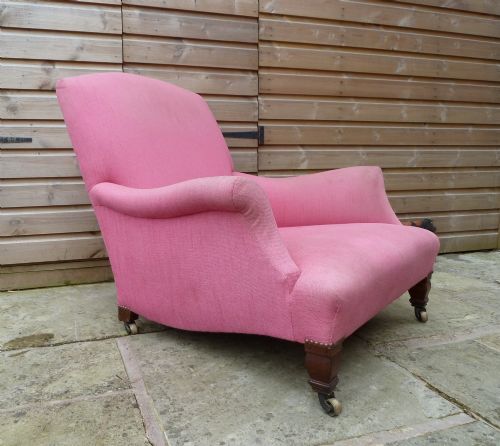
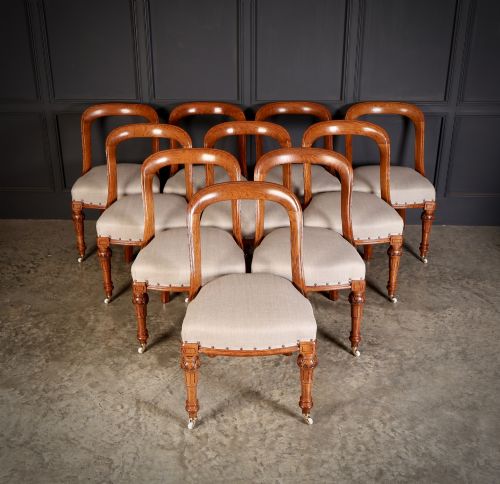
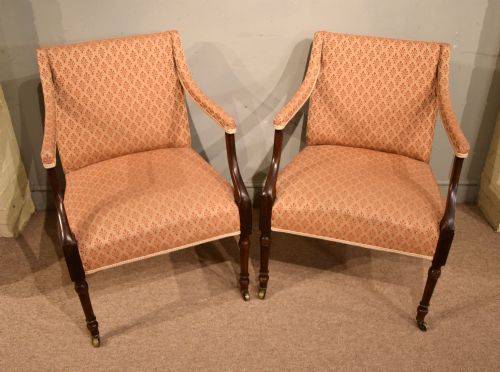
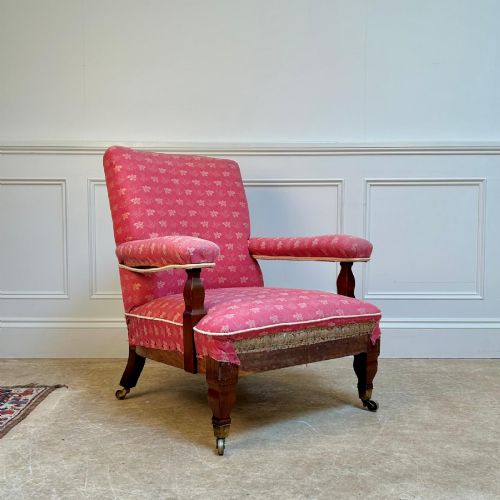
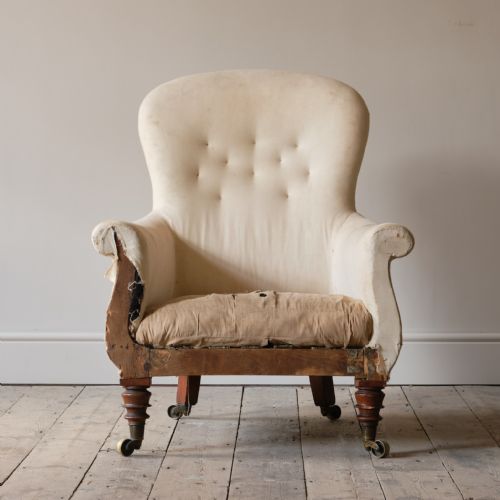
A victorian chair on castors brings nineteenth-century seating utility directly into modern rooms through heavy frames paired with rolling brass wheels. The selection relies heavily on nineteenth-century origins, featuring armchairs, library chairs, and low-slung nursing chairs designed for fireside use.
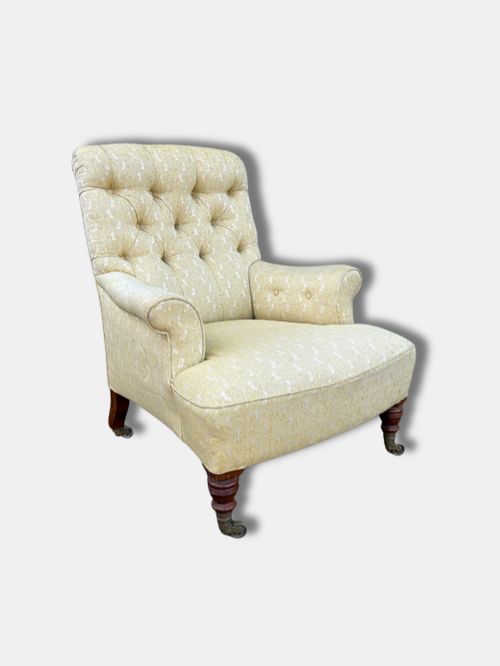
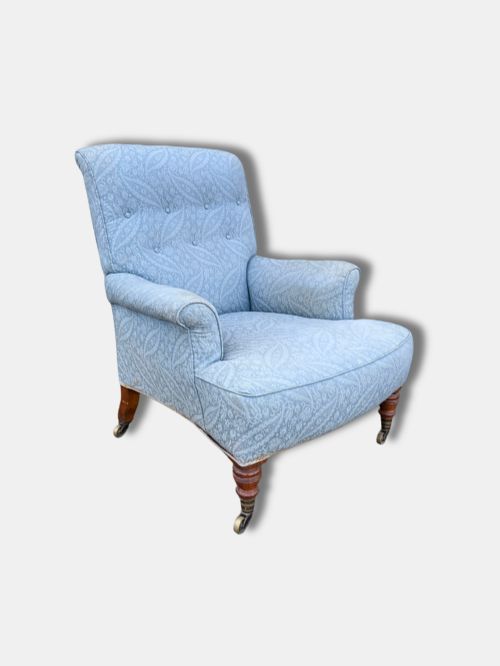
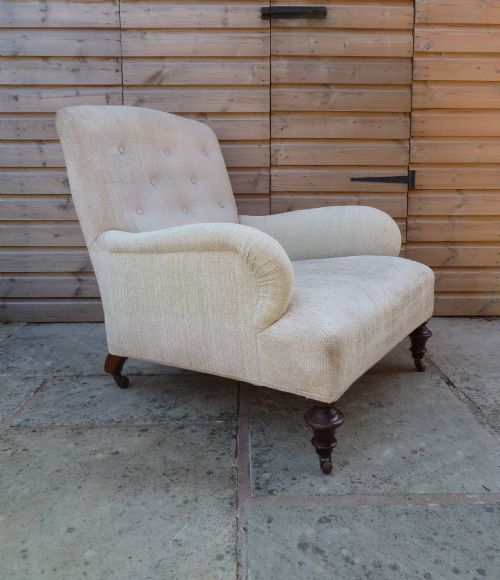
Most pieces encountered on this page date from the nineteenth century, including specific decades like eighteen-eighty and eighteen-seventy, alongside related Edwardian and William IV examples. Forms range from button-back reading seats to chaise longues and open country house armchairs fitted with movable floor supports.
Materials and construction
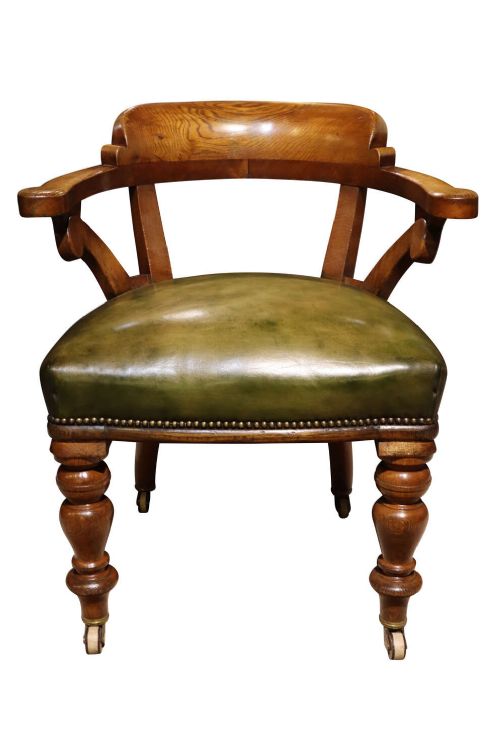
Makers constructed these frames from solid hardwoods including mahogany, walnut, golden oak, and general timber. Upholstery layers typically involved hessian, calico, and fabric finishes, sometimes enhanced by deep leather coverings or button-backed detailing.
Movable elements rely on brass fittings and castors attached to the feet to allow smooth relocation across heavy carpets and wooden floors. Wood turned legs and scroll carved forelegs often conceal or highlight these functional metal wheels.
Victorian readers moved their chairs around constantly to catch the best window light or fireplace warmth without lifting a finger.
Judging quality and craftsmanship
Superior examples demonstrate maker attribution and firm execution, visible in well-known workshop brands and balanced proportions. The density of the timber frame and the retention of original upholstery foundations separate standard seating from exceptional library pieces.
Castor hardware integrity and smooth floor movement distinguish finer survivals from later alterations. Woodwork crispness, particularly on carved legs and showwood frames, marks the distinction between ordinary production and high-grade workshop output.
Howard and Sons·George Jack For Morris and Co·Gillows·Morison and Co·Holland and Sons·Hindley and Sons·William Birch·Cope and Collinson
The Victorian Chair on Castors Glossary
- Castor
- A small wheel mounted on a swivel assembly attached to the legs of a chair to allow easy movement. These small metal or wooden rollers are typically fashioned from brass during the nineteenth century.
- Showwood
- Timber framing left exposed around the upholstered elements of a chair. This polished wood accentuates the carved lines of the frame.
- Button back
- An upholstery technique where indentations are formed in the padding by pulling threads tightly through the fabric and securing them with covered buttons. This creates a diamond-patterned cushioned surface.
- Nursing chair
- A low-seated chair historically designed for sitting close to a nursery fire. These compact seats often feature short legs and supportive upholstered backs.
- Library chair
- A substantial upholstered armchair designed for reading rooms and studies. They frequently incorporate leather coverings and sturdy wooden armrests.
Victorian Chair on Castors: Frequently Asked Questions
What is a victorian chair on castors?
A victorian chair on castors is a nineteenth-century upholstered seat built with small wheels on its feet for effortless room placement.
These pieces range from deep-seated library armchairs to low nursing chairs, utilising sturdy timber frames and rolling brass hardware.
How do I identify a Howard and Sons chair?
Howard and Sons chairs typically feature maker stamps on the brass castors, strict upholstery proportions, and deep comfortable cushioning.
They represent some of the most sought-after nineteenth-century lounge seating available on the market.
Were all these chairs originally on wheels?
Most nineteenth-century armchairs and library seats were designed with castors to protect heavy carpets and ease relocation.
Makers fitted them directly into the base of wooden legs, bun feet, or brass cappings.
How do I care for antique leather upholstery?
Antique leather requires gentle cleaning and occasional conditioning to maintain suppleness and prevent cracking over time.
Avoid placing these chairs near direct heat sources or strong sunlight to preserve the original hide.