



Victorian Ceramic Teapot
A victorian ceramic teapot brings utility and character to the table, formed in porcelain, earthenware, and stoneware across the nineteenth century.

Victorian Ceramic Teapot
When searching for a victorian ceramic teapot, buyers encounter a variety of forms including individual solitaire teapots, bachelor teasets, and larger household vessels. These pieces stem from the nineteenth century, spanning periods from the 1840s through to the early 1900s.
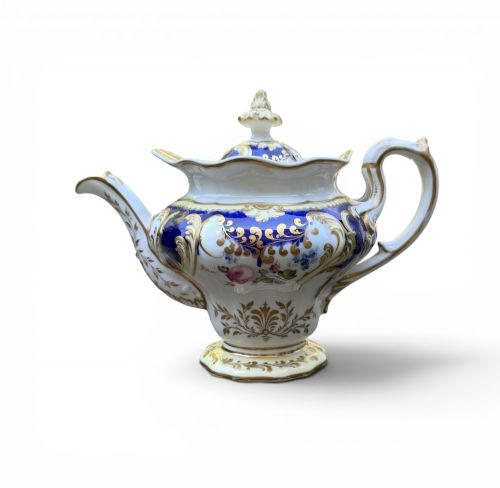
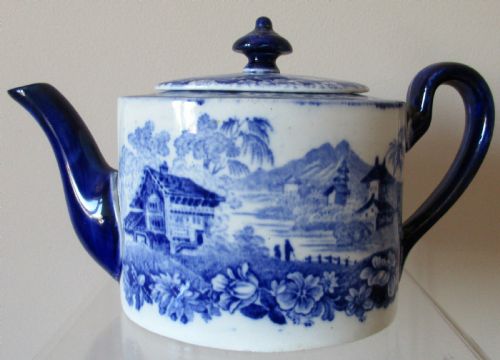
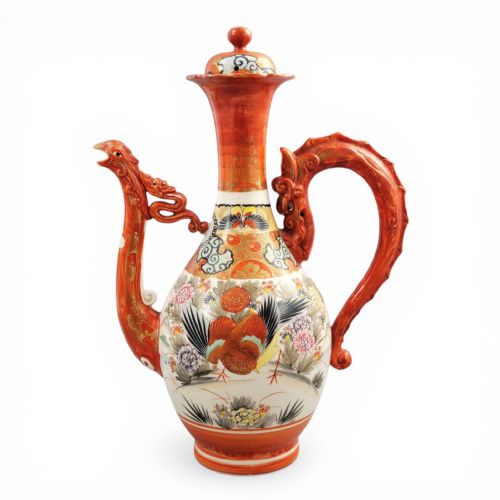
The most common versions met on this page include earthenware and porcelain bodies decorated with transfer printing, cobalt blue, or majolica glazes. Makers applied styles ranging from neoclassical and rococo revival to Victorian folk art and Japanese influences.
Beyond standard tea pots, the selection encompasses related items like milk jugs, miniature teapots, and complete tea services. Buyers find both simple domestic wares and ornate exhibition pieces bearing distinct factory marks.
Assessing quality
Quality rests in the crispness of the moulding and the precision of the hand-painted or transfer-printed decoration. Finer examples display balanced proportions, clean glaze application, and well-defined relief work without blurring.
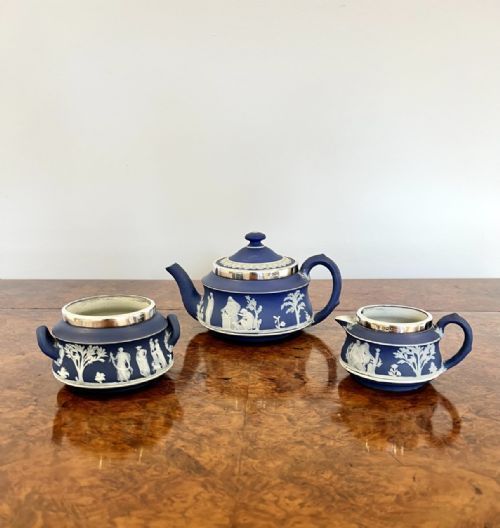
The reputation of the pottery and the complexity of the form distinguish standard domestic items from superior output. Pieces featuring silver mounts, delicate miniature scales, or sculptural figural elements represent the upper tier of production.
Listings feature nineteenth-century ceramics in porcelain, earthenware, and stoneware, decorated with majolica, enamel, and transfer printing.
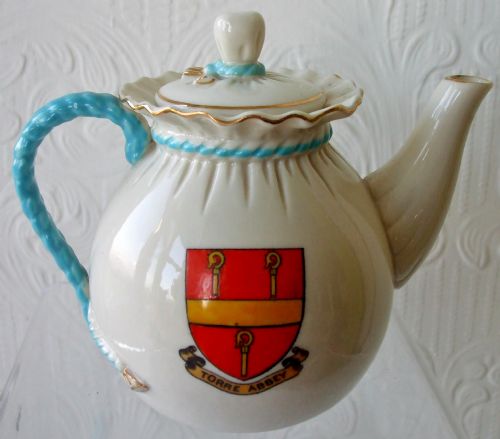
Wedgwood·W.H. Goss·Mintons·Royal Worcester·Royal Davenport·Staffordshire China Table Coaster·Doulton·Joseph Holdcroft·Royal Crown Derby
The Victorian Ceramic Teapot Glossary
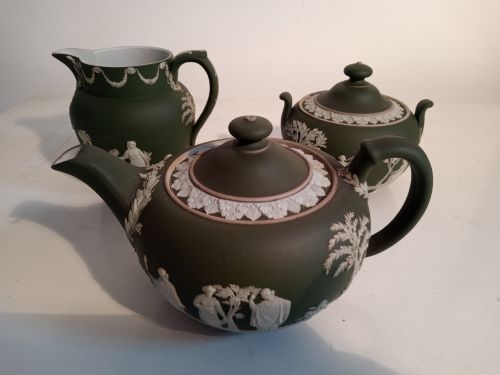
- Jasperware
- A fine-grained stoneware developed by Wedgwood, characterised by contrasting raised white relief figures against a coloured clay background such as blue or green.
- Majolica
- A colourful lead-glazed earthenware popular during the Victorian era, known for vibrant hues and naturalistic moulded plant or animal motifs.
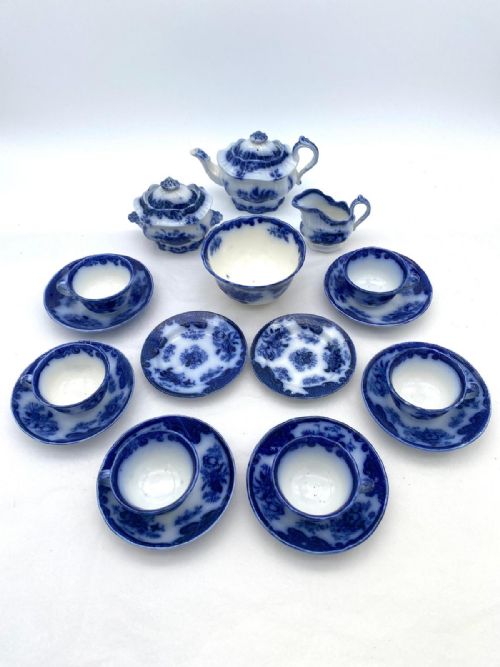
- Flow blue
- A transfer-printing technique where cobalt blue pigment blurred slightly into the white glaze during firing, creating a misty, soft-edged effect.
- Bargeware
- Folk art pottery traditionally decorated with applied coloured clay flowers, leaves, and metallic lustre, often associated with canal boat people.
- Solitaire
- A small, matched tea set designed for one person, typically comprising a miniature teapot, cup, saucer, and sometimes a tiny milk jug.
Victorian Ceramic Teapot: Frequently Asked Questions
How do I date a Victorian teapot?
Dating relies on factory registration marks, maker stamps impressed into the base, and stylistic clues like rococo revival shaping or transfer print patterns.
Comparing the glaze type and decorative motifs against known production periods helps narrow down the exact decade of manufacture.
What is a solitaire tea set?
A solitaire set is an intimate tea service scaled down for a single person, featuring a small teapot paired directly with its own cup and saucer.
These compact sets were popular for bedroom use or solitary afternoon tea.
Are these teapots safe for daily use?
While historic ceramics are structurally sound, older glazes can contain lead, and thermal shock from boiling water may stress antique clay bodies.
Most collectors prefer to display these pieces or use them gently for decorative purposes rather than everyday brewing.
How do I display a ceramic teapot?
Displaying these pieces safely requires stable shelving away from direct sunlight and heavy foot traffic to prevent accidental knocks.
Grouping items by colour, such as blue and white transfer ware or jasperware, creates an attractive visual focal point in a cabinet or room.