



Victorian Ceramic Tea Cups
Victorian ceramic tea cups bring tactile nineteenth-century ritual to the table through fine porcelain, earthenware, and intricate hand painting.
Victorian Ceramic Tea Cups
When searching for victorian ceramic tea cups, collectors encounter everything from single cabinet trios to complete afternoon tea services spanning the nineteenth century. These drinking vessels and matching saucers represent the domestic ceramic output of British and European kilns.
The pieces most frequently met on this page combine teacups and saucers with occasional larger service components like teapots, jugs, and bowls. They range from single pairs to sets intended for six or ten persons.
Origins stretch across English potteries and continental European makers, capturing periods from Georgian echoes through the height of the Victorian era up to the turn of the twentieth century.
How they were made
Potters shaped these vessels using bone china, standard porcelain, and earthenware bodies, depending on the desired translucency and strength of the cup. Makers then applied glazes and fired the pieces to create a smooth, impervious surface suitable for daily use.
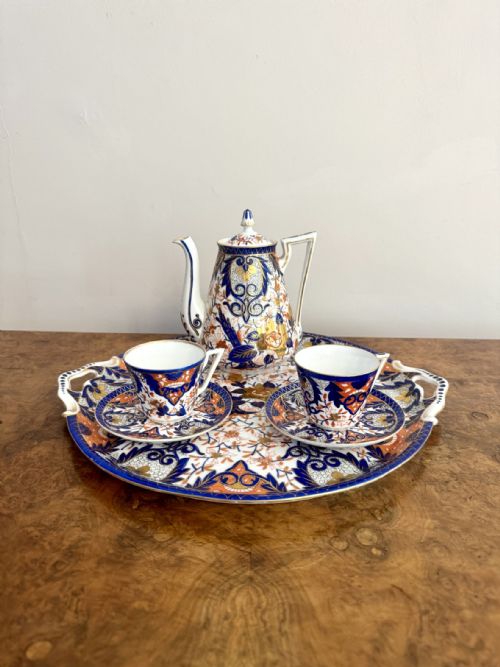
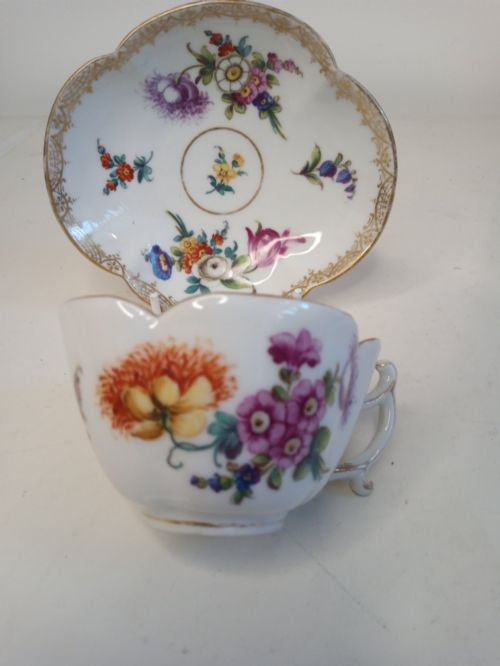
Decoration relied heavily on hand painting, enamel work, and the application of gold leaf and gilding. Artisans executed specific revival aesthetics, such as Imari and Kakiemon palettes, alongside hand-gilded and enamelled Bohemian designs.
Victorian Ceramic Tea Cups Retail Price Guide 2026
Typical asking prices for victorian ceramic tea cups among the pieces listed under this phrase on Sellingantiques today, from the lower quarter to the upper quarter. They describe what is for sale here now, not the wider market.
The listings span porcelain, bone china, and earthenware, decorated with enamel, gold leaf, and hand painting.
What varies in quality
The distinction between standard domestic wares and exceptional pieces rests upon the finesse of the ceramic body and the execution of the decoration. Fine bone china and porcelain offer greater delicacy and translucency than heavier earthenware.
Hand-painted details, raised gilding, and intricate enamelling executed by skilled hands elevate the visual depth of a cup and saucer far above transfer-printed equivalents. Maker attribution also plays a role, with established factories achieving greater refinement in form and palette.
Royal Worcester·Minton·Moser·Davenport
The Victorian Ceramic Tea Cups Glossary
- Bone china
- A type of soft-paste porcelain incorporating bone ash, yielding a durable body with high whiteness and translucency. It became a staple of British nineteenth-century ceramic production.
- Gilding
- The application of gold leaf or gold paint to ceramic surfaces for decorative accent. It appears on rims, handles, and intricate motifs.
- Enamel
- Opaque vitreous material fused to the ceramic body through firing, creating bright coloured patterns. Enamelling often accompanies hand-painted scenes on Victorian tea wares.
- Imari
- A decorative style characterised by the palette of underglaze blue, iron red, and gold, originating in Japan and widely revived in Victorian England. Victorian Imari cups adapt these historic motifs to European porcelain forms.
- Kakiemon
- An asymmetric Japanese ceramic style featuring delicate enamel painting of flora and fauna, often revived on nineteenth-century tea sets. Minton produced notable examples of this aesthetic.
Victorian Ceramic Tea Cups: Frequently Asked Questions
What is a true trio?
A true trio consists of a matching teacup, saucer, and matching side plate originating from the same set and maker.
These pieces are distinct from assembled groupings gathered together by later owners.
How do I identify a Victorian cup?
Identification relies on a combination of ceramic body weight, handle shape, decoration style, and any factory marks on the base.
Nineteenth-century pieces often display specific registration marks, pattern numbers, or maker stamps unique to the period.
Were these cups used daily?
Many Victorian tea wares saw active service in middle and upper-class households for afternoon tea and formal gatherings.
Surviving examples range from heavily utilised domestic sets to pristine cabinet pieces kept primarily for display.
What is blush ivory?
Blush ivory is a ceramic finish developed by factories like Royal Worcester featuring a soft, cream-coloured matte background.
It is typically accented with delicate floral painting and gilt highlights characteristic of late nineteenth-century taste.