


Victorian Ceramic Spill Vase
These Victorian ceramic spill vases hold tapers safely for lighting fires and lamps while bringing nineteenth-century earthenware character to a mantelpiece.
Victorian Ceramic Spill Vase
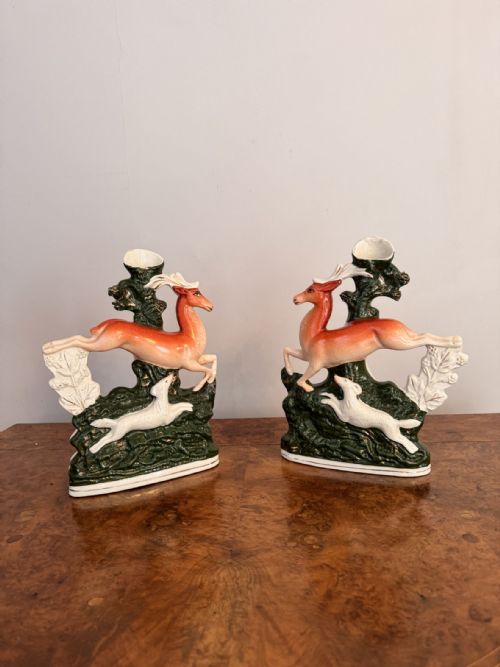
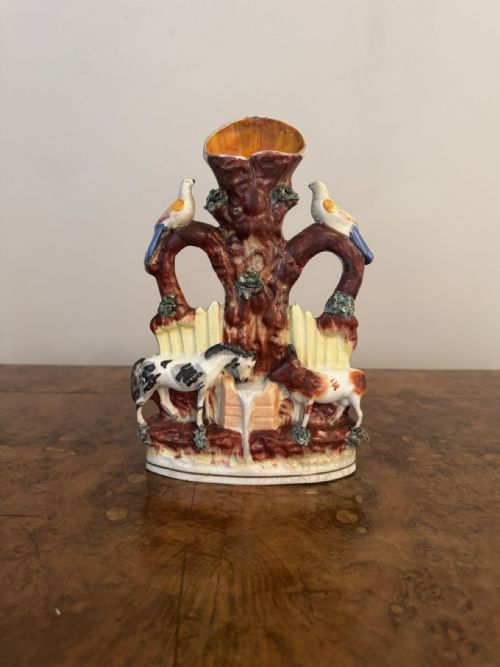
A victorian ceramic spill vase takes the form of hollow pottery cylinders or figures designed to hold wooden tapers next to a hearth. The most frequent examples appearing on this page belong to the nineteenth century and originate from Staffordshire potteries.
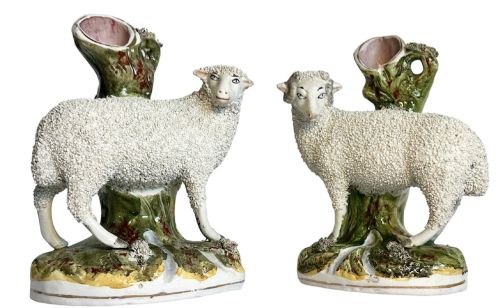
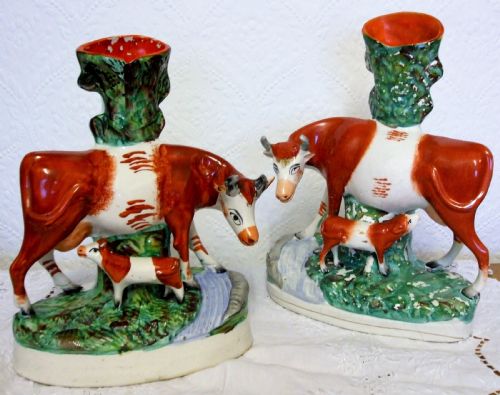
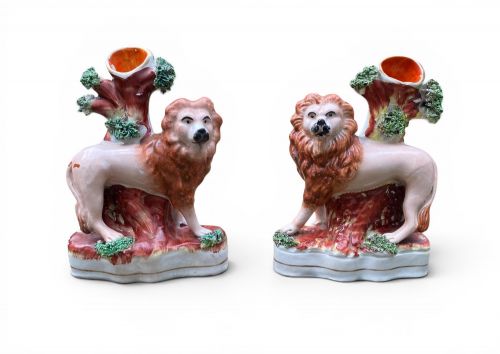
Makers shaped these utilitarian objects as animals, figures, and castles, integrating the hollow spill holder directly behind sheep, cows, deer, dogs, lions, and swans. Many pieces arrive in pairs, intended to balance each other symmetrically on a mantelpiece.
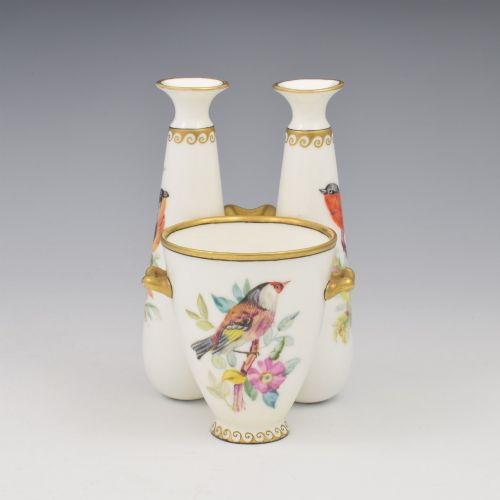
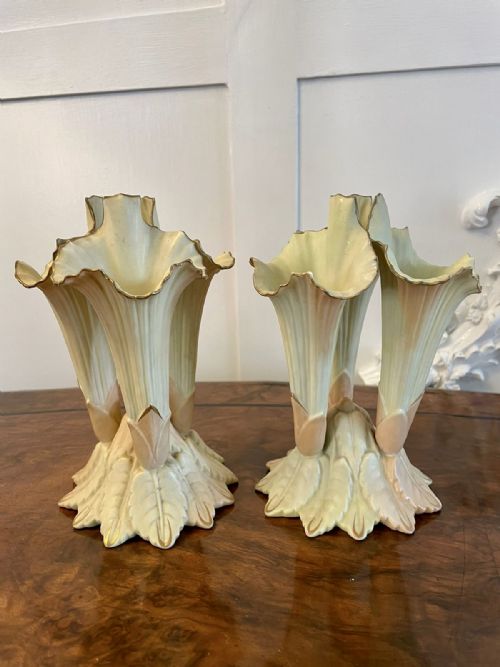
Alongside regional Staffordshire earthenware, the selection includes porcelain work from factories such as Royal Worcester and Locke & Co, as well as Japanese Imari export pieces. These varied styles share the primary nineteenth-century function of containing slender spills for lighting fires.
Materials and methods
Potters built these figures primarily from earthenware and porcelain, applying lead glaze or enamel colours to the surfaces before firing. Many Staffordshire pieces rely on moulded earthenware bodies finished with hand-painted details.
Factories like Royal Worcester utilised fine porcelain and ivory grounds, whilst other pieces incorporate bisque porcelain or applied gold leaf. The manufacturing process combined press-moulding with hand finishing to create both utilitarian spill holders and decorative figures.
Nineteenth-century potters expected cows to look amiable while holding a fireplace taper on your mantelpiece.
What separates the grades
The sophistication of the palette and the complexity of the subject matter distinguish standard production pieces from exceptional works by makers like Royal Worcester. Pairs matched in scale and finish command greater attention than mismatched survivors.
Royal Worcester·Locke & Co·Vion et Baury·John Hopewell
The Victorian Ceramic Spill Vase Glossary
- Spill
- A slender strip of wood or rolled paper used for transferring a flame from a fire to a candle or lamp. The vase provides a dedicated upright container for these tapers.
- Flat back
- A method of moulding where the reverse of a Staffordshire figure is left unglazed and flattened so it sits flush against a wall. This technique saved materials and weight on pieces meant for mantelpieces.
- Bisque
- Unglazed fired porcelain possessing a matte, marble-like texture. It appears on nineteenth-century decorative figures and vases.
- Staffordshire pottery
- Earthenware produced by numerous factories situated in the Midlands region of England during the nineteenth century. These works include figures, animals, and castle spill holders.
- Imari
- A style of Japanese export porcelain decorated in underglaze blue and iron red with gilt highlights. Large pairs of these vases appear alongside British earthenware.
Victorian Ceramic Spill Vase: Frequently Asked Questions
What is a spill vase used for?
These vessels held thin wooden tapers known as spills close to the fireplace for lighting lamps, candles, and tobacco pipes before matches became common.
Placed on the mantelpiece, they kept the tapers dry and accessible while serving as decorative ornaments.
How do I identify Staffordshire pieces?
Staffordshire spill vases typically feature earthenware bodies, hand-painted enamel colours, and flat backs designed to face forward on a shelf.
Common subjects include animals like cows, sheep, and deer, often modelled with a tubular holder positioned directly behind the main figure.
Were these made as pairs?
Many nineteenth-century spill vases and figures were produced as mirrored pairs to flank a clock or ornament in the centre of a mantelpiece.
Matching pairs feature complementary poses, identical sizing, and corresponding colour palettes from the same pottery.
What is blush ivory porcelain?
Blush ivory refers to a soft, creamy porcelain body with a tinted glaze developed by late nineteenth-century English manufacturers.
This technique created a warm matte finish that frequently served as a ground for delicate floral or gilt decoration.