


Victorian Ceramic Oil Lamp
A victorian ceramic oil lamp brings the warm glow of the nineteenth century into a room through hand-painted porcelain, faience, and gleaming brass.
Victorian Ceramic Oil Lamp
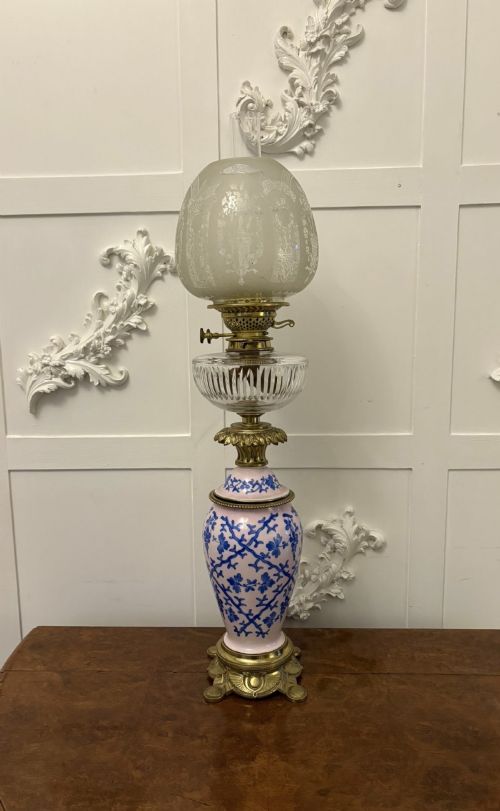
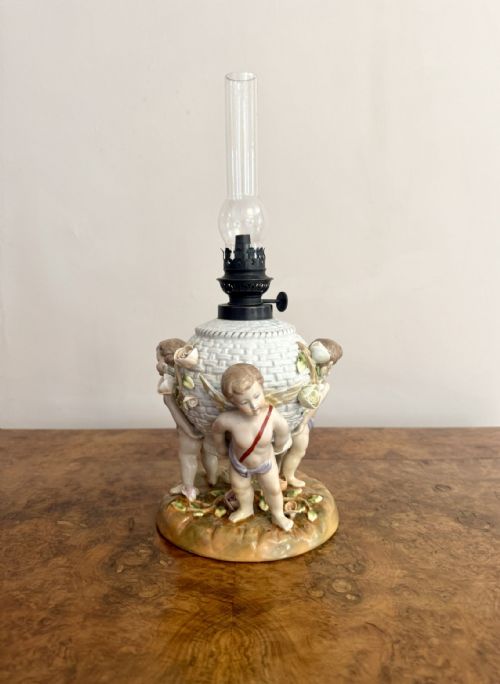
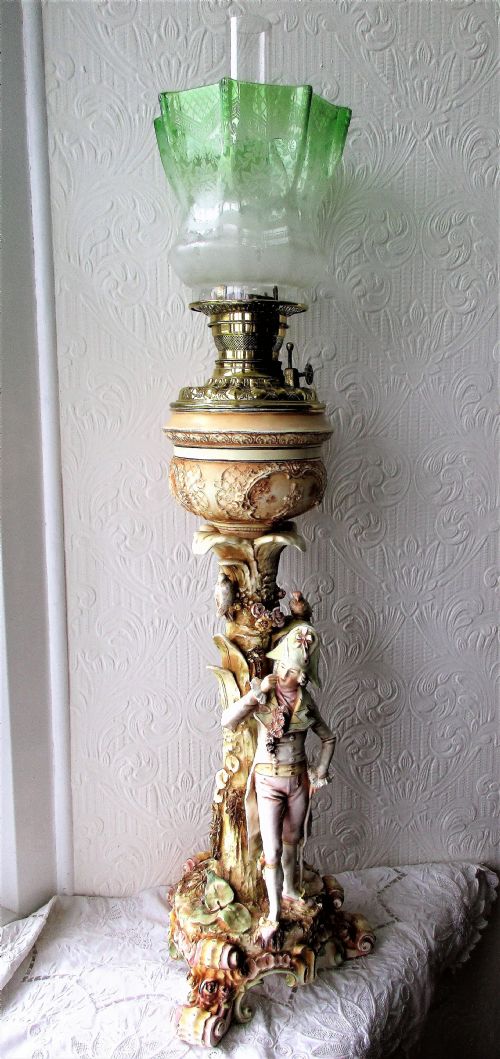
When you search for a victorian ceramic oil lamp, you enter a diverse field of nineteenth-century lighting that combines fired clay bodies with functional metal hardware. These table lamps range from simple domestic pieces to elaborate figural designs featuring animals and human forms.
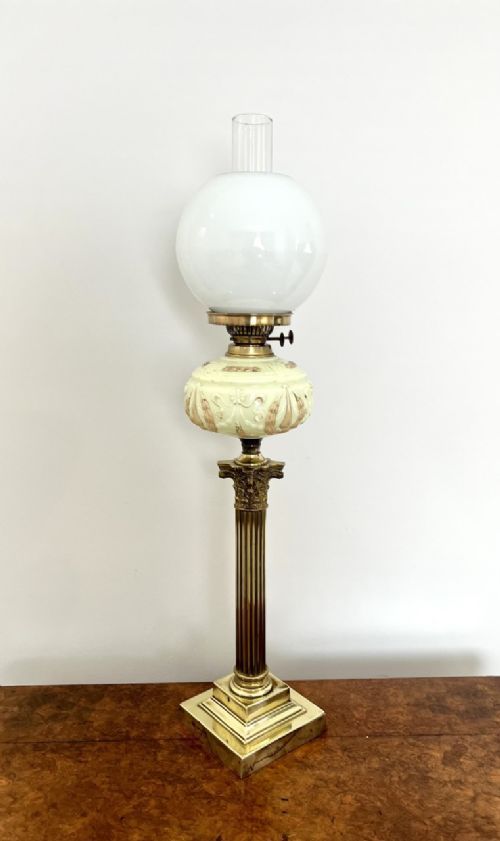
The versions you are most likely to meet on this page hail from the Victorian period, late Victorian era, and the turn of the twentieth century. They draw upon styles as varied as Victorian Rococo Revival, Art Nouveau, and Napoleon III, often pairing ceramic reservoirs with cast brass or bronze bases.
Materials and construction
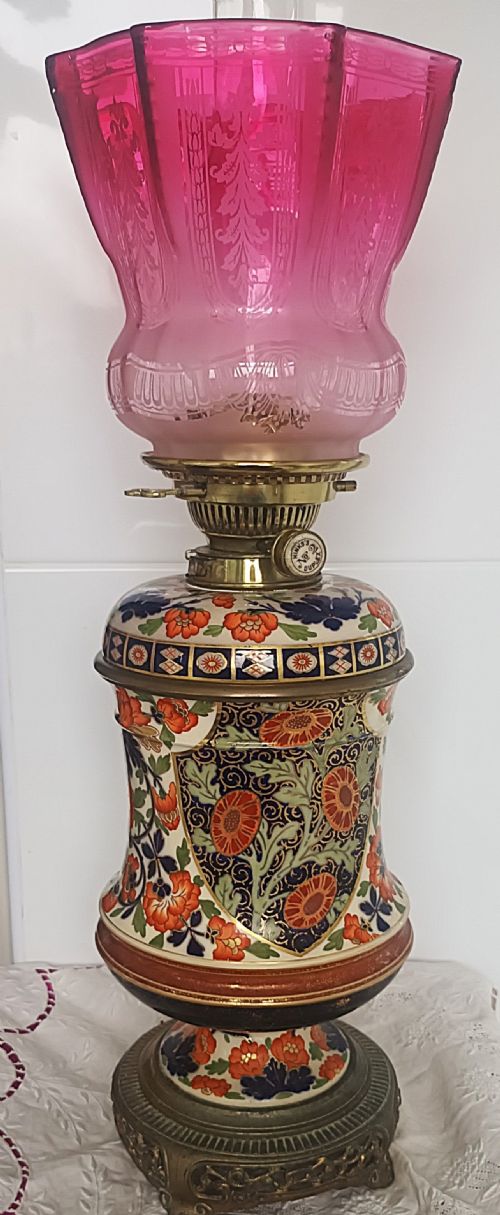
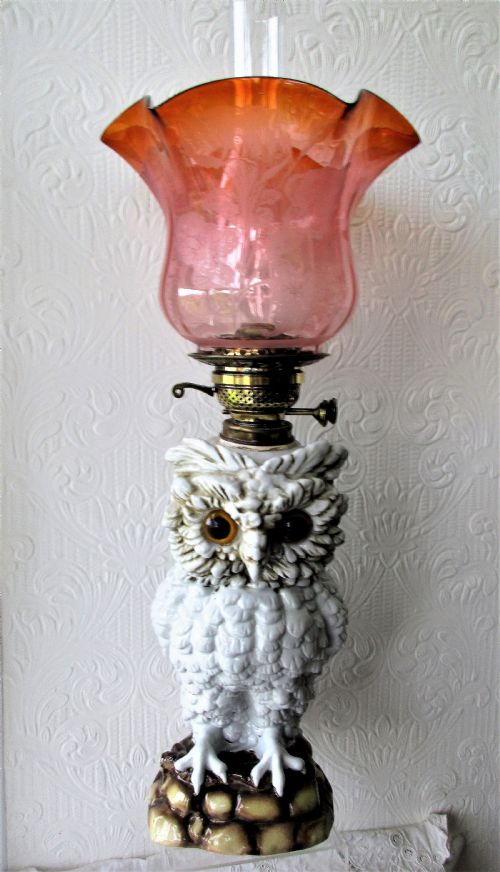
Makers utilised porcelain, faience, and glazed pottery for the bodies, frequently shaping them into owls, figures, or globular reservoirs. These ceramic elements were then mounted onto sturdy bases of brass, bronze, and occasionally black glass.
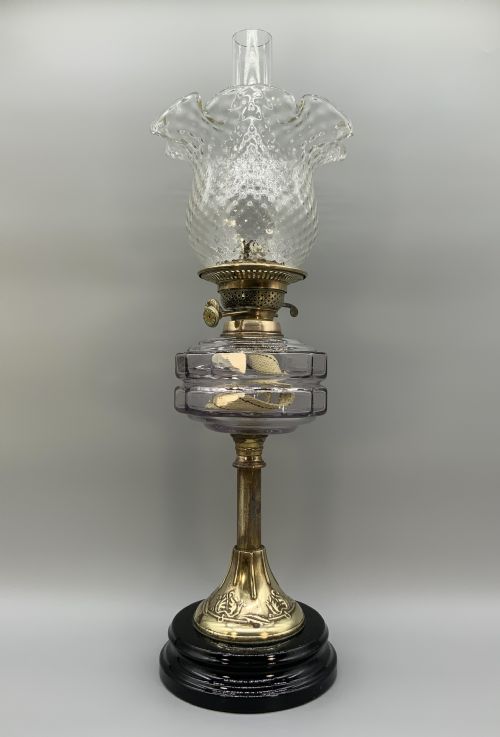
Many examples incorporate hand-blown glass shades, twin-burning mechanisms, and telescopic columns that allowed users to adjust the height of the light. The combination of delicate ceramic painting with robust metal casting defined the craft of the period.
Several lamps on this page take the form of wise porcelain owls staring intently into the room while holding a flame.
Judging quality
Quality in a victorian ceramic oil lamp rests upon the crispness of the moulding and the artistry of the hand-painted decoration on the porcelain or faience. Finer pieces display detailed figural modeling, such as feathered owls or elaborate rococo scrolls, rather than plain glazed finishes.
The integration of the ceramic reservoir with the metal mounts also dictates the grade of the piece, with heavier brass castings and sophisticated burner mechanisms like the duplex system marking out the better workshops.
Sitzendorf·Hinks·Taylor Tunnicliff
The Victorian Ceramic Oil Lamp Glossary
- Faience
- Tin-glazed earthenware popular for colourful, enamelled lamp bases. It provides a rich ground for floral and pictorial decoration.
- Duplex burner
- A double-wick mechanism designed to produce a brighter light than single-wick burners. It became a hallmark of improved nineteenth-century lighting.
- Telescopic
- A column design allowing the lamp height to be adjusted vertically. This feature allowed users to alter the spread of light across a room.
- Figural
- A lamp modelled in the shape of an animal, human figure, or specific object such as an owl or a terrestrial globe. These pieces depart from standard column or urn shapes.
Victorian Ceramic Oil Lamp: Frequently Asked Questions
Can I convert these lamps to electricity?
Many collectors choose to run electrical wiring through the central column of a victorian ceramic oil lamp for modern use. This process can often be done without drilling holes by passing the cord through the existing burner path.
Retaining the original burner parts alongside the new wiring allows the conversion to look sympathetic to the period. Professional rewiring ensures the antique metal and ceramic components remain safe for daily illumination.
What is faience?
Faience refers to tin-glazed earthenware that offers a smooth, opaque surface for colourful enamelled painting. Nineteenth-century makers favoured it for lamp reservoirs because it accepted rich glazes and detailed pictorial scenes.
This material allows for deep blues, greens, and floral motifs that contrast sharply with the polished brass bases beneath them.
How do I clean the ceramic body?
Cleaning a victorian ceramic oil lamp requires a soft, dry cloth to remove dust from the glazed surfaces and hand-painted details. Avoid harsh chemical cleaners or soaking the ceramic, as moisture can damage old glazes and painted enamel.
Metal components like brass and bronze should be wiped gently with a non-abrasive cloth to preserve their natural patina rather than polished to a bright shine.