


German Porcelain Lamps
German porcelain lamps bring sculptural modelling and hand-painted detail to a room, ranging from figural animal forms to oil and table lighting.
German Porcelain Lamps
When you search for german porcelain lamps, you encounter sculptural table lighting and oil lamps originating from major factories during the nineteenth and early twentieth centuries. These pieces combine glazed ceramic figures and vases with brass, glass, and fabric components.
The selections on this page feature table lamps and oil lamps spanning the Victorian era through the Art Deco period. Animal and figural subjects appear frequently, alongside pierced vases adapted for illumination.
Moulded porcelain forms take inspiration from historical styles, including Rococo Revival curves and Victorian novelty designs. You are most likely to meet pieces bearing Sitzendorf, Meissen, Karl Ens, and Ernst Bohne & Sohn attributions.
How they were made
Makers shaped these german porcelain lamps using fired ceramic body pastes, applying detailed hand-painting and polychrome glazes over modelled figures and pierced vessel surfaces. Artisans incorporated brass mountings and fitted glass chimneys or shades to complete the lighting mechanism.
The construction of figural oil lamps and table lamps required specialised kilns to fire complex, multi-part porcelain mouldings before mounting them onto metal bases. Silk and fabric elements were later added to soften the illumination.
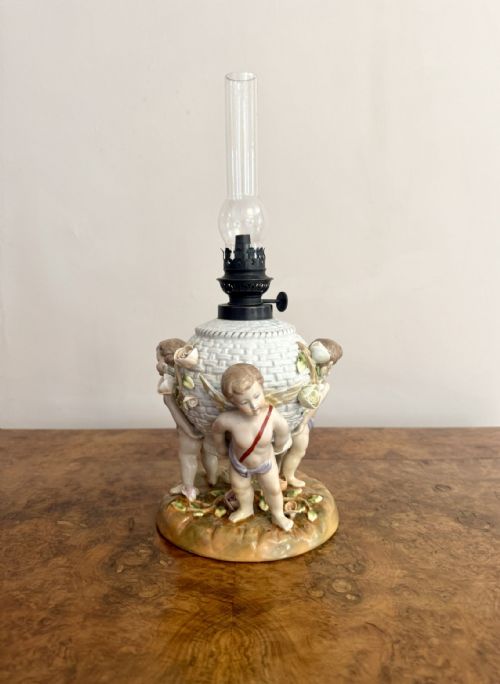
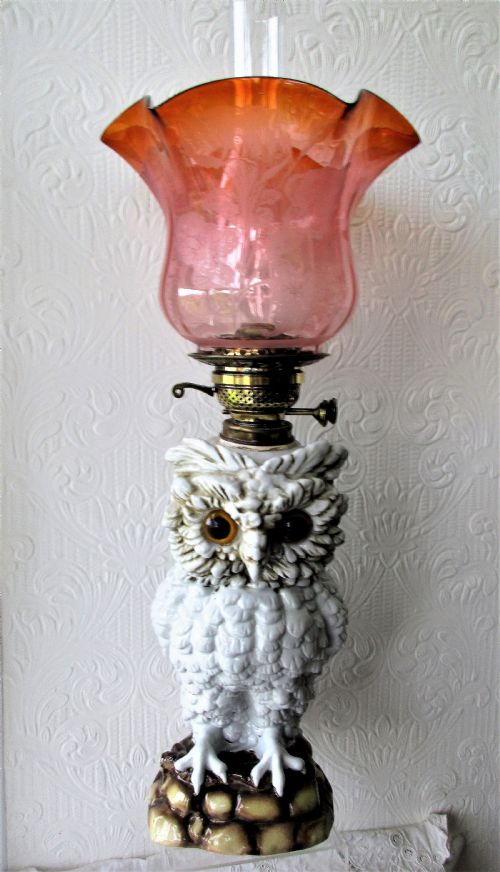
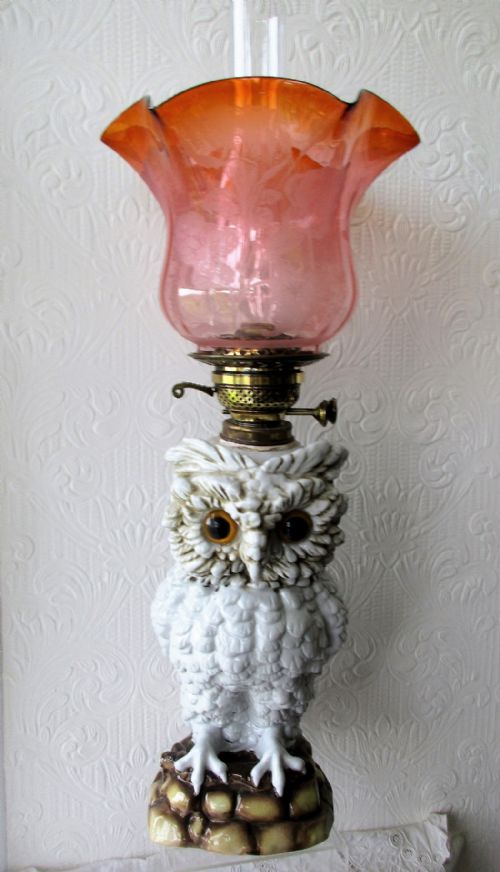
A porcelain spitz dog sits quietly among the owls and cherubs, guarding the nineteenth-century lighting.
What varies in quality
The integration of porcelain bodies with brass mounts and the survival of original decorative components influence the overall integrity of each piece. Greater sculptural ambition and careful enamel application elevate individual examples.
Sitzendorf·Karl Ens·Anton Buschelberger·Meissen·Ernst Bohne & Sohn
The German Porcelain Lamps Glossary
- Polychrome
- Decoration executed in multiple enamel colours. This technique defines the painted surfaces of nineteenth-century figural ceramics.
- Pierced
- Perforated or cut-through ornament allowing light or air to pass. This method appears on decorative vase bodies adapted as lamps.
- Oil lamp
- A lighting device burning liquid fuel via a wick. Many nineteenth-century porcelain examples retain brass burner mechanisms.
- Bisque
- Unglazed fired porcelain having a matte, tactile surface. This finish emphasises sculptural contours on figural subjects.
German Porcelain Lamps: Frequently Asked Questions
What periods do these lamps cover?
The available pieces span the nineteenth century through the early twentieth century, incorporating Victorian, Rococo Revival, and Art Deco styles.
Specific dates recorded in the evidence range from around 1800 through the 1920s.
Were these originally oil lamps?
Many examples began as oil lamps, featuring brass burners and glass chimneys alongside the porcelain reservoirs.
Others utilise pierced vases or figural sculptures adapted later for electrical table lighting.
What animal subjects appear?
Makers frequently modelled figural lamps in the form of owls, spitz dogs, and cherubs.
These animal and figural compositions often serve as the main body supporting the lighting fittings.
What materials accompany the porcelain?
Brass mountings provide structural support and house the burner or electrical components.
Glass and fabric or silk elements appear in chimneys, shades, and associated fittings.