


Victorian Ceramic Mantelpiece Ornament
These nineteenth-century figures and spill vases bring cheerful character to a hearth, offering the charm that collectors seek in a victorian ceramic mantelpiece ornament.
Victorian Ceramic Mantelpiece Ornament
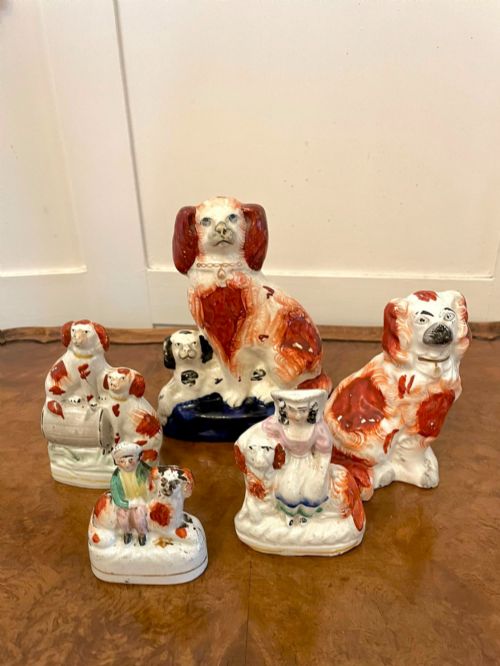
When searching for a victorian ceramic mantelpiece ornament, buyers encounter pottery and earthenware shaped into domestic animals, royal portraits, and rustic pairs designed specifically for display on a shelf above a fireplace. The pieces span the nineteenth century, with Staffordshire production forming the bulk of what appears on this page alongside continental porcelain.
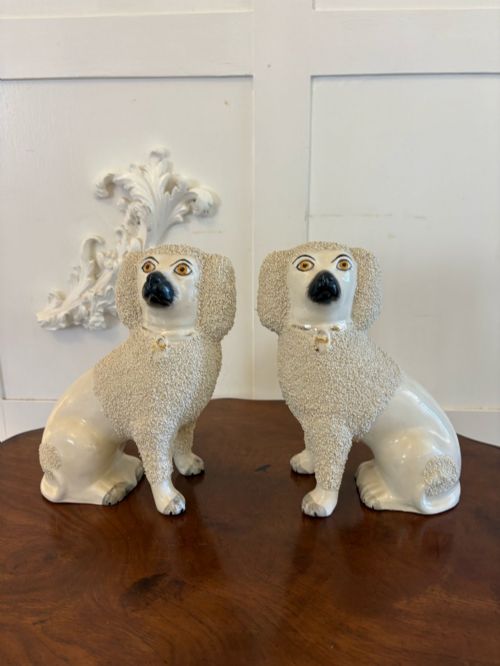
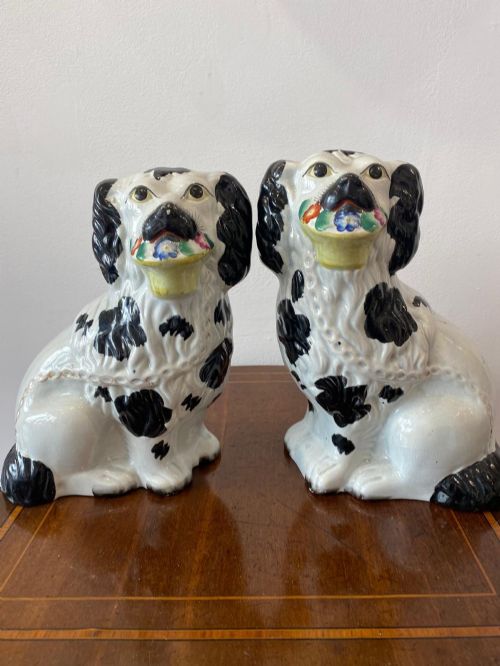
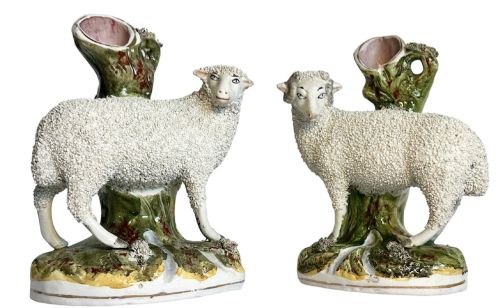
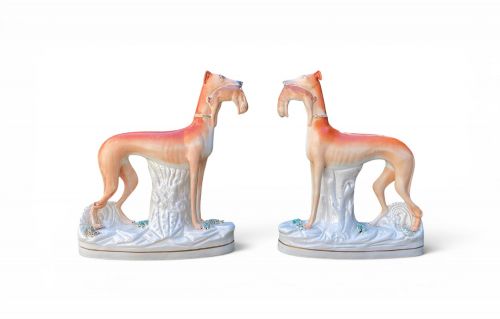
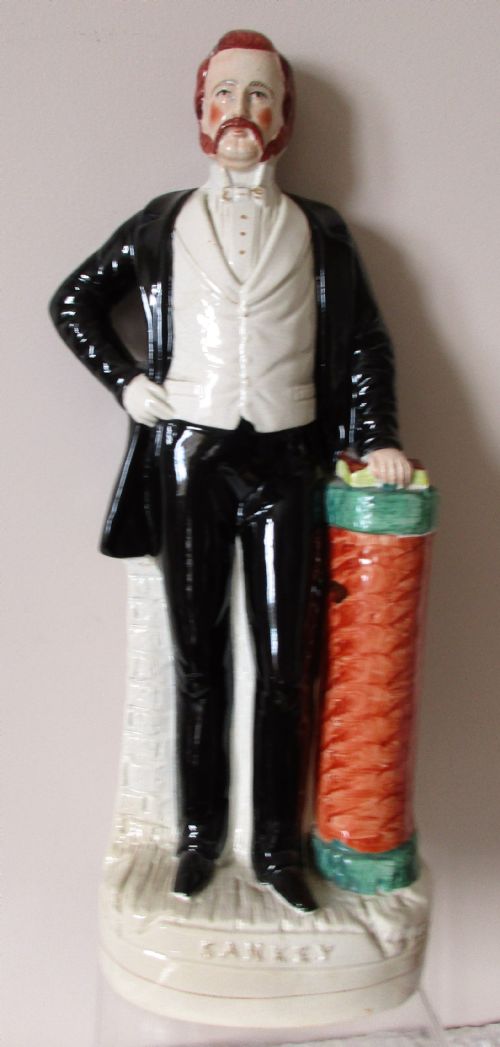
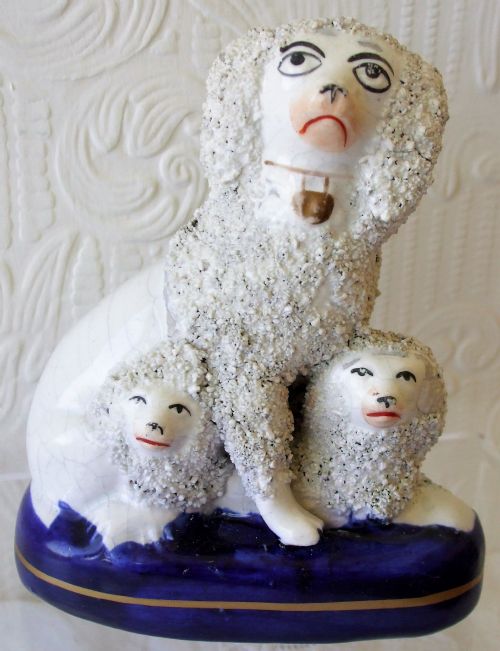
Forms range from flatback figures intended to stand against a wall to pairs of spaniels, poodles, lions, and sheep, often functioning as spill vases to hold wooden matches. Figures of historical personages and rural scenes also feature frequently among the domestic animals.
Makers produced these decorative objects in quantity for everyday homes, resulting in sturdy earthenware bodies that survived generations of household use. The aesthetic leans toward folk art and traditional English styles, sometimes adopting rococo revival curves.
Materials and Techniques
Potters shaped these objects from earthenware and stoneware, utilising clay bodies that accepted thick lead glazes and enamel paint layers. Many pieces received hand painting over a white ground, sometimes accented with gold leaf or copper lustre glaze.
Victorian mantel dogs kept a silent, permanent watch over the hearth while waiting for someone to fetch a light.
Distinctions in Quality
Quality rests upon the crispness of the mould and the care taken with hand painting, particularly in the rendering of facial expressions and surface patterns on animals and human figures. Superior examples display clean enamel work and balanced proportions without excessive blurring of the underlying clay.
The richness of the glaze and the retention of original gold leaf or copper lustre accents separate ordinary utilitarian items from finely finished parlour ornaments. Pairs that retain their matching counterpart and show minimal wear to the painted surface command greater appreciation.
Eugene Clauss·Sitzendorf
The Victorian Ceramic Mantelpiece Ornament Glossary
- Flatback
- A figure moulded with a detailed front and a flat, unglazed or minimally finished back designed to sit flush against a wall on a mantelpiece.
- Spill Vase
- A hollow ceramic cylinder attached to a figure, intended to hold wooden spill lights for transferring flames from the hearth to candles or pipes.
- Treacle Glaze
- A dark, translucent brown lead glaze that produces a rich, glossy finish on nineteenth-century pottery figures.
- Copper Lustre
- A metallic glaze application that gives ceramic surfaces a reflective, coppery sheen characteristic of certain Victorian animal sculptures.
- Earthenware
- Porous pottery fired at a lower temperature than stoneware or porcelain, serving as the primary material for Staffordshire mantel ornaments.
Victorian Ceramic Mantelpiece Ornament: Frequently Asked Questions
What is a Staffordshire flatback?
A Staffordshire flatback is a ceramic figure designed with a detailed front and a flat rear side so it could stand safely against a wall.
These pieces were produced in large numbers during the nineteenth century specifically for display on mantelpieces and shelves.
Why are ceramic dogs paired?
Ceramic dogs like spaniels and poodles were traditionally made as symmetrical pairs to sit at either end of a fireplace mantel.
This balanced arrangement reflected Victorian interior design preferences for order and symmetry in domestic living spaces.
How were spill vases used?
Spill vases held thin wooden tapers called spills, which people used to transfer a flame from the coal fire to light candles, lamps, or tobacco.
Potters integrated these holders into sculptural groups of animals or figures to combine decorative appeal with daily utility.
What materials make up these ornaments?
These decorative objects consist primarily of earthenware or stoneware clay bodies shaped in moulds.
Artisans then finished the fired pieces using lead glazes, enamel paints, copper lustre, and occasional touches of gold leaf.