




Victorian Ceramic Loving Cup
These victorian ceramic loving cup pieces are traditional two-handled drinking vessels designed for shared toasts, offering rich historical character for any collection.
Victorian Ceramic Loving Cup
A victorian ceramic loving cup is a two-handled drinking vessel intended for communal use during toasts and celebrations, appearing across the nineteenth century in various regional and factory-made styles. The forms span robust earthenware country pottery, salt-glazed stoneware, and delicate porcelain, often featuring multiple handles to allow safe passing between guests.
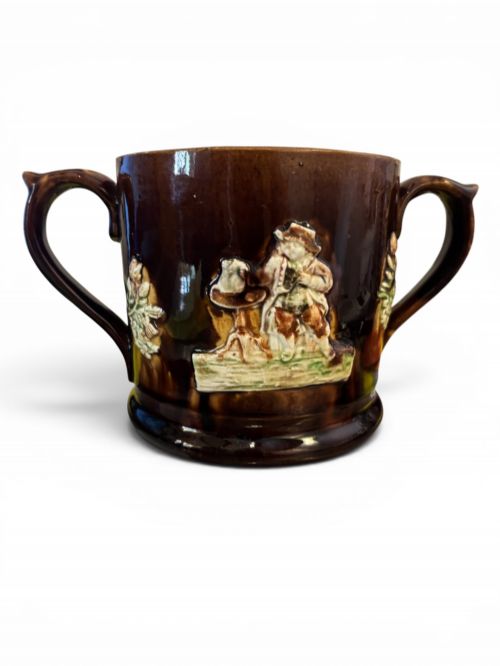
Most examples found on this page date from the nineteenth century, encompassing utilitarian transfer-printed drinking vessels alongside finer ornamental pieces from established potteries. Collectors encounter traditional harvest jugs, pedestal tygs, and humorous surprise mugs fitted with internal ceramic frogs or newts designed to startle the drinker.
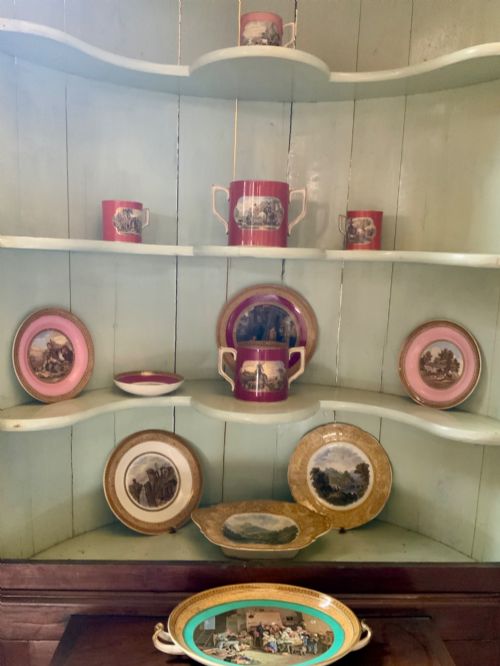
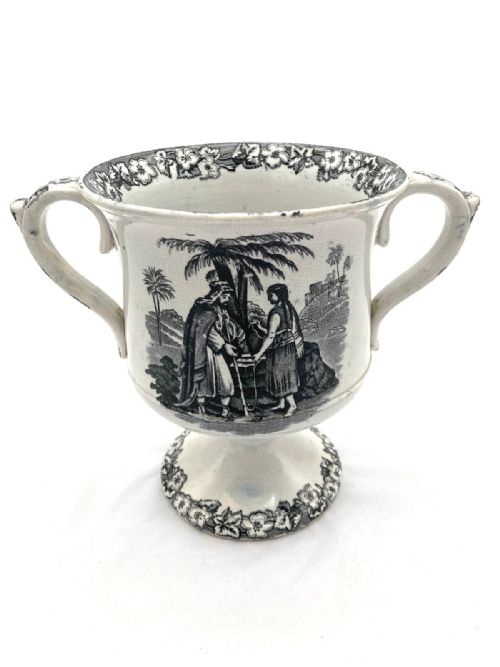
The decorative schemes range from hunting scenes rendered in black transfer print to hand-painted botanical motifs and polychrome glazes. Makers often incorporated silver rims or mounts to reinforce the vessel rim and elevate its status.
How they were made
Potters shaped these vessels using earthenware, stoneware, or porcelain bodies, frequently applying salt glazes or rich enamel colours to the surface before firing. Stoneware pieces like those from Doulton Lambeth utilise dense clays fired at high temperatures to achieve a durable, impermeable finish.
Decoration relied heavily on copperplate transfer printing in black or mulberry tones, occasionally enhanced by hand-applied polychrome enamels and gold leaf highlights. Many vessels incorporate applied clay handles and sprigged reliefs, while specialised additions like silver rims required metalworking skills to attach securely to the ceramic body.
Victorian Ceramic Loving Cup Retail Price Guide 2026
Typical asking prices for victorian ceramic loving cup among the pieces listed under this phrase on Sellingantiques today, from the lower quarter to the upper quarter. They describe what is for sale here now, not the wider market.
Nothing unites a gathering quite like a hidden ceramic toad peering up from the dregs of your ale.
What varies in quality
The distinction between standard utility wares and exceptional pieces lies in the precision of the transfer printing, the delicacy of the hand-painted details, and the reputation of the maker. Standard country pottery vessels display robust charm through rustic glazes, whereas works by named artists or major manufactories show superior refinement in their modelling and painted execution.
The presence of precious metals, such as gold leaf accents or hallmarked silver rims and mounts, elevates the status of a piece. Furthermore, the complexity of internal surprises like moulded frogs and newts dictates the ambition of the original design.
Doulton Lambeth·Royal Worcester
The Victorian Ceramic Loving Cup Glossary
- Tyg
- A tall drinking vessel with three or more handles, designed so several people could drink from it without sharing the same spot on the rim. These multi-handled cups date back centuries and frequently appear in stoneware and earthenware.
- Transferware
- Pottery decorated by applying a printed design from an engraved copper plate onto tissue paper, which was then transferred onto the unglazed or bisque ceramic body. This technique allowed intricate scenes, such as hunting prints, to be reproduced with great consistency.
- Prattware
- A type of earthenware associated with Staffordshire potteries, known for underglaze polychrome decoration typically utilising blue, ochre, brown, and green pigments. Pieces often include moulded figures and historical subjects.
- Sprigged relief
- A decorative technique where moulded clay motifs are separately shaped and applied to the unfired body of a vessel using slip as an adhesive. This creates raised ornamental patterns across the surface.
Victorian Ceramic Loving Cup: Frequently Asked Questions
What is a loving cup?
A loving cup is a large communal drinking vessel traditionally furnished with two or more handles so that it could be passed securely among guests during toasts and celebrations.
Over time, these vessels evolved from purely functional tavern and household items into decorative presentation pieces and commemorative objects.
Why do some cups have frogs inside?
Potters placed ceramic frogs or newts inside the bottom of certain drinking vessels as a practical joke to surprise the drinker as the liquid diminished.
These humorous items were popular in English taverns during the eighteenth and nineteenth centuries to liven up communal drinking customs.
How do you date a ceramic loving cup?
Dating relies upon examining the materials, decorative techniques, glaze types, and any maker marks or factory stamps present on the base.
Transfer printing styles, the use of specific colour palettes like mulberry, and the presence of silver mounts also help narrow down the period of manufacture.
Are these cups meant for daily use?
While originally created as functional drinkware or tavern tankards, antique ceramic pieces are now generally treated as decorative or display items to preserve their condition.
Older earthenware and glazed surfaces can be vulnerable to staining or thermal shock if utilised for modern dining.