


Victorian Cattle Oil Artwork
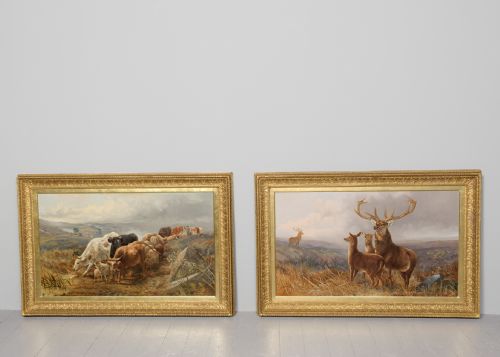
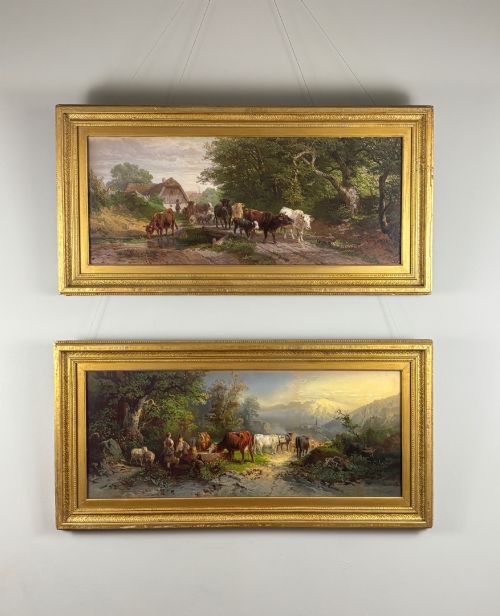
When you search for victorian cattle oil artwork, you uncover pastoral canvases depicting shaggy Highland beasts and prize bulls in rural landscapes.
Victorian Cattle Oil Artwork
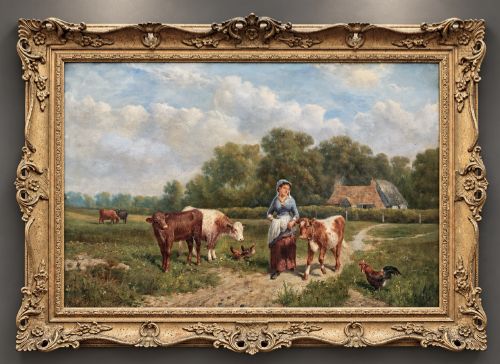
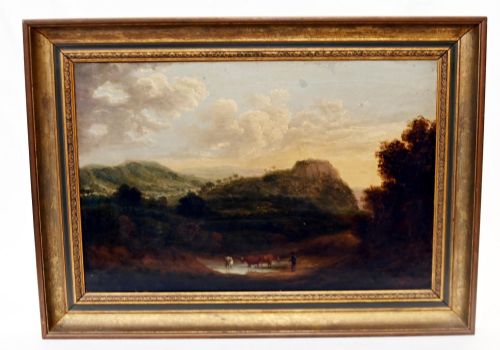
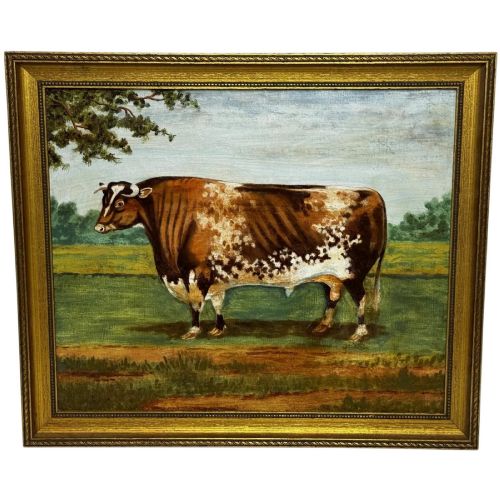
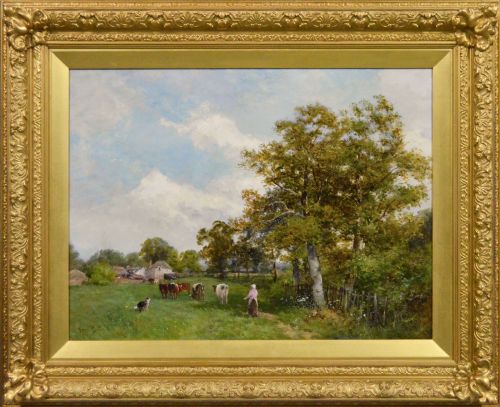
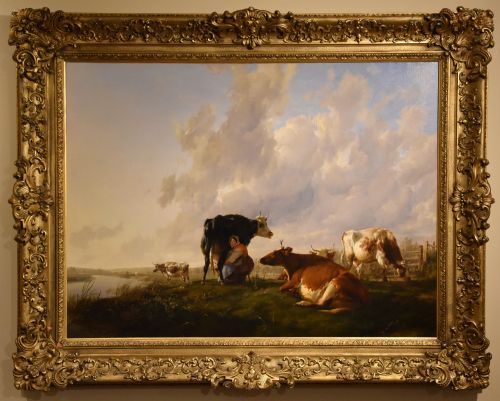
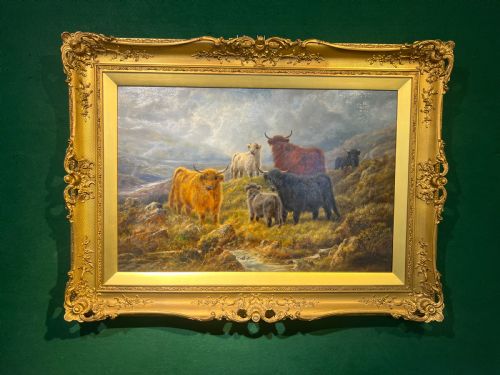
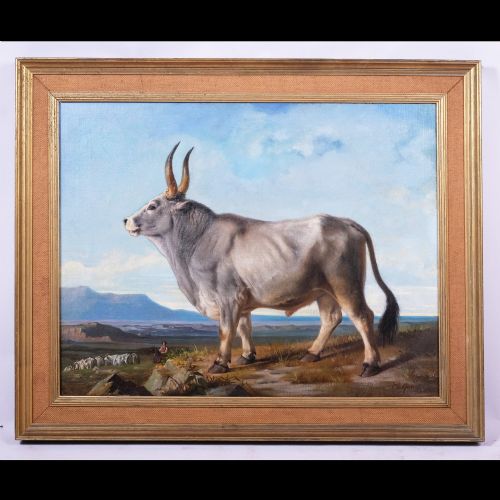
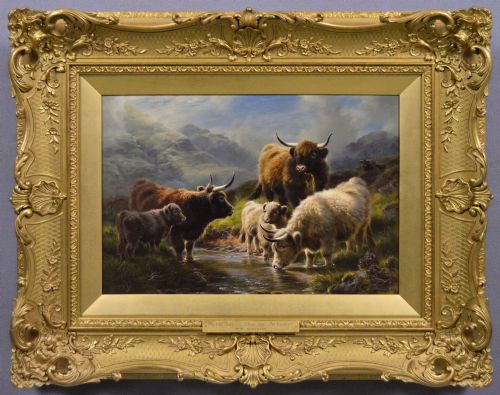
These pieces comprise canvas paintings rendered in oil paint that portray herds, farmyards, and pastoral scenes from the nineteenth century. Buyers encounter depictions of Shorthorn bulls, Highland cattle near lochs, and milkmaids tending livestock in river valleys.
The works originate predominantly from British and European painters working within Victorian realism, pastoralism, and the British School. Canvases range from intimate studies of calves to large framed landscapes featuring drovers and grazing herds.
Framing often includes original gesso and giltwood surrounds that complement the rich tones of the oil pigments. Pastoral subjects dominate the selection, reflecting a period fascinated by agriculture, rural industry, and dramatic highland scenery.
Materials and technique
Painters applied oil paint to stretched canvas, building texture through layered brushwork to render the dense coats of cattle and the atmospheric haze of valleys. Canvases were secured to wooden stretchers and housed in heavy wooden frames adorned with moulded gesso and gold leaf.
Pigments captured natural light across varied terrains, from the snowy crags of Scottish landscapes to sunlit riverbanks and dim farmyard interiors. Gilding on the frames utilised thin sheets of gold leaf applied over prepared gesso bases on wood.
Listings feature oil paintings on canvas created during the nineteenth and early twentieth centuries, utilising giltwood and gesso frames.
Quality variations
Anatomy and handling of light distinguish the upper tier of works from simpler studio output. Master painters render the muscular structure of a Shorthorn bull or the texture of wet hair with anatomical precision, whereas naive works rely on stiff outlines.
The depth of the landscape and the integration of the animals into their environment set superior canvases apart. Finer pieces balance detailed animal portraiture with atmospheric skies and convincing perspective, while lesser examples treat the background as a static backdrop.
David Bates·Thomas Sidney Cooper·William Watson Jnr·Robert Cleminson·Johann Friedrich Voltz·A M Gauci·Henry Robinson Hall·Henry Hillier Parker·Samuel Joseph Clark·George Vicat Cole·Andre de Moller·Sidney Richard Percy·Frederick James Knowles·Robert Thorne Waite·Pierre Emmanuel Dielmans·George Cole·Thomas Baker·Sidney Yates Johnson·Sidney Pike·Charles Jones·Arthur Charles Dodd·Claude Cardon·George Turner·William Traies·John W Morris
The Victorian Cattle Oil Artwork Glossary
- Gesso
- A plaster-like mixture applied to wooden frames before gilding. It provides a smooth base for intricate mouldings.
- Stretcher
- The wooden frame that holds the canvas taut behind the painting. Inscribed notes or signatures often appear on this wooden structure.
- Giltwood
- Wood carved and coated with gold leaf or metallic paint. It frames many nineteenth-century paintings.
- Pastoral
- A genre of art concerning the rural life of shepherds, farmers, and cattle. These scenes idealize the countryside.
Victorian Cattle Oil Artwork: Frequently Asked Questions
How do I identify a genuine nineteenth-century canvas?
Examine the weave of the canvas and the construction of the wooden stretcher behind the painting. Older supports often show oxidation and markings appropriate to the period.
Signatures, exhibition labels, and inscriptions on the stretcher or frame provide further clues regarding the date and origin of the artwork.
Where should I hang a large pastoral oil painting?
These works require wall space away from direct sunlight and excessive moisture to protect the oil paint and giltwood frame. Placing them at eye level in a principal room allows the details of the landscape to be appreciated.
Ensure the wall can support the weight of heavy framed canvases, particularly those featuring elaborate gesso mouldings.
What subjects are typical in these pastoral scenes?
Common subjects include Highland cattle beside lochs, milkmaids with cows, and drovers crossing bridges in rural valleys. Animals are often shown grazing or sheltering from weather.
Artists frequently set these livestock against recognizable British landscapes, ranging from Scottish highlands to riverbanks in the English countryside.
How do I care for an antique oil painting?
Dust the surface and the giltwood frame gently with a soft, dry brush without applying pressure to the canvas. Avoid using liquid cleaners or household products on the painted surface.
Maintain stable room temperatures and humidity levels to prevent the canvas from slackening and to protect the wooden frame from cracking.