




Victorian Cat Painting
These Victorian cat painting works capture domestic and playful feline subjects in oils, canvas, and giltwood frames.
Victorian Cat Painting
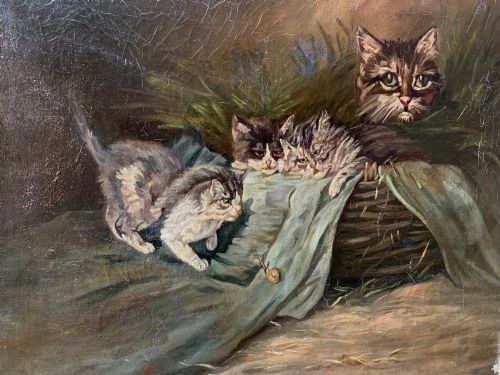
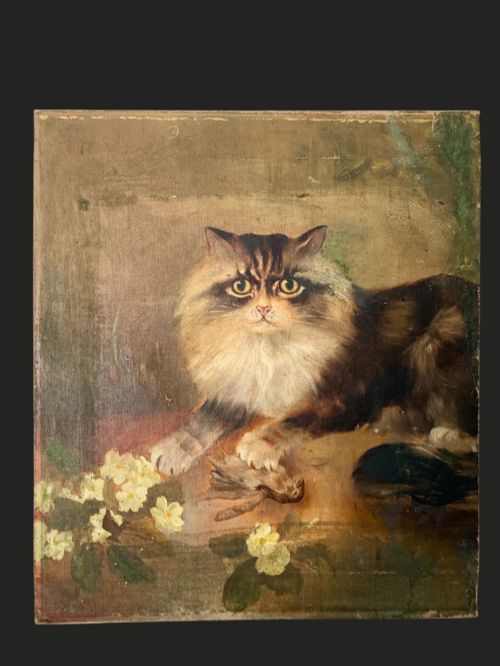
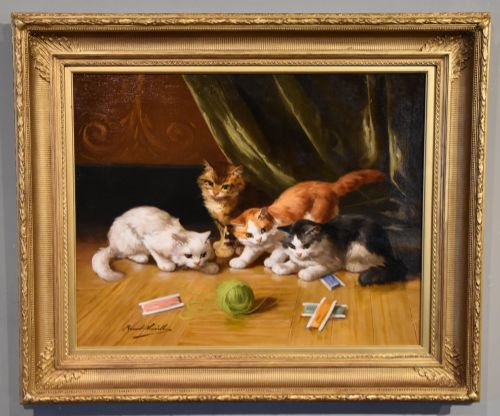
A Victorian cat painting brings domestic felines and playful kittens into domestic interiors through oil on canvas and oil on board. These works range from naive school portraits to detailed genre scenes of cats with fish or at tea parties.
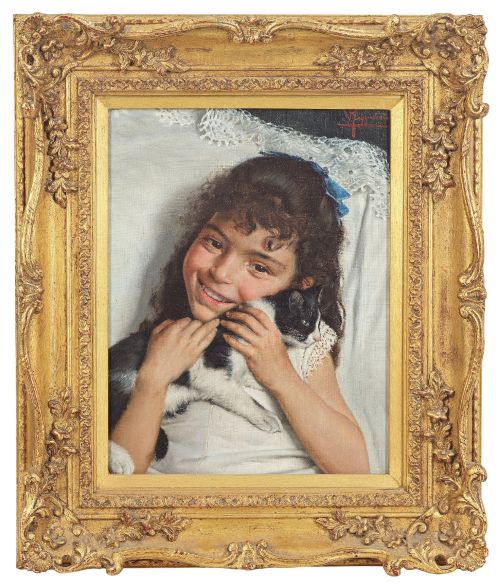
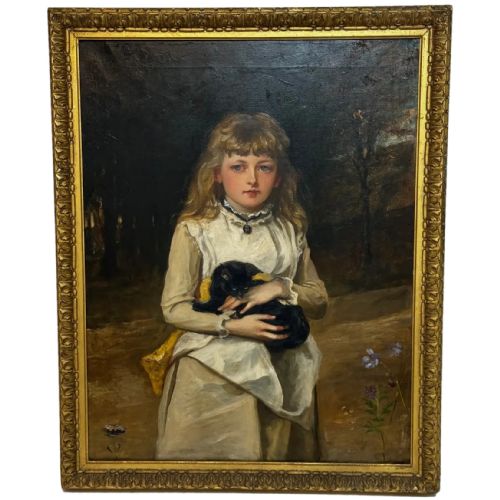
Buyers frequently encounter works attributed to named artists alongside pieces from the French school and provincial English painters. The subjects extend beyond single portraits to groups of Persian kittens and children with pets.
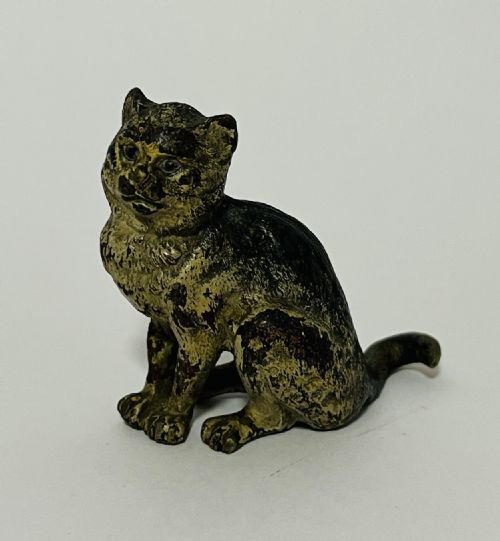
The category also encompasses related items such as cold-painted bronze figures, pottery wall pockets, and Staffordshire figures. Oil paintings remain the dominant form across the nineteenth century and into the early twentieth century.
How they were made
Artists apply oil paint to stretched canvas or wooden boards, often framing the finished works in giltwood or carved gilt frames. Some pieces utilise milk glass or panel supports instead of standard canvas.
Three-dimensional pieces like cold-painted bronze figurines and pottery figures involve casting or moulding, followed by hand-painting. Gesso frames add decorative relief around the painted surface.
Listings feature oil paintings alongside pottery figures, wall pockets, and cold-painted bronze pieces from the nineteenth and early twentieth centuries.
What varies in quality
Quality rests upon the handling of the animal's form and fur texture, where skilled painters capture realistic movement and expression. Naive school pieces display a simpler charm, whilst academic works show precise draughtsmanship.
The execution of the surrounding frame, whether original giltwood or later replacement, influences the presentation. The distinction between signed works by recorded artists and anonymous school pieces shapes the character of each item.
Vittorio Reggianini·Alfred Arthur Brunel de Neuville·Agnes Augusta Talboys·Charles Burton Barber·Henry Weigall·Cuthbert Edmund Swan·Horatio Henry Couldery·Francisco Jose Domingo y Marques·Geza Vastagh·Jules Le Roy·Bessie Bamber
The Victorian Cat Painting Glossary
- Genre painting
- A representation of everyday life and ordinary subjects. These works often depict domestic animals or children with pets in familiar interior settings.
- Naive school
- Art created by self-taught painters working outside academic traditions. These pieces prioritise direct expression over strict anatomical perspective.
- Giltwood
- Wood that has been coated with gold leaf or gilt. This material forms the ornate frames surrounding many period oil paintings.
- Cold-painted bronze
- Metal sculpture painted after casting without high-temperature firing. This technique produces detailed small animal figures.
- Animalier
- A nineteenth-century artistic focus on the realistic portrayal of animals. Painters and sculptors working in this style studied animal anatomy closely.
Victorian Cat Painting: Frequently Asked Questions
What subjects appear in these paintings?
Paintings show individual cats, playful kitten groups, and animals interacting with people. Domestic scenes often feature pets alongside children or within interior domestic settings.
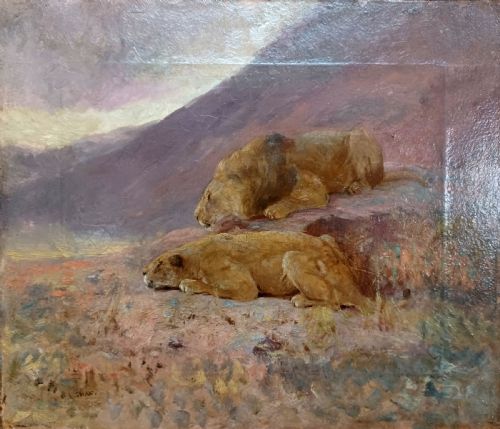
Feline subjects extend to hunting scenes and playful groupings like tea parties. Some compositions pair cats with fish or other domestic animals.
How are these artworks framed?
Many oil paintings retain their original giltwood or carved gilded frames. These decorative surrounds complement the painted canvas.
Frames vary from simple mouldings to elaborate gesso designs. The choice of frame often reflects the period and origin of the painting.
Are all pieces oil paintings?
Oil on canvas and oil on board form the majority of the available works. Artists also utilised milk glass and panel supports for their paintings.
The selection includes three-dimensional objects as well as flat art. Buyers find cold-painted bronze figures and pottery wall pockets alongside the paintings.
Who painted these works?
Named nineteenth-century and early twentieth-century artists produced many of these canvases. Signatures and attributions link works to painters such as Alfred Arthur Brunel de Neuville and Bessie Bamber.
Other pieces originate from anonymous provincial schools and French school painters. These works provide a broad view of historical animal painting styles.
How do naive works differ?
Naive school paintings present a simpler, less academic approach to form and perspective. These pieces focus on direct charm rather than strict anatomical accuracy.
Formal academic works display detailed realism in fur texture and lighting. Both styles capture nineteenth-century attitudes towards domestic animals.