



Victorian Cast Iron Jardiniere
These robust victorian cast iron jardiniere pieces bring architectural weight to lawns and conservatories.
Victorian Cast Iron Jardiniere
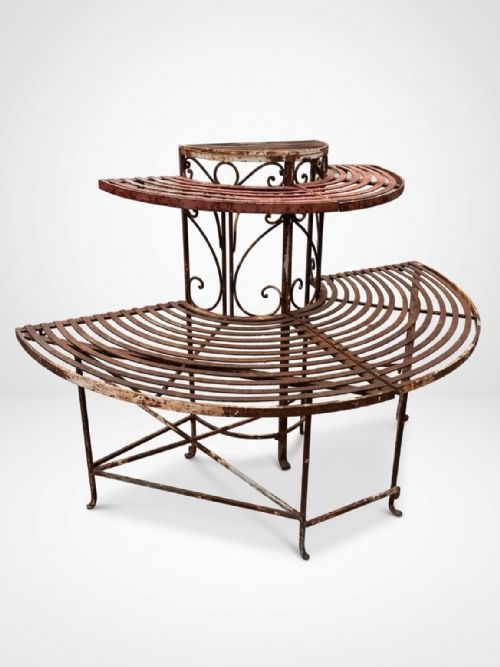
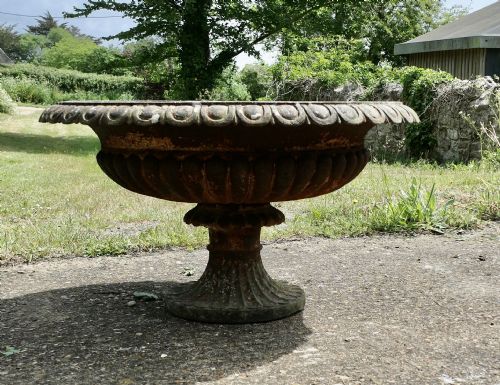
A victorian cast iron jardiniere is a heavy plant receptacle designed for ornamental flora, appearing frequently as urns, footed pots, and tiered stands. Buyers searching this phrase encounter nineteenth-century examples spanning simple round planters to elaborate novelty forms.
Materials and construction
Foundries utilised heavy cast iron as the primary medium, sometimes combining the metal with brass elements or wrought iron supports. Paint finishes applied to the iron provided surface colour and initial protection against garden weathering.
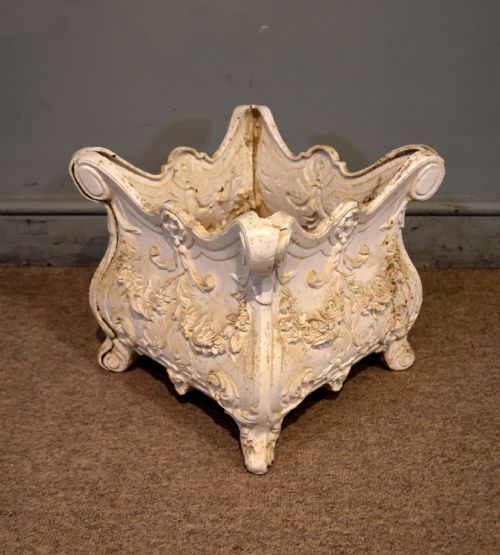
Moulding techniques allowed makers to produce intricate Neoclassical motifs and unusual novelty shapes such as shrimp forms. Stone, wirework, and marble occasionally supplement the dominant iron construction in related plant stands.
Victorian Cast Iron Jardiniere Retail Price Guide 2026
Typical asking prices for victorian cast iron jardiniere among the pieces listed under this phrase on Sellingantiques today, from the lower quarter to the upper quarter. They describe what is for sale here now, not the wider market.
Shrimps lend their likeness to at least one pair of nineteenth-century garden planters.
Differentiating quality
Superior examples display crisp casting detail in the decorative relief work, whereas lower-quality pieces show softened edges from worn foundry moulds. The complexity of the design, such as multi-tiered stands or sculptural animal forms, separates standard pots from finer exhibition pieces.
Original surface patination and intact structural joins dictate the desirability of a piece. Heavy weathering can obscure foundational casting quality if the metal has suffered significant corrosion.
Coalbrookdale
The Victorian Cast Iron Jardiniere Glossary
- Jardiniere
- An ornamental pot or stand for holding plants or flowers. These vessels sit on floors or tabletops.
- Neoclassical
- A style drawing on classical antiquity featuring formal symmetry and traditional motifs. This aesthetic influences many nineteenth-century urn designs.
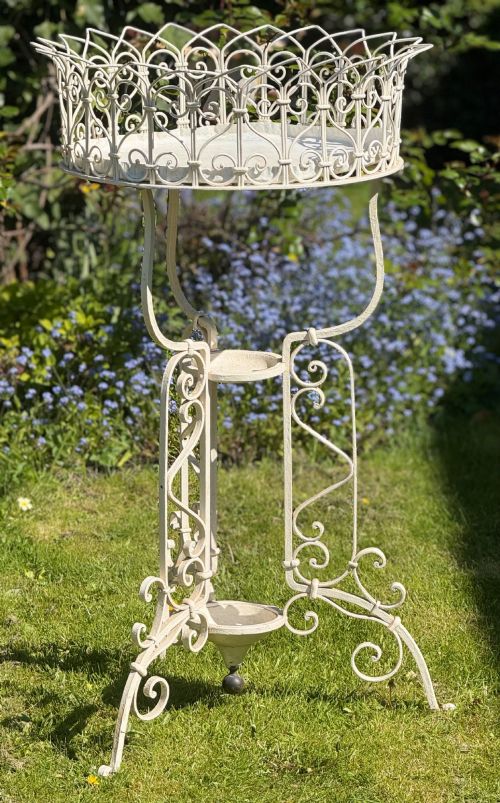
- Wirework
- Construction utilising interwoven metal strands to form plant stands or planters. This technique creates a lighter visual appearance than solid cast iron.
- Urn
- A rounded vase-shaped vessel, often raised on a pedestal base. Garden versions function as permanent landscape planters.
Victorian Cast Iron Jardiniere: Frequently Asked Questions
Where should I place a heavy cast iron planter?
These robust pieces suit outdoor garden settings, stone patios, or large Victorian conservatories where their weight provides stability.
Ensure the ground is level to prevent stress on the iron base during wet weather.
How do I care for cast iron garden pieces?
Regular cleaning removes debris, while seasonal checks help monitor any paint wear on the metal surface.
Applying protective coatings preserves the iron against prolonged moisture exposure outdoors.
Can multi-tiered plant stands hold heavy pots?
Tiered stands constructed from cast iron provide substantial support for multiple standard plant pots.
Distribution of weight across the tiers ensures the standalone structure remains balanced.