
Victorian Casket
A victorian casket offers a glimpse into nineteenth-century domestic life, holding everything from personal letters to precious gems within decorative housings.
Victorian Casket
A victorian casket encompasses a diverse group of nineteenth-century containers designed to hold jewellery, stationery, sewing items, and writing materials.
The objects on this page appear in various timber, metal, and glass forms, dating primarily from the Victorian period through to the early twentieth century.
Buyers will encounter specialised utility boxes alongside purely decorative caskets, reflecting the varied storage needs of past households.
How They Were Made
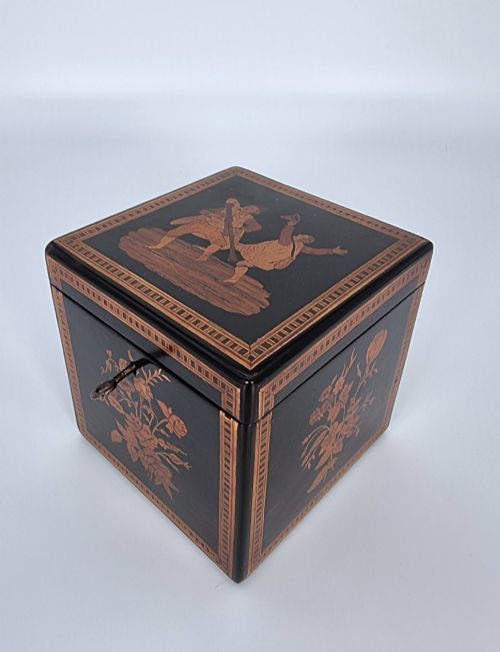
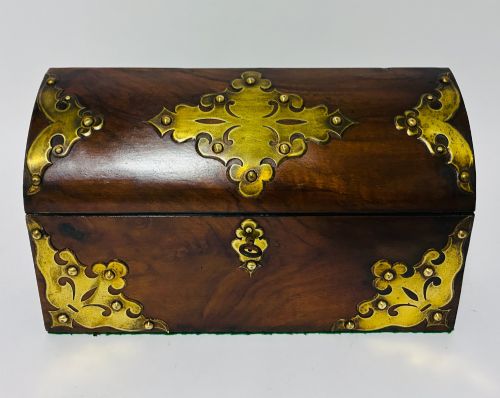
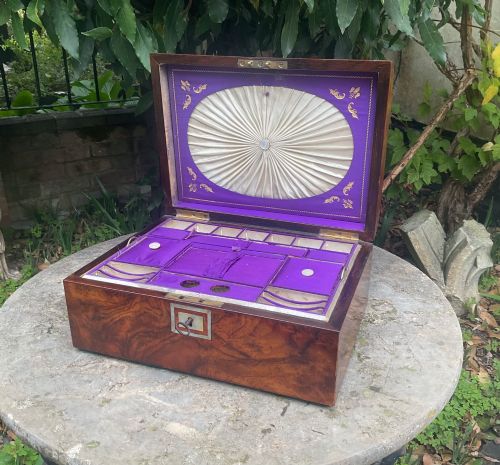
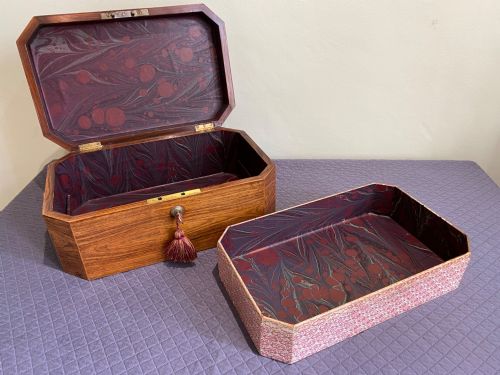
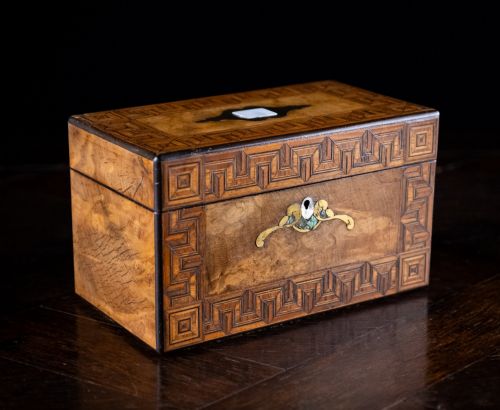
Maker workshops utilised dense decorative timbers such as rosewood, walnut, and coromandel, often enhanced with intricate parquetry and mother-of-pearl inlay.
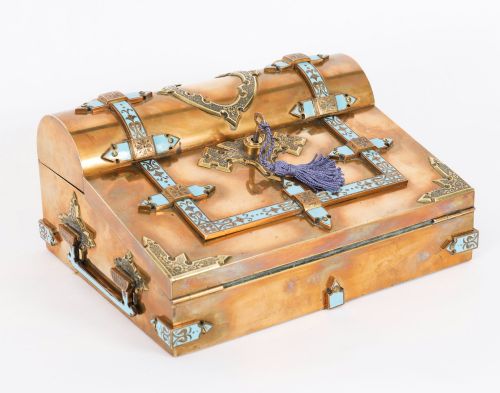
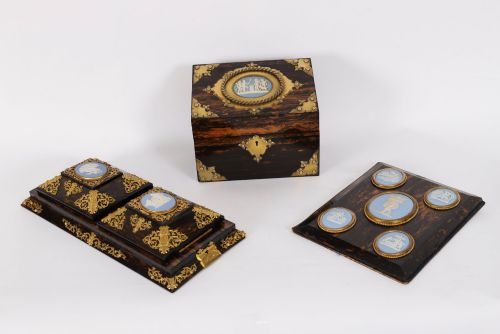
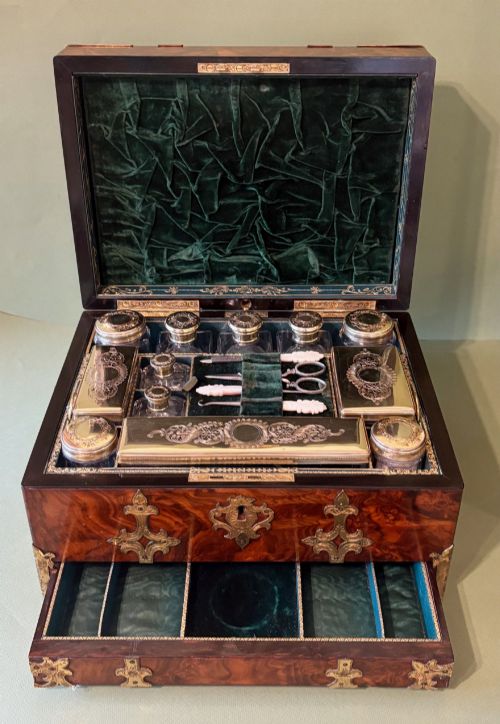
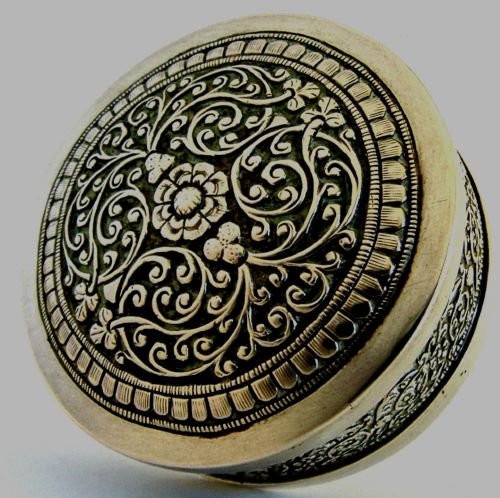
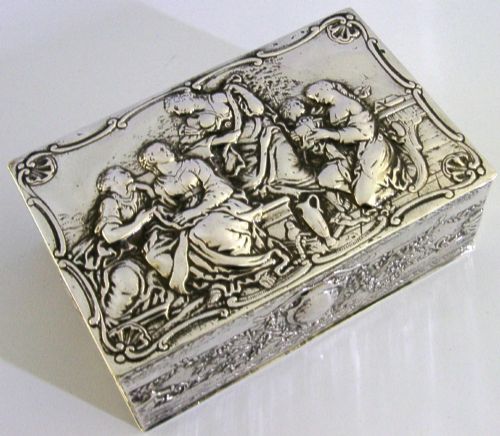
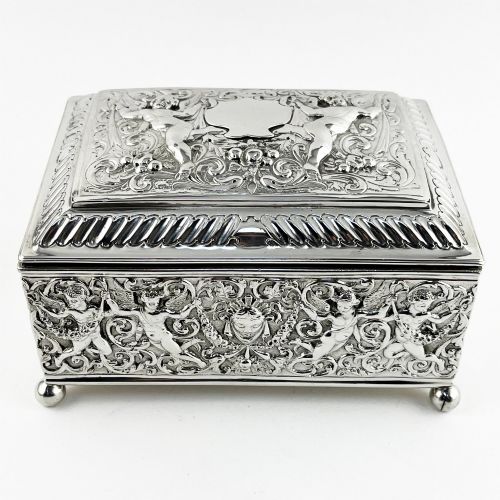
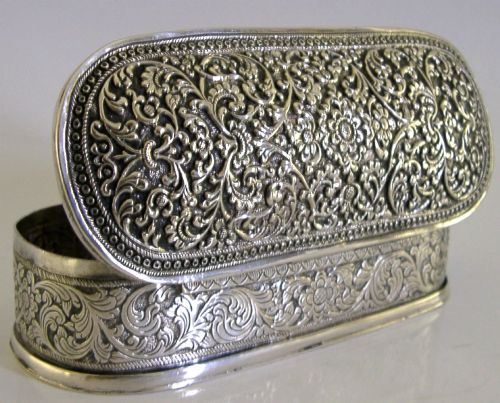
Metal mounts in brass, ormolu, and sterling silver frequently frame panels of glass, tortoiseshell, porcelain, and stone cabochons.
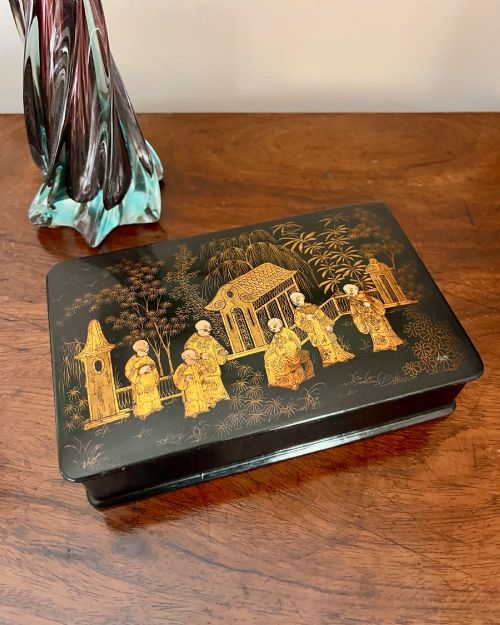
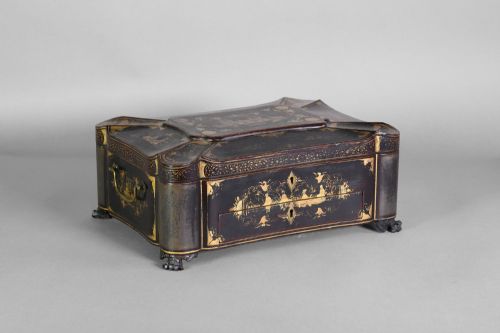
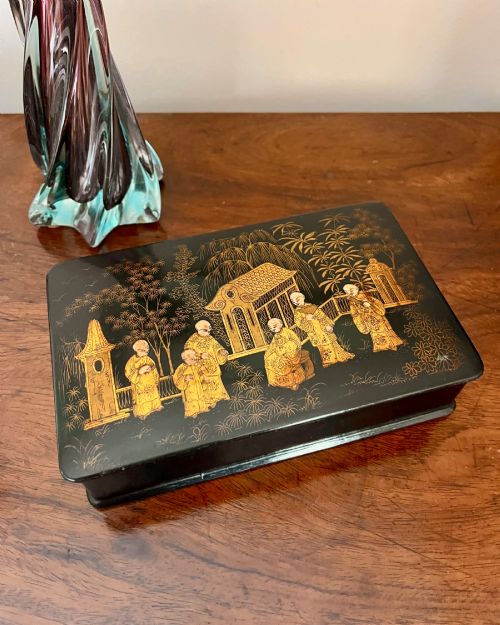
Surface decoration ranges from hand-painted details and lacquered chinoiserie to deep wood carvings characteristic of the Black Forest style.
The selection includes specialised sewing boxes, stationery caskets, and desk accessories.
What Varies In Quality
Distinctions in craftsmanship emerge through the precision of timber inlays, the weight of cast metal mounts, and the complexity of internal fitted trays.
Material selection dictates much of the standing of a piece, with exotic woods and hallmarked silver elevating the manufacture well beyond standard domestic containers.
Edmund Nye·William Comyns·F. L. Hausburg·H. Greaves
The Victorian Casket Glossary
- Casket
- A decorative box or chest traditionally used for holding valuables, letters, or small personal items. These pieces often feature hinged lids and secure locking mechanisms.
- Ormolu
- Gilded bronze or brass mounts applied to decorative objects and furniture during the nineteenth century. This technique added bright metallic highlights to wooden and glass surfaces.
- Tunbridge Ware
- A distinct form of woodworking characterised by meticulous mosaic patterns made from tiny strips of coloured wood. This style flourished in Kent during the Victorian era.
- Cabochon
- A polished gemstone cut with a smooth, convex surface rather than faceted edges. These stones frequently adorn metal and wooden caskets as decorative focal points.
- Boulle
- A method of marquetry utilising tortoiseshell and brass inlay developed in France. Pieces employing this technique display elaborate contrasting metallic patterns.
Victorian Casket: Frequently Asked Questions
What were victorian caskets used for?
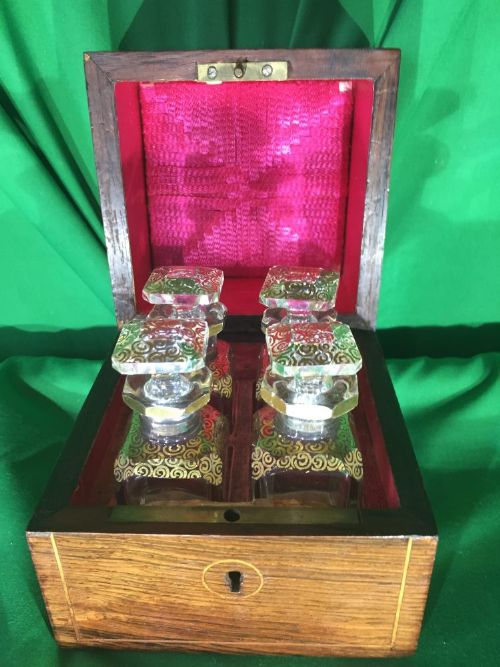
These containers served specific domestic purposes, holding correspondence, sewing implements, or writing instruments. Many functioned as vanity cases for storing scent bottles and personal trinkets.
Larger variants were built as stationery boxes or humidor chests for cigars. Their presence on desks and dressing tables combined practical organisation with decorative display.
How do I identify a victorian casket?
Identification relies on observing characteristic nineteenth-century construction methods, timber species, and decorative motifs. Materials like coromandel, burr walnut, and hallmarked sterling silver point directly to this era.
Stylistic influences such as Neo-Rococo, Chinoiserie, or Arts and Crafts further help place the manufacture within the nineteenth century.
Are these boxes still practical to use?
Many of these containers retain their original fitted trays, velvet linings, and internal compartments, making them suitable for modern storage. They remain practical for organising jewellery, watches, or small keepsakes.
Care should be taken with delicate materials like tortoiseshell, paper-mâché, and antique silk linings during daily use.