
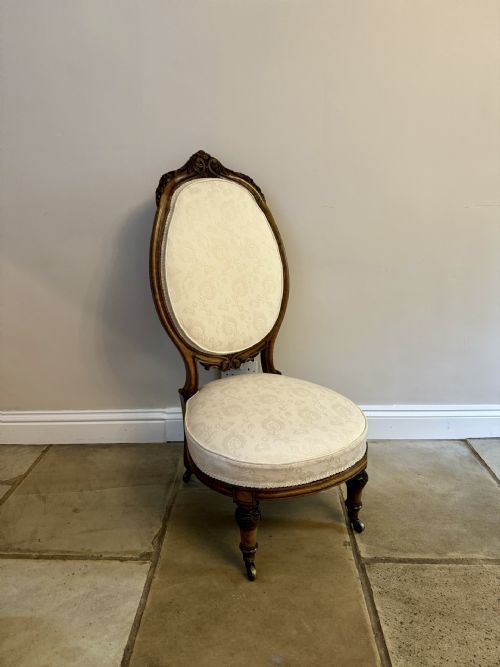


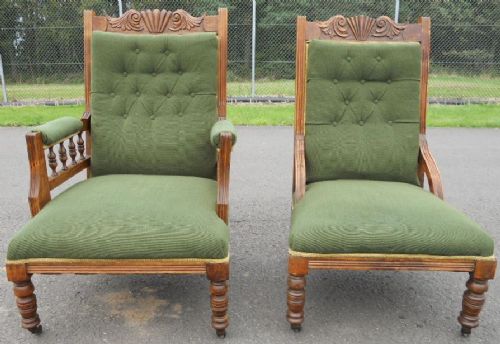
Victorian Carved Walnut Ladies Chair
A victorian carved walnut ladies chair offers compact elegance and deep historic character, combining rich timber frames with graceful low seating.
Victorian Carved Walnut Ladies Chair
A victorian carved walnut ladies chair sits low to the ground and typically lacks heavy arms, designed specifically for the voluminous skirts and dresses of the nineteenth century. These seating pieces appear frequently in walnut, often styled with button backs or carved show-wood frames.
The evidence shows examples spanning from the early Victorian period through to the Edwardian era, encompassing nursing chairs, slipper chairs, and drawing room suites. Many pieces belong to matched pairs alongside larger gentleman's armchairs.
Makers and craftsmen utilised walnut timber extensively across these nineteenth century designs, shaping occasional and side chairs for formal drawing rooms. The low profile and supportive backrests distinguish this specific form from standard parlour seating.
How they were made
Frames are constructed from solid walnut, selected for its rich grain and capability to hold deep, crisp carved detail along the crest rails and cabriole legs. Show-wood borders frame the upholstered backs, highlighting the joinery and timber quality.
Upholstery techniques involve traditional stuffing secured over webbing and springs, traditionally finished with textile coverings such as velvet. Metal castors and brass components frequently support the lower legs of these nineteenth century seats.
Listings feature walnut frames paired with velvet, textile, and ceramic elements across Victorian and Edwardian periods.
What varies in quality
The depth, crispness, and hand-carved intricacy of the wooden show-wood frames distinguish finer examples from simpler production. Superior pieces exhibit deeply moulded walnut contours and harmonious proportions between the carved crest and the cabriole supports.
The integrity of the original frame construction and the preservation of the timber surface determine the overall standard of a piece. Examples retaining well-defined walnut grain and substantial structural weight demonstrate higher craftsmanship.
The Victorian Carved Walnut Ladies Chair Glossary
- Walnut
- A dense, dark hardwood utilised extensively for Victorian furniture frames. It accepts intricate carving exceptionally well and develops a deep patina over time.
- Show-wood
- The exposed polished wooden framing surrounding the upholstered sections of a chair. This decorative timber border displays the artisan's carving skill.
- Nursing chair
- A low-seated Victorian chair designed originally for feeding infants or general domestic use. The reduced height allows for comfortable seated tasks.
- Cabriole leg
- A furniture leg that curves outward and then tapers inward, ending in a graceful foot. This form derives from classical furniture design and appears frequently on Victorian seating.
- Button back
- An upholstery style where depressions are formed in the fabric by pulling buttons deep into the padding. This technique creates a tufted surface that provides structural support to the padding.
Victorian Carved Walnut Ladies Chair: Frequently Asked Questions
How were these chairs used originally?
These low seats served primarily in formal drawing rooms, bedrooms, and sitting rooms during the nineteenth century. Their compact proportions and armless or low-armed designs accommodated the heavy, layered garments worn by women at the time.
They also functioned as nursing chairs for domestic duties near the nursery hearth. The absence of high wooden arms permitted freedom of movement for everyday tasks.
How do I date a walnut ladies chair?
Dating relies on examining stylistic shifts between the early Victorian period, the high Victorian Rococo Revival, and later Edwardian influences. Carved motifs, leg shapes, and frame profiles evolved significantly across these decades.
Earlier nineteenth century examples often feature deep, exuberant floral crests and rich walnut show-wood, while later pieces show straighter lines and simpler joinery. Comparing the construction methods to documented periods helps establish a reliable timeframe.
Are these chairs comfortable for daily use?
The low seating position and supportive padded backs offer a distinct sitting experience compared to modern lounge furniture. They provide firm support suited to upright sitting rather than reclining.
Most pieces feature traditional internal springing and stuffing that yields a firmer feel. Placing them in a drawing room or reading corner provides both practical seating and historical presence.