

Victorian Carved Wall Shelf
Victorian carved wall shelf designs combine practical storage with decorative presence, bringing period character and timber warmth directly to your walls.
Victorian Carved Wall Shelf
A victorian carved wall shelf provides compact display space for ornaments, books, or small collections while adding architectural interest to a room. Buyers searching this phrase will find a variety of hanging ledges, corner units, and display brackets originating from the nineteenth century.
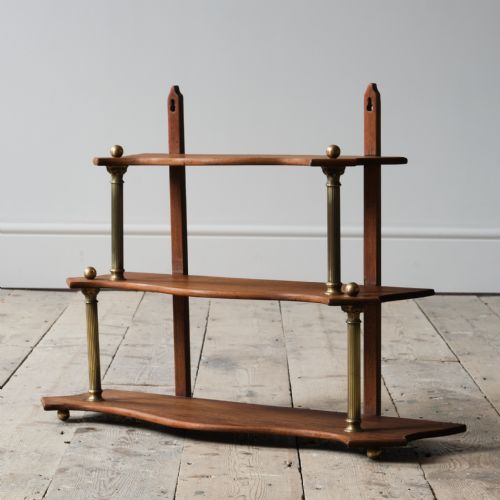
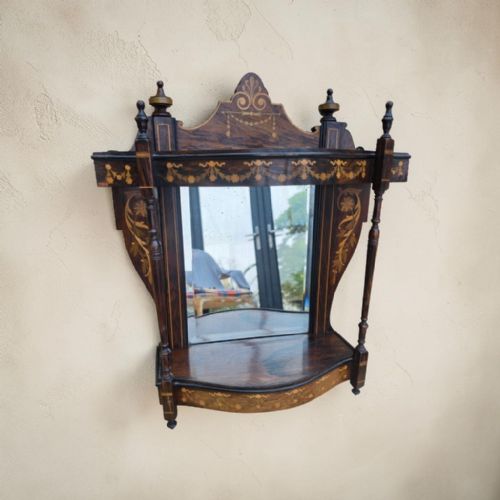
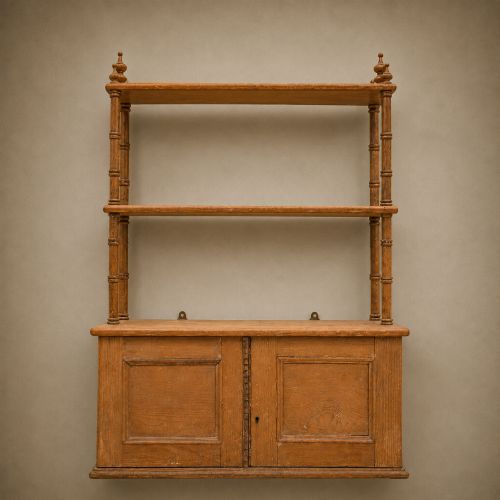
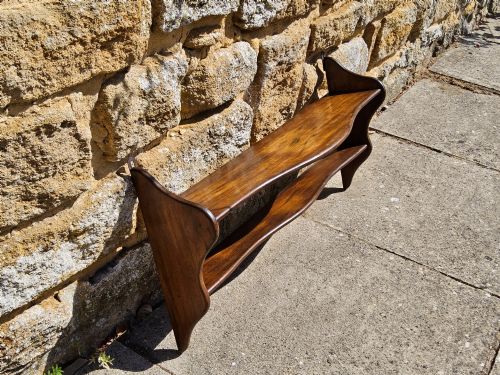
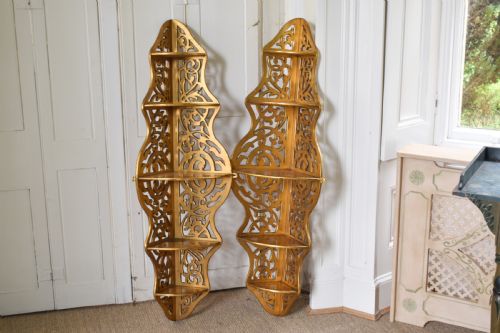
Mahogany and walnut examples dominate the selection, often featuring stepped tiers, fretwork panels, or turned supports designed to mount securely onto plaster or wood-panelled walls. Pieces range from plain country pine and oak utility racks to highly decorative giltwood and inlaid rosewood display pieces.
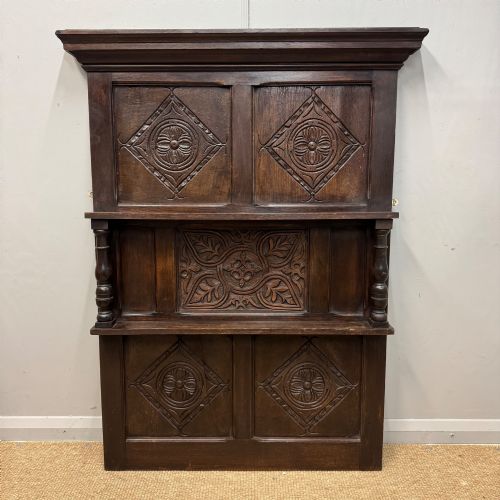
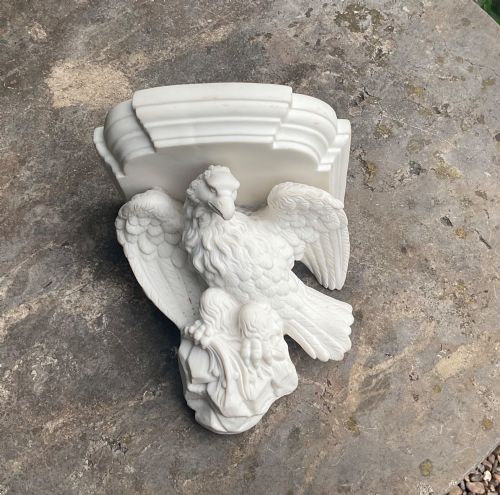
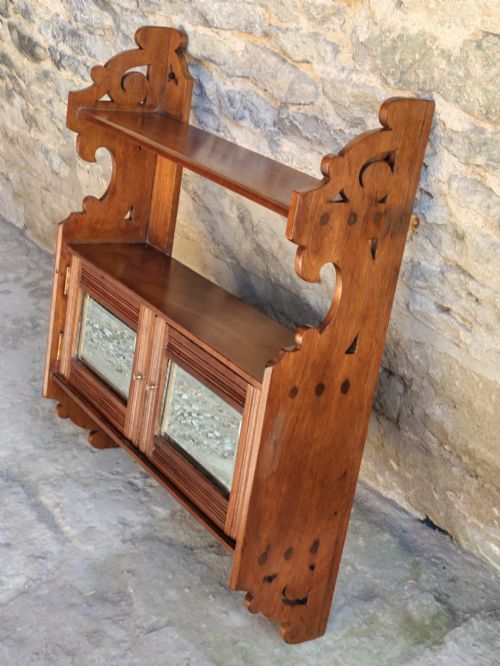
The assortment extends beyond simple ledges to include wall cabinets, overmantel panels, and specialised brackets intended to hold clocks, figures, or plates. Most items date from the Victorian era and the late nineteenth century, reflecting diverse stylistic influences from Gothic Revival to Moorish and Rococo designs.
Materials and Construction Techniques
Cabinetmakers utilised dense hardwoods such as mahogany, walnut, and oak to carve structural frames, corbels, and pierced galleries that could support weight without sagging. Softer timbers like pine and beech served for utility kitchen racks and painted or polished display shelves.
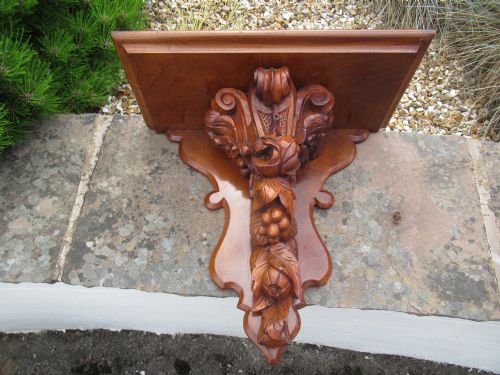
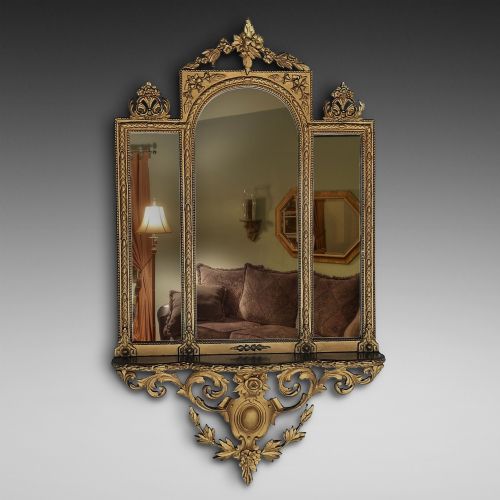
Decorative surfaces frequently incorporated applied gesso, hand-carved foliage, brass fittings, and intricate marquetry or inlay using contrasting woods and olive wood. Giltwood finishes and terracotta elements provided rich texture, while structural joints relied on traditional pegged mortise and tenon or secure dowelling.
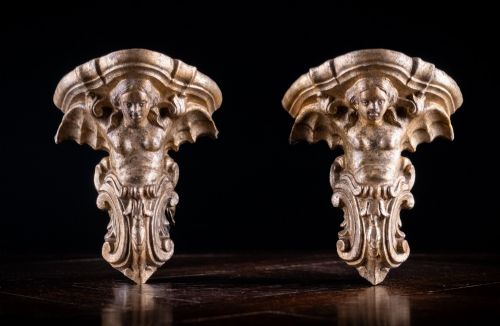
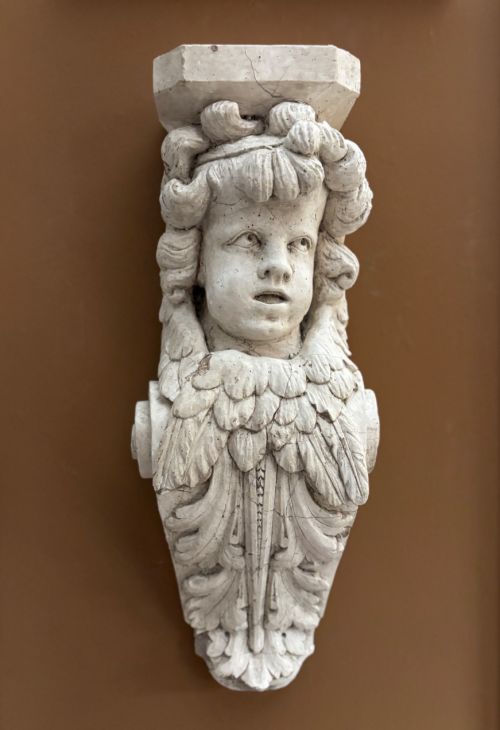
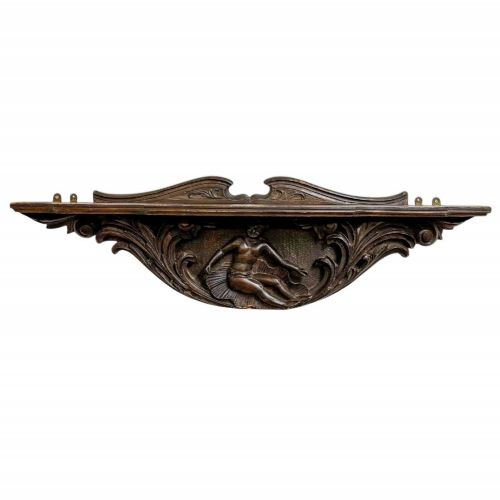
Several pieces feature winged sirens and putti, proving that Victorians enjoyed a touch of mythological drama holding up their tea cups.
Distinctions in Quality
Depth of carving and crispness of detail separate standard production shelves from exceptional artisan pieces. Sharply rendered foliage, undercut leaves, and balanced proportions indicate skilled hand-carving rather than mass-produced moulding.
The choice of timber grain and the integrity of joint construction dictate longevity and visual appeal. Richly figured mahogany and walnut with intact original polish command greater appreciation than plain, poorly seasoned timbers showing shrinkage splits.
Liberty and Co·John Moyr Smith·Connell of London
The Victorian Carved Wall Shelf Glossary
- Corbel
- A projecting bracket of stone, wood, or metal supporting a weight above it. These architectural supports frequently anchor wall shelves and display ledges.
- Gesso
- A plaster mix applied to wood as a base for painting or gilding. It allows for intricate moulded ornamentation on frames and brackets.
- Overmantel
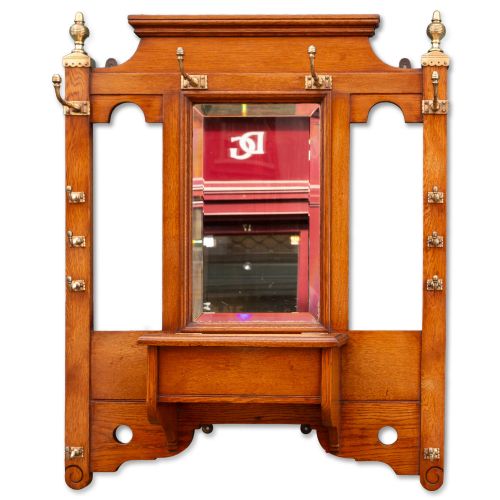
- A decorative structure placed on the wall directly above a fireplace. They often incorporate mirrors, small display shelves, and carved pediments.
- Pediment
- A triangular or arched architectural ornament crowning a doorway, cabinet, or wall shelf. It creates a formal focal point at the top of the piece.
- What-not
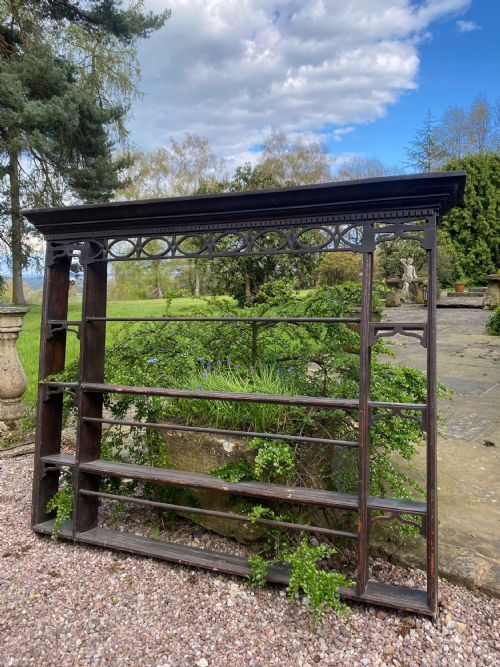
- An open set of multi-tiered shelves used for displaying ornaments and curiosities. These freestanding or wall-mounted stands gained popularity during the nineteenth century.
Victorian Carved Wall Shelf: Frequently Asked Questions
What is the difference between an overmantel and a wall shelf?
An overmantel is specifically designed to sit above a fireplace mantelpiece, often combining mirror glass, carved panels, and small display ledges into one large architectural frame. Standard wall shelves are independent units mounted anywhere in a room.
While both serve a display function, overmantels command a dominant wall space and reflect period interior design trends around the hearth.
How should I clean antique polished walnut and mahogany?
Dust surfaces regularly with a soft, dry cloth to prevent dirt accumulation in carved recesses. Avoid modern silicone sprays that can damage historic finishes.
Apply a quality beeswax sparingly once or twice a year to nourish dry timber and maintain a soft, natural lustre on the wood.
Are these shelves suitable for books or only display?
Some sturdy oak or mahogany designs feature deep ledges or enclosed cupboards suitable for portable bookshelves and kitchen storage. Lighter fretwork or giltwood brackets are intended solely for decorative ornaments and small ceramics.
Examine the depth of the shelf and the strength of its supporting brackets before placing heavy volumes upon it.