




Victorian Carved Wall Brackets
Victorian carved wall brackets bring tactile timber and ornate relief work to vertical surfaces.
Victorian Carved Wall Brackets
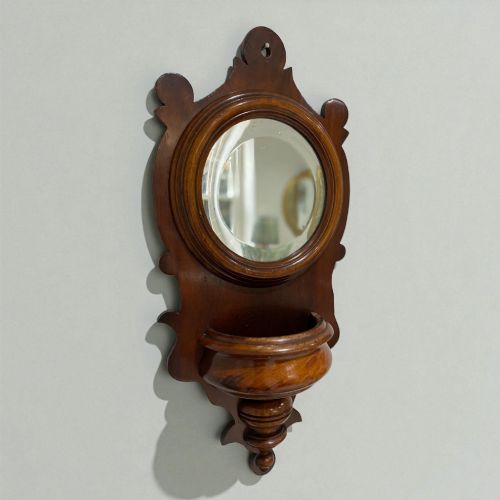
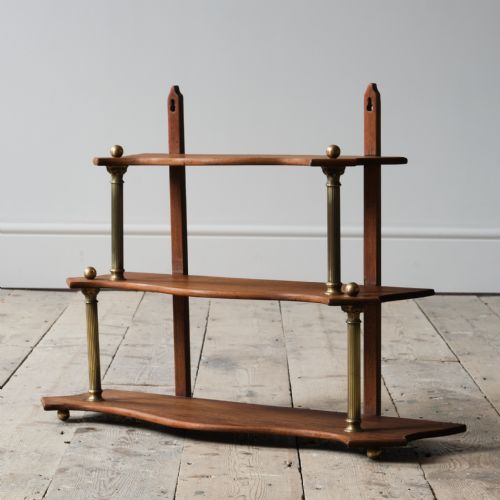
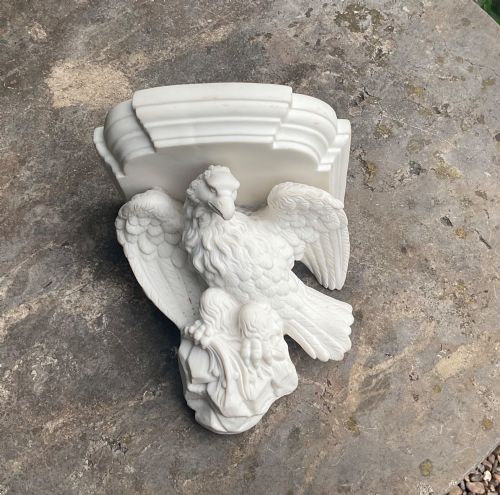
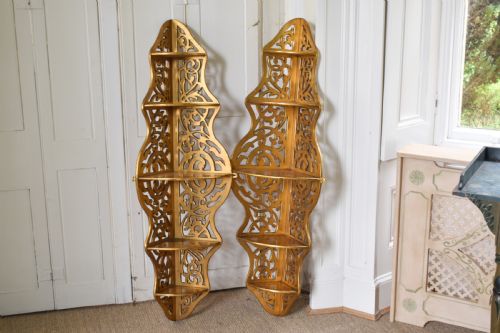
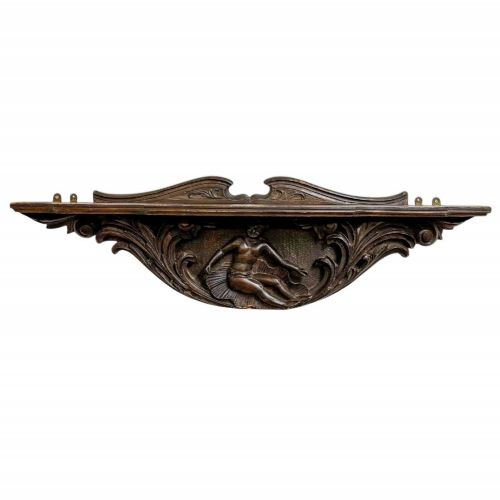
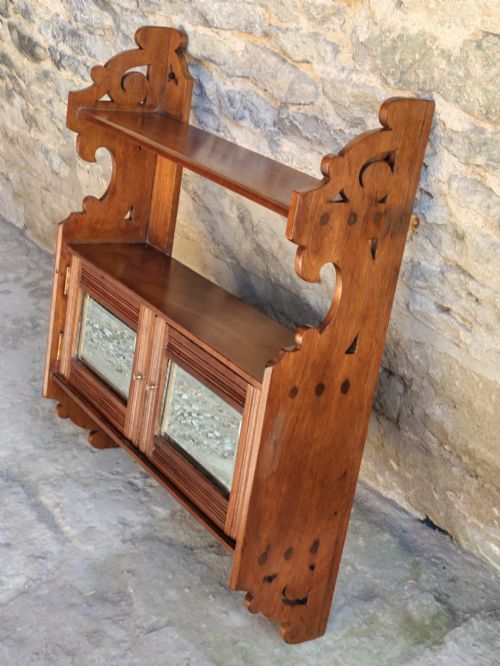
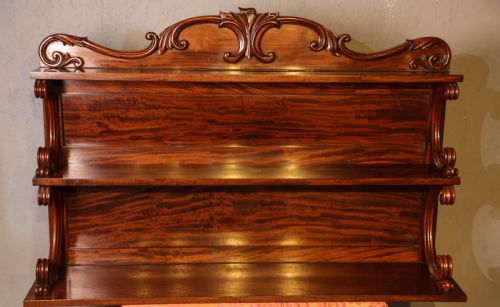
When you search for victorian carved wall brackets, you encounter architectural ledges, display surfaces and corbels designed to project from domestic interiors. The pieces span the nineteenth century, including specific decades such as eighteen eighty, eighteen seventy, eighteen ninety, eighteen fifty, nineteen hundred and eighteen sixty. Most examples take the form of wall brackets, wall shelves and corner shelves.
The selection includes varied stylistic influences from the period, ranging from standard Victorian and Neoclassical to Rococo Revival, Anglo-Indian and Late Victorian. Makers employed these diverse aesthetics to support ornaments, clocks and lighting fixtures within nineteenth-century rooms.
Materials and Construction
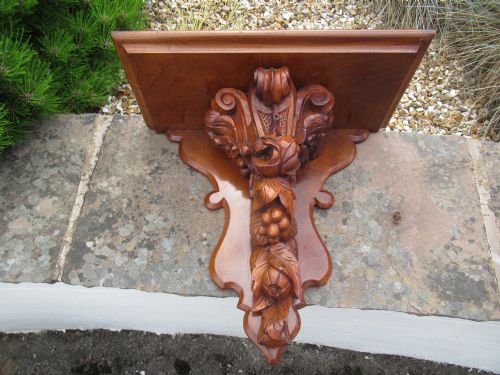
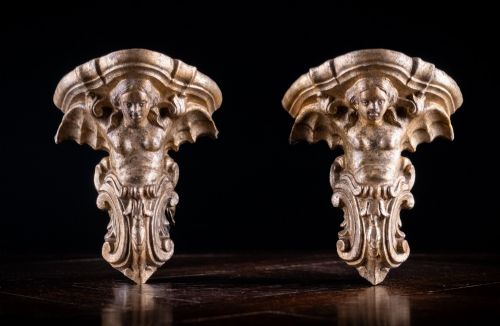
Carvers utilised a variety of woods including mahogany, walnut, red walnut, olive wood, pine and limewood to shape the structural supports and decorative elements. Artisans frequently applied gilding, gesso, brass and terracotta to enhance the visual depth and surface texture of the carvings.
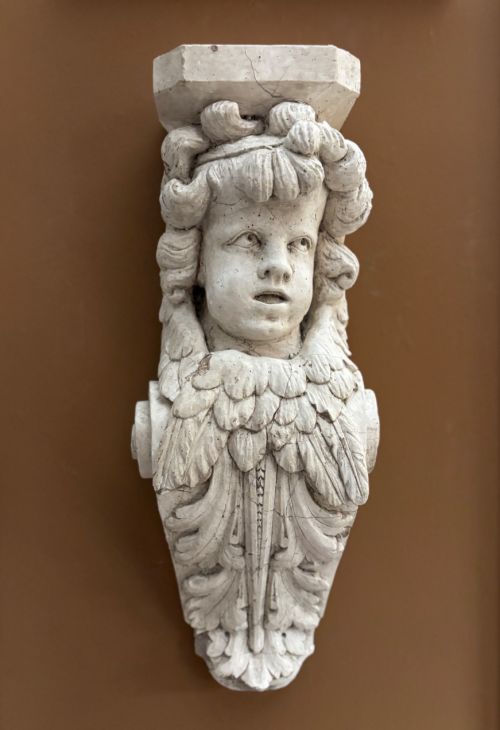
Techniques combined traditional joinery with intricate hand-carving to produce high-relief figures, putti, winged sirens, archangels and foliage. Cabinetmakers constructed hanging shelves, corbels and bracket clocks to withstand vertical weight while displaying ornate craftsmanship.
Archangel Gabriel once kept watch over a nineteenth-century room, carved entirely from pine wood around eighteen ninety.
Evaluating Craftsmanship
Quality rests in the depth and sharpness of the hand-carving, where crisp details in wooden foliage or figurative elements separate superior work from mechanical reproduction. The choice of timber also dictates standard, with dense woods like walnut and mahogany retaining finer edges than softer materials.
Design coherence defines the upper tier of these pieces, showing balanced proportions and integrated ornamentation rather than applied decorative elements. Original surface treatments, whether natural wood grain or period gilding, preserve the integrity of the manufacture.
Connell of London·J. A. Wheatley Carlisle·J.W.Benson·Lenzkirch
The Victorian Carved Wall Brackets Glossary
- Corbel
- A structural bracket projecting from a wall to support a weight above it. These architectural elements often feature detailed scrollwork or figurative carving.
- Gesso
- A plaster-like mixture applied to wood surfaces as a base for gilding or painting. This material allowed artisans to achieve smooth, ornate relief details before applying gold leaf.
- Fusee
- A conical pulley used in clock movements to maintain even tension as the mainspring unwinds. This mechanism appears frequently in nineteenth-century wall clocks mounted on brackets.
- Ormolu
- Gilded bronze furniture mounts and decorative details popular in nineteenth-century design. The finish adds metallic brilliance to carved wooden frames and shelves.
- Pier glass
- A tall mirror designed to hang on the wall between windows, often paired with a console table or wall bracket underneath.
Victorian Carved Wall Brackets: Frequently Asked Questions
What were wall brackets used for originally?
Victorian households utilised these projecting shelves to display porcelain, small sculptures, timepieces and decorative ornaments. They elevated objects to eye level, adding architectural interest to plain wall surfaces.
In many interiors, they functioned as physical supports for heavy bracket clocks or served as companion pieces alongside wall mirrors and candle sconces.
How do I identify the period of a carved wall bracket?
Examine the wood species, tool marks left by the carver, and stylistic cues such as Neoclassical or Rococo Revival motifs. Nineteenth-century pieces typically exhibit hand-carved depth and traditional joinery methods distinct from twentieth-century reproductions.
Dates associated with specific pieces often align with stylistic revivals popular during the eighteen eighties and nineties, reflected in the choice of walnut, mahogany or gilded terracotta.
How should I hang antique wall brackets safely?
Secure the bracket directly into wall studs or use appropriate heavy-duty wall anchors rated for the combined weight of the shelf and its display object. Because many nineteenth-century items feature intricate carvings, handle the outer edges carefully during installation to avoid damaging fragile relief work.
Verifying the stability of the backplate and any hanging loops ensures the bracket remains flush and secure against the vertical surface.