
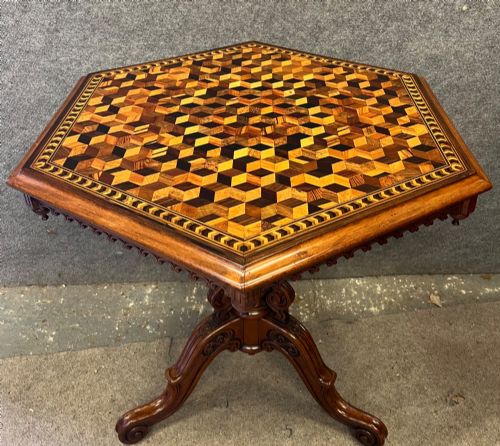
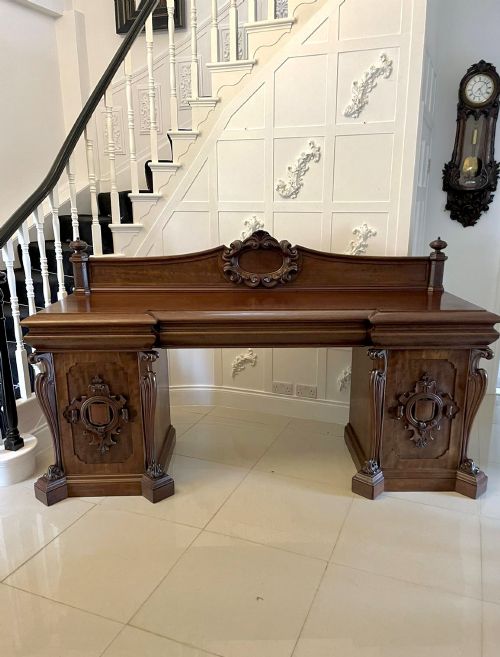
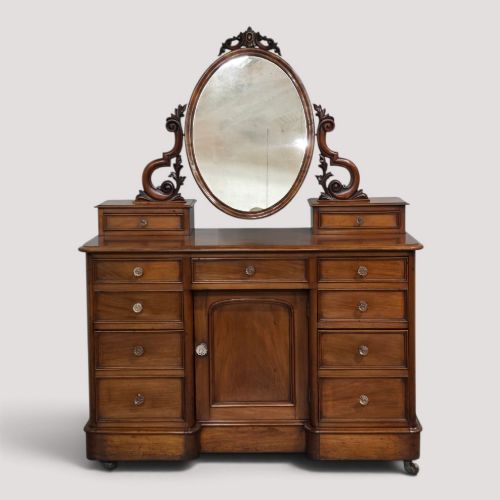
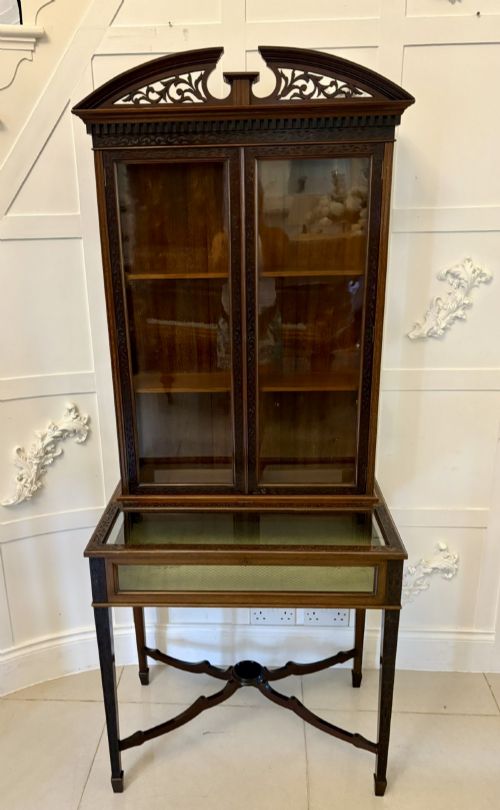
Victorian Carved Mahogany Table
When a buyer searches for a victorian carved mahogany table, they encounter solid timber furniture built for formal nineteenth-century interiors.
Victorian Carved Mahogany Table
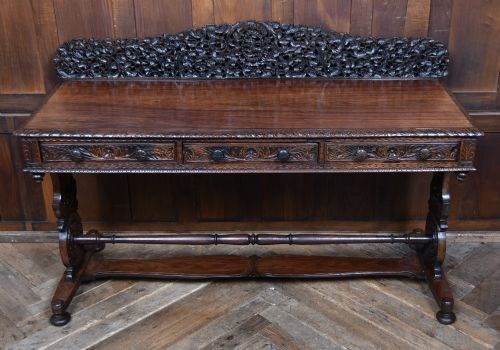
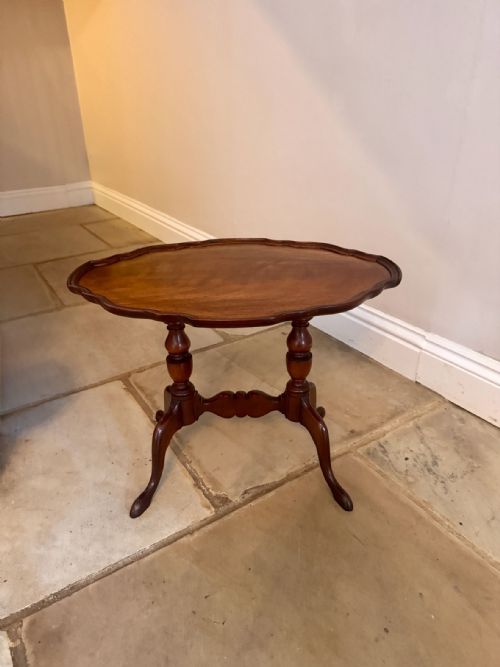
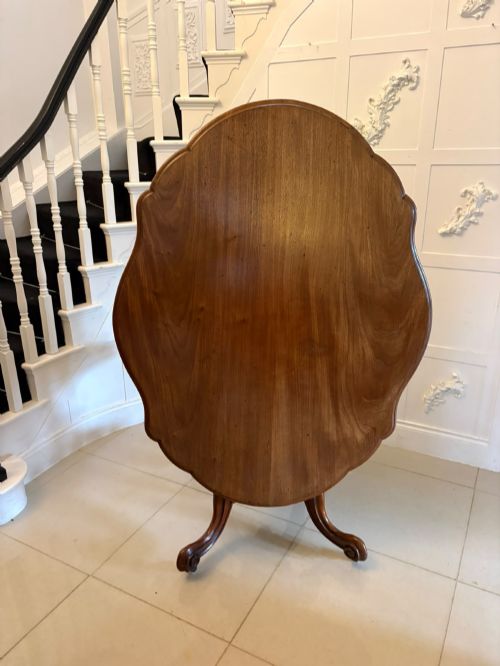
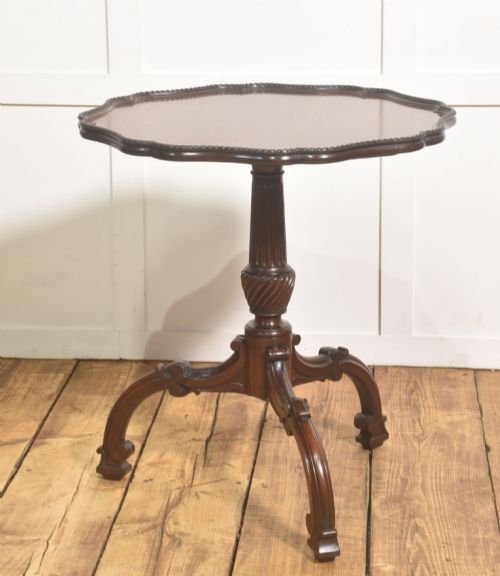
A victorian carved mahogany table spans numerous domestic forms designed for dining, display, and writing within nineteenth-century households. The selection includes extending dining tables, tilt-top breakfast tables, occasional lamp tables, and console tables.
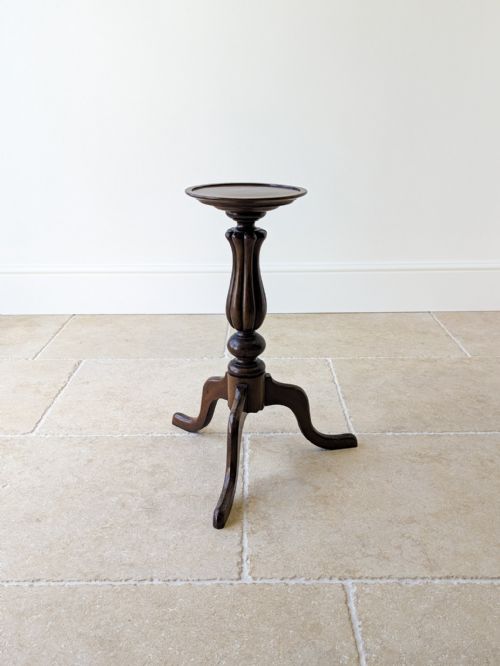
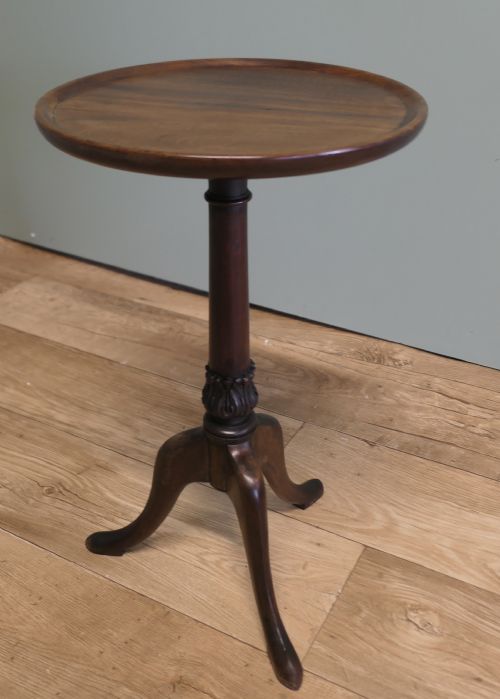
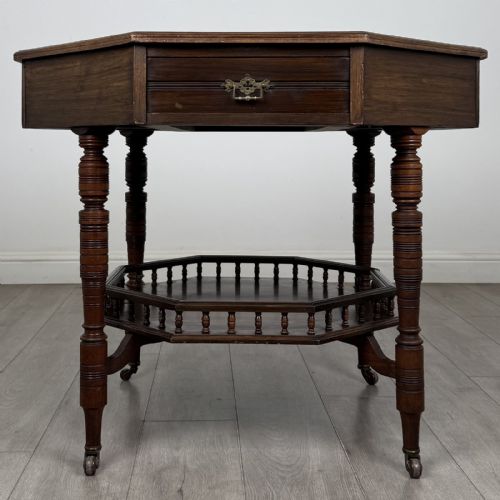
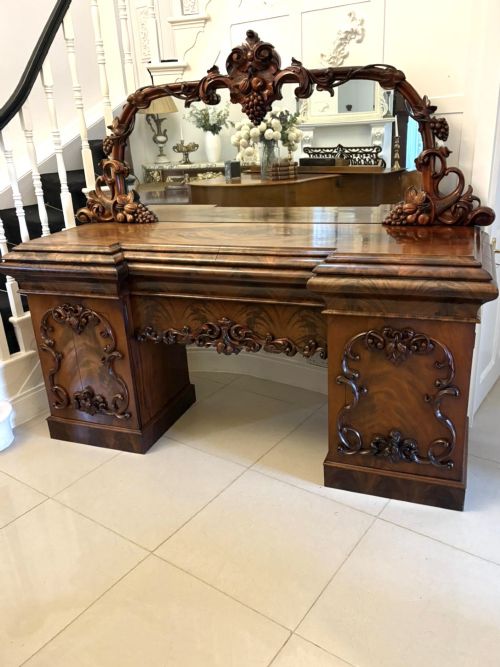
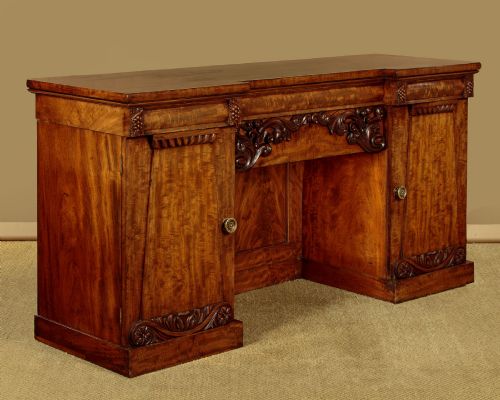
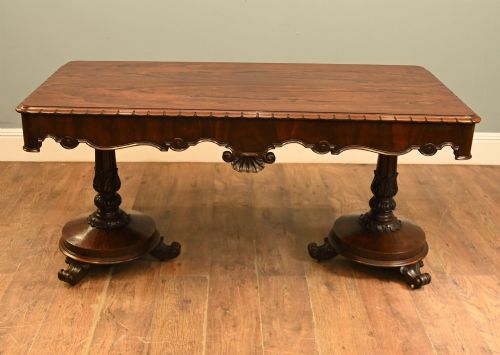
Makers of the period utilised dense imported timber, shaping the material with substantial hand-carved ornamentation along pedestal bases, friezes, and cabriole legs. These surfaces often display rich grain patterns and deep red-brown tones.
Most examples originate from nineteenth-century British workshops, reflecting stylistic shifts from late Regency proportions towards heavier Victorian ornamentation and later revival movements.
How they were made
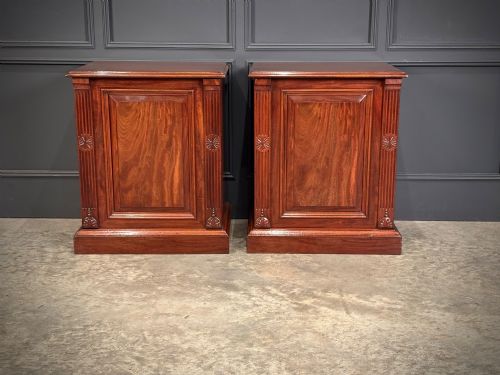
Cabinetmakers worked primarily with solid mahogany and flame mahogany veneers, applying the timber over secondary structural woods to create stable tabletops and cabinet carcases. Surface decoration relied on hand-chiselled mouldings, reeded edges, and deep relief carvings.
Structural joints utilised traditional mortise and tenon construction, whilst extending dining mechanisms depended on robust timber runners and brass winding hardware. Tripod bases and pedestal supports frequently incorporated carved scrollwork or claw feet secured to central turned columns.
Some dining tables required up to fourteen guests to fill the space.
What varies in quality
The degree of hand-carving determines much of the distinction across these tables, separating deep, crisp relief work from shallow or mechanical production. Timber selection also dictates value, with figured flame veneers and dense cuban mahogany reserved for top-tier commissions.
Proportion and structural integrity define the remaining differences, where heavier pedestal bases balance extended leaves or heavy marble inserts without sagging. The precision of the joinery and the retention of original brass fittings indicate workshop competence.
P and MA Nicholson·Brockbanks and Atkins·William and Gibton·Wylie and Lochead
The Victorian Carved Mahogany Table Glossary
- Flame mahogany
- A veneer cut from the fork of the mahogany tree where the branch meets the trunk. This growth pattern creates a distinctive flickering flame effect across large tabletops.
- Tilt-top
- A hinged tabletop mechanism allowing the surface to fold vertically when not in use. This design enabled tables to be stored against walls in smaller nineteenth-century rooms.
- Demilune
- A half-moon shape characteristic of console tables designed to sit flush against a wall. These forms often feature matching wall mirrors and carved aprons.
- Tripod base
- A three-legged support structure commonly found on wine tables and lamp tops. The design prevents rocking on uneven historical floorboards.
- Piecrust edge
- A raised, carved decorative rim shaped along the perimeter of circular tabletops. This technique requires meticulous hand-carving from solid timber blanks.
Victorian Carved Mahogany Table: Frequently Asked Questions
How do I seat six people comfortably?
Extending dining tables use removable central leaves supported by internal wooden runners. You insert these leaves manually when hosting larger gatherings.
Circular tilt-top breakfast tables remain fixed in size and suit smaller rooms where flexibility is less important than floor space.
Can I place hot plates on the wood?
French polish and traditional wax finishes offer limited resistance to direct heat and moisture. Use protective mats beneath serving dishes to prevent surface clouding.
Regular polishing maintains the moisture barrier of the mahogany without building up heavy chemical layers over the carvings.
How do I identify a tilt-top mechanism?
A wooden or brass catch beneath the surface releases the tabletop, allowing the top to pivot upright on its central pillar. This historical feature saved valuable floor space in Victorian parlours.
Check that the locking catch engages securely to prevent the table tipping unexpectedly during normal daily use.
Why do some tables feature marble tops?
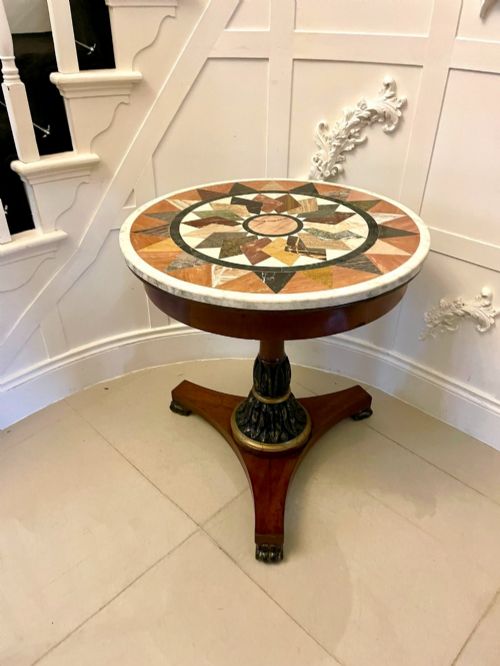
Console and centre tables occasionally incorporate inset white or coloured marble slabs to provide durable, heat-resistant surfaces for serving food or displaying heavy ornaments.
These heavier stone tops rest within rebated wooden frames, secured by their own weight rather than modern adhesives.