



Victorian Carved Hoop Ring
A victorian carved hoop ring brings together nineteenth-century craftsmanship and precious gemstones in a delicate finger ornament that collectors prize for everyday wear.
Victorian Carved Hoop Ring
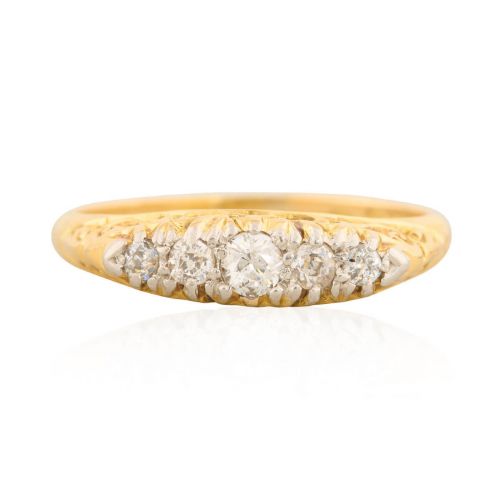
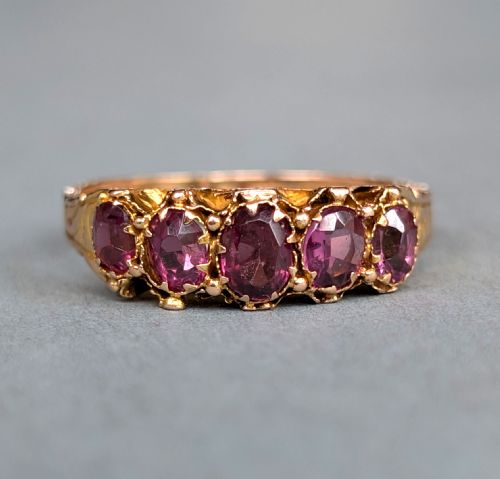
A victorian carved hoop ring presents a continuous band of gemstones or intricately worked metal that sits low on the hand. The pieces available span the Victorian and Edwardian eras, stretching from the late nineteenth century into the early twentieth century.
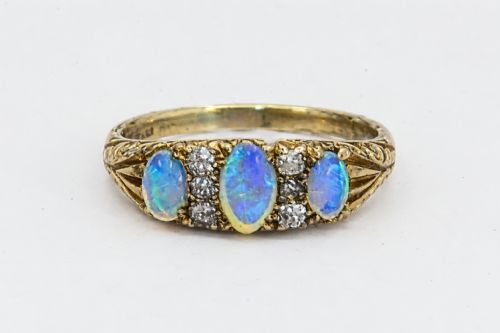
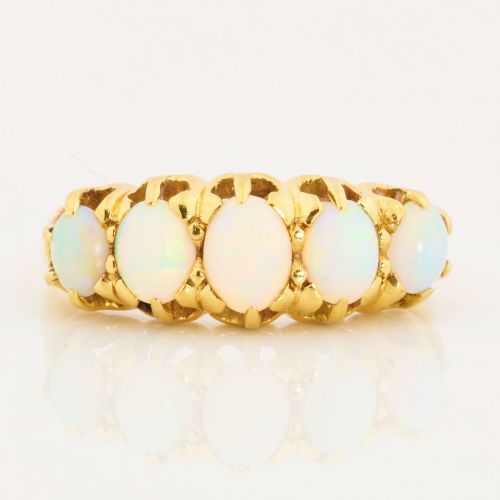
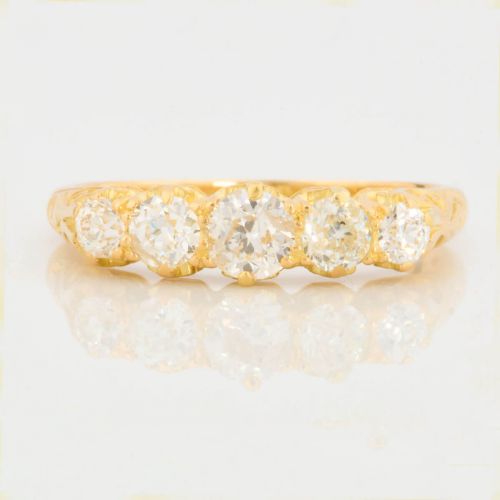
Five-stone settings dominate the selection, often alternating diamonds with sapphires, rubies, or opals. These arrangements follow a traditional half-hoop format where the gems graduate slightly in size to follow the curve of the finger.
Gold forms the foundation of nearly every piece, appearing in eighteen-carat yellow gold alongside occasional fifteen-carat variations. Makers integrated hallmarks that record assay offices such as Chester and London alongside specific dates from the eighteen-nineties.
Materials and construction methods
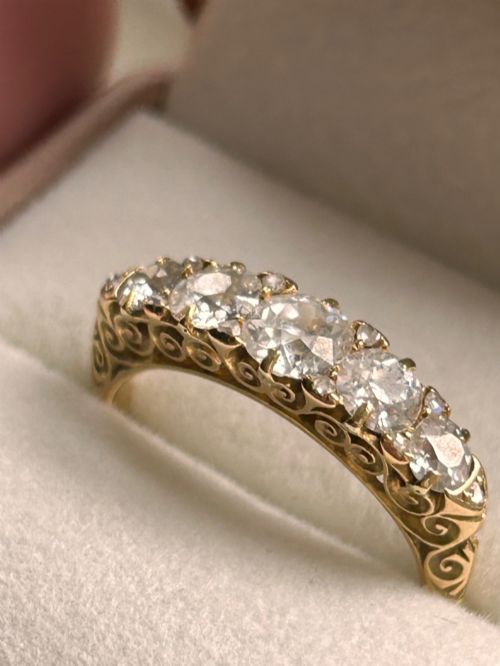
Goldsmiths shaped eighteen-carat yellow gold into sturdy shanks before carving the shoulders and settings by hand. This manual sculpting created decorative scrollwork or boat-shaped settings known as bateau mounts that cradle the stones securely.
Old cut diamonds and natural gemstones feature heavily in these creations, held in place by low-profile claws or flush gypsy settings. The integration of basaltic sapphires and fiery opals demonstrates how artisans selected stones to contrast against the polished yellow gold.
The site records pieces bearing full hallmarks from London and Chester dating back to the final decade of the nineteenth century.
Distinctions in execution and stone selection
The precision of the hand-carved shoulders distinguishes standard production from finer workshop output. Crisp lines and deep relief work on the gold indicate superior artisan skill.
Stone matching and carat weight heavily influence the overall stature of a piece. Well-matched rubies, sapphires, or old cut diamonds with consistent colour saturation elevate the presence of the ring.
The Victorian Carved Hoop Ring Glossary
- Carved half hoop
- A ring design featuring a row of gemstones across the top half of the band, often accompanied by sculpted gold shoulders. This configuration became exceptionally popular during the late nineteenth century.
- Old cut diamond
- A precursor to the modern brilliant cut, characterised by a smaller table, higher crown, and a distinctive open culet facet. These stones were shaped by hand to catch candlelight.
- Gypsy setting
- A mounting style where the gemstone is flush-set directly into the thick gold band, creating a smooth and seamless exterior profile. This technique protects the girdle of the stone during daily wear.
- Bateau ring
- A boat-shaped mounting style that sweeps outward from the band to frame a cluster of gems. The horizontal silhouette sits flat against the finger.
- Basaltic sapphire
- A natural corundum gemstone originating from alkali basalt terrains, known for deep and saturated blue tones. These stones appear frequently in nineteenth-century cluster rings.
Victorian Carved Hoop Ring: Frequently Asked Questions
How do I date a Victorian carved hoop ring?
Examine the interior of the shank for legible hallmarks that indicate assay offices and specific years of manufacture. Stylistic markers such as boat-shaped mounts and hand-carved shoulders also point toward the late nineteenth century.
Assay marks often include crown stamps and numerical purity indicators like eighteen carats, which provide a reliable chronological anchor for the piece.
Are these rings suitable for daily wear?
Solid gold bands and low-profile stone settings make these rings durable enough for regular use. Consideration should be given to softer gems like opals, which require careful handling compared to diamonds or rubies.
Removing the jewellery during manual tasks preserves the integrity of the hand-carved gold shoulders and prong settings over time.
What is a five-stone half hoop?
A five-stone half hoop arranges five prominent gemstones in a horizontal row across the top of the finger. This layout maximises the play of light across diamonds, sapphires, or garnets.
The stones often graduate in size from the centre outwards, maintaining a balanced proportion that complements the curved gold band.
How should I clean my antique ring?
Warm water mixed with mild soap and a soft brush will safely remove oils and debris from the settings. Avoid harsh chemical dips, particularly if the ring contains porous stones like opals.
Inspect the claws periodically with a loupe to ensure the diamonds and coloured gems remain tightly secured in their mountings.