


Victorian Carved Entry Chairs
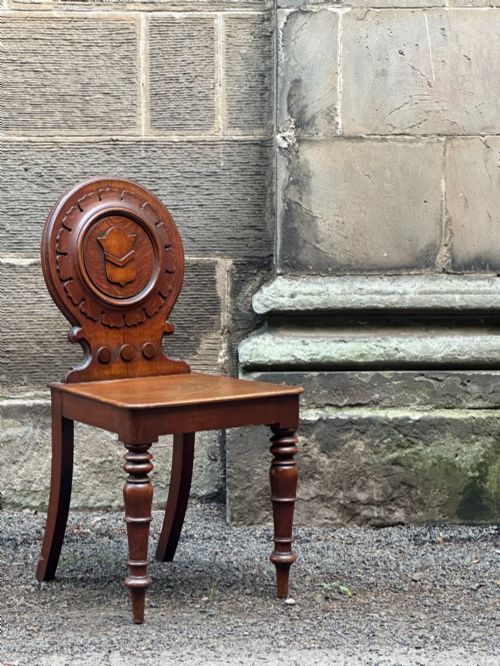
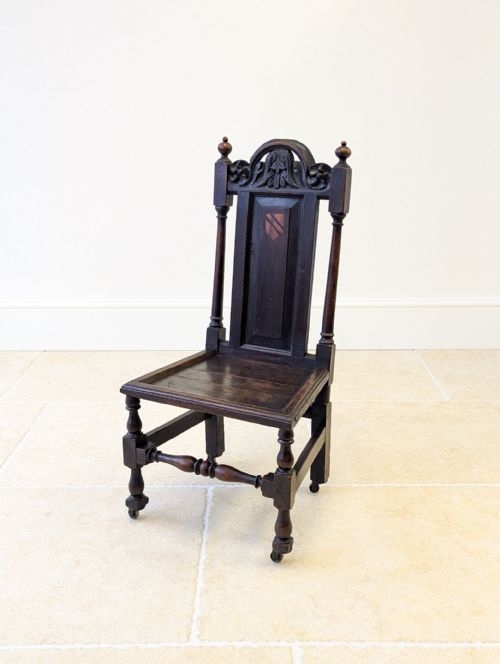
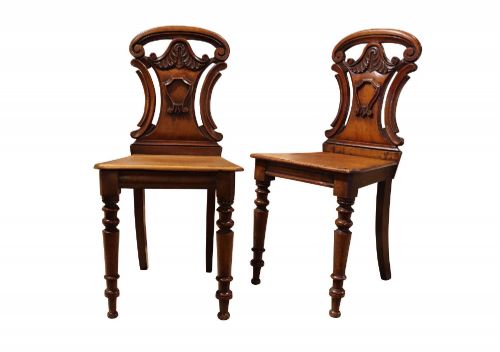
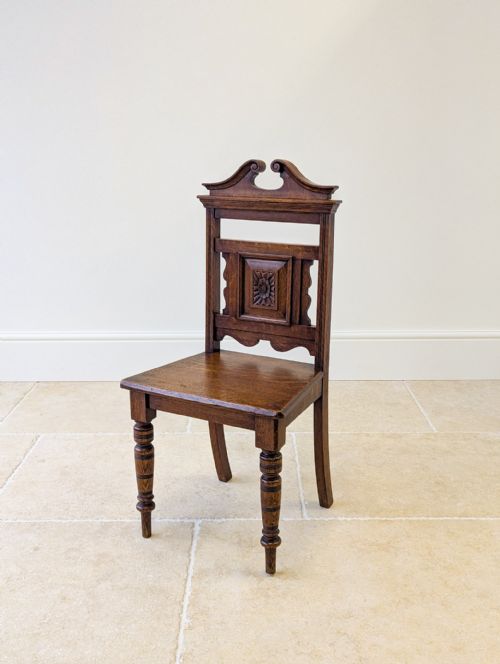
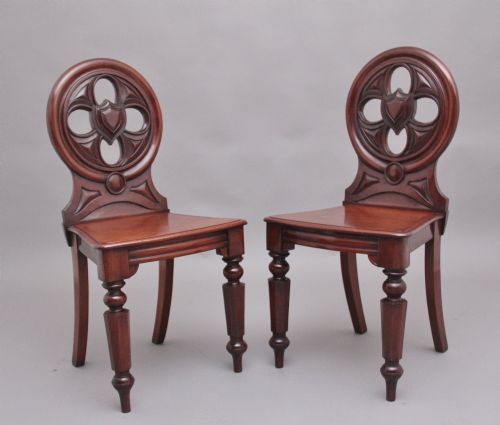
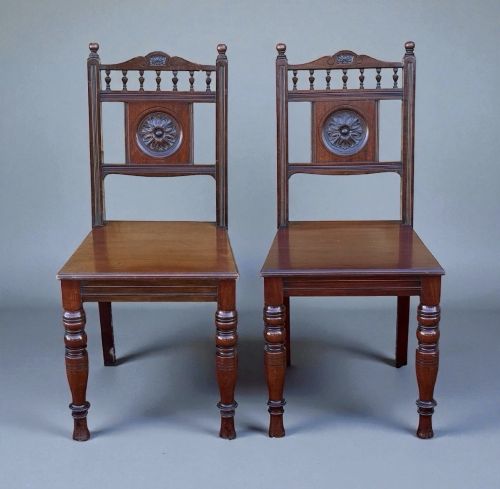
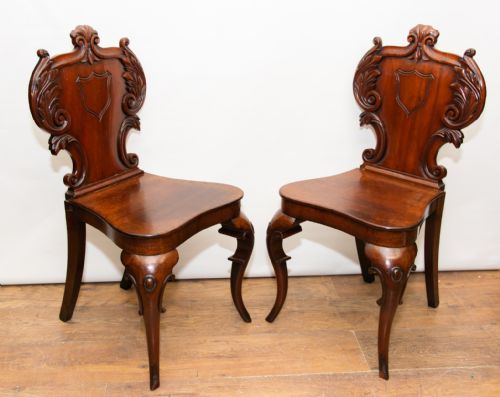
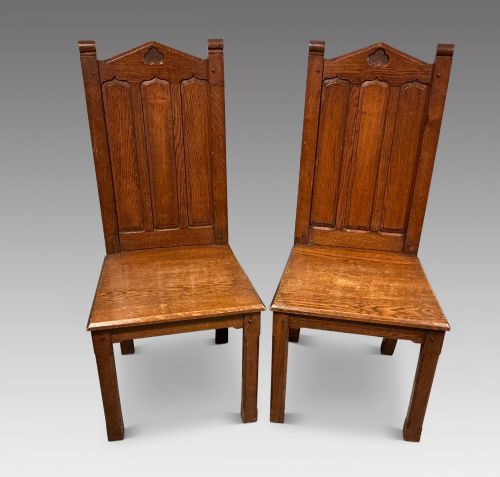
Victorian carved entry chairs bring solid timber presence and formal decoration to a hallway, offering a practical seat with distinctive period carving.
Victorian Carved Entry Chairs
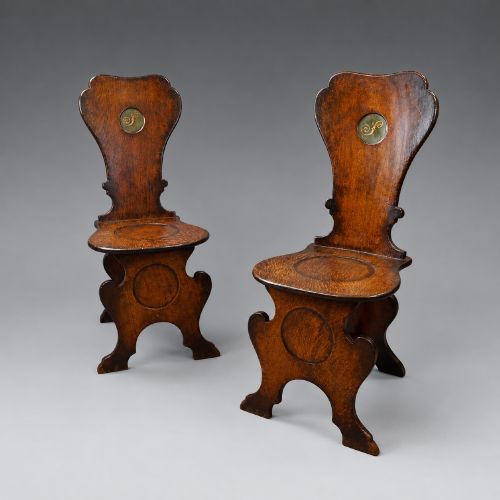
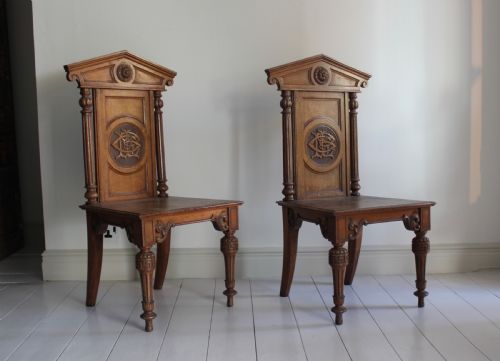
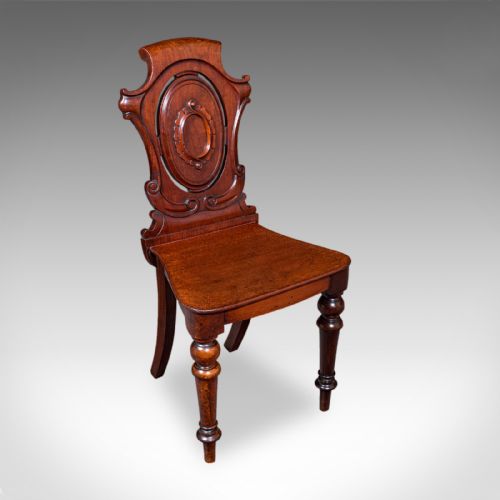
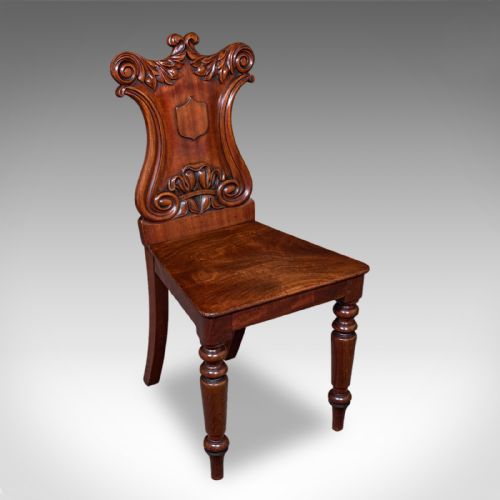
When buyers search for victorian carved entry chairs, they encounter firm timber seating designed for the entrance hall, reception room, or landing. These pieces primarily take the form of hall chairs and occasional seats, often featuring rigid wooden panels and upright backs intended for brief periods of sitting.
The most common versions met on this page span the Victorian period and the broader nineteenth century, frequently constructed from dense hardwoods like oak and mahogany. Alongside standard single chairs and pairs, buyers find related forms such as monks benches and side seats reflecting revival styles.
Origins stretch across English, Scottish, Irish, French, and American workshops, demonstrating how regional cabinet makers reinterpreted classical and medieval motifs for domestic halls. The emphasis remains on architectural presence and durable timber construction suited to high-traffic spaces.
Quality differences
The distinction between standard examples and superior pieces rests on the depth, crispness, and ambition of the carved ornament. Master carvers achieved sharp relief work and balanced proportions that integrate seamlessly with the overall silhouette of the chair.
Selection of timber figure also dictates standing, with finely grained walnut, figured mahogany, and quarter-sawn oak commanding greater visual authority. Superior execution extends to the integration of specialised elements such as inset ceramic tiles or complex panel assembly.
Holland & Sons
The Victorian Carved Entry Chairs Glossary
- Sgabello
- A light wooden chair originating from the Italian Renaissance, characterised by a high carved back and trestle supports instead of standard legs. These occasionally appear among nineteenth-century revival seating.
- Shield Back
- A chair back shaped in the outline of a heraldic shield, frequently embellished with carved foliage or crests in nineteenth-century reception seats. This form was popularised during earlier neoclassical periods and adapted by Victorian makers.
- Monks Bench
- A dual-purpose hall seat featuring a hinged back that folds down to convert the unit into a small table. They are constructed in solid oak with box storage bases beneath the seat.
- Jacobean Revival
- A nineteenth-century design movement emulating seventeenth-century English furnishings through heavy turning, strapwork carving, and dark-finished oak. Pieces in this style emphasise architectural solidity.
- Aesthetic Movement
- A late nineteenth-century design current that prioritised visual refinement and artistic harmony over strict historical revival. Furniture from this circle often exhibits simplified structural lines paired with refined ornamentation.
Victorian Carved Entry Chairs: Frequently Asked Questions
What is a hall chair used for?
Hall chairs served as formal, upright seating placed in entranceways and reception rooms rather than for lounging. Visitors used them briefly while waiting to be announced.
Their rigid timber construction and decorative backs functioned primarily as architectural statements for arriving guests.
How do I identify a Victorian hall chair?
Victorian examples typically feature solid wood seats without upholstery, paired with high carved backs displaying gothic, shield, or Renaissance motifs. The timbers used are predominantly dense hardwoods like oak, walnut, and mahogany.
Proportions remain narrow and upright, designed to stand against hallway walls without obstructing movement.
Are these chairs comfortable to sit on?
These seats are intentionally firm and upright, built from solid timber with carved wooden panels instead of cushioned padding. They were meant for short waiting periods rather than extended relaxation.
Living with them involves appreciating their sculptural silhouettes and historical presence in an entryway.
How do I care for antique wood hall chairs?
Maintain the timber by keeping chairs away from direct heat sources and sudden temperature fluctuations that can dry out old wood. Regular dusting with a dry cloth preserves the polished surface without building up residue.
Avoid chemical polishes and feed the grain periodically with appropriate natural wax to maintain the finish.