


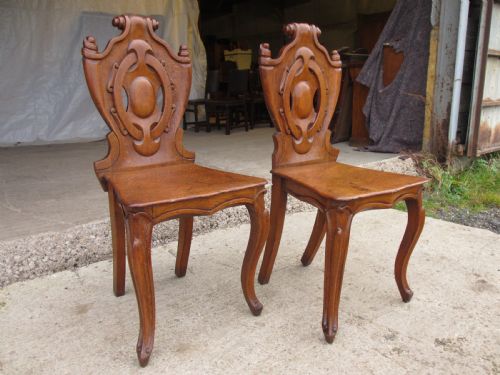

Shield Back Oak Chairs
Shield back oak chairs are striking seating options that bring traditional character and distinctive carved heraldic motifs to a room.
Shield Back Oak Chairs
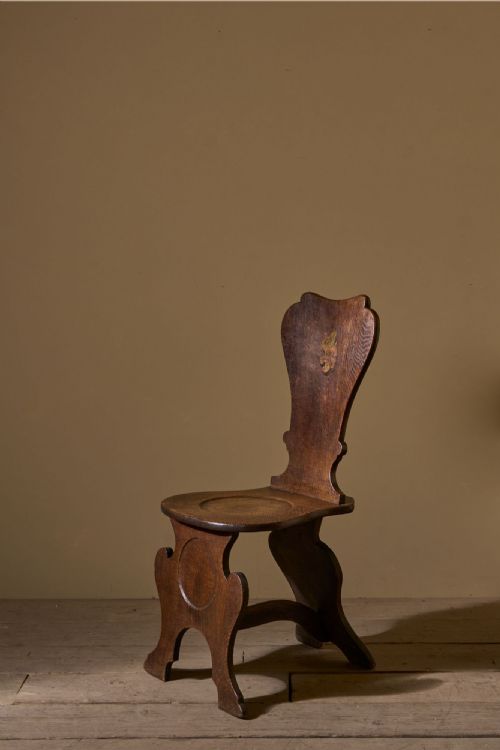
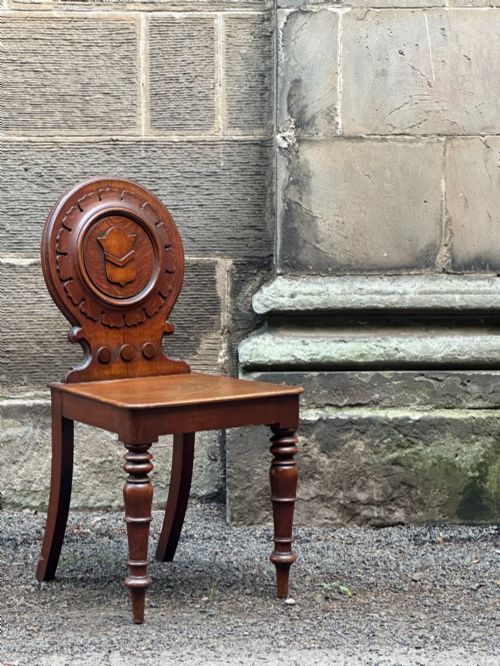
Shield back oak chairs are formal seating forms designed primarily for halls and reception spaces, featuring distinctively carved backrests shaped like heraldic shields. When searching for shield back oak chairs, buyers encounter pieces originating predominantly from the Victorian and Georgian eras alongside examples dating to the eighteenth century and the Regency period.
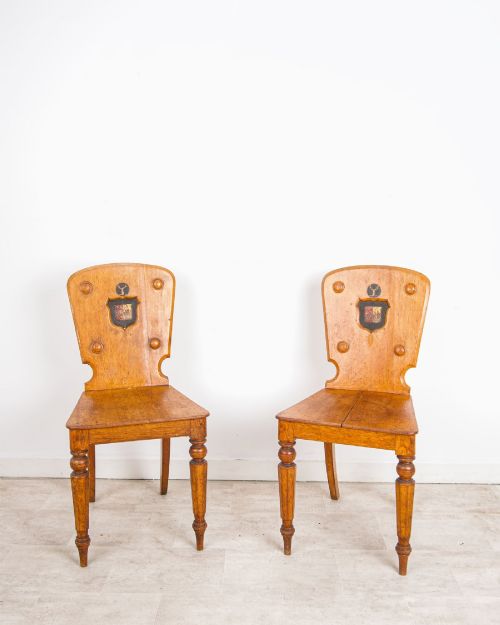
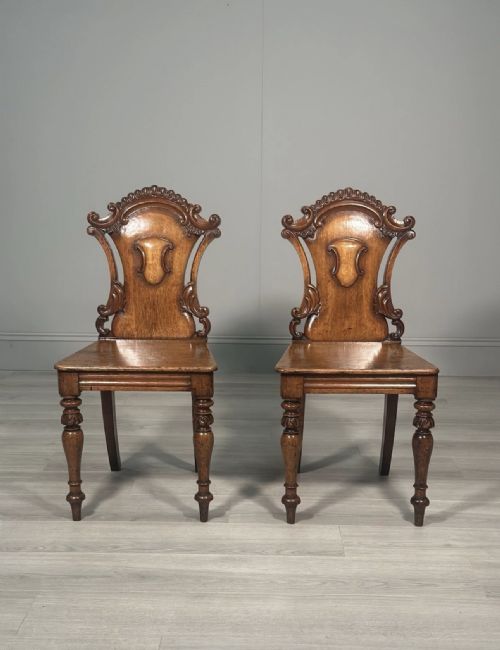
The selections on this page consist chiefly of hall chairs, side chairs, and occasional armchairs, often presented in pairs. These pieces combine robust timber construction with decorative carving, frequently incorporating heraldic elements within the backrest design.
How they were made
These chairs are constructed from solid oak, sometimes highlighted as golden oak, utilising traditional joinery methods to ensure structural stability in heavy-use hallway settings. Carved details to the shield backs and legs demonstrate period woodworking techniques, while select examples incorporate painted finishes or upholstered textile components.
Support structures vary from turned or cabriole legs to simpler side chair configurations, reflecting the stylistic preferences of the eighteenth and nineteenth centuries. Cabinetmakers relied on dense timber to withstand the rigours of entrance halls while delivering intricate relief carving on the prominent back panels.
The listings show oak as the exclusive timber choice, spanning the eighteenth century through to late Victorian Gothic Revival interpretations.
What varies in quality
Quality in these chairs rests upon the crispness and depth of the carved shield back, where finely rendered heraldic details distinguish superior examples from simpler production. The selection of the oak timber itself, including grain consistency and rich natural colour, further elevates the stature of a piece.
Proportion and structural integrity define the upper tier of the range, particularly in how the cabriole or turned legs meet the seat frame. Pieces that maintain balanced proportions alongside deep, deliberate carving represent the higher standard of craftsmanship within this category.
The Shield Back Oak Chairs Glossary
- Shield back
- A backrest design shaped in the contour of a heraldic shield, often embellished with carving or crests. This form serves as the primary visual focus of the chair.
- Hall chair
- A stiff-backed seating piece intended for placement in an entrance hall rather than for long periods of sitting. These items traditionally displayed family crests or decorative motifs.
- Cabriole leg
- A furniture leg that curves out and then in, resembling the leg of an animal. This style appears on select Victorian examples within the selection.
- Carver
- An armchair designed in the same style as a matching set of smaller side chairs. These typically stood at the head of a dining table or served as accent seating.
Shield Back Oak Chairs: Frequently Asked Questions
Where did these chairs traditionally go?
These pieces stood primarily in the entrance halls or reception spaces of large homes. They functioned as formal seating for callers waiting to be announced.
Because they were placed in public areas, makers focused heavily on the visual impact of the carved backrest rather than plush upholstery.
Are these chairs comfortable for daily use?
Hall chairs were built with upright wooden seats rather than deep padding. They encourage an erect posture suited to brief periods of sitting.
Most buyers place them in hallways, bedrooms, or landings where their decorative carved backs can be fully appreciated.
How do I spot a Victorian piece?
Victorian examples often feature heavier carved relief work and darker or golden oak finishes. Stylistic revivals during this period frequently drew inspiration from earlier Georgian designs.
Construction methods and timber patination help distinguish nineteenth-century production from older eighteenth-century work.
Do these chairs usually come in pairs?
Many of these pieces survive and are offered as matched pairs for symmetry in hallways or flanking a console table. Single examples also appear frequently across different periods.
Matching pairs are particularly valued for maintaining uniform design details in larger spaces.