
Victorian Carved Drawer Chest
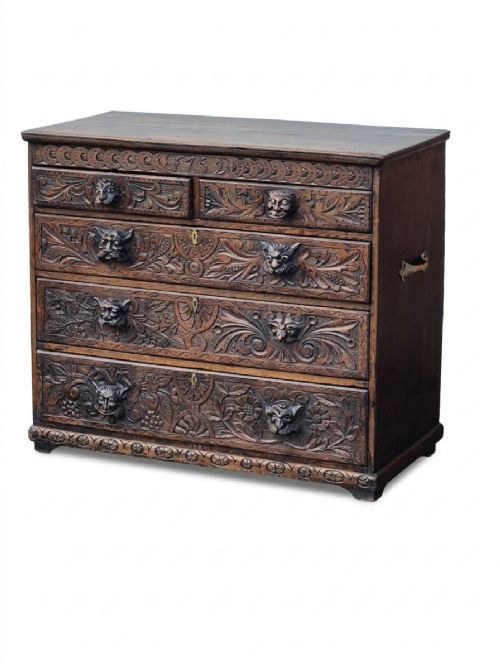
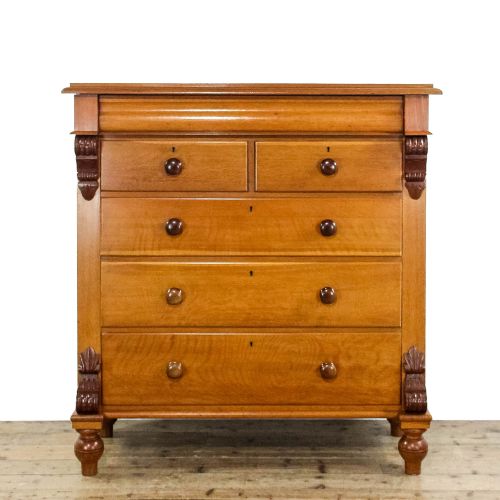
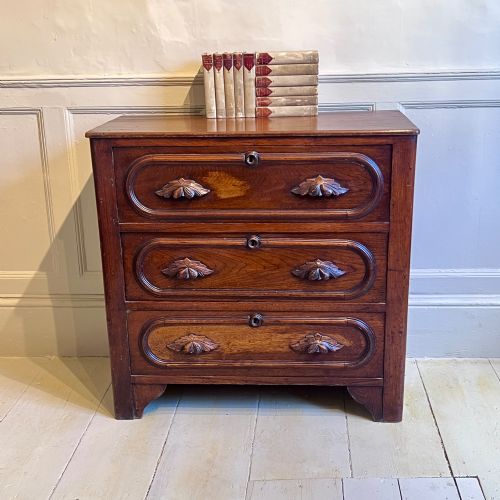
When you search for a victorian carved drawer chest, you uncover robust timber storage pieces carrying deep foliate motifs and grotesque masks.
Victorian Carved Drawer Chest
A victorian carved drawer chest combines solid timber construction with ornamental relief work typical of the nineteenth century. These pieces primarily date from the Victorian era, spanning decades from eighteen-fifty to nineteen-hundred, alongside related William-Fourth examples.
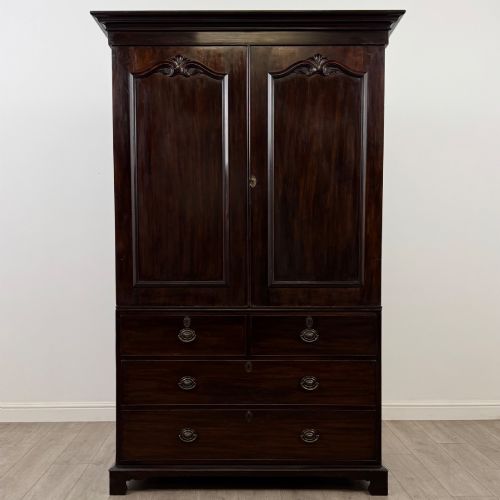
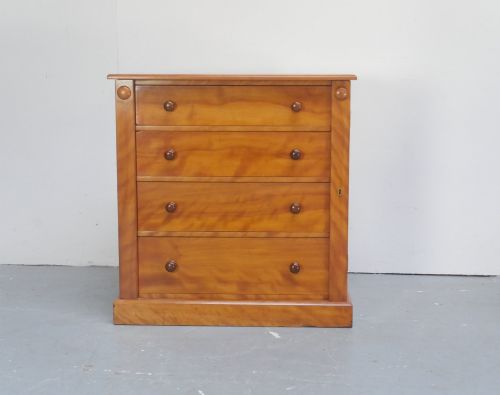
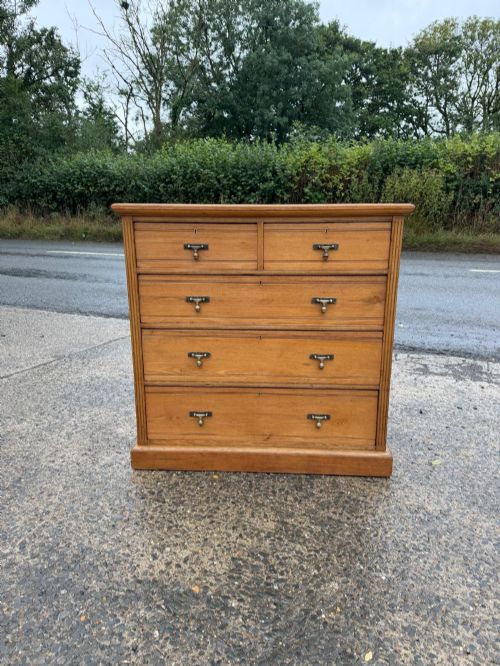
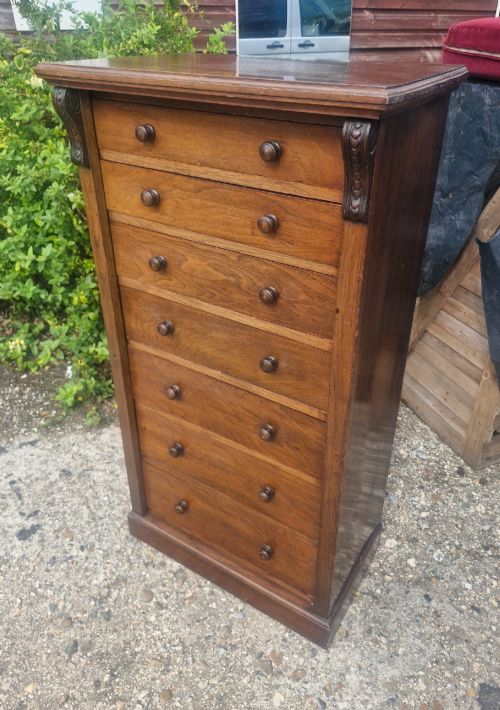
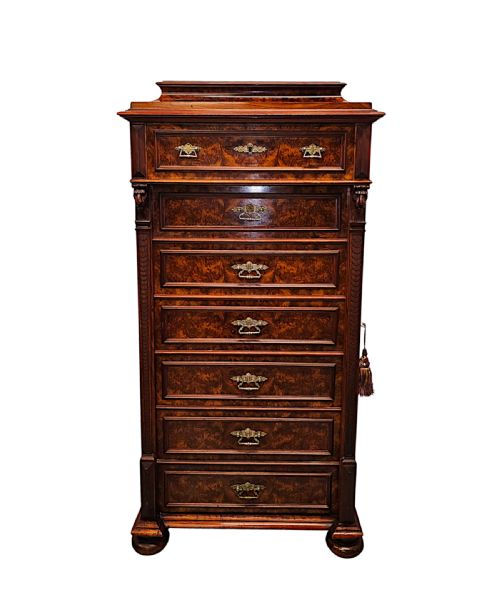
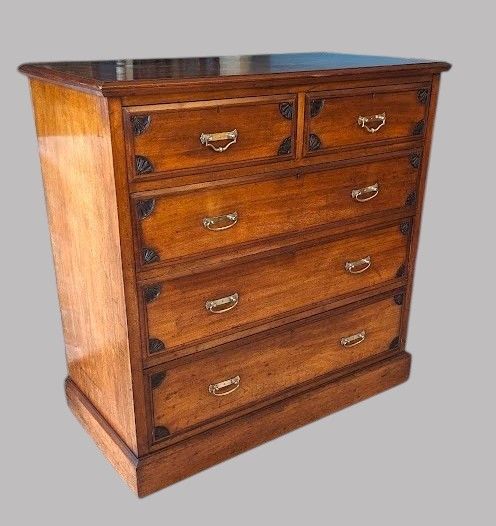
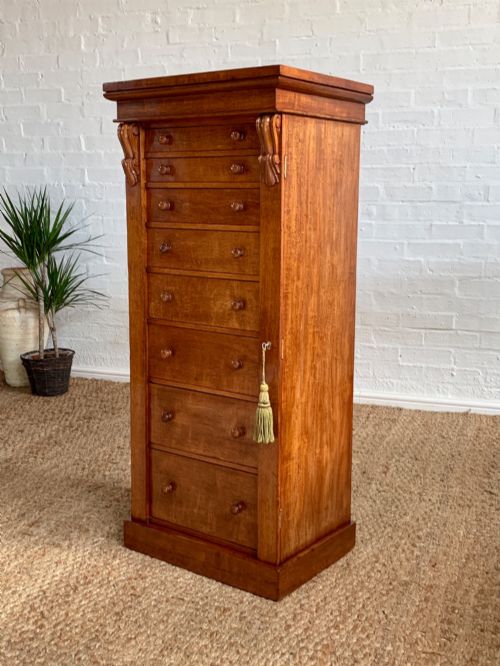
The most frequent form encountered on this page is the sturdy oak or mahogany chest of drawers, often incorporating tall Wellington formats and drop-front locking mechanisms. Buyers also discover specialist variations including bedside chests, compact commodes, and architectural linen presses.
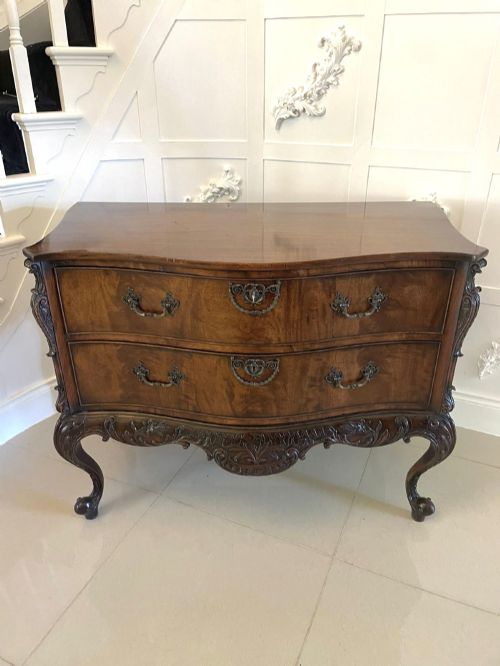
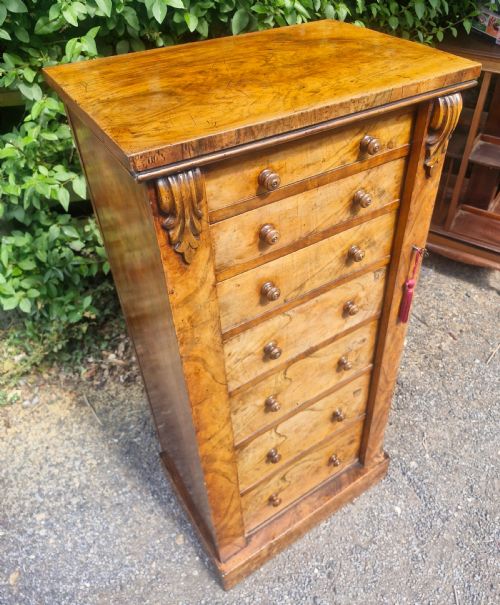
Carved details define this specific group, ranging from botanical foliate patterns to striking Green Man masks and lion motifs. Woods stretch from figured mahogany and burr walnut down to waxed pine and regional oak.
Craftsmanship and Proportion
Quality rests upon the crispness of the hand carving and the selection of figured wood veneers across the drawer fronts. Pieces displaying deep, undamaged foliate relief and well-matched burr walnut sit at the upper end of the scale.
Structural integrity of the locking mechanisms on Wellington chests and the retention of original turned knobs or brass hardware distinguish superior examples. Timber choice also dictates distinction, moving from utilitarian pine to dense, figured mahogany and carved oak.
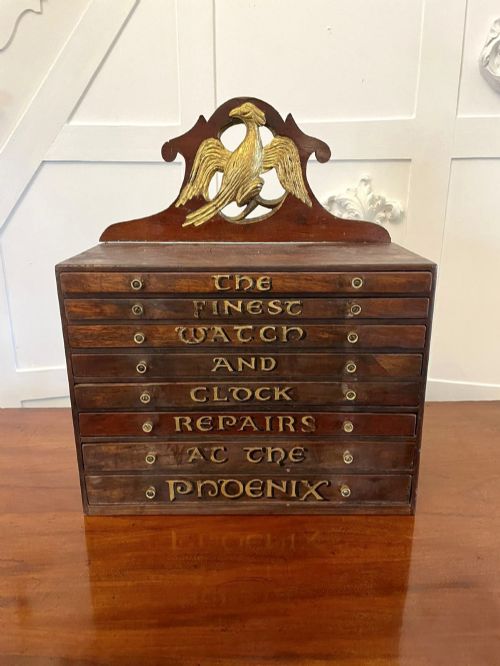
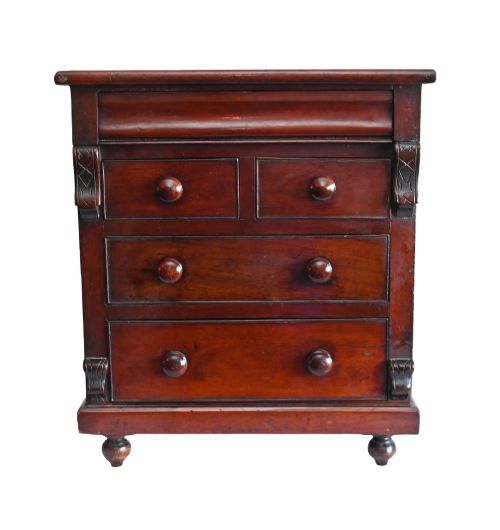
A miniature carved slate model sits among the full-sized timber chests.
The Victorian Carved Drawer Chest Glossary
- Wellington chest
- A tall, narrow chest of drawers secured by a hinged locking stile on one side that fastens over the drawer edges. This format typically contains up to eight graduated drawers.
- Green Man
- A sculptural architectural motif depicting a human face sprouted from or entwined with vines and foliage. It appears frequently as carved drawer pulls or mask ornamentation on nineteenth-century oak furniture.
- Flame mahogany veneer
- A thin slice of timber cut from the fork of a mahogany tree to produce a flickering, flame-like grain pattern. Cabinetmakers laid this across drawer surfaces for decorative effect.
- Linen press
- A tall cupboard featuring upper sliding trays or shelves above a chest of lower drawers. These pieces served to store household linens flat.
- Serpentine front
- A furniture front curving outward at the centre and inward at the sides in a continuous wave line. This shape demands advanced woodworking skill to execute.
Victorian Carved Drawer Chest: Frequently Asked Questions
What is a Wellington chest?
A Wellington chest is a tall, narrow timber storage unit featuring a vertical locking bar down one side. This hinged flap secures all the drawers simultaneously when locked.
Cabinetmakers built these tall forms to maximise storage in bedrooms while maintaining a compact floor footprint.
How do I care for waxed pine?
Waxed pine surfaces require occasional applications of beeswax to nourish the timber and maintain the soft sheen. Avoid placing these chests near direct heat sources or damp environments.
Regular dusting with a dry cloth keeps the wax finish protected against daily wear.
What woods were used?
Nineteenth-century makers built these storage pieces using oak, mahogany, walnut, and pine. Finer examples display figured mahogany veneers and burr walnut across the visible drawer fronts.
Secondary timbers like oak and pine form the interior drawer linings and structural carcases.
How do I identify the period?
Dating relies upon timber choices, construction methods like hand-cut dovetails, and stylistic markers such as Gothic Revival motifs or William Fourth proportions. Nineteenth-century pieces carry distinct regional variations in their hardware and joinery.
Carving styles also help place the piece within the Victorian era.