


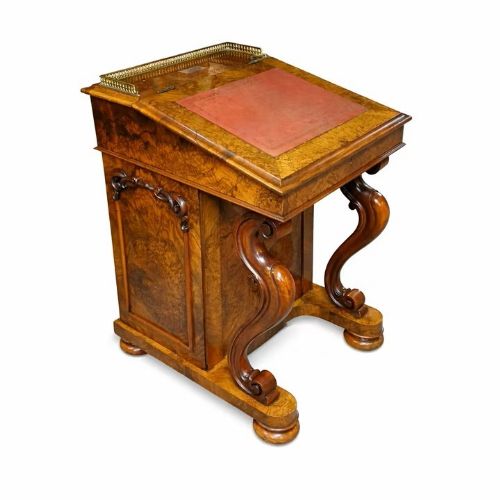
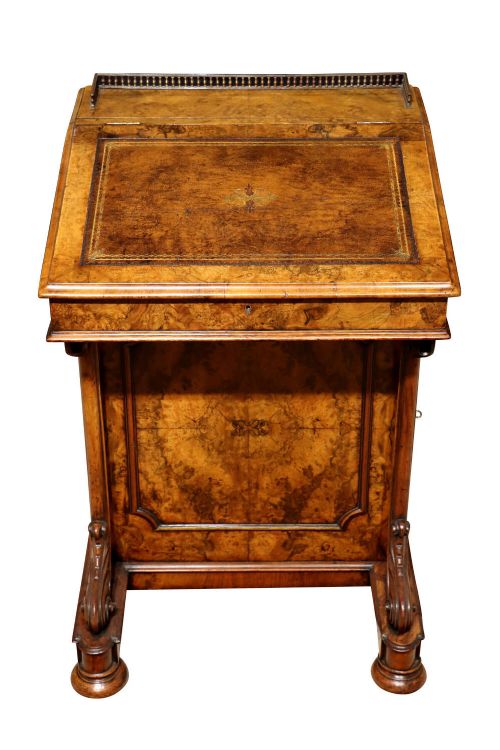


Victorian Carved Davenport Desk
A victorian carved davenport desk offers compact writing storage with timeless character, combining practical slope-top utility with rich period timber.
Victorian Carved Davenport Desk
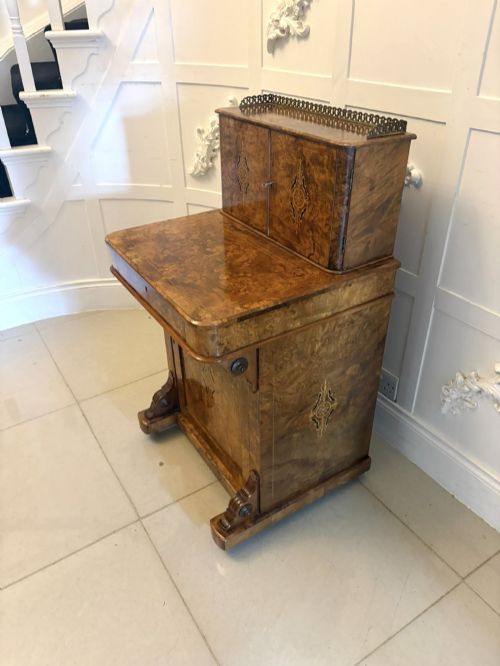
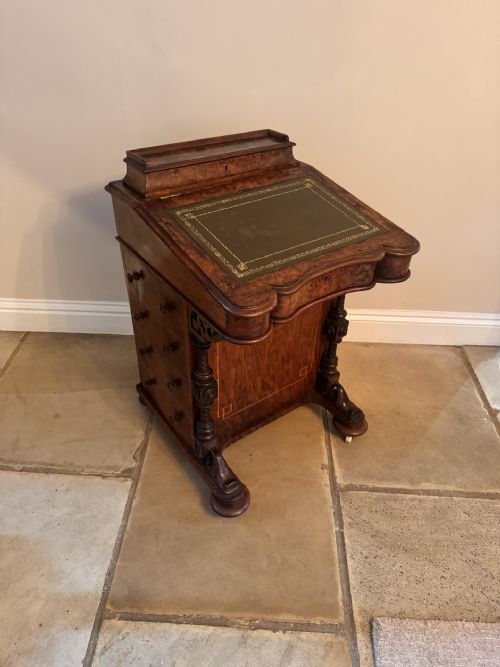
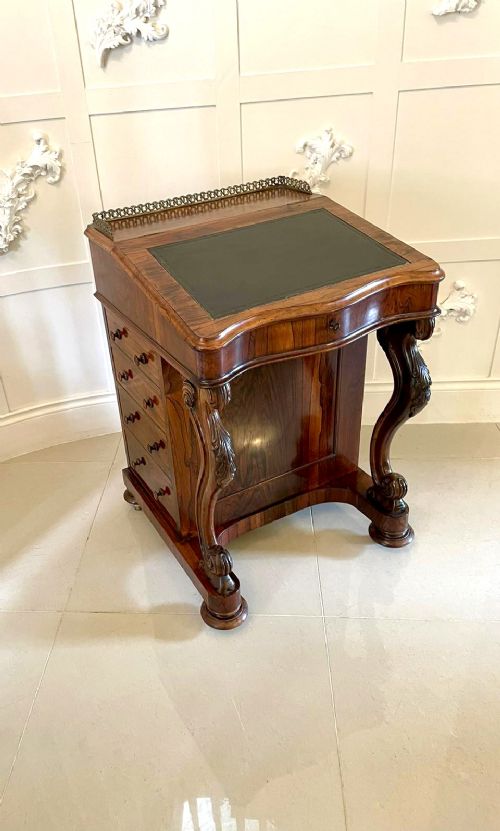
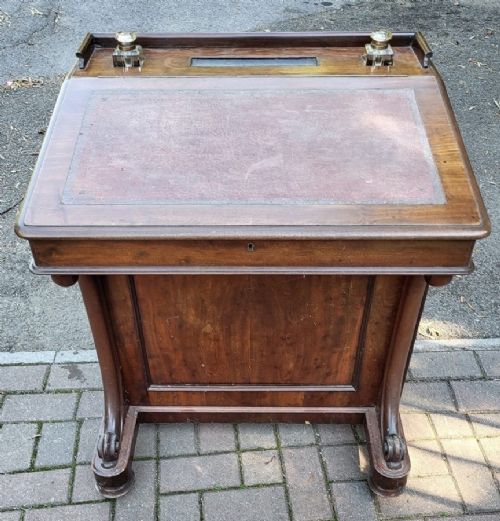
When you examine a victorerian carved davenport desk, you look at a compact writing cabinet featuring a sloping lid that lifts or slants for correspondence. These pieces typically incorporate a stationary box above and a pedestal of drawers or a kneehole space below.
The versions you meet most frequently on this page originate from the nineteenth century, spanning periods from William IV through late Victorian times. They arrive in various timbers, most notably burr walnut and mahogany, alongside rosewood and oak.
Makers of the era designed these desks for domestic studies or ladies boudoirs where floor space was at a premium. The integration of side drawers and sliding mechanisms provides substantial storage within a remarkably small footprint.
Materials and construction
Cabinet makers utilised choice hardwoods such as burr walnut, mahogany, and rosewood, often selecting timber with highly figured grain for the primary surfaces. These woods were carefully prepared and polished to highlight the natural patterns.
Carved ornamentation and inlay work required skilled carpentry, incorporating brass fittings, leather writing surfaces, and sometimes satinwood for interior drawers. Structural joinery ensured that side drawers and pop-up compartments operated smoothly within the main pedestal carcass.
Listings demonstrate a strong preference for burr walnut among nineteenth-century makers, alongside examples in rosewood, mahogany, and oak.
What separates the best from the rest
The distinction between standard examples and the finest pieces lies in the choice of timber figure and the crispness of the carving. Superior models display richly patterned burr walnut or intricate floral marquetry, whereas simpler pieces utilise plain veneers or straightforward mahogany.
Internal complexity also divides the range, with pop-up stationery boxes and fitted satinwood interiors indicating higher workshop ambition. Freestanding designs finished with drawers on both sides demonstrate a level of design finish not found in simpler wall-facing versions.
The Victorian Carved Davenport Desk Glossary
- Davenport
- A small pedestal desk featuring a sloping writing surface and side drawers. The form became popular during the nineteenth century for domestic study use.
- Burr walnut
- Timber taken from a tree growth that produces intricate, swirling grain patterns. Cabinet makers prized this material for decorative veneering on high-status furniture.
- Pop-up
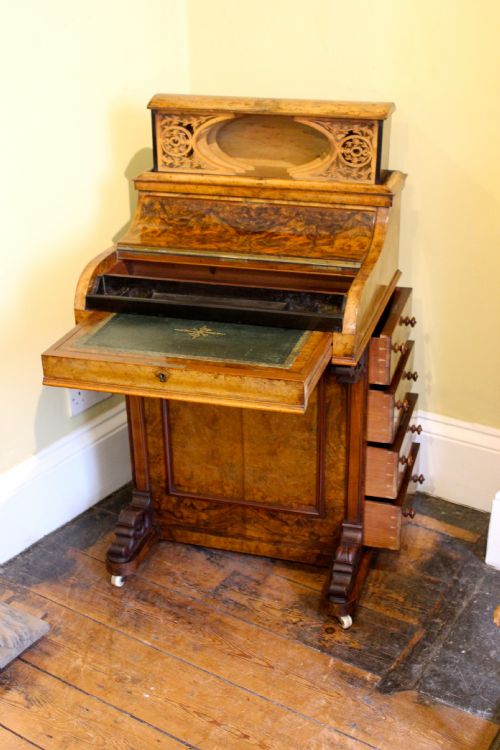
- A mechanism hidden within the desk superstructure that raises a stationery compartment when released. This mechanical complexity marks a more sophisticated piece.
- Marquetry
- The art of applying pieces of veneer to a structure to form decorative patterns or pictures. Craftsmen used contrasting timbers to achieve pictorial depth.
Victorian Carved Davenport Desk: Frequently Asked Questions
Where were davenport desks used?
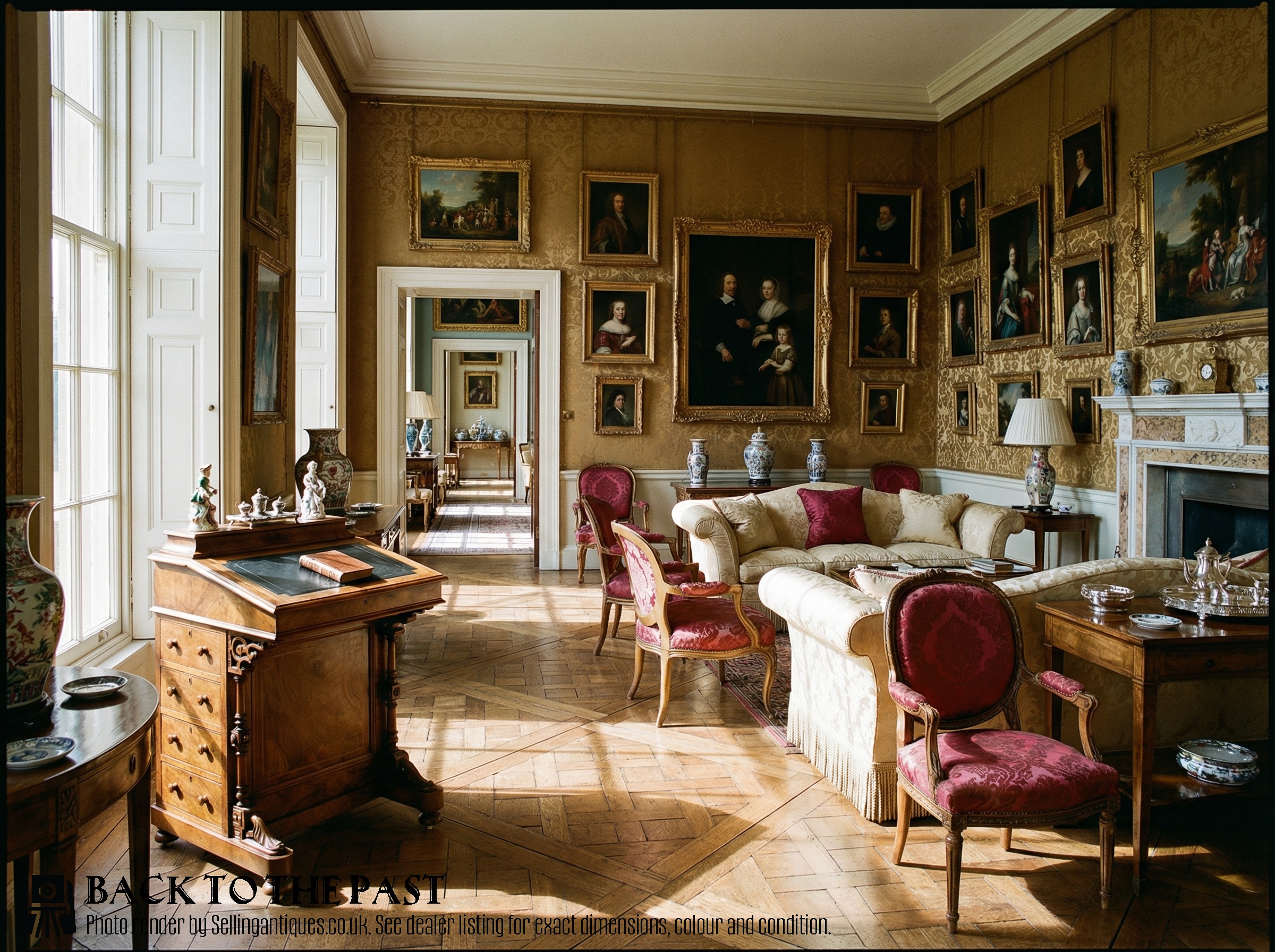
These compact desks were primarily designed for domestic settings such as drawing rooms, boudoirs, or private studies where space was limited.
Their small footprint allowed homeowners to maintain a dedicated writing station without occupying an entire room.
What is a pop-up davenport?
A pop-up davenport incorporates a spring-loaded or mechanical compartment housed within the upper superstructure of the desk.
When released, this section rises to reveal additional stationery slots and small drawers for correspondence.
How do I identify a Victorian davenport?
Victorian examples typically date from the nineteenth century and display characteristic timber choices like burr walnut, rosewood, or mahogany.
Stylistic markers range from plain classical lines to heavy carving or marquetry inlay depending on the specific decade of manufacture.
Are these desks suitable for daily writing?
The sloping leather-lined top provides a traditional and functional surface for occasional correspondence and note-taking.
Internal stationary compartments and side drawers offer practical storage for modern writing accessories.